SUBSCRIBE TO OUR FREE NEWSLETTER
Daily news & progressive opinion—funded by the people, not the corporations—delivered straight to your inbox.
5
#000000
#FFFFFF
To donate by check, phone, or other method, see our More Ways to Give page.
Daily news & progressive opinion—funded by the people, not the corporations—delivered straight to your inbox.
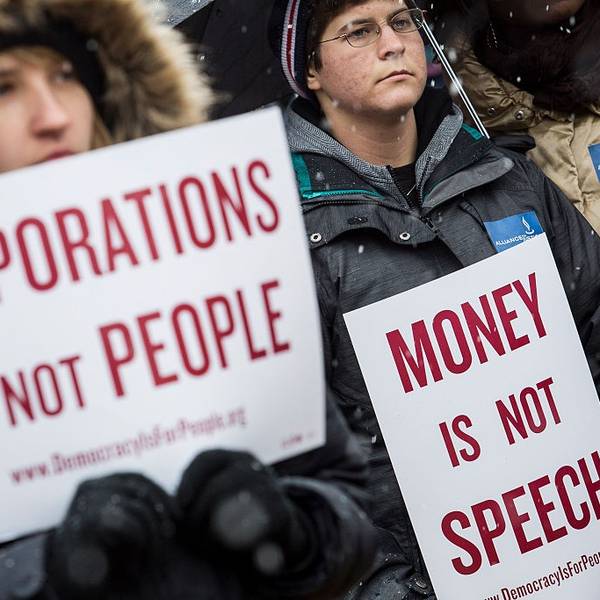
A group of campaign reform advocates in the city of Seattle has a novel solution to curb the influence of money in political elections: more money.
In less than a week, Seattle voters will decide the fate of the Honest Elections ballot initiative, otherwise known as I-122.
If passed, the initiative--engineered by a loose coalition of local progressive groups and organizers--will mail four $25 "democracy vouchers" to every Seattle voter on the first business day of an election year. The vouchers would be financed by a 10-year, $30 million property tax levy.
Voters then will have the option to allocate one or all of the vouchers to the campaign of the city official of their choice, provided that candidate has voluntarily opted into the voucher system.
The initiative's main goals, according to proponents, are to establish an even playing field among candidates vying for office, mitigate the impact of big donors on local elections, and magnify the importance of average citizens.
An estimated 0.3 percent of Seattle residents make up half of the contributors to political campaigns, says Sarra Tekola, who works with the nonprofit Sightline Institute, one of the measure's main backers. "This initiative helps people who have limited means actually be paid attention to, regardless of economic status--including people of color and young people."
With a new source of campaign revenue at stake, Tekola joins those proponents who insist the measure will force City Council members and candidates to spend additional time addressing the concerns of the layperson, which they might otherwise forego to spend time currying favor with big-money donors.
According to The Seattle Times, the average cost of a winning City Council campaign is $243,000. As of last week, Seattle's 18 city council candidates have cumulatively raised more than $2.6 million, for an average of $143,753 each.
The need to raise money to fund a successful campaign, of course, is not unique to Seattle, nor is candidates' dependence on major donors. Nationally, less than 1 percent of Americans account for 80 percent of campaign contributions.
For this reason, Honest Election supporters see it as a viable model for other municipalities across the country.
"This is a very important initiative on a national level," says longtime campaign finance reform advocate John Bonifaz of Free Speech for People.
Reform advocates should still continue to fight for a constitutional amendment to overturn Citizens United, the 2010 U.S. Supreme Court decision credited with allowing unlimited amounts of money to be spent on campaigns by corporations and labor groups via "Super PACs," Bonifaz added. But what is happening in Seattle is a good start.
If other cities were to adopt I-122 in its entirety, they would potentially be agreeing to some of the most stringent campaign laws in the country.
Along with "democracy vouchers," the measure addresses a number of issues, including lowering the maximum contribution an individual can make from $700 to $500, and applying spending caps on the campaigns of candidates who have opted in to the voucher program.
What may appear as a Christmas list to reform advocates is viewed as overkill by the initiative's opponents, including Bob Mahon of No Election Vouchers, I-122's main opposition.
"I-122 gives this misperception that we have corruption in our politics, which we don't. The biggest concern we have is money, and the initiative does nothing to address that. In fact, it potentially could make that problem worse," says Mahon.
Mahon, who was a member of the Seattle Ethics and Elections Commission for eight years and describes himself as a "true-blue Democrat," says the initiative is well-intentioned, but he fears it ultimately will exacerbate what it purports to stop.
"In terms of the limit on contributions, money always finds its way into the system," Mahon said, referring to the Citizens United case.
Mahon says that open transparency is the best remedy for big money at the local level. Only fighting for a constitutional amendment at the national level would stop the influence of Super PACs, which do not have to report their donors, he says.
Critics of the measure, including Mahon, claim that Seattle is essentially being used as a "petri dish" for an experiment in campaign finance reform. But that's the point, supporters say.
"Cities and states can be laboratories for campaign finance regulation that may work in other places," says Kenneth Gross, a New York lawyer who was influential in that city's move toward a publicly funded system that "matched" the contributions small donors made to local campaigns. "If this program can constitutionally thwart the undue influence of outsized donations it should be given a try."
With a recent poll showing that more than 84 percent of Americans believe money has an undue influence in politics, campaign reformers will be watching to see just how Seattle's experiment turns out.
This country and this world are at a monumental crossroads. US voters have an opportunity to beat back the forces of fascism and confront the billionaires who are rigging the economy, our media system, and our democracy, making it increasingly impossible for ordinary people to get by. We’re not just talking about the election. We’re talking about what must be done once these fascist elements are vanquished from power. We need a bolder set of solutions than what either major party has so far been willing to offer and a working-class movement ready to fight like hell for it. Trump didn't emerge from nowhere. The conditions that fueled MAGA authoritarianism were created by decades of radical neoliberal economic policies and a corrupt political system dominated by corporate interests. They slashed taxes on the super-rich, promising that the benefits would trickle down. They said giveaways to the corporate titans would make life more affordable for the rest of us. It was all bullshit. And when a bitter, betrayed populace searches for someone to blame, right-wing demagogues have little trouble finding scapegoats. People know when they're being lied to, but you won't hear any of this from the corporate media. Only independent journalism—powered and funded by people who believe in building a better world—can deliver truly trustworthy daily news. If you share our vision, please contribute whatever you can to sustain our work. |
A group of campaign reform advocates in the city of Seattle has a novel solution to curb the influence of money in political elections: more money.
In less than a week, Seattle voters will decide the fate of the Honest Elections ballot initiative, otherwise known as I-122.
If passed, the initiative--engineered by a loose coalition of local progressive groups and organizers--will mail four $25 "democracy vouchers" to every Seattle voter on the first business day of an election year. The vouchers would be financed by a 10-year, $30 million property tax levy.
Voters then will have the option to allocate one or all of the vouchers to the campaign of the city official of their choice, provided that candidate has voluntarily opted into the voucher system.
The initiative's main goals, according to proponents, are to establish an even playing field among candidates vying for office, mitigate the impact of big donors on local elections, and magnify the importance of average citizens.
An estimated 0.3 percent of Seattle residents make up half of the contributors to political campaigns, says Sarra Tekola, who works with the nonprofit Sightline Institute, one of the measure's main backers. "This initiative helps people who have limited means actually be paid attention to, regardless of economic status--including people of color and young people."
With a new source of campaign revenue at stake, Tekola joins those proponents who insist the measure will force City Council members and candidates to spend additional time addressing the concerns of the layperson, which they might otherwise forego to spend time currying favor with big-money donors.
According to The Seattle Times, the average cost of a winning City Council campaign is $243,000. As of last week, Seattle's 18 city council candidates have cumulatively raised more than $2.6 million, for an average of $143,753 each.
The need to raise money to fund a successful campaign, of course, is not unique to Seattle, nor is candidates' dependence on major donors. Nationally, less than 1 percent of Americans account for 80 percent of campaign contributions.
For this reason, Honest Election supporters see it as a viable model for other municipalities across the country.
"This is a very important initiative on a national level," says longtime campaign finance reform advocate John Bonifaz of Free Speech for People.
Reform advocates should still continue to fight for a constitutional amendment to overturn Citizens United, the 2010 U.S. Supreme Court decision credited with allowing unlimited amounts of money to be spent on campaigns by corporations and labor groups via "Super PACs," Bonifaz added. But what is happening in Seattle is a good start.
If other cities were to adopt I-122 in its entirety, they would potentially be agreeing to some of the most stringent campaign laws in the country.
Along with "democracy vouchers," the measure addresses a number of issues, including lowering the maximum contribution an individual can make from $700 to $500, and applying spending caps on the campaigns of candidates who have opted in to the voucher program.
What may appear as a Christmas list to reform advocates is viewed as overkill by the initiative's opponents, including Bob Mahon of No Election Vouchers, I-122's main opposition.
"I-122 gives this misperception that we have corruption in our politics, which we don't. The biggest concern we have is money, and the initiative does nothing to address that. In fact, it potentially could make that problem worse," says Mahon.
Mahon, who was a member of the Seattle Ethics and Elections Commission for eight years and describes himself as a "true-blue Democrat," says the initiative is well-intentioned, but he fears it ultimately will exacerbate what it purports to stop.
"In terms of the limit on contributions, money always finds its way into the system," Mahon said, referring to the Citizens United case.
Mahon says that open transparency is the best remedy for big money at the local level. Only fighting for a constitutional amendment at the national level would stop the influence of Super PACs, which do not have to report their donors, he says.
Critics of the measure, including Mahon, claim that Seattle is essentially being used as a "petri dish" for an experiment in campaign finance reform. But that's the point, supporters say.
"Cities and states can be laboratories for campaign finance regulation that may work in other places," says Kenneth Gross, a New York lawyer who was influential in that city's move toward a publicly funded system that "matched" the contributions small donors made to local campaigns. "If this program can constitutionally thwart the undue influence of outsized donations it should be given a try."
With a recent poll showing that more than 84 percent of Americans believe money has an undue influence in politics, campaign reformers will be watching to see just how Seattle's experiment turns out.