SUBSCRIBE TO OUR FREE NEWSLETTER
Daily news & progressive opinion—funded by the people, not the corporations—delivered straight to your inbox.
5
#000000
#FFFFFF
To donate by check, phone, or other method, see our More Ways to Give page.
Rather, we should acknowledge our broken promise to Gorbachev that we wouldn't expand NATO if Russia didn't object to a reunified Germany's entry into NATO when the wall came down, and promise not to invite the Ukraine or Georgia to become members of our old Cold War military alliance.
We should be disbanding NATO and working for reform of the UN system so that it can fulfill its peacekeeping mission without archaic reliance on regional military competitive alliances. Further, we should remove our missiles from Poland, Romania and Turkey and negotiate the space weapons ban which China and Russia repeatedly proposed, and which only the US blocked for several years in the UN's committee on Disarmament in Geneva which requires consensus.
We should also reinstate the 1972 Anti-Ballistic Missile Treaty which Bush walked out of in 2001 and take up Russia's offer to negotiate a treaty to ban cyberwarfare, which it proposed after the US boasted about its virus attack on Iran's enrichment facilities and which the US rejected out of hand.
We need to stop being the world's bully, as described last week by Jack Matlock, Reagan and Bush's Ambassador to Russia who has examined our provocative actions towards Russia which resulted in these terrible events in Crimea.
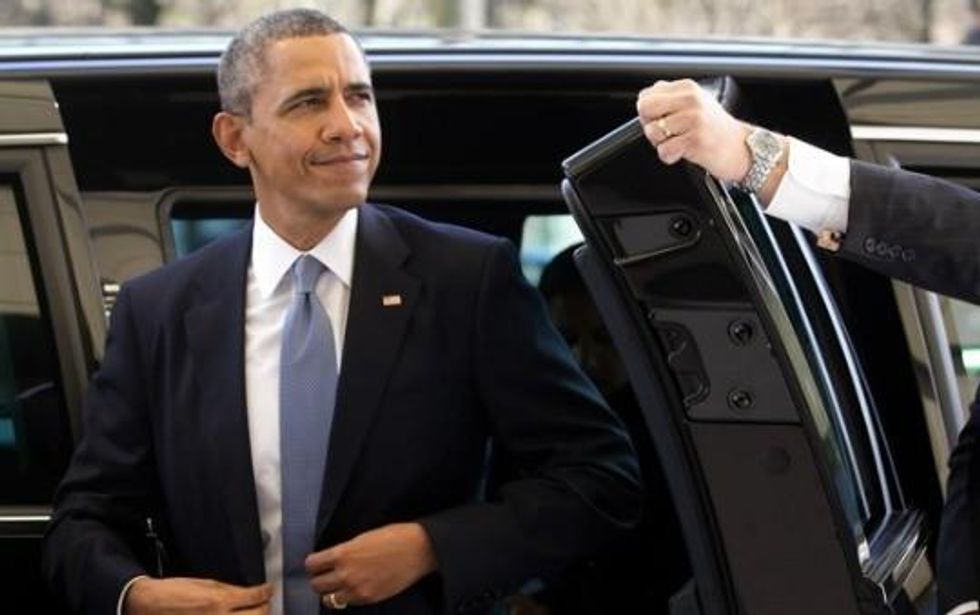
It's ironic that Obama is now in the Hague at his third "Nuclear Security Summit" to talk about locking down and securing loose bomb-making materials, without any discussion about how to honor our Non-Proliferation Treaty promise to eliminate our massive nuclear arsenal, for which we are planning to spend $640 billion over the next ten years for two new bomb factories, and new lethal delivery systems--missiles, planes, submarines.
The sad history of our bad faith relationships with Gorbachev and Putin and our aggressive military provocations, including today's announcement that NATO will be doing military war games in Poland, will do nothing to make our world a safer, more peaceful place.
The US needs more creative 21st century thinking on how to relate to the rest of the world.
Rather, we should acknowledge our broken promise to Gorbachev that we wouldn't expand NATO if Russia didn't object to a reunified Germany's entry into NATO when the wall came down, and promise not to invite the Ukraine or Georgia to become members of our old Cold War military alliance.
We should be disbanding NATO and working for reform of the UN system so that it can fulfill its peacekeeping mission without archaic reliance on regional military competitive alliances. Further, we should remove our missiles from Poland, Romania and Turkey and negotiate the space weapons ban which China and Russia repeatedly proposed, and which only the US blocked for several years in the UN's committee on Disarmament in Geneva which requires consensus.
We should also reinstate the 1972 Anti-Ballistic Missile Treaty which Bush walked out of in 2001 and take up Russia's offer to negotiate a treaty to ban cyberwarfare, which it proposed after the US boasted about its virus attack on Iran's enrichment facilities and which the US rejected out of hand.
We need to stop being the world's bully, as described last week by Jack Matlock, Reagan and Bush's Ambassador to Russia who has examined our provocative actions towards Russia which resulted in these terrible events in Crimea.
It's ironic that Obama is now in the Hague at his third "Nuclear Security Summit" to talk about locking down and securing loose bomb-making materials, without any discussion about how to honor our Non-Proliferation Treaty promise to eliminate our massive nuclear arsenal, for which we are planning to spend $640 billion over the next ten years for two new bomb factories, and new lethal delivery systems--missiles, planes, submarines.
The sad history of our bad faith relationships with Gorbachev and Putin and our aggressive military provocations, including today's announcement that NATO will be doing military war games in Poland, will do nothing to make our world a safer, more peaceful place.
The US needs more creative 21st century thinking on how to relate to the rest of the world.
Rather, we should acknowledge our broken promise to Gorbachev that we wouldn't expand NATO if Russia didn't object to a reunified Germany's entry into NATO when the wall came down, and promise not to invite the Ukraine or Georgia to become members of our old Cold War military alliance.
We should be disbanding NATO and working for reform of the UN system so that it can fulfill its peacekeeping mission without archaic reliance on regional military competitive alliances. Further, we should remove our missiles from Poland, Romania and Turkey and negotiate the space weapons ban which China and Russia repeatedly proposed, and which only the US blocked for several years in the UN's committee on Disarmament in Geneva which requires consensus.
We should also reinstate the 1972 Anti-Ballistic Missile Treaty which Bush walked out of in 2001 and take up Russia's offer to negotiate a treaty to ban cyberwarfare, which it proposed after the US boasted about its virus attack on Iran's enrichment facilities and which the US rejected out of hand.
We need to stop being the world's bully, as described last week by Jack Matlock, Reagan and Bush's Ambassador to Russia who has examined our provocative actions towards Russia which resulted in these terrible events in Crimea.
It's ironic that Obama is now in the Hague at his third "Nuclear Security Summit" to talk about locking down and securing loose bomb-making materials, without any discussion about how to honor our Non-Proliferation Treaty promise to eliminate our massive nuclear arsenal, for which we are planning to spend $640 billion over the next ten years for two new bomb factories, and new lethal delivery systems--missiles, planes, submarines.
The sad history of our bad faith relationships with Gorbachev and Putin and our aggressive military provocations, including today's announcement that NATO will be doing military war games in Poland, will do nothing to make our world a safer, more peaceful place.
The US needs more creative 21st century thinking on how to relate to the rest of the world.