SUBSCRIBE TO OUR FREE NEWSLETTER
Daily news & progressive opinion—funded by the people, not the corporations—delivered straight to your inbox.
5
#000000
#FFFFFF
To donate by check, phone, or other method, see our More Ways to Give page.
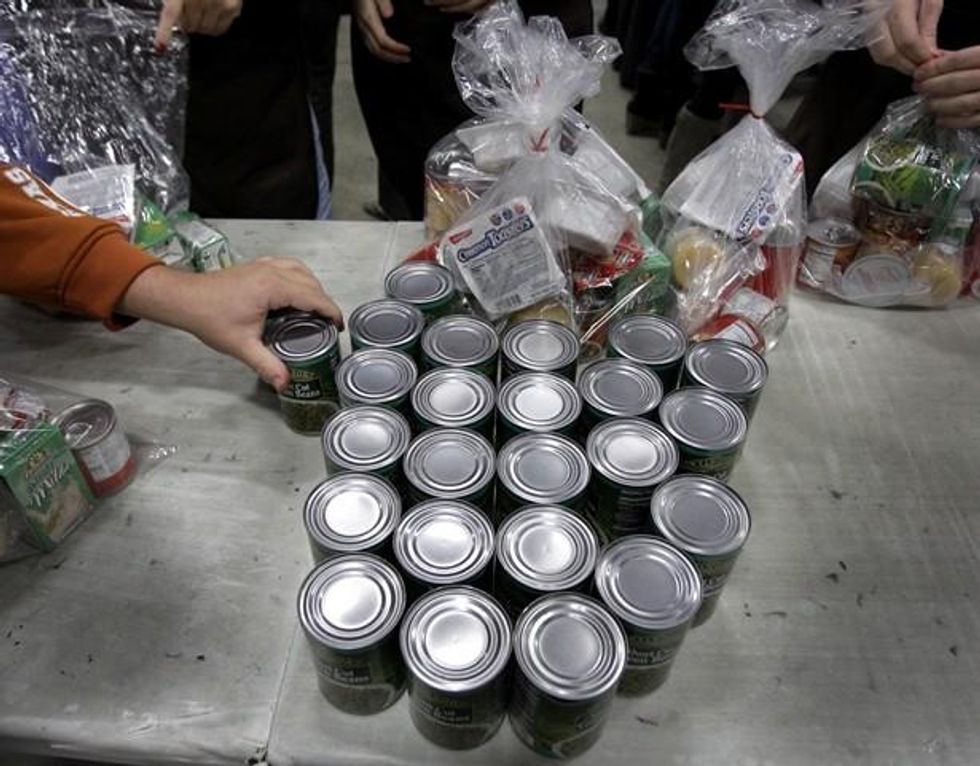
Dozens of food pantries are "cropping up at colleges across the country in recent years as educators acknowledge the struggles many students face as the cost of getting a higher education continues to soar," the Associated Press reported this weekend. Tuition alone, thearticle notes, "has become a growing burden, rising 27 percent at public colleges and 14 percent at private schools in the past five years, according to the College Board. Add in expenses for books, housing and other necessities of college life and some are left to choose between eating and learning."
College students, of course, have long been broke, and plenty members of today's professional class nurture nostalgic memories of their ramen years. What we're looking at here, though, isn't picturesque slumming--it's serious poverty. A recent paper in the Journal of Nutrition Education and Behavior, for example, found that 59 percent of students at one midsize rural university in Oregon had experienced food insecurity in the previous year, with the problem especially acute among students with jobs. "Over the last 30 years, the price of higher education has steadily outpaced inflation, cost of living, and medical expenses," the authors wrote. "Recent changes to federal loan policies regarding the amount and duration of federal aid received as well as how soon interest will begin to accrue after college may exacerbate the financial challenges students face. Food insecurity, as a potential consequence of the increasing cost of higher education, and its likely impact on student health, learning and social outcomes should not be considered an accepted aspect of the impoverished student experience, but a major student health priority."
Meanwhile, it's increasingly clear that the economic struggles students face during school follow them long past graduation. A major new report from the Pew Research Center, "Millennials in Adulthood: Detached from Institutions, Networked With Friends," notes that people between 18 and 33 are the first generation in the modern era to have "higher levels of student loan debt, poverty and unemployment, and lower levels of wealth and personal income than their two immediate predecessor generations (Gen Xers and Boomers) had at the same stage of their life cycles." This, even though they are the "best-educated cohort of young adults in American history."
For these young people, the meritocratic social contract--the idea that hard work and academic achievement will be rewarded with economic security--is breaking down. No wonder the Pew report finds that they're the only generation to favor a bigger, more activist federal government. A 2011 Pew poll even found that people between 18 and 29 had a more favorable view of socialism (49 percent) than capitalism (46 percent). So while everyone should worry that our college students are in such desperate straits, conservatives have special reason for anxiety. Thanks to their economic policies, a whole generation is getting an education in the need for a robust welfare state.
Dozens of food pantries are "cropping up at colleges across the country in recent years as educators acknowledge the struggles many students face as the cost of getting a higher education continues to soar," the Associated Press reported this weekend. Tuition alone, thearticle notes, "has become a growing burden, rising 27 percent at public colleges and 14 percent at private schools in the past five years, according to the College Board. Add in expenses for books, housing and other necessities of college life and some are left to choose between eating and learning."
College students, of course, have long been broke, and plenty members of today's professional class nurture nostalgic memories of their ramen years. What we're looking at here, though, isn't picturesque slumming--it's serious poverty. A recent paper in the Journal of Nutrition Education and Behavior, for example, found that 59 percent of students at one midsize rural university in Oregon had experienced food insecurity in the previous year, with the problem especially acute among students with jobs. "Over the last 30 years, the price of higher education has steadily outpaced inflation, cost of living, and medical expenses," the authors wrote. "Recent changes to federal loan policies regarding the amount and duration of federal aid received as well as how soon interest will begin to accrue after college may exacerbate the financial challenges students face. Food insecurity, as a potential consequence of the increasing cost of higher education, and its likely impact on student health, learning and social outcomes should not be considered an accepted aspect of the impoverished student experience, but a major student health priority."
Meanwhile, it's increasingly clear that the economic struggles students face during school follow them long past graduation. A major new report from the Pew Research Center, "Millennials in Adulthood: Detached from Institutions, Networked With Friends," notes that people between 18 and 33 are the first generation in the modern era to have "higher levels of student loan debt, poverty and unemployment, and lower levels of wealth and personal income than their two immediate predecessor generations (Gen Xers and Boomers) had at the same stage of their life cycles." This, even though they are the "best-educated cohort of young adults in American history."
For these young people, the meritocratic social contract--the idea that hard work and academic achievement will be rewarded with economic security--is breaking down. No wonder the Pew report finds that they're the only generation to favor a bigger, more activist federal government. A 2011 Pew poll even found that people between 18 and 29 had a more favorable view of socialism (49 percent) than capitalism (46 percent). So while everyone should worry that our college students are in such desperate straits, conservatives have special reason for anxiety. Thanks to their economic policies, a whole generation is getting an education in the need for a robust welfare state.
Dozens of food pantries are "cropping up at colleges across the country in recent years as educators acknowledge the struggles many students face as the cost of getting a higher education continues to soar," the Associated Press reported this weekend. Tuition alone, thearticle notes, "has become a growing burden, rising 27 percent at public colleges and 14 percent at private schools in the past five years, according to the College Board. Add in expenses for books, housing and other necessities of college life and some are left to choose between eating and learning."
College students, of course, have long been broke, and plenty members of today's professional class nurture nostalgic memories of their ramen years. What we're looking at here, though, isn't picturesque slumming--it's serious poverty. A recent paper in the Journal of Nutrition Education and Behavior, for example, found that 59 percent of students at one midsize rural university in Oregon had experienced food insecurity in the previous year, with the problem especially acute among students with jobs. "Over the last 30 years, the price of higher education has steadily outpaced inflation, cost of living, and medical expenses," the authors wrote. "Recent changes to federal loan policies regarding the amount and duration of federal aid received as well as how soon interest will begin to accrue after college may exacerbate the financial challenges students face. Food insecurity, as a potential consequence of the increasing cost of higher education, and its likely impact on student health, learning and social outcomes should not be considered an accepted aspect of the impoverished student experience, but a major student health priority."
Meanwhile, it's increasingly clear that the economic struggles students face during school follow them long past graduation. A major new report from the Pew Research Center, "Millennials in Adulthood: Detached from Institutions, Networked With Friends," notes that people between 18 and 33 are the first generation in the modern era to have "higher levels of student loan debt, poverty and unemployment, and lower levels of wealth and personal income than their two immediate predecessor generations (Gen Xers and Boomers) had at the same stage of their life cycles." This, even though they are the "best-educated cohort of young adults in American history."
For these young people, the meritocratic social contract--the idea that hard work and academic achievement will be rewarded with economic security--is breaking down. No wonder the Pew report finds that they're the only generation to favor a bigger, more activist federal government. A 2011 Pew poll even found that people between 18 and 29 had a more favorable view of socialism (49 percent) than capitalism (46 percent). So while everyone should worry that our college students are in such desperate straits, conservatives have special reason for anxiety. Thanks to their economic policies, a whole generation is getting an education in the need for a robust welfare state.