SUBSCRIBE TO OUR FREE NEWSLETTER
Daily news & progressive opinion—funded by the people, not the corporations—delivered straight to your inbox.
5
#000000
#FFFFFF
To donate by check, phone, or other method, see our More Ways to Give page.
Assume that you ran a business that was found guilty of bribery, forgery, perjury, defrauding homeowners, fleecing investors, swindling consumers, cheating credit card holders, violating U.S. trade laws and bilking American soldiers. Can you even imagine the kind of punishment you'd get?
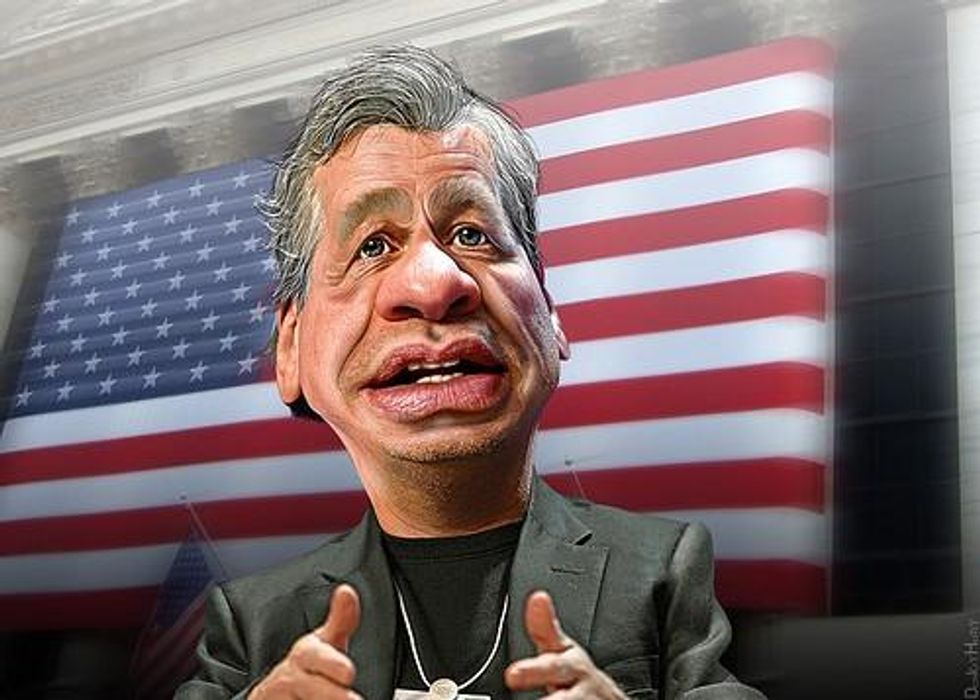
How about zero? Nada. Nothing. Zilch. No jail time. Not even a fine. Plus, you still get to stay on as boss, you get to keep all the loot you gained from the crime spree, and you even get an $8.5 million pay raise!
Of course, you and I would never get such outrageous, absurd, kid-glove pampering by legal authorities. But, then, we're not the capo of JPMorgan Chase, America's biggest bank and a crime syndicate that apparently is too big to jail.
Jamie Dimon is the slick, vainglorious, silver-haired boss of the JPMorgan house of banksters. This CEO has fostered a culture of thievery during his years as a top executive at JPMorgan, leading to a shameful litany of crime. Yet, federal prosecutors have bowed to the politically connected Wall Streeter, refusing to ruffle his feathers with even a single criminal charge.
Meanwhile, one of the scams that Dimon directly supervised produced a $6 billion loss for shareholders in 2012. And his reign of mismanagement and illegalities cost the bank's shareholders another $20 billion in federal fines last year, resulting in a 16 percent drop in profits. You might think the bank's board of directors would at least slap Jamie's wrist for the loss of those billions of dollars, but no -- in January, they rewarded him, raising his pay by some 70 percent to a sweet $20 million!
The New York Times noted that, "To ordinary Americans," such a reward for poor performance "may seem curious." Curious? Uh-uh.
Try incomprehensible, insane and immoral. Wall Street's haughty elites continue to demonstrate that they're common mobsters -- only not so ethical.
That's the funny thing about Wall Street mobsters (or as I like to call them: Banksters) is that they make a killing by defrauding millions of homeowners, customers, investors and taxpayers -- then, when caught, they wonder why we don't love them.
That's "funny" as in "bizarre," not as in "ha-ha."
You would think that after racking up a record level of regulatory fines for the recidivist criminal operation overseen by the boss, a little self-reproachment might have done Dimon some good. But he chose a funny way (again meaning bizarre) to express remorse: He's been running a feel-sorry-for-me campaign, claiming that he's the victim of this sordid story!
Never mind his long rap sheet of malfeasance and incompetence, which cost so many so much, Jamie wails that everything from Wall Street's bailout to the pay of top bank executives have made people envious of bankers' success. Thus, he moans, an anti-Wall Street sentiment has spread through the public, prompting politicians and regulators to pander to this populist anger by persecuting enterprising bankers like him. He called the whole thing "unfair."
Good grief. This guy builds bank profits through rip-offs, piles billions of dollars in fines on the backs of shareholders, pockets $20 million in personal pay for one year's work -- and he wants us to weep for him? Being a Wall Street boss, you see, means never having to say you're sorry, for it's always someone else's fault.
Only 25 years ago, more than a thousand bankers were prosecuted for this sort of malfeasance during the savings & loan scandal. Let's return to the ethical accountability of those days. Or maybe We the People should send our own message to today's banksters by rolling a guillotine down the center of Wall Street.
Assume that you ran a business that was found guilty of bribery, forgery, perjury, defrauding homeowners, fleecing investors, swindling consumers, cheating credit card holders, violating U.S. trade laws and bilking American soldiers. Can you even imagine the kind of punishment you'd get?
How about zero? Nada. Nothing. Zilch. No jail time. Not even a fine. Plus, you still get to stay on as boss, you get to keep all the loot you gained from the crime spree, and you even get an $8.5 million pay raise!
Of course, you and I would never get such outrageous, absurd, kid-glove pampering by legal authorities. But, then, we're not the capo of JPMorgan Chase, America's biggest bank and a crime syndicate that apparently is too big to jail.
Jamie Dimon is the slick, vainglorious, silver-haired boss of the JPMorgan house of banksters. This CEO has fostered a culture of thievery during his years as a top executive at JPMorgan, leading to a shameful litany of crime. Yet, federal prosecutors have bowed to the politically connected Wall Streeter, refusing to ruffle his feathers with even a single criminal charge.
Meanwhile, one of the scams that Dimon directly supervised produced a $6 billion loss for shareholders in 2012. And his reign of mismanagement and illegalities cost the bank's shareholders another $20 billion in federal fines last year, resulting in a 16 percent drop in profits. You might think the bank's board of directors would at least slap Jamie's wrist for the loss of those billions of dollars, but no -- in January, they rewarded him, raising his pay by some 70 percent to a sweet $20 million!
The New York Times noted that, "To ordinary Americans," such a reward for poor performance "may seem curious." Curious? Uh-uh.
Try incomprehensible, insane and immoral. Wall Street's haughty elites continue to demonstrate that they're common mobsters -- only not so ethical.
That's the funny thing about Wall Street mobsters (or as I like to call them: Banksters) is that they make a killing by defrauding millions of homeowners, customers, investors and taxpayers -- then, when caught, they wonder why we don't love them.
That's "funny" as in "bizarre," not as in "ha-ha."
You would think that after racking up a record level of regulatory fines for the recidivist criminal operation overseen by the boss, a little self-reproachment might have done Dimon some good. But he chose a funny way (again meaning bizarre) to express remorse: He's been running a feel-sorry-for-me campaign, claiming that he's the victim of this sordid story!
Never mind his long rap sheet of malfeasance and incompetence, which cost so many so much, Jamie wails that everything from Wall Street's bailout to the pay of top bank executives have made people envious of bankers' success. Thus, he moans, an anti-Wall Street sentiment has spread through the public, prompting politicians and regulators to pander to this populist anger by persecuting enterprising bankers like him. He called the whole thing "unfair."
Good grief. This guy builds bank profits through rip-offs, piles billions of dollars in fines on the backs of shareholders, pockets $20 million in personal pay for one year's work -- and he wants us to weep for him? Being a Wall Street boss, you see, means never having to say you're sorry, for it's always someone else's fault.
Only 25 years ago, more than a thousand bankers were prosecuted for this sort of malfeasance during the savings & loan scandal. Let's return to the ethical accountability of those days. Or maybe We the People should send our own message to today's banksters by rolling a guillotine down the center of Wall Street.
Assume that you ran a business that was found guilty of bribery, forgery, perjury, defrauding homeowners, fleecing investors, swindling consumers, cheating credit card holders, violating U.S. trade laws and bilking American soldiers. Can you even imagine the kind of punishment you'd get?
How about zero? Nada. Nothing. Zilch. No jail time. Not even a fine. Plus, you still get to stay on as boss, you get to keep all the loot you gained from the crime spree, and you even get an $8.5 million pay raise!
Of course, you and I would never get such outrageous, absurd, kid-glove pampering by legal authorities. But, then, we're not the capo of JPMorgan Chase, America's biggest bank and a crime syndicate that apparently is too big to jail.
Jamie Dimon is the slick, vainglorious, silver-haired boss of the JPMorgan house of banksters. This CEO has fostered a culture of thievery during his years as a top executive at JPMorgan, leading to a shameful litany of crime. Yet, federal prosecutors have bowed to the politically connected Wall Streeter, refusing to ruffle his feathers with even a single criminal charge.
Meanwhile, one of the scams that Dimon directly supervised produced a $6 billion loss for shareholders in 2012. And his reign of mismanagement and illegalities cost the bank's shareholders another $20 billion in federal fines last year, resulting in a 16 percent drop in profits. You might think the bank's board of directors would at least slap Jamie's wrist for the loss of those billions of dollars, but no -- in January, they rewarded him, raising his pay by some 70 percent to a sweet $20 million!
The New York Times noted that, "To ordinary Americans," such a reward for poor performance "may seem curious." Curious? Uh-uh.
Try incomprehensible, insane and immoral. Wall Street's haughty elites continue to demonstrate that they're common mobsters -- only not so ethical.
That's the funny thing about Wall Street mobsters (or as I like to call them: Banksters) is that they make a killing by defrauding millions of homeowners, customers, investors and taxpayers -- then, when caught, they wonder why we don't love them.
That's "funny" as in "bizarre," not as in "ha-ha."
You would think that after racking up a record level of regulatory fines for the recidivist criminal operation overseen by the boss, a little self-reproachment might have done Dimon some good. But he chose a funny way (again meaning bizarre) to express remorse: He's been running a feel-sorry-for-me campaign, claiming that he's the victim of this sordid story!
Never mind his long rap sheet of malfeasance and incompetence, which cost so many so much, Jamie wails that everything from Wall Street's bailout to the pay of top bank executives have made people envious of bankers' success. Thus, he moans, an anti-Wall Street sentiment has spread through the public, prompting politicians and regulators to pander to this populist anger by persecuting enterprising bankers like him. He called the whole thing "unfair."
Good grief. This guy builds bank profits through rip-offs, piles billions of dollars in fines on the backs of shareholders, pockets $20 million in personal pay for one year's work -- and he wants us to weep for him? Being a Wall Street boss, you see, means never having to say you're sorry, for it's always someone else's fault.
Only 25 years ago, more than a thousand bankers were prosecuted for this sort of malfeasance during the savings & loan scandal. Let's return to the ethical accountability of those days. Or maybe We the People should send our own message to today's banksters by rolling a guillotine down the center of Wall Street.