

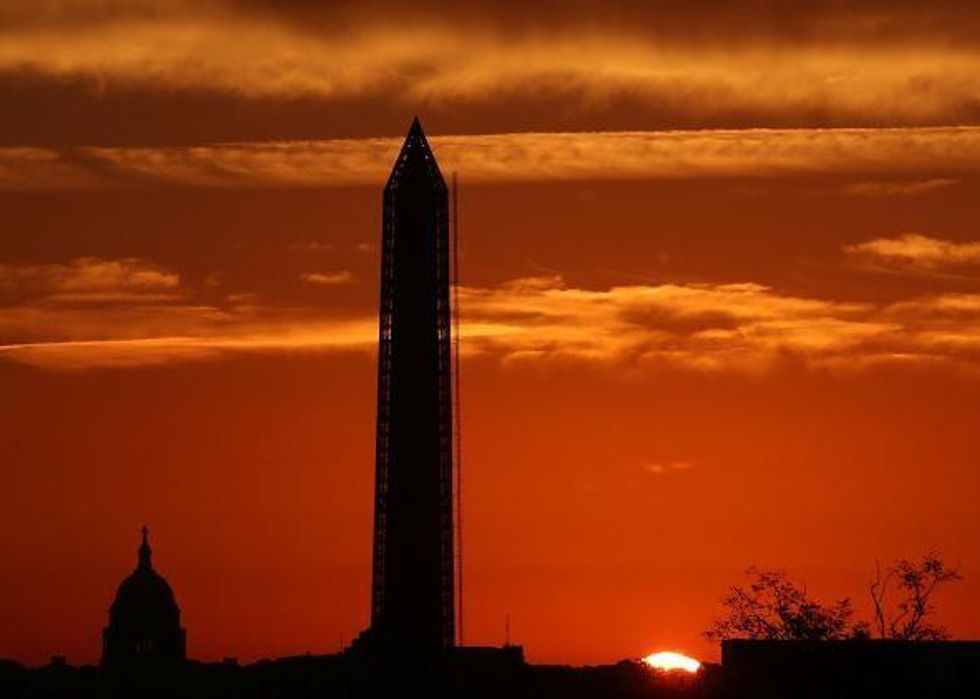
But the pleasant autumn weather disguises a government teetering on the brink. Because, at midnight Monday night, the government of this intensely proud and nationalistic people will shut down, a drastic sign of political dysfunction in this moribund republic.
The capital's rival clans find themselves at an impasse, unable to agree on a measure that will allow the American state to carry out its most basic functions. While the factions have come close to such a shutdown before, opponents of President Barack Obama's embattled regime now appear prepared to allow the government to be shuttered over opposition to a controversial plan intended to bring the nation's health care system in line with international standards.
Six years into his rule, Obama's position can appear confusing, even contradictory. Though the executive retains control of the country's powerful intelligence service, capable of the extrajudicial execution of the regime's opponents half a world away, the president's efforts to govern domestically have been stymied in the legislature by an extremist rump faction of the main opposition party.
The current rebellion has been led by Sen. Ted Cruz, a young fundamentalist lawmaker from the restive Texas region, known in the past as a hotbed of separatist activity. Activity in the legislature ground to a halt last week for a full day as Cruz insisted on performing a time-honored American demonstration of stamina and self-denial, which involved speaking for 21 hours, quoting liberally from science fiction films and children's books. The gesture drew wide media attention, though its political purpose was unclear to outsiders.
With hours remaining until the government of the world's richest nation runs out of money, attention now focuses on longtime opposition leader John Boehner, under pressure from both the regime and the radical elements of his own movement, who may be the only political figure with the standing needed to end the standoff.
While the country's most recent elections were generally considered to be free and fair (despite threats against international observers), the current crisis has raised questions in the international community about the regime's ability to govern this complex nation of 300 million people, not to mention its vast stockpiles of weapons of mass destruction.
Americans themselves are starting to ask difficult questions as well. As this correspondent's cab driver put it, while driving down the poorly maintained roads that lead from the airport, "Do these guys have any idea what they're doing to the country?"
But the pleasant autumn weather disguises a government teetering on the brink. Because, at midnight Monday night, the government of this intensely proud and nationalistic people will shut down, a drastic sign of political dysfunction in this moribund republic.
The capital's rival clans find themselves at an impasse, unable to agree on a measure that will allow the American state to carry out its most basic functions. While the factions have come close to such a shutdown before, opponents of President Barack Obama's embattled regime now appear prepared to allow the government to be shuttered over opposition to a controversial plan intended to bring the nation's health care system in line with international standards.
Six years into his rule, Obama's position can appear confusing, even contradictory. Though the executive retains control of the country's powerful intelligence service, capable of the extrajudicial execution of the regime's opponents half a world away, the president's efforts to govern domestically have been stymied in the legislature by an extremist rump faction of the main opposition party.
The current rebellion has been led by Sen. Ted Cruz, a young fundamentalist lawmaker from the restive Texas region, known in the past as a hotbed of separatist activity. Activity in the legislature ground to a halt last week for a full day as Cruz insisted on performing a time-honored American demonstration of stamina and self-denial, which involved speaking for 21 hours, quoting liberally from science fiction films and children's books. The gesture drew wide media attention, though its political purpose was unclear to outsiders.
With hours remaining until the government of the world's richest nation runs out of money, attention now focuses on longtime opposition leader John Boehner, under pressure from both the regime and the radical elements of his own movement, who may be the only political figure with the standing needed to end the standoff.
While the country's most recent elections were generally considered to be free and fair (despite threats against international observers), the current crisis has raised questions in the international community about the regime's ability to govern this complex nation of 300 million people, not to mention its vast stockpiles of weapons of mass destruction.
Americans themselves are starting to ask difficult questions as well. As this correspondent's cab driver put it, while driving down the poorly maintained roads that lead from the airport, "Do these guys have any idea what they're doing to the country?"
But the pleasant autumn weather disguises a government teetering on the brink. Because, at midnight Monday night, the government of this intensely proud and nationalistic people will shut down, a drastic sign of political dysfunction in this moribund republic.
The capital's rival clans find themselves at an impasse, unable to agree on a measure that will allow the American state to carry out its most basic functions. While the factions have come close to such a shutdown before, opponents of President Barack Obama's embattled regime now appear prepared to allow the government to be shuttered over opposition to a controversial plan intended to bring the nation's health care system in line with international standards.
Six years into his rule, Obama's position can appear confusing, even contradictory. Though the executive retains control of the country's powerful intelligence service, capable of the extrajudicial execution of the regime's opponents half a world away, the president's efforts to govern domestically have been stymied in the legislature by an extremist rump faction of the main opposition party.
The current rebellion has been led by Sen. Ted Cruz, a young fundamentalist lawmaker from the restive Texas region, known in the past as a hotbed of separatist activity. Activity in the legislature ground to a halt last week for a full day as Cruz insisted on performing a time-honored American demonstration of stamina and self-denial, which involved speaking for 21 hours, quoting liberally from science fiction films and children's books. The gesture drew wide media attention, though its political purpose was unclear to outsiders.
With hours remaining until the government of the world's richest nation runs out of money, attention now focuses on longtime opposition leader John Boehner, under pressure from both the regime and the radical elements of his own movement, who may be the only political figure with the standing needed to end the standoff.
While the country's most recent elections were generally considered to be free and fair (despite threats against international observers), the current crisis has raised questions in the international community about the regime's ability to govern this complex nation of 300 million people, not to mention its vast stockpiles of weapons of mass destruction.
Americans themselves are starting to ask difficult questions as well. As this correspondent's cab driver put it, while driving down the poorly maintained roads that lead from the airport, "Do these guys have any idea what they're doing to the country?"