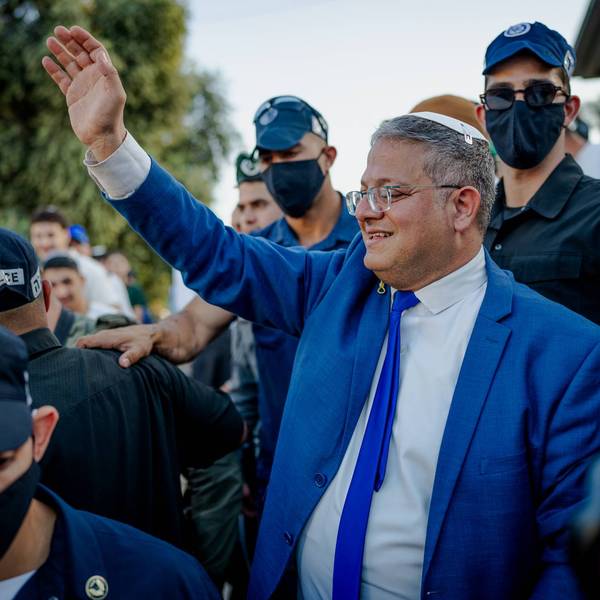

Israel's Prime Minister Benjamin Netanyahu has committed a politician's worst sin: he has become tiresome. Just as the world was breathing in peace after the election of Mr. Hassan Rohani as the new Iranian president with moderate views on nuclear development Mr. Netanyahu -never to be outdone- declared that Iran was getting closer and closer to the bomb and added, "I won't wait until it is too late."

Speaking about Israel's policy Netanyahu said, "What is important is to convey to them, especially after the election, that the policy will not change...And [it] should be backed up with ratcheted sanctions. You should ratchet up the sanctions and make it clear to Iran that they won't get away with it. And if sanctions don't work, they have to know that you'll be prepared to take military action - that's the only thing that will get their attention."
Prodded by Netanyahu, and contrary to the opinion of most countries, the United States and its European allies have imposed brutal sanctions on Iran that have affected the Iranian people more than its leadership, and have intensified a public health crisis in the country. Those sanctions, rather than daunting the Iranians, have intensified them in their resolve to pursue their nuclear program.
The Iranians reason that if Israel is determined to have an estimated 200 to 400 nuclear weapons despite their aggressive actions against their neighbors (Egypt, Syria, Lebanon, Jordan) why couldn't they develop their own nuclear program? It is still to be determined if the Iranian nuclear program is planned for aggressive purposes. In addition, the Iranians say, they haven't attacked any of their neighbors in more than 200 years.
Both in 2009 and in 2012, the United Nations passed a resolution calling on Israel to sign the Nuclear Non Proliferation Treaty and to submit to inspections. Israel refused. Iran, by contrast, is a signatory of that treaty.
President Obama has repeatedly indicated the danger represented by nuclear weapons falling into terrorists' hands, thus suggesting the need to curb Iran's development of a nuclear weapon. However, both Pakistan and North Korea, with considerable more unstable regimes, represent a far more serious danger in that regard, and they have not been subjected to the kind of hostility that the Iranian government has been.
As Mr. Netanyahu insists that Iran is edging up to the red line on its nuclear development, Mr. Rohani has stated that he is in favor of continuing negotiations to resolve his country's nuclear dispute with the West. At the same time, however, Mr. Rohani is standing up to this country's right to pursue peaceful development of a civil nuclear energy program.
Despite his clams about his concern for peace, Mr. Netanyahu's actions betray his lofty words. He has ordered the lethal attack against thousands of civilians -many of them women and children- in Gaza and the uninterrupted building of Israeli settlements on Palestinian land. Both actions have been strongly condemned by the international community.
Iran's new leadership now offers the opportunity to change a paradigm geared for war for one geared for peaceful coexistence. Rather than using belligerent language, this would be a logical next step in brokering peace in that troubled region.
Israel's Prime Minister Benjamin Netanyahu has committed a politician's worst sin: he has become tiresome. Just as the world was breathing in peace after the election of Mr. Hassan Rohani as the new Iranian president with moderate views on nuclear development Mr. Netanyahu -never to be outdone- declared that Iran was getting closer and closer to the bomb and added, "I won't wait until it is too late."
Speaking about Israel's policy Netanyahu said, "What is important is to convey to them, especially after the election, that the policy will not change...And [it] should be backed up with ratcheted sanctions. You should ratchet up the sanctions and make it clear to Iran that they won't get away with it. And if sanctions don't work, they have to know that you'll be prepared to take military action - that's the only thing that will get their attention."
Prodded by Netanyahu, and contrary to the opinion of most countries, the United States and its European allies have imposed brutal sanctions on Iran that have affected the Iranian people more than its leadership, and have intensified a public health crisis in the country. Those sanctions, rather than daunting the Iranians, have intensified them in their resolve to pursue their nuclear program.
The Iranians reason that if Israel is determined to have an estimated 200 to 400 nuclear weapons despite their aggressive actions against their neighbors (Egypt, Syria, Lebanon, Jordan) why couldn't they develop their own nuclear program? It is still to be determined if the Iranian nuclear program is planned for aggressive purposes. In addition, the Iranians say, they haven't attacked any of their neighbors in more than 200 years.
Both in 2009 and in 2012, the United Nations passed a resolution calling on Israel to sign the Nuclear Non Proliferation Treaty and to submit to inspections. Israel refused. Iran, by contrast, is a signatory of that treaty.
President Obama has repeatedly indicated the danger represented by nuclear weapons falling into terrorists' hands, thus suggesting the need to curb Iran's development of a nuclear weapon. However, both Pakistan and North Korea, with considerable more unstable regimes, represent a far more serious danger in that regard, and they have not been subjected to the kind of hostility that the Iranian government has been.
As Mr. Netanyahu insists that Iran is edging up to the red line on its nuclear development, Mr. Rohani has stated that he is in favor of continuing negotiations to resolve his country's nuclear dispute with the West. At the same time, however, Mr. Rohani is standing up to this country's right to pursue peaceful development of a civil nuclear energy program.
Despite his clams about his concern for peace, Mr. Netanyahu's actions betray his lofty words. He has ordered the lethal attack against thousands of civilians -many of them women and children- in Gaza and the uninterrupted building of Israeli settlements on Palestinian land. Both actions have been strongly condemned by the international community.
Iran's new leadership now offers the opportunity to change a paradigm geared for war for one geared for peaceful coexistence. Rather than using belligerent language, this would be a logical next step in brokering peace in that troubled region.
Israel's Prime Minister Benjamin Netanyahu has committed a politician's worst sin: he has become tiresome. Just as the world was breathing in peace after the election of Mr. Hassan Rohani as the new Iranian president with moderate views on nuclear development Mr. Netanyahu -never to be outdone- declared that Iran was getting closer and closer to the bomb and added, "I won't wait until it is too late."
Speaking about Israel's policy Netanyahu said, "What is important is to convey to them, especially after the election, that the policy will not change...And [it] should be backed up with ratcheted sanctions. You should ratchet up the sanctions and make it clear to Iran that they won't get away with it. And if sanctions don't work, they have to know that you'll be prepared to take military action - that's the only thing that will get their attention."
Prodded by Netanyahu, and contrary to the opinion of most countries, the United States and its European allies have imposed brutal sanctions on Iran that have affected the Iranian people more than its leadership, and have intensified a public health crisis in the country. Those sanctions, rather than daunting the Iranians, have intensified them in their resolve to pursue their nuclear program.
The Iranians reason that if Israel is determined to have an estimated 200 to 400 nuclear weapons despite their aggressive actions against their neighbors (Egypt, Syria, Lebanon, Jordan) why couldn't they develop their own nuclear program? It is still to be determined if the Iranian nuclear program is planned for aggressive purposes. In addition, the Iranians say, they haven't attacked any of their neighbors in more than 200 years.
Both in 2009 and in 2012, the United Nations passed a resolution calling on Israel to sign the Nuclear Non Proliferation Treaty and to submit to inspections. Israel refused. Iran, by contrast, is a signatory of that treaty.
President Obama has repeatedly indicated the danger represented by nuclear weapons falling into terrorists' hands, thus suggesting the need to curb Iran's development of a nuclear weapon. However, both Pakistan and North Korea, with considerable more unstable regimes, represent a far more serious danger in that regard, and they have not been subjected to the kind of hostility that the Iranian government has been.
As Mr. Netanyahu insists that Iran is edging up to the red line on its nuclear development, Mr. Rohani has stated that he is in favor of continuing negotiations to resolve his country's nuclear dispute with the West. At the same time, however, Mr. Rohani is standing up to this country's right to pursue peaceful development of a civil nuclear energy program.
Despite his clams about his concern for peace, Mr. Netanyahu's actions betray his lofty words. He has ordered the lethal attack against thousands of civilians -many of them women and children- in Gaza and the uninterrupted building of Israeli settlements on Palestinian land. Both actions have been strongly condemned by the international community.
Iran's new leadership now offers the opportunity to change a paradigm geared for war for one geared for peaceful coexistence. Rather than using belligerent language, this would be a logical next step in brokering peace in that troubled region.