SUBSCRIBE TO OUR FREE NEWSLETTER
Daily news & progressive opinion—funded by the people, not the corporations—delivered straight to your inbox.
5
#000000
#FFFFFF
To donate by check, phone, or other method, see our More Ways to Give page.
There is no debate on climate change in Germany. The temperature for the past 10 months has been three degrees above average and we're again on course for the warmest year on record. There's no dispute among Germans as to whether this change is man-made, or that we contribute to it and need to stop accelerating the process.
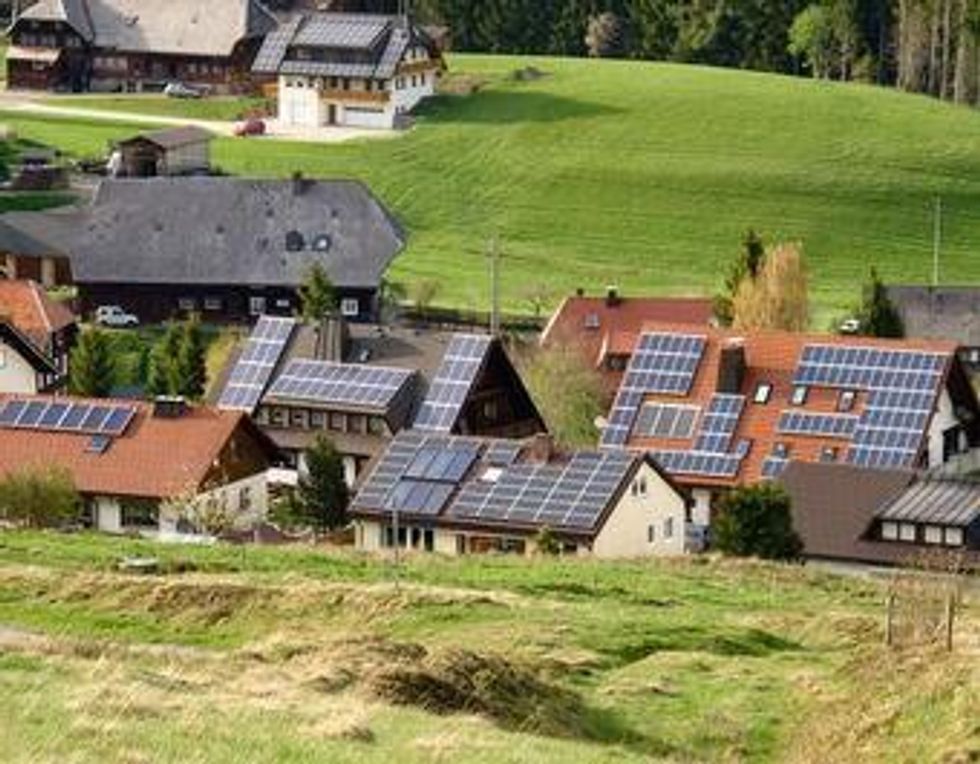
Since 2000, Germany has converted 25 percent of its power grid to renewable energy sources such as solar, wind and biomass. The architects of the clean energy movement Energiewende, which translates to "energy transformation," estimate that from 80 percent to 100 percent of Germany's electricity will come from renewable sources by 2050.
Germans are baffled that the United States has not taken the same path. Not only is the U.S. the wealthiest nation in the world, but it's also credited with jump-starting Germany's green movement 40 years ago.
"This is a very American idea," Arne Jungjohann, a director at the Heinrich Boll Stiftung Foundation (HBSF), said at a press conference Tuesday morning in Washington, D.C. "We got this from Jimmy Carter."
Germany adopted and continued Carter's push for energy conservation while the U.S. abandoned further efforts. The death of an American Energiewende solidified when President Ronald Reagan ripped down the solar panels atop the White House that Carter had installed.
Since then, Germany has created strong incentives for the public to invest in renewable energy. It pays people to generate electricity from solar panels on their houses. The effort to turn more consumers into producers is accelerated through feed-in tariffs, which are 20-year contracts that ensure a fixed price the government will pay. Germany lowers the price every year, so there's good reason to sign one as soon as possible, before compensation falls further.
The money the government uses to pay producers comes from a monthly surcharge on utility bills that everyone pays, similar to a rebate. Ratepayers pay an additional cost for the renewable energy fund and then get that money back from the government, at a profit, if they are producing their own energy.
In the end, ratepayers control the program, not the government. This adds consistency, Davidson says. If the government itself paid, it would be easy for a new finance minister to cut the program upon taking office. Funding is not at the whim of politicians as it is in the U.S.
"Everyone has skin in the game," says writer Osha Gray Davidson. "The movement is decentralized and democratized, and that's why it works. Anybody in Germany can be a utility."
The press conference the foundation organized with InsideClimate News comes two weeks after one of the biggest storms in U.S. history and sits in the shadow of the Keystone XL Pipeline, which would unlock the world's second-largest oil reserve in Canada. The event also comes one day after a report that says that the U.S. is on track to become the leading oil and gas producer by 2020, which suggests that the U.S. has the capability to match Germany's green movement, but is instead using its resources to deepen its dependency on fossil fuels.
Many community organizers have given up on government and are moving to spark a green movement in the U.S. through energy cooperatives.
Anya Schoolman is a D.C. organizer who has started many co-ops in the district although she began with no experience. She says that converting to renewable energy one person at a time would not work in the U.S. because of legal complexities and tax laws that discourage people from investing in clean energy.
Grid managers in the U.S., she explains, often require households to turn off wind turbines at night, a practice called "curtailment."
"It's a favor to the utility companies," she says, which don't hold as much power in Germany as they do in the United States.
Individuals and cooperatives own 65 percent of Germany's renewable energy capacity. In the U.S. they own 2 percent. The rest is privately controlled.
The largest difference, panelists said, between Germany and the U.S. is how reactive the government is to its citizens. Democracy in Germany has meant keeping and strengthening regulatory agencies while forming policies that put public ownership ahead of private ownership.
"In the end," says Davidson, who spent a month in Germany studying the Energiewende, "it isn't about making money. It's about quality of life."
This article was made possible by the Center for Study of Responsive Law.
There is no debate on climate change in Germany. The temperature for the past 10 months has been three degrees above average and we're again on course for the warmest year on record. There's no dispute among Germans as to whether this change is man-made, or that we contribute to it and need to stop accelerating the process.
Since 2000, Germany has converted 25 percent of its power grid to renewable energy sources such as solar, wind and biomass. The architects of the clean energy movement Energiewende, which translates to "energy transformation," estimate that from 80 percent to 100 percent of Germany's electricity will come from renewable sources by 2050.
Germans are baffled that the United States has not taken the same path. Not only is the U.S. the wealthiest nation in the world, but it's also credited with jump-starting Germany's green movement 40 years ago.
"This is a very American idea," Arne Jungjohann, a director at the Heinrich Boll Stiftung Foundation (HBSF), said at a press conference Tuesday morning in Washington, D.C. "We got this from Jimmy Carter."
Germany adopted and continued Carter's push for energy conservation while the U.S. abandoned further efforts. The death of an American Energiewende solidified when President Ronald Reagan ripped down the solar panels atop the White House that Carter had installed.
Since then, Germany has created strong incentives for the public to invest in renewable energy. It pays people to generate electricity from solar panels on their houses. The effort to turn more consumers into producers is accelerated through feed-in tariffs, which are 20-year contracts that ensure a fixed price the government will pay. Germany lowers the price every year, so there's good reason to sign one as soon as possible, before compensation falls further.
The money the government uses to pay producers comes from a monthly surcharge on utility bills that everyone pays, similar to a rebate. Ratepayers pay an additional cost for the renewable energy fund and then get that money back from the government, at a profit, if they are producing their own energy.
In the end, ratepayers control the program, not the government. This adds consistency, Davidson says. If the government itself paid, it would be easy for a new finance minister to cut the program upon taking office. Funding is not at the whim of politicians as it is in the U.S.
"Everyone has skin in the game," says writer Osha Gray Davidson. "The movement is decentralized and democratized, and that's why it works. Anybody in Germany can be a utility."
The press conference the foundation organized with InsideClimate News comes two weeks after one of the biggest storms in U.S. history and sits in the shadow of the Keystone XL Pipeline, which would unlock the world's second-largest oil reserve in Canada. The event also comes one day after a report that says that the U.S. is on track to become the leading oil and gas producer by 2020, which suggests that the U.S. has the capability to match Germany's green movement, but is instead using its resources to deepen its dependency on fossil fuels.
Many community organizers have given up on government and are moving to spark a green movement in the U.S. through energy cooperatives.
Anya Schoolman is a D.C. organizer who has started many co-ops in the district although she began with no experience. She says that converting to renewable energy one person at a time would not work in the U.S. because of legal complexities and tax laws that discourage people from investing in clean energy.
Grid managers in the U.S., she explains, often require households to turn off wind turbines at night, a practice called "curtailment."
"It's a favor to the utility companies," she says, which don't hold as much power in Germany as they do in the United States.
Individuals and cooperatives own 65 percent of Germany's renewable energy capacity. In the U.S. they own 2 percent. The rest is privately controlled.
The largest difference, panelists said, between Germany and the U.S. is how reactive the government is to its citizens. Democracy in Germany has meant keeping and strengthening regulatory agencies while forming policies that put public ownership ahead of private ownership.
"In the end," says Davidson, who spent a month in Germany studying the Energiewende, "it isn't about making money. It's about quality of life."
This article was made possible by the Center for Study of Responsive Law.
There is no debate on climate change in Germany. The temperature for the past 10 months has been three degrees above average and we're again on course for the warmest year on record. There's no dispute among Germans as to whether this change is man-made, or that we contribute to it and need to stop accelerating the process.
Since 2000, Germany has converted 25 percent of its power grid to renewable energy sources such as solar, wind and biomass. The architects of the clean energy movement Energiewende, which translates to "energy transformation," estimate that from 80 percent to 100 percent of Germany's electricity will come from renewable sources by 2050.
Germans are baffled that the United States has not taken the same path. Not only is the U.S. the wealthiest nation in the world, but it's also credited with jump-starting Germany's green movement 40 years ago.
"This is a very American idea," Arne Jungjohann, a director at the Heinrich Boll Stiftung Foundation (HBSF), said at a press conference Tuesday morning in Washington, D.C. "We got this from Jimmy Carter."
Germany adopted and continued Carter's push for energy conservation while the U.S. abandoned further efforts. The death of an American Energiewende solidified when President Ronald Reagan ripped down the solar panels atop the White House that Carter had installed.
Since then, Germany has created strong incentives for the public to invest in renewable energy. It pays people to generate electricity from solar panels on their houses. The effort to turn more consumers into producers is accelerated through feed-in tariffs, which are 20-year contracts that ensure a fixed price the government will pay. Germany lowers the price every year, so there's good reason to sign one as soon as possible, before compensation falls further.
The money the government uses to pay producers comes from a monthly surcharge on utility bills that everyone pays, similar to a rebate. Ratepayers pay an additional cost for the renewable energy fund and then get that money back from the government, at a profit, if they are producing their own energy.
In the end, ratepayers control the program, not the government. This adds consistency, Davidson says. If the government itself paid, it would be easy for a new finance minister to cut the program upon taking office. Funding is not at the whim of politicians as it is in the U.S.
"Everyone has skin in the game," says writer Osha Gray Davidson. "The movement is decentralized and democratized, and that's why it works. Anybody in Germany can be a utility."
The press conference the foundation organized with InsideClimate News comes two weeks after one of the biggest storms in U.S. history and sits in the shadow of the Keystone XL Pipeline, which would unlock the world's second-largest oil reserve in Canada. The event also comes one day after a report that says that the U.S. is on track to become the leading oil and gas producer by 2020, which suggests that the U.S. has the capability to match Germany's green movement, but is instead using its resources to deepen its dependency on fossil fuels.
Many community organizers have given up on government and are moving to spark a green movement in the U.S. through energy cooperatives.
Anya Schoolman is a D.C. organizer who has started many co-ops in the district although she began with no experience. She says that converting to renewable energy one person at a time would not work in the U.S. because of legal complexities and tax laws that discourage people from investing in clean energy.
Grid managers in the U.S., she explains, often require households to turn off wind turbines at night, a practice called "curtailment."
"It's a favor to the utility companies," she says, which don't hold as much power in Germany as they do in the United States.
Individuals and cooperatives own 65 percent of Germany's renewable energy capacity. In the U.S. they own 2 percent. The rest is privately controlled.
The largest difference, panelists said, between Germany and the U.S. is how reactive the government is to its citizens. Democracy in Germany has meant keeping and strengthening regulatory agencies while forming policies that put public ownership ahead of private ownership.
"In the end," says Davidson, who spent a month in Germany studying the Energiewende, "it isn't about making money. It's about quality of life."
This article was made possible by the Center for Study of Responsive Law.