SUBSCRIBE TO OUR FREE NEWSLETTER
Daily news & progressive opinion—funded by the people, not the corporations—delivered straight to your inbox.
5
#000000
#FFFFFF
To donate by check, phone, or other method, see our More Ways to Give page.
There was a lot less dancing in the streets this Election Day than in 2008, when the nation celebrated the election of the first African-American president. But progressives can nonetheless feel great relief at the re-election of Barack Obama.
Probably because of my lapsed subscription to the Weekly Standard, I received a robo-call last week from Dick Morris, urging me to donate money to his favorite cause: none other than the infamous group Citizens United. Conservatives, Morris's recorded voice intimated, not only had a chance to oust Obama; they had an opportunity to "decimate the radical left." At that point, I was concerned that we had become fearful too late.
At the same time, I do not have illusions about what the White House will deliver in the next four years. Those who refused to vote for Obama may have been wrong if they argued that "there is no difference" between the two main parties, but they are surely correct that the Democrats have pushed dangerously to the right and that the left is hitched to them at its peril.
I supported voting for Obama on the grounds that social movements are stronger when they can battle against tepid centrists in office than when forced into rear-guard battles against elected conservatives with a rabid desire to attack unions, curtail reproductive rights, and shred the social safety net. Taking on Democrats, we can be bolder, more imaginative, less reactive. Moreover, people are less tempted to think that changing politicians will be an adequate remedy.
Doug Henwood (who is perennially crotchety but often right, too) put it this way:
I would prefer that Obama win the election--not so much because he'd be so much better than Romney on policy but because he will disappoint so many of his loyalists that it would be good for radical politics. Instead of people bellyaching about McCain's awfulness, as they would have had he won in 2008, we got Occupy.
The presidential election is the realm in which social movements have the least power. Yet there's a reason why, every four years, we are drawn into not particularly productive debates about it. The established parties spend billions to promote the contest. The media treats debate between the two parties as the beginning and end of political exchange. And, most important, for large numbers of people throughout the country, choosing a favorite and casting a vote during a presidential election represents a peak of democratic involvement.
The challenge for progressives is to change that--to foster and highlight the long work of extending democracy into daily practice. This is where realists who voted to avert Republican rule and radicals who abstained should agree.
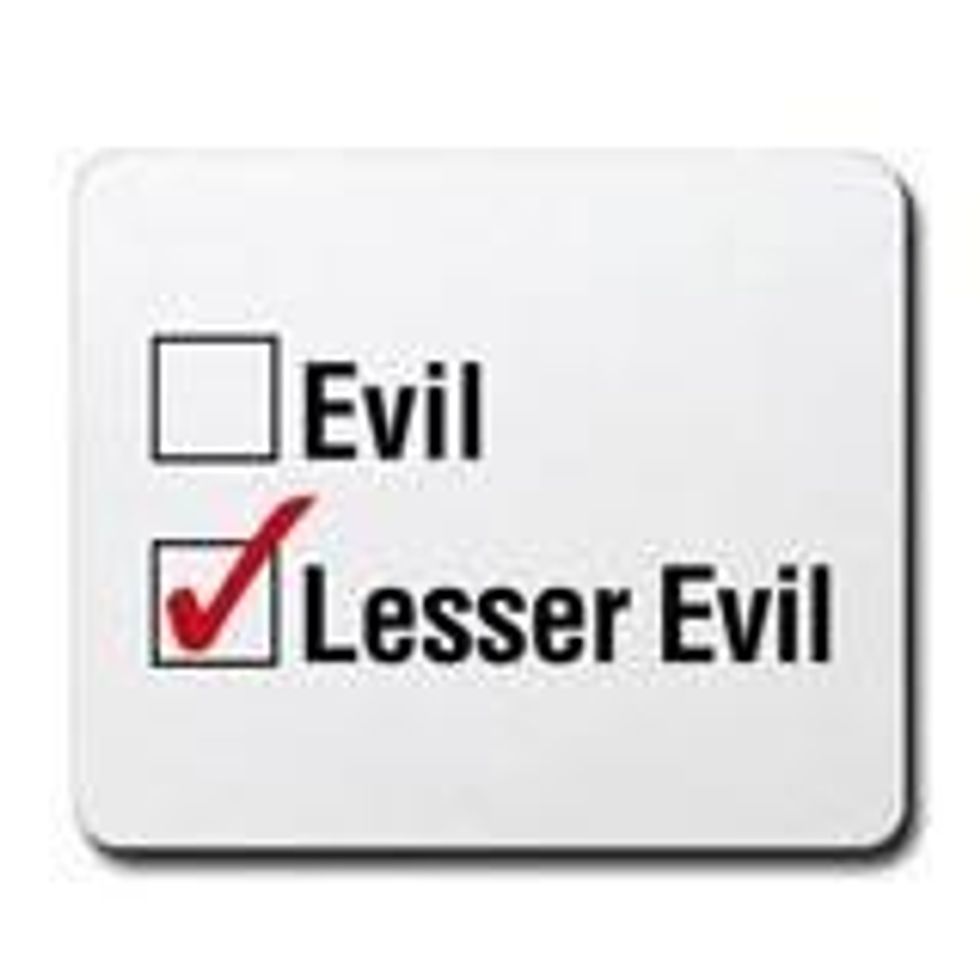
For my part, I'm glad at the election's outcome, and also glad to move on. On Election Day, opting for the lesser evil was the right call. The rest of our days, we have common cause with those who refuse to settle for evil.
There was a lot less dancing in the streets this Election Day than in 2008, when the nation celebrated the election of the first African-American president. But progressives can nonetheless feel great relief at the re-election of Barack Obama.
Probably because of my lapsed subscription to the Weekly Standard, I received a robo-call last week from Dick Morris, urging me to donate money to his favorite cause: none other than the infamous group Citizens United. Conservatives, Morris's recorded voice intimated, not only had a chance to oust Obama; they had an opportunity to "decimate the radical left." At that point, I was concerned that we had become fearful too late.
At the same time, I do not have illusions about what the White House will deliver in the next four years. Those who refused to vote for Obama may have been wrong if they argued that "there is no difference" between the two main parties, but they are surely correct that the Democrats have pushed dangerously to the right and that the left is hitched to them at its peril.
I supported voting for Obama on the grounds that social movements are stronger when they can battle against tepid centrists in office than when forced into rear-guard battles against elected conservatives with a rabid desire to attack unions, curtail reproductive rights, and shred the social safety net. Taking on Democrats, we can be bolder, more imaginative, less reactive. Moreover, people are less tempted to think that changing politicians will be an adequate remedy.
Doug Henwood (who is perennially crotchety but often right, too) put it this way:
I would prefer that Obama win the election--not so much because he'd be so much better than Romney on policy but because he will disappoint so many of his loyalists that it would be good for radical politics. Instead of people bellyaching about McCain's awfulness, as they would have had he won in 2008, we got Occupy.
The presidential election is the realm in which social movements have the least power. Yet there's a reason why, every four years, we are drawn into not particularly productive debates about it. The established parties spend billions to promote the contest. The media treats debate between the two parties as the beginning and end of political exchange. And, most important, for large numbers of people throughout the country, choosing a favorite and casting a vote during a presidential election represents a peak of democratic involvement.
The challenge for progressives is to change that--to foster and highlight the long work of extending democracy into daily practice. This is where realists who voted to avert Republican rule and radicals who abstained should agree.
For my part, I'm glad at the election's outcome, and also glad to move on. On Election Day, opting for the lesser evil was the right call. The rest of our days, we have common cause with those who refuse to settle for evil.
There was a lot less dancing in the streets this Election Day than in 2008, when the nation celebrated the election of the first African-American president. But progressives can nonetheless feel great relief at the re-election of Barack Obama.
Probably because of my lapsed subscription to the Weekly Standard, I received a robo-call last week from Dick Morris, urging me to donate money to his favorite cause: none other than the infamous group Citizens United. Conservatives, Morris's recorded voice intimated, not only had a chance to oust Obama; they had an opportunity to "decimate the radical left." At that point, I was concerned that we had become fearful too late.
At the same time, I do not have illusions about what the White House will deliver in the next four years. Those who refused to vote for Obama may have been wrong if they argued that "there is no difference" between the two main parties, but they are surely correct that the Democrats have pushed dangerously to the right and that the left is hitched to them at its peril.
I supported voting for Obama on the grounds that social movements are stronger when they can battle against tepid centrists in office than when forced into rear-guard battles against elected conservatives with a rabid desire to attack unions, curtail reproductive rights, and shred the social safety net. Taking on Democrats, we can be bolder, more imaginative, less reactive. Moreover, people are less tempted to think that changing politicians will be an adequate remedy.
Doug Henwood (who is perennially crotchety but often right, too) put it this way:
I would prefer that Obama win the election--not so much because he'd be so much better than Romney on policy but because he will disappoint so many of his loyalists that it would be good for radical politics. Instead of people bellyaching about McCain's awfulness, as they would have had he won in 2008, we got Occupy.
The presidential election is the realm in which social movements have the least power. Yet there's a reason why, every four years, we are drawn into not particularly productive debates about it. The established parties spend billions to promote the contest. The media treats debate between the two parties as the beginning and end of political exchange. And, most important, for large numbers of people throughout the country, choosing a favorite and casting a vote during a presidential election represents a peak of democratic involvement.
The challenge for progressives is to change that--to foster and highlight the long work of extending democracy into daily practice. This is where realists who voted to avert Republican rule and radicals who abstained should agree.
For my part, I'm glad at the election's outcome, and also glad to move on. On Election Day, opting for the lesser evil was the right call. The rest of our days, we have common cause with those who refuse to settle for evil.