Ten years ago today, the two of us were an hour into the first big coalition meeting to oppose the impending U.S. war against Iraq, surrounded by dozens of leaders of a wide array of movements: peace, civil rights, women's rights, environmentalists, labor, social justice, and many others. Then, we noticed some people walking to the back of the room and returning with tears streaking down their faces.
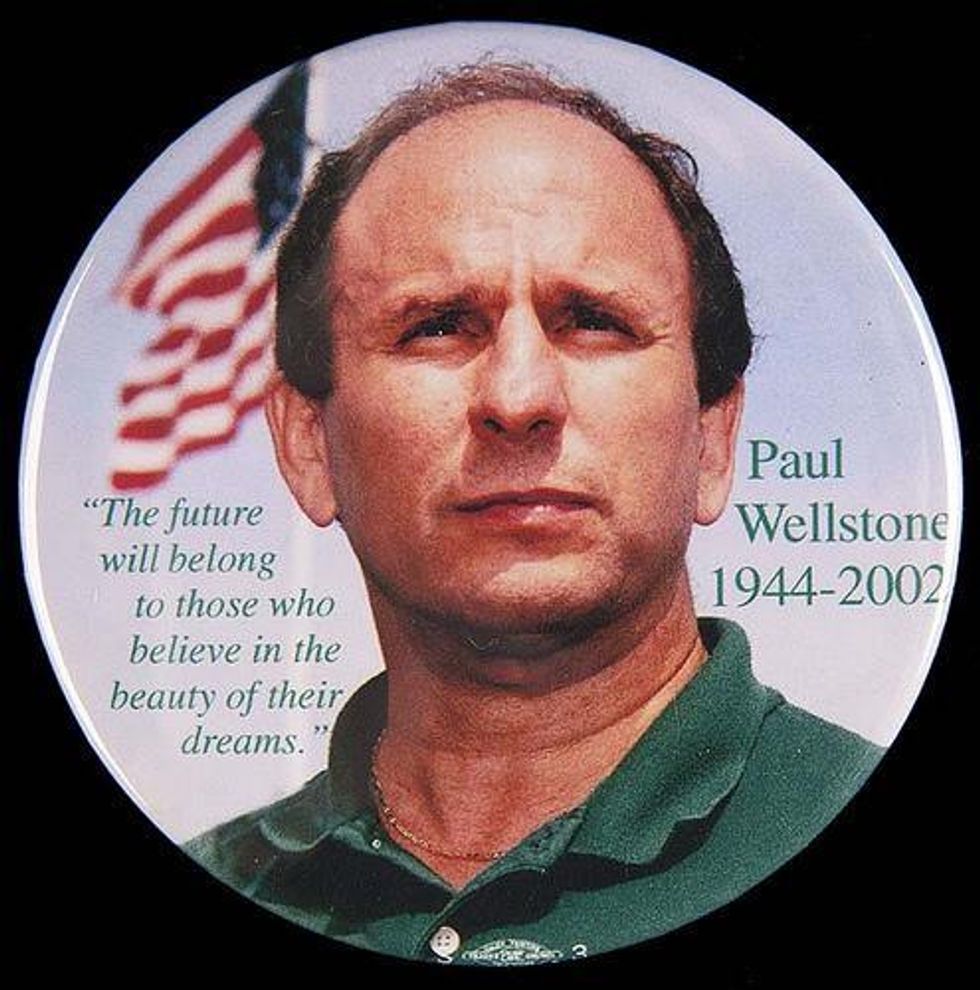
Someone interrupted the meeting with the tragic news. One of the great progressive leaders of our time, Senator Paul Wellstone, had just died in a plane crash campaigning in his home state of Minnesota. The room, just seconds before buzzing with ideas, fell silent. In shock, we took a few minutes to get into small groups and remember Paul, the people's Senator, the anti-war Senator.
We knew that Paul would have wanted us to get back to work quickly in this historic task, so after 15 minutes, we went back to creating what would become the broad, overarching coalition to fight the wars in Iraq and Afghanistan: United for Peace and Justice. UFPJ quickly grew to over 1,000 organizations, and we always thought of Paul as we walked into its meetings.
As we think back to that day, we are flooded with Paul memories. Paul proved that progressives without much money could win statewide elections. He visited every corner of Minnesota in a Volkswagen bus during his successful Senate campaigns. He was a stalwart internationalist and he had a poster of our IPS colleague Orlando Letelier, who was assassinated by the Chilean dictatorship, on the wall of his office.
Paul cared deeply about poverty. When he was contemplating a presidential bid in the late 1990s, he retraced the route of Bobby Kennedy's southern tour to highlight poverty and racism in this country. When IPS co-hosted Paul's report back from that tour at Howard University, he spoke with great passion about the human face of poverty and inequality in this nation. In the end, powerful back pain from his days as a wrestler precluded him from running for president in 2000.
Today, Paul would be protesting against the inhumanity and illegality of drone strikes. He would be demanding the end of the U.S. war in Afghanistan now, and he'd be explaining to people the wisdom of making major cuts to the U.S. military budget. He would be leading the charge for inequality-busting measures like the Robin Hood tax. He would be joining the protests against unjust budget-cutting deals by his colleagues. And, he would be standing with people fighting expulsion from their homes by predator banks.
Our great challenge today is to shift this nation's course from our current casino and militarized Wall Street economy to a democratic, peaceful, and green Main Street economy. Paul would be leading the charge.
Ten years ago today, the two of us were an hour into the first big coalition meeting to oppose the impending U.S. war against Iraq, surrounded by dozens of leaders of a wide array of movements: peace, civil rights, women's rights, environmentalists, labor, social justice, and many others. Then, we noticed some people walking to the back of the room and returning with tears streaking down their faces.
Someone interrupted the meeting with the tragic news. One of the great progressive leaders of our time, Senator Paul Wellstone, had just died in a plane crash campaigning in his home state of Minnesota. The room, just seconds before buzzing with ideas, fell silent. In shock, we took a few minutes to get into small groups and remember Paul, the people's Senator, the anti-war Senator.
We knew that Paul would have wanted us to get back to work quickly in this historic task, so after 15 minutes, we went back to creating what would become the broad, overarching coalition to fight the wars in Iraq and Afghanistan: United for Peace and Justice. UFPJ quickly grew to over 1,000 organizations, and we always thought of Paul as we walked into its meetings.
As we think back to that day, we are flooded with Paul memories. Paul proved that progressives without much money could win statewide elections. He visited every corner of Minnesota in a Volkswagen bus during his successful Senate campaigns. He was a stalwart internationalist and he had a poster of our IPS colleague Orlando Letelier, who was assassinated by the Chilean dictatorship, on the wall of his office.
Paul cared deeply about poverty. When he was contemplating a presidential bid in the late 1990s, he retraced the route of Bobby Kennedy's southern tour to highlight poverty and racism in this country. When IPS co-hosted Paul's report back from that tour at Howard University, he spoke with great passion about the human face of poverty and inequality in this nation. In the end, powerful back pain from his days as a wrestler precluded him from running for president in 2000.
Today, Paul would be protesting against the inhumanity and illegality of drone strikes. He would be demanding the end of the U.S. war in Afghanistan now, and he'd be explaining to people the wisdom of making major cuts to the U.S. military budget. He would be leading the charge for inequality-busting measures like the Robin Hood tax. He would be joining the protests against unjust budget-cutting deals by his colleagues. And, he would be standing with people fighting expulsion from their homes by predator banks.
Our great challenge today is to shift this nation's course from our current casino and militarized Wall Street economy to a democratic, peaceful, and green Main Street economy. Paul would be leading the charge.
Ten years ago today, the two of us were an hour into the first big coalition meeting to oppose the impending U.S. war against Iraq, surrounded by dozens of leaders of a wide array of movements: peace, civil rights, women's rights, environmentalists, labor, social justice, and many others. Then, we noticed some people walking to the back of the room and returning with tears streaking down their faces.
Someone interrupted the meeting with the tragic news. One of the great progressive leaders of our time, Senator Paul Wellstone, had just died in a plane crash campaigning in his home state of Minnesota. The room, just seconds before buzzing with ideas, fell silent. In shock, we took a few minutes to get into small groups and remember Paul, the people's Senator, the anti-war Senator.
We knew that Paul would have wanted us to get back to work quickly in this historic task, so after 15 minutes, we went back to creating what would become the broad, overarching coalition to fight the wars in Iraq and Afghanistan: United for Peace and Justice. UFPJ quickly grew to over 1,000 organizations, and we always thought of Paul as we walked into its meetings.
As we think back to that day, we are flooded with Paul memories. Paul proved that progressives without much money could win statewide elections. He visited every corner of Minnesota in a Volkswagen bus during his successful Senate campaigns. He was a stalwart internationalist and he had a poster of our IPS colleague Orlando Letelier, who was assassinated by the Chilean dictatorship, on the wall of his office.
Paul cared deeply about poverty. When he was contemplating a presidential bid in the late 1990s, he retraced the route of Bobby Kennedy's southern tour to highlight poverty and racism in this country. When IPS co-hosted Paul's report back from that tour at Howard University, he spoke with great passion about the human face of poverty and inequality in this nation. In the end, powerful back pain from his days as a wrestler precluded him from running for president in 2000.
Today, Paul would be protesting against the inhumanity and illegality of drone strikes. He would be demanding the end of the U.S. war in Afghanistan now, and he'd be explaining to people the wisdom of making major cuts to the U.S. military budget. He would be leading the charge for inequality-busting measures like the Robin Hood tax. He would be joining the protests against unjust budget-cutting deals by his colleagues. And, he would be standing with people fighting expulsion from their homes by predator banks.
Our great challenge today is to shift this nation's course from our current casino and militarized Wall Street economy to a democratic, peaceful, and green Main Street economy. Paul would be leading the charge.