SUBSCRIBE TO OUR FREE NEWSLETTER
Daily news & progressive opinion—funded by the people, not the corporations—delivered straight to your inbox.
5
#000000
#FFFFFF
To donate by check, phone, or other method, see our More Ways to Give page.
After the fall of the Berlin wall, I worked with environmental groups in Eastern Europe. They were looking at good examples of democracy and free speech from around the world to help build their own democratic societies. Canadian freedom of speech, respect for environmental laws, and ability of the public to participate in decision-making was a shining model. Over the last decade that I have worked with partners in Canada how things have changed. I have seen firsthand how the expanding tar sands bubble in Alberta has not only skewed the economy of Canada, but also pushed the government, environmental laws and even free speech and democracy to bow to the oil industry. Today NRDC will black out our webpage - along with hundreds of other groups across North America - to speak out and protest what in Canada has become an all out attack on democracy and nature in order to safeguard the interests of the tar sands oil industry. See, Black Out, Speak Out in Canada for more. Tar sands oil is expensive and puts us all on a path of worsening climate change at a time when people across America are suffering from unusual heat, floods, tornados and other extreme weather. When tar sands starts to take away basic individual rights, it is past time to call a halt and focus on cleaner forms of energy.
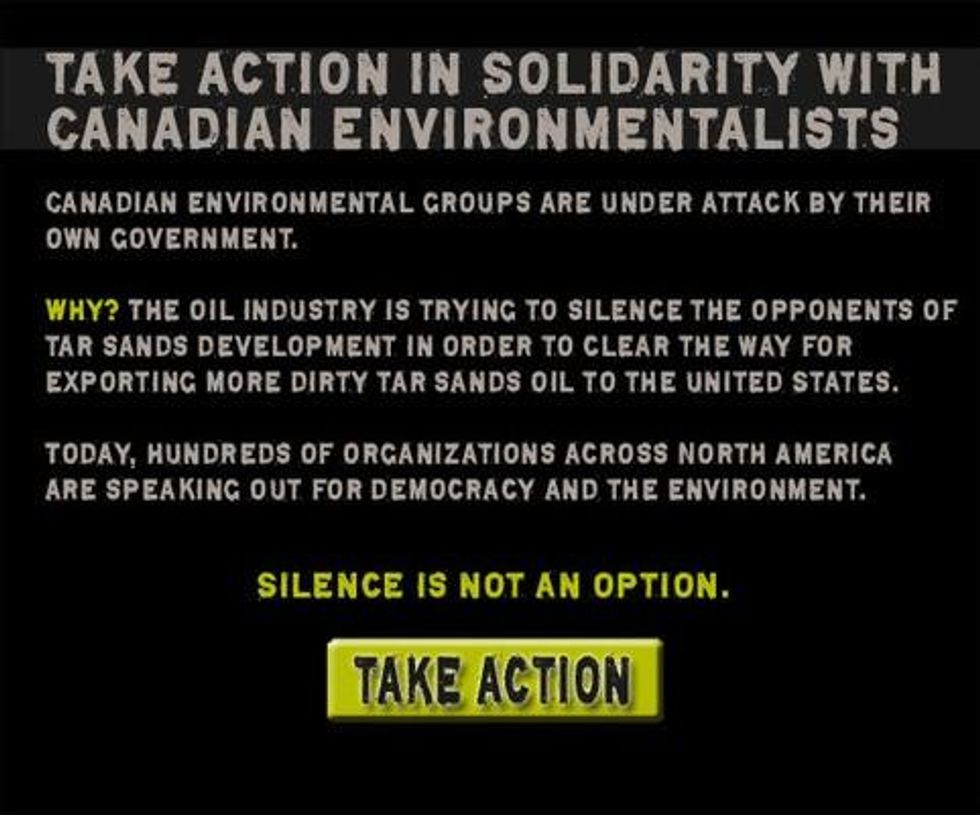
Let's take a closer look at what has been happening in Canada. The start of the recent round of attacks came around the same time as the U.S. decision to delay the Keystone XL tar sands pipeline and later the decision to reject the project coupled with rising Canadian public opposition to proposed tar sands pipelines to the west and east in Canada. Public concerns with and opposition to the tar sands oil industry was starting to affect the timing of projects, investor trust and the oil industry's bottom line. The oil industry faced several choices - it could respond to the concerns and clean up its act or it could focus on public relations and counter attacks. Needless to say, given where things stand today, it chose counterattacks and the Canadian federal government amazingly was willing to act as the mouthpiece for many of those attacks.
However, the most recent actions of the Canadian government - rolling back environmental laws and the ability of citizen groups to advocate for their environment and health - is clearly part of a longer-term shift to an economy that puts oil extraction above all else. The Canadian budget bill cuts the National Roundtable on the Environment and Energy - a highly respected forum of industry, scientists and environmentalists that last fall came out with a new report about the high cost of climate change to the Canadian economy. It weakens the Canadian Fisheries Act protections for freshwater fish and limits the effectiveness of the environmental review process, including limiting the authority of the National Energy Board to hold a fair and thorough review of, for example, tar sands pipelines. Here is a link to the top ten environmental concerns with the budget from Canadian group Ecojustice.
For some time now, the Canadian federal government has been branding anyone who does not agree with them as radicals. It has even questioned the integrity of the many First Nations who have raised their concerns about tar sands extraction and what oil spills from tar sands pipelines and tankers could mean to their communities. This rhetoric has been blunt and from the top, including an open letter from Natural Resources Minister Joe Oliver, attacking groups he alleged were threatening to "hijack our regulatory system to achieve their radical ideological agenda" and unfounded allegations by Environment Minister Peter Kent accusing charities of laundering foreign money. These go beyond a valuable public debate to an effort to stifle public debate, especially when coupled with the stepped up investigations of charitable groups that have questioned the government's policy to promote tar sands and the new $8 million in the budget bill to further limit the ability of charities to be advocates.
It's bad enough to see the Harper regime pushing dirty tar sands as the energy solution; now it is out to stifle an honest debate about how bad tar sands will be for our air, water, land, wildlife, our health and our climate. That's why we join our Canadian friends in protesting this attempt to silence debate about our energy future and the need to fight climate change.
After the fall of the Berlin wall, I worked with environmental groups in Eastern Europe. They were looking at good examples of democracy and free speech from around the world to help build their own democratic societies. Canadian freedom of speech, respect for environmental laws, and ability of the public to participate in decision-making was a shining model. Over the last decade that I have worked with partners in Canada how things have changed. I have seen firsthand how the expanding tar sands bubble in Alberta has not only skewed the economy of Canada, but also pushed the government, environmental laws and even free speech and democracy to bow to the oil industry. Today NRDC will black out our webpage - along with hundreds of other groups across North America - to speak out and protest what in Canada has become an all out attack on democracy and nature in order to safeguard the interests of the tar sands oil industry. See, Black Out, Speak Out in Canada for more. Tar sands oil is expensive and puts us all on a path of worsening climate change at a time when people across America are suffering from unusual heat, floods, tornados and other extreme weather. When tar sands starts to take away basic individual rights, it is past time to call a halt and focus on cleaner forms of energy.
Let's take a closer look at what has been happening in Canada. The start of the recent round of attacks came around the same time as the U.S. decision to delay the Keystone XL tar sands pipeline and later the decision to reject the project coupled with rising Canadian public opposition to proposed tar sands pipelines to the west and east in Canada. Public concerns with and opposition to the tar sands oil industry was starting to affect the timing of projects, investor trust and the oil industry's bottom line. The oil industry faced several choices - it could respond to the concerns and clean up its act or it could focus on public relations and counter attacks. Needless to say, given where things stand today, it chose counterattacks and the Canadian federal government amazingly was willing to act as the mouthpiece for many of those attacks.
However, the most recent actions of the Canadian government - rolling back environmental laws and the ability of citizen groups to advocate for their environment and health - is clearly part of a longer-term shift to an economy that puts oil extraction above all else. The Canadian budget bill cuts the National Roundtable on the Environment and Energy - a highly respected forum of industry, scientists and environmentalists that last fall came out with a new report about the high cost of climate change to the Canadian economy. It weakens the Canadian Fisheries Act protections for freshwater fish and limits the effectiveness of the environmental review process, including limiting the authority of the National Energy Board to hold a fair and thorough review of, for example, tar sands pipelines. Here is a link to the top ten environmental concerns with the budget from Canadian group Ecojustice.
For some time now, the Canadian federal government has been branding anyone who does not agree with them as radicals. It has even questioned the integrity of the many First Nations who have raised their concerns about tar sands extraction and what oil spills from tar sands pipelines and tankers could mean to their communities. This rhetoric has been blunt and from the top, including an open letter from Natural Resources Minister Joe Oliver, attacking groups he alleged were threatening to "hijack our regulatory system to achieve their radical ideological agenda" and unfounded allegations by Environment Minister Peter Kent accusing charities of laundering foreign money. These go beyond a valuable public debate to an effort to stifle public debate, especially when coupled with the stepped up investigations of charitable groups that have questioned the government's policy to promote tar sands and the new $8 million in the budget bill to further limit the ability of charities to be advocates.
It's bad enough to see the Harper regime pushing dirty tar sands as the energy solution; now it is out to stifle an honest debate about how bad tar sands will be for our air, water, land, wildlife, our health and our climate. That's why we join our Canadian friends in protesting this attempt to silence debate about our energy future and the need to fight climate change.
After the fall of the Berlin wall, I worked with environmental groups in Eastern Europe. They were looking at good examples of democracy and free speech from around the world to help build their own democratic societies. Canadian freedom of speech, respect for environmental laws, and ability of the public to participate in decision-making was a shining model. Over the last decade that I have worked with partners in Canada how things have changed. I have seen firsthand how the expanding tar sands bubble in Alberta has not only skewed the economy of Canada, but also pushed the government, environmental laws and even free speech and democracy to bow to the oil industry. Today NRDC will black out our webpage - along with hundreds of other groups across North America - to speak out and protest what in Canada has become an all out attack on democracy and nature in order to safeguard the interests of the tar sands oil industry. See, Black Out, Speak Out in Canada for more. Tar sands oil is expensive and puts us all on a path of worsening climate change at a time when people across America are suffering from unusual heat, floods, tornados and other extreme weather. When tar sands starts to take away basic individual rights, it is past time to call a halt and focus on cleaner forms of energy.
Let's take a closer look at what has been happening in Canada. The start of the recent round of attacks came around the same time as the U.S. decision to delay the Keystone XL tar sands pipeline and later the decision to reject the project coupled with rising Canadian public opposition to proposed tar sands pipelines to the west and east in Canada. Public concerns with and opposition to the tar sands oil industry was starting to affect the timing of projects, investor trust and the oil industry's bottom line. The oil industry faced several choices - it could respond to the concerns and clean up its act or it could focus on public relations and counter attacks. Needless to say, given where things stand today, it chose counterattacks and the Canadian federal government amazingly was willing to act as the mouthpiece for many of those attacks.
However, the most recent actions of the Canadian government - rolling back environmental laws and the ability of citizen groups to advocate for their environment and health - is clearly part of a longer-term shift to an economy that puts oil extraction above all else. The Canadian budget bill cuts the National Roundtable on the Environment and Energy - a highly respected forum of industry, scientists and environmentalists that last fall came out with a new report about the high cost of climate change to the Canadian economy. It weakens the Canadian Fisheries Act protections for freshwater fish and limits the effectiveness of the environmental review process, including limiting the authority of the National Energy Board to hold a fair and thorough review of, for example, tar sands pipelines. Here is a link to the top ten environmental concerns with the budget from Canadian group Ecojustice.
For some time now, the Canadian federal government has been branding anyone who does not agree with them as radicals. It has even questioned the integrity of the many First Nations who have raised their concerns about tar sands extraction and what oil spills from tar sands pipelines and tankers could mean to their communities. This rhetoric has been blunt and from the top, including an open letter from Natural Resources Minister Joe Oliver, attacking groups he alleged were threatening to "hijack our regulatory system to achieve their radical ideological agenda" and unfounded allegations by Environment Minister Peter Kent accusing charities of laundering foreign money. These go beyond a valuable public debate to an effort to stifle public debate, especially when coupled with the stepped up investigations of charitable groups that have questioned the government's policy to promote tar sands and the new $8 million in the budget bill to further limit the ability of charities to be advocates.
It's bad enough to see the Harper regime pushing dirty tar sands as the energy solution; now it is out to stifle an honest debate about how bad tar sands will be for our air, water, land, wildlife, our health and our climate. That's why we join our Canadian friends in protesting this attempt to silence debate about our energy future and the need to fight climate change.