SUBSCRIBE TO OUR FREE NEWSLETTER
Daily news & progressive opinion—funded by the people, not the corporations—delivered straight to your inbox.
5
#000000
#FFFFFF
To donate by check, phone, or other method, see our More Ways to Give page.
Is democracy a luxury good in America, discarded when the going gets rough?
Apparently Michigan's Gov. Rick Snyder thinks so.
In Michigan, Detroit and other cities have hit the wall. The Great Recession has devastated city finances. Everyone agrees tough steps are needed.
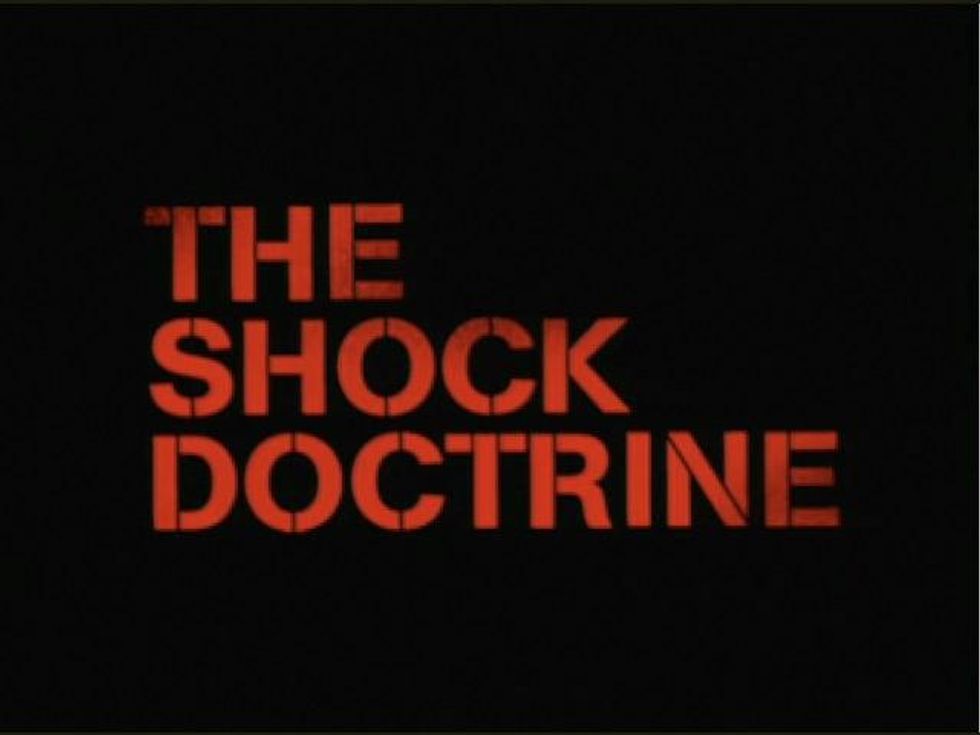
Snyder's response is what Canadian author and social activist Naomi Klein calls economic "shock doctrine." Use the crisis to force-feed an unpopular far-right agenda: privatizing basic services; selling off public parks and assets for private gain; breaking labor contracts; laying off teachers, cops and other vital service providers.
Meanwhile, the governor calls for cutting taxes for corporations, and his Republican colleagues in the House slash federal support for states and localities, intensifying the pressure.
Citizens oppose this, so democracy itself must be trashed -- particularly in majority minority cities. In Benton Harbor and Pontiac, the governor has invoked Public Act 4 and appointed emergency managers with extraordinary powers. The emergency managers can break all city contracts; abolish all city offices; sell off the public's assets; pass and revoke laws, all without consultation or approval of the citizens' elected representatives.
In Detroit, Snyder has said, "Let's have it so the city can keep running the city." But his formulation of that doesn't include the elected City Council members. Rather than invoking the economic martial law of Public Act 4, the governor has offered Detroit a "consent agreement."
Instead of an emergency manager, the governor's draft would create a nine-person "Financial Advisory Board" with similarly unlimited budgetary and economic development powers. The mayor and City Council would name three board members; the governor would pick the rest.
Not surprisingly, the document has received a skeptical response from elected officials. U.S. Rep. John Conyers Jr. (D-Mich.) said he objects because the proposed agreement "essentially asks the city to forfeit its citizens' rights in exchange for no tangible benefit."
The governor offers no new assistance from the state. While city workers face another blow, corporate vultures are circling, salivating at the possibilities of gentrifying public parks or profiting from privatized services.
But Detroit didn't cause the housing bubble or the Great Recession. It is bizarre that Wall Street's excesses cause the mess and then the bill is sent to the victims.
Moreover, Snyder and other Republican governors are competing to lower taxes on corporations and the wealthy, even as they savage services for working and poor families and sell off public assets. The result will starve vital investments -- in infrastructure, in schools and children, in health care and worker training. This is a road to impoverishment.
What's needed instead is more democracy. Federal aid should be increased to cities and states to avoid layoffs. A regional development plan should be put together by federal, state and local officials.
In the city, community meetings are needed to discuss difficult choices. The mayor and the City Council should insist that the city's creditors share in the sacrifice. Union workers have made significant concessions; they must not be trampled. It simply isn't right to claim that contracts with banks and creditors are sacrosanct, while those with workers can be discarded.
The financial elites who caused the mess should not be given dictatorial powers to clean it up.
And democracy isn't a luxury; it is a fundamental right.
Is democracy a luxury good in America, discarded when the going gets rough?
Apparently Michigan's Gov. Rick Snyder thinks so.
In Michigan, Detroit and other cities have hit the wall. The Great Recession has devastated city finances. Everyone agrees tough steps are needed.
Snyder's response is what Canadian author and social activist Naomi Klein calls economic "shock doctrine." Use the crisis to force-feed an unpopular far-right agenda: privatizing basic services; selling off public parks and assets for private gain; breaking labor contracts; laying off teachers, cops and other vital service providers.
Meanwhile, the governor calls for cutting taxes for corporations, and his Republican colleagues in the House slash federal support for states and localities, intensifying the pressure.
Citizens oppose this, so democracy itself must be trashed -- particularly in majority minority cities. In Benton Harbor and Pontiac, the governor has invoked Public Act 4 and appointed emergency managers with extraordinary powers. The emergency managers can break all city contracts; abolish all city offices; sell off the public's assets; pass and revoke laws, all without consultation or approval of the citizens' elected representatives.
In Detroit, Snyder has said, "Let's have it so the city can keep running the city." But his formulation of that doesn't include the elected City Council members. Rather than invoking the economic martial law of Public Act 4, the governor has offered Detroit a "consent agreement."
Instead of an emergency manager, the governor's draft would create a nine-person "Financial Advisory Board" with similarly unlimited budgetary and economic development powers. The mayor and City Council would name three board members; the governor would pick the rest.
Not surprisingly, the document has received a skeptical response from elected officials. U.S. Rep. John Conyers Jr. (D-Mich.) said he objects because the proposed agreement "essentially asks the city to forfeit its citizens' rights in exchange for no tangible benefit."
The governor offers no new assistance from the state. While city workers face another blow, corporate vultures are circling, salivating at the possibilities of gentrifying public parks or profiting from privatized services.
But Detroit didn't cause the housing bubble or the Great Recession. It is bizarre that Wall Street's excesses cause the mess and then the bill is sent to the victims.
Moreover, Snyder and other Republican governors are competing to lower taxes on corporations and the wealthy, even as they savage services for working and poor families and sell off public assets. The result will starve vital investments -- in infrastructure, in schools and children, in health care and worker training. This is a road to impoverishment.
What's needed instead is more democracy. Federal aid should be increased to cities and states to avoid layoffs. A regional development plan should be put together by federal, state and local officials.
In the city, community meetings are needed to discuss difficult choices. The mayor and the City Council should insist that the city's creditors share in the sacrifice. Union workers have made significant concessions; they must not be trampled. It simply isn't right to claim that contracts with banks and creditors are sacrosanct, while those with workers can be discarded.
The financial elites who caused the mess should not be given dictatorial powers to clean it up.
And democracy isn't a luxury; it is a fundamental right.
Is democracy a luxury good in America, discarded when the going gets rough?
Apparently Michigan's Gov. Rick Snyder thinks so.
In Michigan, Detroit and other cities have hit the wall. The Great Recession has devastated city finances. Everyone agrees tough steps are needed.
Snyder's response is what Canadian author and social activist Naomi Klein calls economic "shock doctrine." Use the crisis to force-feed an unpopular far-right agenda: privatizing basic services; selling off public parks and assets for private gain; breaking labor contracts; laying off teachers, cops and other vital service providers.
Meanwhile, the governor calls for cutting taxes for corporations, and his Republican colleagues in the House slash federal support for states and localities, intensifying the pressure.
Citizens oppose this, so democracy itself must be trashed -- particularly in majority minority cities. In Benton Harbor and Pontiac, the governor has invoked Public Act 4 and appointed emergency managers with extraordinary powers. The emergency managers can break all city contracts; abolish all city offices; sell off the public's assets; pass and revoke laws, all without consultation or approval of the citizens' elected representatives.
In Detroit, Snyder has said, "Let's have it so the city can keep running the city." But his formulation of that doesn't include the elected City Council members. Rather than invoking the economic martial law of Public Act 4, the governor has offered Detroit a "consent agreement."
Instead of an emergency manager, the governor's draft would create a nine-person "Financial Advisory Board" with similarly unlimited budgetary and economic development powers. The mayor and City Council would name three board members; the governor would pick the rest.
Not surprisingly, the document has received a skeptical response from elected officials. U.S. Rep. John Conyers Jr. (D-Mich.) said he objects because the proposed agreement "essentially asks the city to forfeit its citizens' rights in exchange for no tangible benefit."
The governor offers no new assistance from the state. While city workers face another blow, corporate vultures are circling, salivating at the possibilities of gentrifying public parks or profiting from privatized services.
But Detroit didn't cause the housing bubble or the Great Recession. It is bizarre that Wall Street's excesses cause the mess and then the bill is sent to the victims.
Moreover, Snyder and other Republican governors are competing to lower taxes on corporations and the wealthy, even as they savage services for working and poor families and sell off public assets. The result will starve vital investments -- in infrastructure, in schools and children, in health care and worker training. This is a road to impoverishment.
What's needed instead is more democracy. Federal aid should be increased to cities and states to avoid layoffs. A regional development plan should be put together by federal, state and local officials.
In the city, community meetings are needed to discuss difficult choices. The mayor and the City Council should insist that the city's creditors share in the sacrifice. Union workers have made significant concessions; they must not be trampled. It simply isn't right to claim that contracts with banks and creditors are sacrosanct, while those with workers can be discarded.
The financial elites who caused the mess should not be given dictatorial powers to clean it up.
And democracy isn't a luxury; it is a fundamental right.