SUBSCRIBE TO OUR FREE NEWSLETTER
Daily news & progressive opinion—funded by the people, not the corporations—delivered straight to your inbox.
5
#000000
#FFFFFF
To donate by check, phone, or other method, see our More Ways to Give page.
The camp at St Paul's cathedral was a beacon: it drew people from all over London together and united them in a common cause, it gave the movement unprecedented media coverage and provided a focus for the thousands of sympathizers that have visited the camp. But now the camp itself has achieved all it needs to, and the trials of day to day life at St Paul's are drawing too much energy from the bigger picture.
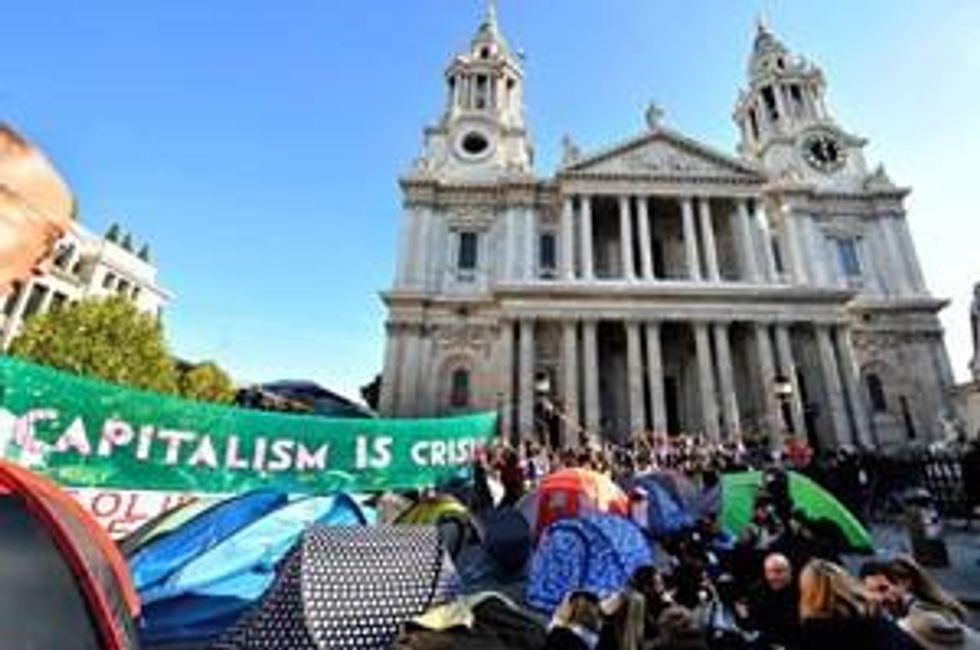
Occupy has become too wrapped up in openness and inclusion, and although these are noble goals it means the camp is plagued with problems of self-policing. The occupations have drawn revelers and the homeless from across the capital, and with them they have brought issues of alcohol and substance abuse and violence. Occupy has tried to help these people, offering food, shelter, counseling and companionship, the vast majority are grateful for this kindness, but a few consistently cause trouble.
There have been some serious incidents at the camp in the last few months including: thefts, tents being slashed and minor assaults. These problems are not of Occupy's making, but they're happening on its watch. When anyone is challenged about people's behavior they're quick to cry "persecution" and appeal to the founding principles of inclusion. If Occupy can't solve the problem of behavior on-site, a hostile media and the police will end the movement before it gets going.
Even people who aren't aggressive or violent can derail the movement. The very nature of the general assembly (GA), whereby everyone can wield a veto, makes it inevitable. A block should be used only if the blocker feels so strongly that they would rather leave the movement than see it carried through, but it is rarely used as such and rarely with a full understanding of the issues at stake. Occupy proudly states that the GA is "real democracy", in fact it is a tyranny that makes it possible to drown out a hundred rational voices with a single irrational one. A simple 10% threshold on a block as used in Occupy Wall Street would greatly reduce the disruption any individual could cause.
The largest stumbling block for Occupy is the obsession with horizontal organization - there is a difference between having a leader and allowing leadership. The leaderless structure caused enough problems when activity was just focused on St Paul's, but with three other loosely tied occupations just in London, in places the organization has broken down almost entirely.
The current consensus model is workable, but at a great cost of time and energy, both of which are in short supply among occupiers and could be more productively spent elsewhere. This is fact recognized by many within the movement. If the legitimacy of the general assembly and the consensus process breaks down further then Occupy risks a total rupture as clans within the movement begin to act independently. Only a form of hierarchy can hold all the disparate groups and individuals together as the movement grows.
There needs to be a reassessment of what the campaign is trying to achieve and how best to do it, and what the aftermath of the eviction will be when these questions are answered. A presence at St Paul's certainly needs to remain as the symbolic heart of the movement, but for it to be more than a space for GAs and lectures is superfluous. Legally the City of London can have no objection to people congregating in the square for general assemblies and the church has considered letting Occupy keep a non-residential presence. Loss of the campsite would also go a long way to shake off the strong counter-culture vibe around the movement that tends to galvanize more people against it than for it. If Occupy is working towards revolution it will need far more public support than it commands today.
Without a doubt there is great work going on at the camp, to name a few the recent talk against high executive pay by Lord Glasman and others outside the FSA building, corporate criminals being put on trial at Occupy Justice and meetings with the treasury select committee. There is a lot more for Occupy to achieve but currently the movement has neither the organisation to get large groups to work towards a common goal nor the autonomy to attract new talent and skills and allow people to use them as best they can.
There may be many challenges that Occupy faces, but none are insurmountable. Only if the movement can pull together and address its own failings can it legitimately address the failings of the rest of the world. At the moment it's not in the right shape to do that.
The camp at St Paul's cathedral was a beacon: it drew people from all over London together and united them in a common cause, it gave the movement unprecedented media coverage and provided a focus for the thousands of sympathizers that have visited the camp. But now the camp itself has achieved all it needs to, and the trials of day to day life at St Paul's are drawing too much energy from the bigger picture.
Occupy has become too wrapped up in openness and inclusion, and although these are noble goals it means the camp is plagued with problems of self-policing. The occupations have drawn revelers and the homeless from across the capital, and with them they have brought issues of alcohol and substance abuse and violence. Occupy has tried to help these people, offering food, shelter, counseling and companionship, the vast majority are grateful for this kindness, but a few consistently cause trouble.
There have been some serious incidents at the camp in the last few months including: thefts, tents being slashed and minor assaults. These problems are not of Occupy's making, but they're happening on its watch. When anyone is challenged about people's behavior they're quick to cry "persecution" and appeal to the founding principles of inclusion. If Occupy can't solve the problem of behavior on-site, a hostile media and the police will end the movement before it gets going.
Even people who aren't aggressive or violent can derail the movement. The very nature of the general assembly (GA), whereby everyone can wield a veto, makes it inevitable. A block should be used only if the blocker feels so strongly that they would rather leave the movement than see it carried through, but it is rarely used as such and rarely with a full understanding of the issues at stake. Occupy proudly states that the GA is "real democracy", in fact it is a tyranny that makes it possible to drown out a hundred rational voices with a single irrational one. A simple 10% threshold on a block as used in Occupy Wall Street would greatly reduce the disruption any individual could cause.
The largest stumbling block for Occupy is the obsession with horizontal organization - there is a difference between having a leader and allowing leadership. The leaderless structure caused enough problems when activity was just focused on St Paul's, but with three other loosely tied occupations just in London, in places the organization has broken down almost entirely.
The current consensus model is workable, but at a great cost of time and energy, both of which are in short supply among occupiers and could be more productively spent elsewhere. This is fact recognized by many within the movement. If the legitimacy of the general assembly and the consensus process breaks down further then Occupy risks a total rupture as clans within the movement begin to act independently. Only a form of hierarchy can hold all the disparate groups and individuals together as the movement grows.
There needs to be a reassessment of what the campaign is trying to achieve and how best to do it, and what the aftermath of the eviction will be when these questions are answered. A presence at St Paul's certainly needs to remain as the symbolic heart of the movement, but for it to be more than a space for GAs and lectures is superfluous. Legally the City of London can have no objection to people congregating in the square for general assemblies and the church has considered letting Occupy keep a non-residential presence. Loss of the campsite would also go a long way to shake off the strong counter-culture vibe around the movement that tends to galvanize more people against it than for it. If Occupy is working towards revolution it will need far more public support than it commands today.
Without a doubt there is great work going on at the camp, to name a few the recent talk against high executive pay by Lord Glasman and others outside the FSA building, corporate criminals being put on trial at Occupy Justice and meetings with the treasury select committee. There is a lot more for Occupy to achieve but currently the movement has neither the organisation to get large groups to work towards a common goal nor the autonomy to attract new talent and skills and allow people to use them as best they can.
There may be many challenges that Occupy faces, but none are insurmountable. Only if the movement can pull together and address its own failings can it legitimately address the failings of the rest of the world. At the moment it's not in the right shape to do that.
The camp at St Paul's cathedral was a beacon: it drew people from all over London together and united them in a common cause, it gave the movement unprecedented media coverage and provided a focus for the thousands of sympathizers that have visited the camp. But now the camp itself has achieved all it needs to, and the trials of day to day life at St Paul's are drawing too much energy from the bigger picture.
Occupy has become too wrapped up in openness and inclusion, and although these are noble goals it means the camp is plagued with problems of self-policing. The occupations have drawn revelers and the homeless from across the capital, and with them they have brought issues of alcohol and substance abuse and violence. Occupy has tried to help these people, offering food, shelter, counseling and companionship, the vast majority are grateful for this kindness, but a few consistently cause trouble.
There have been some serious incidents at the camp in the last few months including: thefts, tents being slashed and minor assaults. These problems are not of Occupy's making, but they're happening on its watch. When anyone is challenged about people's behavior they're quick to cry "persecution" and appeal to the founding principles of inclusion. If Occupy can't solve the problem of behavior on-site, a hostile media and the police will end the movement before it gets going.
Even people who aren't aggressive or violent can derail the movement. The very nature of the general assembly (GA), whereby everyone can wield a veto, makes it inevitable. A block should be used only if the blocker feels so strongly that they would rather leave the movement than see it carried through, but it is rarely used as such and rarely with a full understanding of the issues at stake. Occupy proudly states that the GA is "real democracy", in fact it is a tyranny that makes it possible to drown out a hundred rational voices with a single irrational one. A simple 10% threshold on a block as used in Occupy Wall Street would greatly reduce the disruption any individual could cause.
The largest stumbling block for Occupy is the obsession with horizontal organization - there is a difference between having a leader and allowing leadership. The leaderless structure caused enough problems when activity was just focused on St Paul's, but with three other loosely tied occupations just in London, in places the organization has broken down almost entirely.
The current consensus model is workable, but at a great cost of time and energy, both of which are in short supply among occupiers and could be more productively spent elsewhere. This is fact recognized by many within the movement. If the legitimacy of the general assembly and the consensus process breaks down further then Occupy risks a total rupture as clans within the movement begin to act independently. Only a form of hierarchy can hold all the disparate groups and individuals together as the movement grows.
There needs to be a reassessment of what the campaign is trying to achieve and how best to do it, and what the aftermath of the eviction will be when these questions are answered. A presence at St Paul's certainly needs to remain as the symbolic heart of the movement, but for it to be more than a space for GAs and lectures is superfluous. Legally the City of London can have no objection to people congregating in the square for general assemblies and the church has considered letting Occupy keep a non-residential presence. Loss of the campsite would also go a long way to shake off the strong counter-culture vibe around the movement that tends to galvanize more people against it than for it. If Occupy is working towards revolution it will need far more public support than it commands today.
Without a doubt there is great work going on at the camp, to name a few the recent talk against high executive pay by Lord Glasman and others outside the FSA building, corporate criminals being put on trial at Occupy Justice and meetings with the treasury select committee. There is a lot more for Occupy to achieve but currently the movement has neither the organisation to get large groups to work towards a common goal nor the autonomy to attract new talent and skills and allow people to use them as best they can.
There may be many challenges that Occupy faces, but none are insurmountable. Only if the movement can pull together and address its own failings can it legitimately address the failings of the rest of the world. At the moment it's not in the right shape to do that.