SUBSCRIBE TO OUR FREE NEWSLETTER
Daily news & progressive opinion—funded by the people, not the corporations—delivered straight to your inbox.
5
#000000
#FFFFFF
To donate by check, phone, or other method, see our More Ways to Give page.
Taking inspiration from the Occupy Movement, last week a group of doctors and environmental groups in Salt Lake City, Utah announced a law suit against the third largest mining corporation in the world, Rio Tinto, for violating the Clean Air Act in Utah. This is likely the first time ever that physicians have sued industry for harming public health.
Air pollution causes between 1,000 and 2,000 premature deaths every year in Utah. Moreover, medical research in the last ten years has firmly established that air pollution causes the same broad array of diseases well known to result from first and second hand cigarette smoke--strokes, heart attacks, high blood pressure, virtually every kind of lung disease, neurologic diseases like Alzheimer's, Parkinson's, loss of intelligence, chromosomal damage, higher rates of diabetes, obesity, adverse birth outcomes and various cancers such as lung cancer, breast cancer and leukemia.
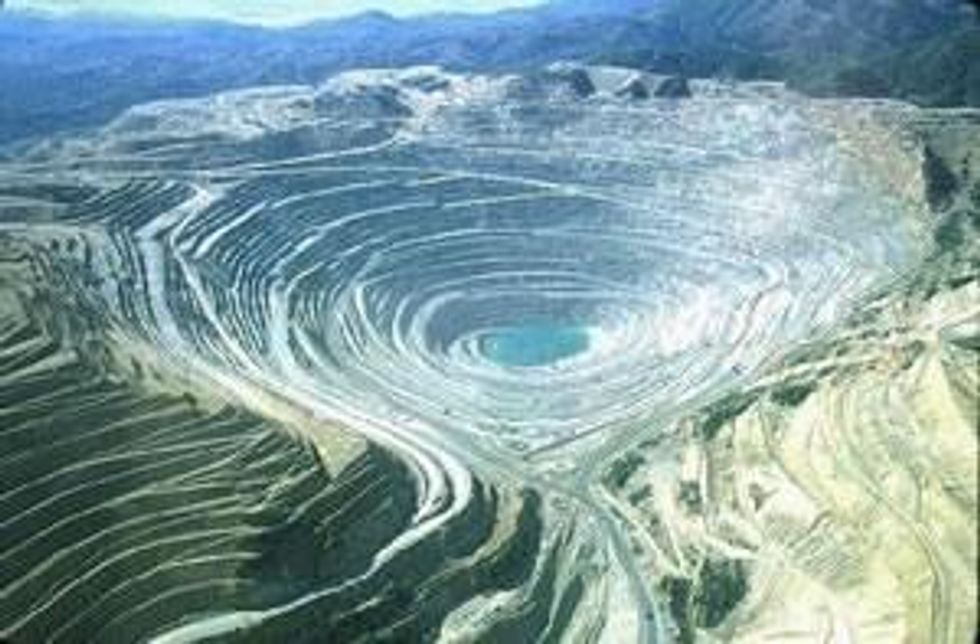
This mine is the world's largest man made excavation and has created the largest mining related water pollution problem in the world. The mine is located on the western doorstep of Salt Lake City, home to well over one million people. There is no comparable juxtaposition of an enormous mining operation this close to such a large urban center. RTK's mine and smelter operations account for 30% of the particulate matter emitted into the atmosphere over Salt Lake County, making it by far the largest source of industrial pollution in the urban areas of Utah.
The smelting operations and fugitive dust from the 1,100 foot high waste rock piles and tailings ponds are a constant source of highly toxic heavy metal contamination--lead, mercury, arsenic, and cadmium-- to the air, water, and soil of Utah's largest city. The mining industry watchdog, Earthworks, states that before the most recently approved expansion, RTK was releasing 695 million pounds of toxic material into the Salt Lake City environment every year. Because heavy metals do not degrade, are not combustible and cannot be destroyed, that heavy metal toxic burden steadily increases year after year, as it has for over 100 years. Despite this extreme burden on public health, predictably, the Utah Division of Air Quality recently issued a permit for RTK to expand their operations by 32% which will make their pollution emissions even worse.
RTK is making record profits--$15 billion last year. In August Chairman of the Board, Jan du Plessis bragged, "Rio Tinto has produced another set of record breaking results." du Plesses apparently specializes in delivering pollution, he is also chairman of the Board of British American Tobacco. Tom Albanese, Rio Tinto's CEO who made almost $8.5 million in compensation last year, recently lamented, "[Rio Tinto must do] a better job at managing the curse of resource nationalism... and the activism of stakeholder engagement." Let me translate that for you: local people throughout the world are tired of being exploited for profit, they're starting to stand up for themselves, and Rio Tinto doesn't like it. Utah citizens tired of RTK's pollution would be considered part of that "curse" to Rio Tinto executives.
This issue is simple: RTK can well afford to clean up, but they won't, and no one is making them. Their contribution to our pollution is hurting all the residents of Salt Lake City and adding to the premature death total mentioned above. For environmental and public health advocates, RTK pursuing and receiving an approval to expand was "the last straw."
If the core tenet of the Occupy Movement is that corporations and the 1% manipulate every level of government to serve their profit driven agendas and simultaneously disregard, if not openly undermine, the interests of the 99%, then there is no better example than RTK's operation of Utah's Bingham Canyon mine.
UPHE estimates that the mortality, health and environmental costs to the community from RTK pollution is between $2 billion and $4 billion, several times the value of the wages and taxes that they pay. Nonetheless, a massive PR budget allows RTK to heavily advertise themselves as "job providers", and take virtually no responsibility for the various environmental and health consequences of their operations.
Frederick Douglass, the19th century civil rights leader, said,"Find out just what any people will quietly submit to and you have found out the exact measure of injustice and wrong which will be imposed upon them." Let it be known that the people in Utah will no longer "quietly submit" to more pollution, more deaths, shortened life spans and poorer health to fatten the wallets in the London board room of Rio Tinto. We are going to "take back" the air we breathe.
Taking inspiration from the Occupy Movement, last week a group of doctors and environmental groups in Salt Lake City, Utah announced a law suit against the third largest mining corporation in the world, Rio Tinto, for violating the Clean Air Act in Utah. This is likely the first time ever that physicians have sued industry for harming public health.
Air pollution causes between 1,000 and 2,000 premature deaths every year in Utah. Moreover, medical research in the last ten years has firmly established that air pollution causes the same broad array of diseases well known to result from first and second hand cigarette smoke--strokes, heart attacks, high blood pressure, virtually every kind of lung disease, neurologic diseases like Alzheimer's, Parkinson's, loss of intelligence, chromosomal damage, higher rates of diabetes, obesity, adverse birth outcomes and various cancers such as lung cancer, breast cancer and leukemia.
This mine is the world's largest man made excavation and has created the largest mining related water pollution problem in the world. The mine is located on the western doorstep of Salt Lake City, home to well over one million people. There is no comparable juxtaposition of an enormous mining operation this close to such a large urban center. RTK's mine and smelter operations account for 30% of the particulate matter emitted into the atmosphere over Salt Lake County, making it by far the largest source of industrial pollution in the urban areas of Utah.
The smelting operations and fugitive dust from the 1,100 foot high waste rock piles and tailings ponds are a constant source of highly toxic heavy metal contamination--lead, mercury, arsenic, and cadmium-- to the air, water, and soil of Utah's largest city. The mining industry watchdog, Earthworks, states that before the most recently approved expansion, RTK was releasing 695 million pounds of toxic material into the Salt Lake City environment every year. Because heavy metals do not degrade, are not combustible and cannot be destroyed, that heavy metal toxic burden steadily increases year after year, as it has for over 100 years. Despite this extreme burden on public health, predictably, the Utah Division of Air Quality recently issued a permit for RTK to expand their operations by 32% which will make their pollution emissions even worse.
RTK is making record profits--$15 billion last year. In August Chairman of the Board, Jan du Plessis bragged, "Rio Tinto has produced another set of record breaking results." du Plesses apparently specializes in delivering pollution, he is also chairman of the Board of British American Tobacco. Tom Albanese, Rio Tinto's CEO who made almost $8.5 million in compensation last year, recently lamented, "[Rio Tinto must do] a better job at managing the curse of resource nationalism... and the activism of stakeholder engagement." Let me translate that for you: local people throughout the world are tired of being exploited for profit, they're starting to stand up for themselves, and Rio Tinto doesn't like it. Utah citizens tired of RTK's pollution would be considered part of that "curse" to Rio Tinto executives.
This issue is simple: RTK can well afford to clean up, but they won't, and no one is making them. Their contribution to our pollution is hurting all the residents of Salt Lake City and adding to the premature death total mentioned above. For environmental and public health advocates, RTK pursuing and receiving an approval to expand was "the last straw."
If the core tenet of the Occupy Movement is that corporations and the 1% manipulate every level of government to serve their profit driven agendas and simultaneously disregard, if not openly undermine, the interests of the 99%, then there is no better example than RTK's operation of Utah's Bingham Canyon mine.
UPHE estimates that the mortality, health and environmental costs to the community from RTK pollution is between $2 billion and $4 billion, several times the value of the wages and taxes that they pay. Nonetheless, a massive PR budget allows RTK to heavily advertise themselves as "job providers", and take virtually no responsibility for the various environmental and health consequences of their operations.
Frederick Douglass, the19th century civil rights leader, said,"Find out just what any people will quietly submit to and you have found out the exact measure of injustice and wrong which will be imposed upon them." Let it be known that the people in Utah will no longer "quietly submit" to more pollution, more deaths, shortened life spans and poorer health to fatten the wallets in the London board room of Rio Tinto. We are going to "take back" the air we breathe.
Taking inspiration from the Occupy Movement, last week a group of doctors and environmental groups in Salt Lake City, Utah announced a law suit against the third largest mining corporation in the world, Rio Tinto, for violating the Clean Air Act in Utah. This is likely the first time ever that physicians have sued industry for harming public health.
Air pollution causes between 1,000 and 2,000 premature deaths every year in Utah. Moreover, medical research in the last ten years has firmly established that air pollution causes the same broad array of diseases well known to result from first and second hand cigarette smoke--strokes, heart attacks, high blood pressure, virtually every kind of lung disease, neurologic diseases like Alzheimer's, Parkinson's, loss of intelligence, chromosomal damage, higher rates of diabetes, obesity, adverse birth outcomes and various cancers such as lung cancer, breast cancer and leukemia.
This mine is the world's largest man made excavation and has created the largest mining related water pollution problem in the world. The mine is located on the western doorstep of Salt Lake City, home to well over one million people. There is no comparable juxtaposition of an enormous mining operation this close to such a large urban center. RTK's mine and smelter operations account for 30% of the particulate matter emitted into the atmosphere over Salt Lake County, making it by far the largest source of industrial pollution in the urban areas of Utah.
The smelting operations and fugitive dust from the 1,100 foot high waste rock piles and tailings ponds are a constant source of highly toxic heavy metal contamination--lead, mercury, arsenic, and cadmium-- to the air, water, and soil of Utah's largest city. The mining industry watchdog, Earthworks, states that before the most recently approved expansion, RTK was releasing 695 million pounds of toxic material into the Salt Lake City environment every year. Because heavy metals do not degrade, are not combustible and cannot be destroyed, that heavy metal toxic burden steadily increases year after year, as it has for over 100 years. Despite this extreme burden on public health, predictably, the Utah Division of Air Quality recently issued a permit for RTK to expand their operations by 32% which will make their pollution emissions even worse.
RTK is making record profits--$15 billion last year. In August Chairman of the Board, Jan du Plessis bragged, "Rio Tinto has produced another set of record breaking results." du Plesses apparently specializes in delivering pollution, he is also chairman of the Board of British American Tobacco. Tom Albanese, Rio Tinto's CEO who made almost $8.5 million in compensation last year, recently lamented, "[Rio Tinto must do] a better job at managing the curse of resource nationalism... and the activism of stakeholder engagement." Let me translate that for you: local people throughout the world are tired of being exploited for profit, they're starting to stand up for themselves, and Rio Tinto doesn't like it. Utah citizens tired of RTK's pollution would be considered part of that "curse" to Rio Tinto executives.
This issue is simple: RTK can well afford to clean up, but they won't, and no one is making them. Their contribution to our pollution is hurting all the residents of Salt Lake City and adding to the premature death total mentioned above. For environmental and public health advocates, RTK pursuing and receiving an approval to expand was "the last straw."
If the core tenet of the Occupy Movement is that corporations and the 1% manipulate every level of government to serve their profit driven agendas and simultaneously disregard, if not openly undermine, the interests of the 99%, then there is no better example than RTK's operation of Utah's Bingham Canyon mine.
UPHE estimates that the mortality, health and environmental costs to the community from RTK pollution is between $2 billion and $4 billion, several times the value of the wages and taxes that they pay. Nonetheless, a massive PR budget allows RTK to heavily advertise themselves as "job providers", and take virtually no responsibility for the various environmental and health consequences of their operations.
Frederick Douglass, the19th century civil rights leader, said,"Find out just what any people will quietly submit to and you have found out the exact measure of injustice and wrong which will be imposed upon them." Let it be known that the people in Utah will no longer "quietly submit" to more pollution, more deaths, shortened life spans and poorer health to fatten the wallets in the London board room of Rio Tinto. We are going to "take back" the air we breathe.