SUBSCRIBE TO OUR FREE NEWSLETTER
Daily news & progressive opinion—funded by the people, not the corporations—delivered straight to your inbox.
5
#000000
#FFFFFF
To donate by check, phone, or other method, see our More Ways to Give page.
I'm urging you to write a letter to the Indian Embassy in Washington to protest its ban on David Barsamian, a great journalist based in Boulder, Colorado.
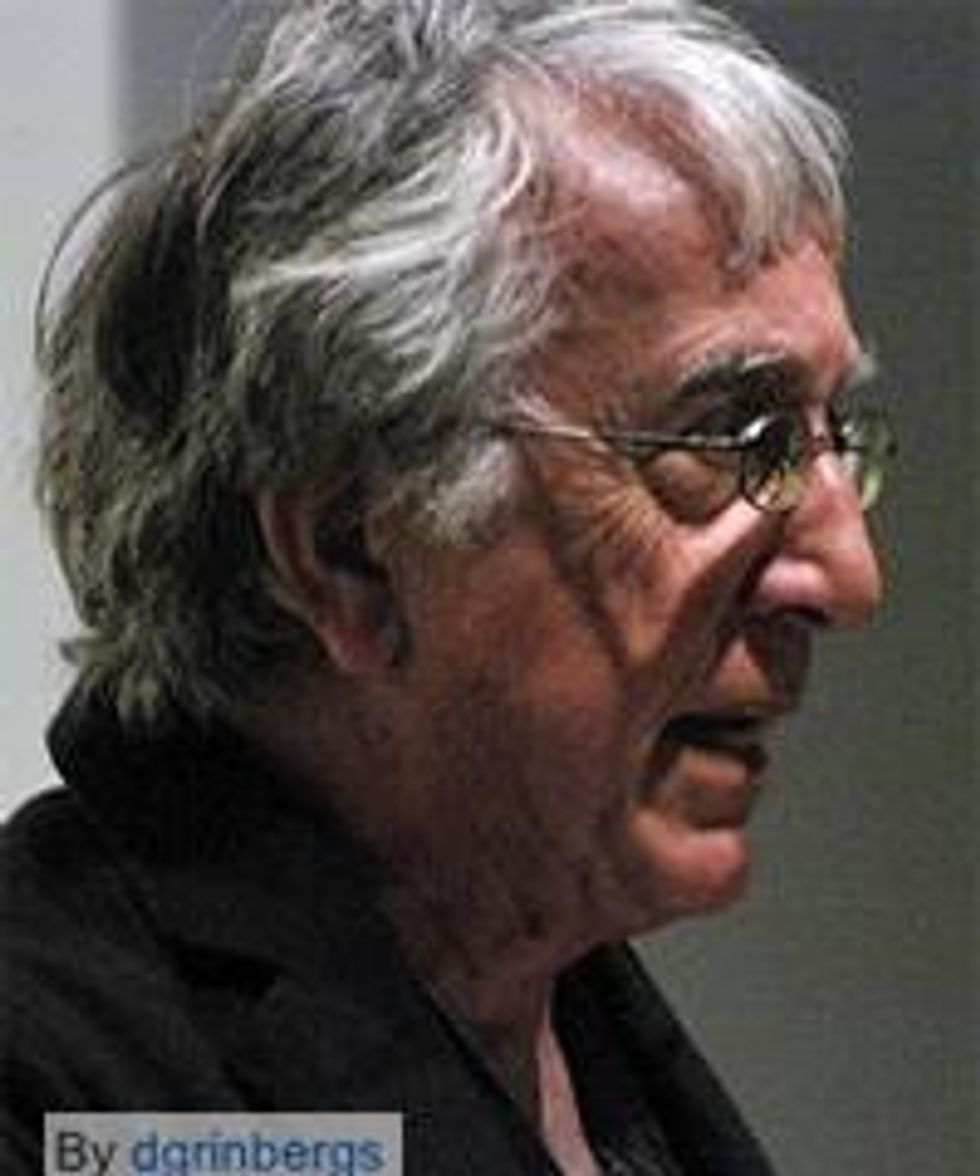
On September 23, the government of India would not let Barsamian enter the country. For a country that prides itself on being the world's largest democracy, that is a disgrace.
Barsamian is the founder and director of Alternative Radio, which for twenty-five years has been generating and distributing some of the most thoughtful interviews and talks in the entire U.S. media.
Barsamian arrived at the Indira Gandhi International Airport in Delhi at 12:30 a.m. last Friday morning.
He explained what happened to him in an interview with Outlook, one of India's most prominent magazines.
The officer at the immigration counter checked his computer screen and said, "Wait here," and then returned with more immigration officers.
"That is when I got worried and anxious," Barsamian said. "They put me in a room with a couch and a chair. Ten minutes went by, fifteen minutes went by, I kept getting up every once in a while and said what's going on? . . . I had to go to the bathroom and one officer accompanied me."
Finally, one of the officers told him, "You have been denied entry into India. You are on the banned list and you may not enter the country."
So they put Barsamian on a plane and sent him back to the United States.
"In free India, I was denied entry," said Barsamian, who had visited India several times before without incident. "I have been to Syria, Lebanon, Egypt but I never faced any problems there."
Forty-five Indian intellectuals have signed a statement denouncing Barsamian's ban.
"We demand that the right to travel and the right to free exchange of ideas between scholars, journalists, artists, and human rights defenders be respected and protected, and that government agents not authorize the denial of entry and eviction of visitors to India, or monitor their movement," the statement said. "Free exchange of ideas is one of the most basic human rights and values in free democratic societies. Freedom of travel is one of the most important avenues for furthering such exchange among peoples. Recognizing this, the International Covenant on Civil and Political Rights, which India has ratified, protects freedom of expression, right to travel and scientific exchange."
Full disclosure: David Barsamian is a friend of mine and a longtime contributor of phenomenal interviews to The Progressive with the likes of Noam Chomsky and Howard Zinn. He collected some of these in a recent book, "Louder Than Bombs: Interviews from The Progressive Magazine."
For The Progressive Barsamian has interviewed several Indian intellectuals, including Amartya Sen in August 2001, Vandana Shiva in September 1997, and Arundhati Roy twice, once in April 2001 and then again in March 2009. (Both Roy and Shiva signed the statement of protest over Barsamian's ban.)
Barsamian's 2009 interview with Roy may have gotten under the skin of the Indian authorities. In the introduction to that interview, he gave some background on India's repression in Kashmir. "Tens of thousands of Kashmiris have been killed, thousands have been disappeared," he said. And he asked Roy about it.
She denounced the crackdown.
"There isn't any possibility of India managing to continue to bulldoze this population in Kashmir," she said. "Eventually all that can come out of it is destruction."
The Indian government is intensely sensitive on the issue of Kashmir. That may be why it gave Barsamian the boot.
But you can't call yourself a democracy while suppressing free speech and clamping down on criticism.
Please write the Indian Embassy in Washington, D.C., and let Ambassador Nirupama Rao know how you feel about India's treatment of this outstanding American journalist.
Write to:
Ambassador Nirupama Rao
The Indian Embassy
2107 Mass. Ave, NW
Washington, DC 20008
Thank you for standing up for David Barsamian and for free speech and freedom of the press.
Sincerely,
Matthew Rothschild
Editor, The Progressive
I'm urging you to write a letter to the Indian Embassy in Washington to protest its ban on David Barsamian, a great journalist based in Boulder, Colorado.
On September 23, the government of India would not let Barsamian enter the country. For a country that prides itself on being the world's largest democracy, that is a disgrace.
Barsamian is the founder and director of Alternative Radio, which for twenty-five years has been generating and distributing some of the most thoughtful interviews and talks in the entire U.S. media.
Barsamian arrived at the Indira Gandhi International Airport in Delhi at 12:30 a.m. last Friday morning.
He explained what happened to him in an interview with Outlook, one of India's most prominent magazines.
The officer at the immigration counter checked his computer screen and said, "Wait here," and then returned with more immigration officers.
"That is when I got worried and anxious," Barsamian said. "They put me in a room with a couch and a chair. Ten minutes went by, fifteen minutes went by, I kept getting up every once in a while and said what's going on? . . . I had to go to the bathroom and one officer accompanied me."
Finally, one of the officers told him, "You have been denied entry into India. You are on the banned list and you may not enter the country."
So they put Barsamian on a plane and sent him back to the United States.
"In free India, I was denied entry," said Barsamian, who had visited India several times before without incident. "I have been to Syria, Lebanon, Egypt but I never faced any problems there."
Forty-five Indian intellectuals have signed a statement denouncing Barsamian's ban.
"We demand that the right to travel and the right to free exchange of ideas between scholars, journalists, artists, and human rights defenders be respected and protected, and that government agents not authorize the denial of entry and eviction of visitors to India, or monitor their movement," the statement said. "Free exchange of ideas is one of the most basic human rights and values in free democratic societies. Freedom of travel is one of the most important avenues for furthering such exchange among peoples. Recognizing this, the International Covenant on Civil and Political Rights, which India has ratified, protects freedom of expression, right to travel and scientific exchange."
Full disclosure: David Barsamian is a friend of mine and a longtime contributor of phenomenal interviews to The Progressive with the likes of Noam Chomsky and Howard Zinn. He collected some of these in a recent book, "Louder Than Bombs: Interviews from The Progressive Magazine."
For The Progressive Barsamian has interviewed several Indian intellectuals, including Amartya Sen in August 2001, Vandana Shiva in September 1997, and Arundhati Roy twice, once in April 2001 and then again in March 2009. (Both Roy and Shiva signed the statement of protest over Barsamian's ban.)
Barsamian's 2009 interview with Roy may have gotten under the skin of the Indian authorities. In the introduction to that interview, he gave some background on India's repression in Kashmir. "Tens of thousands of Kashmiris have been killed, thousands have been disappeared," he said. And he asked Roy about it.
She denounced the crackdown.
"There isn't any possibility of India managing to continue to bulldoze this population in Kashmir," she said. "Eventually all that can come out of it is destruction."
The Indian government is intensely sensitive on the issue of Kashmir. That may be why it gave Barsamian the boot.
But you can't call yourself a democracy while suppressing free speech and clamping down on criticism.
Please write the Indian Embassy in Washington, D.C., and let Ambassador Nirupama Rao know how you feel about India's treatment of this outstanding American journalist.
Write to:
Ambassador Nirupama Rao
The Indian Embassy
2107 Mass. Ave, NW
Washington, DC 20008
Thank you for standing up for David Barsamian and for free speech and freedom of the press.
Sincerely,
Matthew Rothschild
Editor, The Progressive
I'm urging you to write a letter to the Indian Embassy in Washington to protest its ban on David Barsamian, a great journalist based in Boulder, Colorado.
On September 23, the government of India would not let Barsamian enter the country. For a country that prides itself on being the world's largest democracy, that is a disgrace.
Barsamian is the founder and director of Alternative Radio, which for twenty-five years has been generating and distributing some of the most thoughtful interviews and talks in the entire U.S. media.
Barsamian arrived at the Indira Gandhi International Airport in Delhi at 12:30 a.m. last Friday morning.
He explained what happened to him in an interview with Outlook, one of India's most prominent magazines.
The officer at the immigration counter checked his computer screen and said, "Wait here," and then returned with more immigration officers.
"That is when I got worried and anxious," Barsamian said. "They put me in a room with a couch and a chair. Ten minutes went by, fifteen minutes went by, I kept getting up every once in a while and said what's going on? . . . I had to go to the bathroom and one officer accompanied me."
Finally, one of the officers told him, "You have been denied entry into India. You are on the banned list and you may not enter the country."
So they put Barsamian on a plane and sent him back to the United States.
"In free India, I was denied entry," said Barsamian, who had visited India several times before without incident. "I have been to Syria, Lebanon, Egypt but I never faced any problems there."
Forty-five Indian intellectuals have signed a statement denouncing Barsamian's ban.
"We demand that the right to travel and the right to free exchange of ideas between scholars, journalists, artists, and human rights defenders be respected and protected, and that government agents not authorize the denial of entry and eviction of visitors to India, or monitor their movement," the statement said. "Free exchange of ideas is one of the most basic human rights and values in free democratic societies. Freedom of travel is one of the most important avenues for furthering such exchange among peoples. Recognizing this, the International Covenant on Civil and Political Rights, which India has ratified, protects freedom of expression, right to travel and scientific exchange."
Full disclosure: David Barsamian is a friend of mine and a longtime contributor of phenomenal interviews to The Progressive with the likes of Noam Chomsky and Howard Zinn. He collected some of these in a recent book, "Louder Than Bombs: Interviews from The Progressive Magazine."
For The Progressive Barsamian has interviewed several Indian intellectuals, including Amartya Sen in August 2001, Vandana Shiva in September 1997, and Arundhati Roy twice, once in April 2001 and then again in March 2009. (Both Roy and Shiva signed the statement of protest over Barsamian's ban.)
Barsamian's 2009 interview with Roy may have gotten under the skin of the Indian authorities. In the introduction to that interview, he gave some background on India's repression in Kashmir. "Tens of thousands of Kashmiris have been killed, thousands have been disappeared," he said. And he asked Roy about it.
She denounced the crackdown.
"There isn't any possibility of India managing to continue to bulldoze this population in Kashmir," she said. "Eventually all that can come out of it is destruction."
The Indian government is intensely sensitive on the issue of Kashmir. That may be why it gave Barsamian the boot.
But you can't call yourself a democracy while suppressing free speech and clamping down on criticism.
Please write the Indian Embassy in Washington, D.C., and let Ambassador Nirupama Rao know how you feel about India's treatment of this outstanding American journalist.
Write to:
Ambassador Nirupama Rao
The Indian Embassy
2107 Mass. Ave, NW
Washington, DC 20008
Thank you for standing up for David Barsamian and for free speech and freedom of the press.
Sincerely,
Matthew Rothschild
Editor, The Progressive