The American Midterm Elections Seen from Abroad
Ever wonder what our elections look like to the rest of the world? Well, this year we have at least one ready-made answer at hand - the Organization for Security and Cooperation in Europe (OSCE ), the group that primarily comments on elections in former Soviet, Yugoslav or "Soviet Bloc" nations, actually sent a team to observe the recent American mid-term elections. On the whole, the observers thought that "the vote reflected the will of the people," but they did find a few things they thought were off: the multiplicity of voting systems in use throughout the country, the lack of an ID requirement and - above all - the large and growing impact of money.
Few Americans may recognize OSCE by name, but in addition to the above mentioned nations, the group includes virtually all of Europe, the U.S. and Canada and calls itself "the world's largest regional security organization" with "56 participating States" spanning "the geographical area from Vancouver to Vladivostok." Its roots lie in the 1975 Helsinki Accords of the East-West detente era, but it has assumed a larger role since the end of the Cold War, supervising the post-Yugoslav Civil War elections in Bosnia and acting as the prime electoral monitoring agent in former Eastern Bloc and Yugoslav nations.
OSCE also conducts less intensive "assessment" missions - to review the "administrative and legal framework for the conduct of elections" in long established democratic member nations. The U.S. Mission was conducted by the organization's Parliamentary Assembly, with 56 observers included 42 Members of Parliament from 21 countries who were briefed in Washington D.C. and sent to observe voting in six states and the District of Columbia.
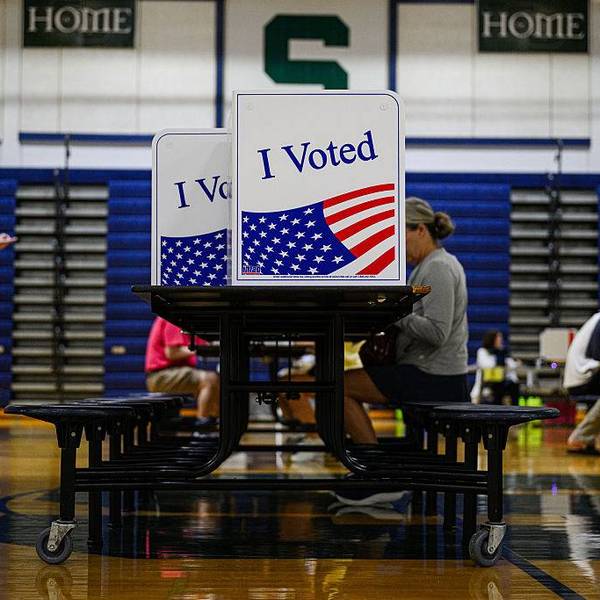
Although finding that " polling proceeded in a calm and well-organized manner," the observers were struck by the "lack of voter secrecy" due to "voting booths and electronic voting machines ... often placed too close to each other, which enabled clear insight as to how a voter marked the ballot," as well as "the widespread possibility to vote without any picture I.D." - a requirement in most of the elections the organization monitors.
The foreign law makers also noted the degree to which "the electoral system continues to be decentralized and highly diverse with a lack of uniform country-wide standards," adding that "there are several voting systems within some states, as regulations are made at the local county level" and even "the right to access polling stations by international election observers is regulated by state law, and in some cases parliamentary observers were not able to observe the voting inside polling stations." All of this will come as no surprise to anyone remembering the infamous "hanging chads" and "butterfly ballots" of the 2000 presidential election.
What is new, however, and, judging from the space their brief report accords it, what apparently made the strongest impression upon the OSCE Mission was "money playing a significant role in creating an uneven playing field between candidates." Noting that "the Supreme Court ruled in Citizens United v. FEC that private corporations should enjoy the same rights as individuals regarding campaign spending, tying this to the right of freedom of speech in the U.S. Constitution," they found the ruling expanding "possibilities for interest groups, including private corporations" and likely helping "to determine the outcome in a number of races."
The fact that "many political ads did not reveal the source of the funding, as this is not required by law," struck them as undermining "the transparency and accountability in the elections," which "could also lead to questions of whether all donations originated in the U.S., as the law stipulates in the Federal Election Campaign Act, or whether any funds came from foreign sources."
So, in case you've been thinking that giving corporations a free hand in the electoral process represents a fundamental threat to American democracy, at least you know you're not alone in this world. And if you've been wondering just how big a deal that Supreme Court decision was, well the Sunlight Foundation - an American "non-profit, nonpartisan organization that uses the power of the Internet to catalyze greater government openness and transparency," as it describes itself - estimates "outside groups raised and spent $126 million on elections without disclosing the source," constituting "more than a quarter of the total $450 million spent by outside groups." And adding "the $60 million spent by groups that were allowed to raise unlimited money, but still had to disclose ... the total amount of outside money made possible by the Citizens United ruling reaches $186 million or 40 percent of the total."
Humongous jump in corporate electoral spending results in big wins for candidates with leave-big-business-alone platforms.
The above would pretty much qualify as a "Dog bites man" headline. So maybe from that point of view we can understand why the newsmedia might not bother to treat this as the overriding story of the election. I mean, what else would we expect, really? And the fact that more of CNN's election day exit poll respondents blamed Wall Street for the country's current economic problems than either George W. Bush (the runner-up choice) or Barack Obama and still voted the way they did tells us how very effective that spending was in obfuscating the issues.
The biggest question coming out of the elections, of course, remains unanswered as of yet. And it will not be answered by studies, observation missions or news reporting. Are we willing and able to save our democracy from going to the highest bidder?
An Urgent Message From Our Co-Founder
Dear Common Dreams reader, It’s been nearly 30 years since I co-founded Common Dreams with my late wife, Lina Newhouser. We had the radical notion that journalism should serve the public good, not corporate profits. It was clear to us from the outset what it would take to build such a project. No paid advertisements. No corporate sponsors. No millionaire publisher telling us what to think or do. Many people said we wouldn't last a year, but we proved those doubters wrong. Together with a tremendous team of journalists and dedicated staff, we built an independent media outlet free from the constraints of profits and corporate control. Our mission has always been simple: To inform. To inspire. To ignite change for the common good. Building Common Dreams was not easy. Our survival was never guaranteed. When you take on the most powerful forces—Wall Street greed, fossil fuel industry destruction, Big Tech lobbyists, and uber-rich oligarchs who have spent billions upon billions rigging the economy and democracy in their favor—the only bulwark you have is supporters who believe in your work. But here’s the urgent message from me today. It's never been this bad out there. And it's never been this hard to keep us going. At the very moment Common Dreams is most needed, the threats we face are intensifying. We need your support now more than ever. We don't accept corporate advertising and never will. We don't have a paywall because we don't think people should be blocked from critical news based on their ability to pay. Everything we do is funded by the donations of readers like you. When everyone does the little they can afford, we are strong. But if that support retreats or dries up, so do we. Will you donate now to make sure Common Dreams not only survives but thrives? —Craig Brown, Co-founder |
Ever wonder what our elections look like to the rest of the world? Well, this year we have at least one ready-made answer at hand - the Organization for Security and Cooperation in Europe (OSCE ), the group that primarily comments on elections in former Soviet, Yugoslav or "Soviet Bloc" nations, actually sent a team to observe the recent American mid-term elections. On the whole, the observers thought that "the vote reflected the will of the people," but they did find a few things they thought were off: the multiplicity of voting systems in use throughout the country, the lack of an ID requirement and - above all - the large and growing impact of money.
Few Americans may recognize OSCE by name, but in addition to the above mentioned nations, the group includes virtually all of Europe, the U.S. and Canada and calls itself "the world's largest regional security organization" with "56 participating States" spanning "the geographical area from Vancouver to Vladivostok." Its roots lie in the 1975 Helsinki Accords of the East-West detente era, but it has assumed a larger role since the end of the Cold War, supervising the post-Yugoslav Civil War elections in Bosnia and acting as the prime electoral monitoring agent in former Eastern Bloc and Yugoslav nations.
OSCE also conducts less intensive "assessment" missions - to review the "administrative and legal framework for the conduct of elections" in long established democratic member nations. The U.S. Mission was conducted by the organization's Parliamentary Assembly, with 56 observers included 42 Members of Parliament from 21 countries who were briefed in Washington D.C. and sent to observe voting in six states and the District of Columbia.
Although finding that " polling proceeded in a calm and well-organized manner," the observers were struck by the "lack of voter secrecy" due to "voting booths and electronic voting machines ... often placed too close to each other, which enabled clear insight as to how a voter marked the ballot," as well as "the widespread possibility to vote without any picture I.D." - a requirement in most of the elections the organization monitors.
The foreign law makers also noted the degree to which "the electoral system continues to be decentralized and highly diverse with a lack of uniform country-wide standards," adding that "there are several voting systems within some states, as regulations are made at the local county level" and even "the right to access polling stations by international election observers is regulated by state law, and in some cases parliamentary observers were not able to observe the voting inside polling stations." All of this will come as no surprise to anyone remembering the infamous "hanging chads" and "butterfly ballots" of the 2000 presidential election.
What is new, however, and, judging from the space their brief report accords it, what apparently made the strongest impression upon the OSCE Mission was "money playing a significant role in creating an uneven playing field between candidates." Noting that "the Supreme Court ruled in Citizens United v. FEC that private corporations should enjoy the same rights as individuals regarding campaign spending, tying this to the right of freedom of speech in the U.S. Constitution," they found the ruling expanding "possibilities for interest groups, including private corporations" and likely helping "to determine the outcome in a number of races."
The fact that "many political ads did not reveal the source of the funding, as this is not required by law," struck them as undermining "the transparency and accountability in the elections," which "could also lead to questions of whether all donations originated in the U.S., as the law stipulates in the Federal Election Campaign Act, or whether any funds came from foreign sources."
So, in case you've been thinking that giving corporations a free hand in the electoral process represents a fundamental threat to American democracy, at least you know you're not alone in this world. And if you've been wondering just how big a deal that Supreme Court decision was, well the Sunlight Foundation - an American "non-profit, nonpartisan organization that uses the power of the Internet to catalyze greater government openness and transparency," as it describes itself - estimates "outside groups raised and spent $126 million on elections without disclosing the source," constituting "more than a quarter of the total $450 million spent by outside groups." And adding "the $60 million spent by groups that were allowed to raise unlimited money, but still had to disclose ... the total amount of outside money made possible by the Citizens United ruling reaches $186 million or 40 percent of the total."
Humongous jump in corporate electoral spending results in big wins for candidates with leave-big-business-alone platforms.
The above would pretty much qualify as a "Dog bites man" headline. So maybe from that point of view we can understand why the newsmedia might not bother to treat this as the overriding story of the election. I mean, what else would we expect, really? And the fact that more of CNN's election day exit poll respondents blamed Wall Street for the country's current economic problems than either George W. Bush (the runner-up choice) or Barack Obama and still voted the way they did tells us how very effective that spending was in obfuscating the issues.
The biggest question coming out of the elections, of course, remains unanswered as of yet. And it will not be answered by studies, observation missions or news reporting. Are we willing and able to save our democracy from going to the highest bidder?
Ever wonder what our elections look like to the rest of the world? Well, this year we have at least one ready-made answer at hand - the Organization for Security and Cooperation in Europe (OSCE ), the group that primarily comments on elections in former Soviet, Yugoslav or "Soviet Bloc" nations, actually sent a team to observe the recent American mid-term elections. On the whole, the observers thought that "the vote reflected the will of the people," but they did find a few things they thought were off: the multiplicity of voting systems in use throughout the country, the lack of an ID requirement and - above all - the large and growing impact of money.
Few Americans may recognize OSCE by name, but in addition to the above mentioned nations, the group includes virtually all of Europe, the U.S. and Canada and calls itself "the world's largest regional security organization" with "56 participating States" spanning "the geographical area from Vancouver to Vladivostok." Its roots lie in the 1975 Helsinki Accords of the East-West detente era, but it has assumed a larger role since the end of the Cold War, supervising the post-Yugoslav Civil War elections in Bosnia and acting as the prime electoral monitoring agent in former Eastern Bloc and Yugoslav nations.
OSCE also conducts less intensive "assessment" missions - to review the "administrative and legal framework for the conduct of elections" in long established democratic member nations. The U.S. Mission was conducted by the organization's Parliamentary Assembly, with 56 observers included 42 Members of Parliament from 21 countries who were briefed in Washington D.C. and sent to observe voting in six states and the District of Columbia.
Although finding that " polling proceeded in a calm and well-organized manner," the observers were struck by the "lack of voter secrecy" due to "voting booths and electronic voting machines ... often placed too close to each other, which enabled clear insight as to how a voter marked the ballot," as well as "the widespread possibility to vote without any picture I.D." - a requirement in most of the elections the organization monitors.
The foreign law makers also noted the degree to which "the electoral system continues to be decentralized and highly diverse with a lack of uniform country-wide standards," adding that "there are several voting systems within some states, as regulations are made at the local county level" and even "the right to access polling stations by international election observers is regulated by state law, and in some cases parliamentary observers were not able to observe the voting inside polling stations." All of this will come as no surprise to anyone remembering the infamous "hanging chads" and "butterfly ballots" of the 2000 presidential election.
What is new, however, and, judging from the space their brief report accords it, what apparently made the strongest impression upon the OSCE Mission was "money playing a significant role in creating an uneven playing field between candidates." Noting that "the Supreme Court ruled in Citizens United v. FEC that private corporations should enjoy the same rights as individuals regarding campaign spending, tying this to the right of freedom of speech in the U.S. Constitution," they found the ruling expanding "possibilities for interest groups, including private corporations" and likely helping "to determine the outcome in a number of races."
The fact that "many political ads did not reveal the source of the funding, as this is not required by law," struck them as undermining "the transparency and accountability in the elections," which "could also lead to questions of whether all donations originated in the U.S., as the law stipulates in the Federal Election Campaign Act, or whether any funds came from foreign sources."
So, in case you've been thinking that giving corporations a free hand in the electoral process represents a fundamental threat to American democracy, at least you know you're not alone in this world. And if you've been wondering just how big a deal that Supreme Court decision was, well the Sunlight Foundation - an American "non-profit, nonpartisan organization that uses the power of the Internet to catalyze greater government openness and transparency," as it describes itself - estimates "outside groups raised and spent $126 million on elections without disclosing the source," constituting "more than a quarter of the total $450 million spent by outside groups." And adding "the $60 million spent by groups that were allowed to raise unlimited money, but still had to disclose ... the total amount of outside money made possible by the Citizens United ruling reaches $186 million or 40 percent of the total."
Humongous jump in corporate electoral spending results in big wins for candidates with leave-big-business-alone platforms.
The above would pretty much qualify as a "Dog bites man" headline. So maybe from that point of view we can understand why the newsmedia might not bother to treat this as the overriding story of the election. I mean, what else would we expect, really? And the fact that more of CNN's election day exit poll respondents blamed Wall Street for the country's current economic problems than either George W. Bush (the runner-up choice) or Barack Obama and still voted the way they did tells us how very effective that spending was in obfuscating the issues.
The biggest question coming out of the elections, of course, remains unanswered as of yet. And it will not be answered by studies, observation missions or news reporting. Are we willing and able to save our democracy from going to the highest bidder?