SUBSCRIBE TO OUR FREE NEWSLETTER
Daily news & progressive opinion—funded by the people, not the corporations—delivered straight to your inbox.
5
#000000
#FFFFFF
To donate by check, phone, or other method, see our More Ways to Give page.
Daily news & progressive opinion—funded by the people, not the corporations—delivered straight to your inbox.
There is nothing easy about
planning or conducting an international action, especially with moving
parts called ships! Yet, activists on board keep their spirits
afloat!
After delays caused
by damaged propellers and broken steering mechanisms, the Gaza Freedom
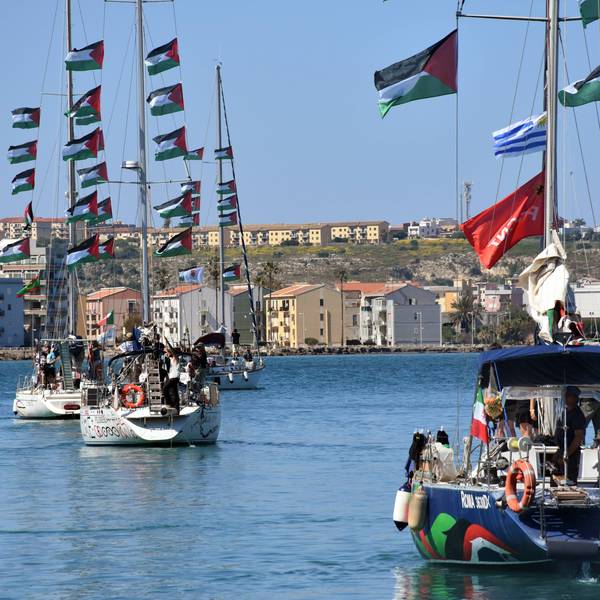
Flotilla now reduced to seven ships is heading for Gaza.
There is nothing easy about
planning or conducting an international action, especially with moving
parts called ships! Yet, activists on board keep their spirits
afloat!
After delays caused
by damaged propellers and broken steering mechanisms, the Gaza Freedom
Flotilla now reduced to seven ships is heading for Gaza.
Yesterday, May 29, 2010,
in a major confrontation, the Greek Cypriot government, under substantial
pressure from the Israeli government, refused to allow members of the
Irish and Scottish Parliament, and other dignitaries, board Challenger
1 that would bring them to the flotilla waiting some 50 miles from Cyprus.
The group travelled to the Turkish Cypriot side of the island and boarded
Challenger 1, whose steering had been repaired.
Despite delays and damaged
ships, spirit on board the ships is high, particularly on board the
Challenger 1 that arrived in the flotilla this morning at 1:30am carrying
German members of Parliament, Belgians, Irish and UK citizens, some
of whom have been on the three-day odyssey from Crete to Cyprus and
now to the flotilla.
In the 36 hours I've been
on board the 600-passenger Turkish ship, life has developed into a routine
of sleeping, eating, watching the horizon. Virtually everyone
is sleep-deprived. All of the passengers are activists in their
home countries. They have been fundraising, speaking and travelling
for months and years for the plight of the Palestinians. They
are seldom without email, computers, mobile calls. Yet, on board
the ship, there is only expensive satellite phone service, if you brought
your own sat phone, and satellite internet service on the ship is only
for journalists to file their stories about the flotilla.
So, for the first time in
many months, very active people have extra time on their hands.
Time for lengthy conversations with activists from the other 50 countries,
time for interviews with the considerable media and time for a well-needed
nap on the floor of the deck or in one of the passenger lounges.
The Mava Marmara is a day
passenger ferry with no cabins or private areas. About ninety
percent of the passengers come from Muslim countries, mostly Arab-Muslim,
but substantial delegations from Indonesia, the world's largest Muslim
country and from Malaysia. In deference to cultural norms, one lounge
has been turned into a women's only lounge, where women eat, sleep
and hold conversations on humanitarian programs, religion and a variety
of other topics, as women are wont to do. Women have free run of the
ship and participate in all the activities of the ship, but do have
a "refuge" from the activity of the ship.
Meals on board an activist
ship rather than a cruise liner are basic, but very good. Hot tea and
Nescafe are available 24 hours a day as is powdered soups. Breakfast
is tomatoes, feta cheese, bread, honey. Lunch and dinner is from
cans--the choices are beef and potatoes, beans and rice stuffed peppers.
Apples and oranges are available during the day. Snacks of nuts,
bread and muffins. Last night, we had our first hot meal. The
IHH staff cooked a meal of grilled meat kabobs, with tomatoes, cucumbers
and peppers.
Conversations automatically
turn to Gaza.
Those of us who have been
in Gaza, particularly since the Israeli 22 day attack over one year
and five months ago that killed 1440, wounded 5,000 and left 50,000
homeless, describe what we saw--the destroyed buildings, lives turned
upside down and yet an incredible spirit of the Palestinians to survive
the horrific effects of the Israeli attack and long term brutal effects
of the three year siege that has made Gaza an "open-air prison."
Last night, all the passengers
on the ship gathered to hear from the leaders of the various groups
that had sent materials and delegations. Turkey, Greece, Kuwait,
Bahrain, Malaysia, Indonesia, the United Kingdom, Scotland, Ireland
all gave spirited talks about why they have worked so hard to be here.
I've just been told that
we are going to transfer 4 of us whom have been on the Marmara onto
the Challenger 1 so 4 on that boat will be able to come on the big ship.
So, off I go to back to the
small boat and then off to Gaza we go, I hope!
Dear Common Dreams reader, It’s been nearly 30 years since I co-founded Common Dreams with my late wife, Lina Newhouser. We had the radical notion that journalism should serve the public good, not corporate profits. It was clear to us from the outset what it would take to build such a project. No paid advertisements. No corporate sponsors. No millionaire publisher telling us what to think or do. Many people said we wouldn't last a year, but we proved those doubters wrong. Together with a tremendous team of journalists and dedicated staff, we built an independent media outlet free from the constraints of profits and corporate control. Our mission has always been simple: To inform. To inspire. To ignite change for the common good. Building Common Dreams was not easy. Our survival was never guaranteed. When you take on the most powerful forces—Wall Street greed, fossil fuel industry destruction, Big Tech lobbyists, and uber-rich oligarchs who have spent billions upon billions rigging the economy and democracy in their favor—the only bulwark you have is supporters who believe in your work. But here’s the urgent message from me today. It's never been this bad out there. And it's never been this hard to keep us going. At the very moment Common Dreams is most needed, the threats we face are intensifying. We need your support now more than ever. We don't accept corporate advertising and never will. We don't have a paywall because we don't think people should be blocked from critical news based on their ability to pay. Everything we do is funded by the donations of readers like you. When everyone does the little they can afford, we are strong. But if that support retreats or dries up, so do we. Will you donate now to make sure Common Dreams not only survives but thrives? —Craig Brown, Co-founder |
There is nothing easy about
planning or conducting an international action, especially with moving
parts called ships! Yet, activists on board keep their spirits
afloat!
After delays caused
by damaged propellers and broken steering mechanisms, the Gaza Freedom
Flotilla now reduced to seven ships is heading for Gaza.
Yesterday, May 29, 2010,
in a major confrontation, the Greek Cypriot government, under substantial
pressure from the Israeli government, refused to allow members of the
Irish and Scottish Parliament, and other dignitaries, board Challenger
1 that would bring them to the flotilla waiting some 50 miles from Cyprus.
The group travelled to the Turkish Cypriot side of the island and boarded
Challenger 1, whose steering had been repaired.
Despite delays and damaged
ships, spirit on board the ships is high, particularly on board the
Challenger 1 that arrived in the flotilla this morning at 1:30am carrying
German members of Parliament, Belgians, Irish and UK citizens, some
of whom have been on the three-day odyssey from Crete to Cyprus and
now to the flotilla.
In the 36 hours I've been
on board the 600-passenger Turkish ship, life has developed into a routine
of sleeping, eating, watching the horizon. Virtually everyone
is sleep-deprived. All of the passengers are activists in their
home countries. They have been fundraising, speaking and travelling
for months and years for the plight of the Palestinians. They
are seldom without email, computers, mobile calls. Yet, on board
the ship, there is only expensive satellite phone service, if you brought
your own sat phone, and satellite internet service on the ship is only
for journalists to file their stories about the flotilla.
So, for the first time in
many months, very active people have extra time on their hands.
Time for lengthy conversations with activists from the other 50 countries,
time for interviews with the considerable media and time for a well-needed
nap on the floor of the deck or in one of the passenger lounges.
The Mava Marmara is a day
passenger ferry with no cabins or private areas. About ninety
percent of the passengers come from Muslim countries, mostly Arab-Muslim,
but substantial delegations from Indonesia, the world's largest Muslim
country and from Malaysia. In deference to cultural norms, one lounge
has been turned into a women's only lounge, where women eat, sleep
and hold conversations on humanitarian programs, religion and a variety
of other topics, as women are wont to do. Women have free run of the
ship and participate in all the activities of the ship, but do have
a "refuge" from the activity of the ship.
Meals on board an activist
ship rather than a cruise liner are basic, but very good. Hot tea and
Nescafe are available 24 hours a day as is powdered soups. Breakfast
is tomatoes, feta cheese, bread, honey. Lunch and dinner is from
cans--the choices are beef and potatoes, beans and rice stuffed peppers.
Apples and oranges are available during the day. Snacks of nuts,
bread and muffins. Last night, we had our first hot meal. The
IHH staff cooked a meal of grilled meat kabobs, with tomatoes, cucumbers
and peppers.
Conversations automatically
turn to Gaza.
Those of us who have been
in Gaza, particularly since the Israeli 22 day attack over one year
and five months ago that killed 1440, wounded 5,000 and left 50,000
homeless, describe what we saw--the destroyed buildings, lives turned
upside down and yet an incredible spirit of the Palestinians to survive
the horrific effects of the Israeli attack and long term brutal effects
of the three year siege that has made Gaza an "open-air prison."
Last night, all the passengers
on the ship gathered to hear from the leaders of the various groups
that had sent materials and delegations. Turkey, Greece, Kuwait,
Bahrain, Malaysia, Indonesia, the United Kingdom, Scotland, Ireland
all gave spirited talks about why they have worked so hard to be here.
I've just been told that
we are going to transfer 4 of us whom have been on the Marmara onto
the Challenger 1 so 4 on that boat will be able to come on the big ship.
So, off I go to back to the
small boat and then off to Gaza we go, I hope!
There is nothing easy about
planning or conducting an international action, especially with moving
parts called ships! Yet, activists on board keep their spirits
afloat!
After delays caused
by damaged propellers and broken steering mechanisms, the Gaza Freedom
Flotilla now reduced to seven ships is heading for Gaza.
Yesterday, May 29, 2010,
in a major confrontation, the Greek Cypriot government, under substantial
pressure from the Israeli government, refused to allow members of the
Irish and Scottish Parliament, and other dignitaries, board Challenger
1 that would bring them to the flotilla waiting some 50 miles from Cyprus.
The group travelled to the Turkish Cypriot side of the island and boarded
Challenger 1, whose steering had been repaired.
Despite delays and damaged
ships, spirit on board the ships is high, particularly on board the
Challenger 1 that arrived in the flotilla this morning at 1:30am carrying
German members of Parliament, Belgians, Irish and UK citizens, some
of whom have been on the three-day odyssey from Crete to Cyprus and
now to the flotilla.
In the 36 hours I've been
on board the 600-passenger Turkish ship, life has developed into a routine
of sleeping, eating, watching the horizon. Virtually everyone
is sleep-deprived. All of the passengers are activists in their
home countries. They have been fundraising, speaking and travelling
for months and years for the plight of the Palestinians. They
are seldom without email, computers, mobile calls. Yet, on board
the ship, there is only expensive satellite phone service, if you brought
your own sat phone, and satellite internet service on the ship is only
for journalists to file their stories about the flotilla.
So, for the first time in
many months, very active people have extra time on their hands.
Time for lengthy conversations with activists from the other 50 countries,
time for interviews with the considerable media and time for a well-needed
nap on the floor of the deck or in one of the passenger lounges.
The Mava Marmara is a day
passenger ferry with no cabins or private areas. About ninety
percent of the passengers come from Muslim countries, mostly Arab-Muslim,
but substantial delegations from Indonesia, the world's largest Muslim
country and from Malaysia. In deference to cultural norms, one lounge
has been turned into a women's only lounge, where women eat, sleep
and hold conversations on humanitarian programs, religion and a variety
of other topics, as women are wont to do. Women have free run of the
ship and participate in all the activities of the ship, but do have
a "refuge" from the activity of the ship.
Meals on board an activist
ship rather than a cruise liner are basic, but very good. Hot tea and
Nescafe are available 24 hours a day as is powdered soups. Breakfast
is tomatoes, feta cheese, bread, honey. Lunch and dinner is from
cans--the choices are beef and potatoes, beans and rice stuffed peppers.
Apples and oranges are available during the day. Snacks of nuts,
bread and muffins. Last night, we had our first hot meal. The
IHH staff cooked a meal of grilled meat kabobs, with tomatoes, cucumbers
and peppers.
Conversations automatically
turn to Gaza.
Those of us who have been
in Gaza, particularly since the Israeli 22 day attack over one year
and five months ago that killed 1440, wounded 5,000 and left 50,000
homeless, describe what we saw--the destroyed buildings, lives turned
upside down and yet an incredible spirit of the Palestinians to survive
the horrific effects of the Israeli attack and long term brutal effects
of the three year siege that has made Gaza an "open-air prison."
Last night, all the passengers
on the ship gathered to hear from the leaders of the various groups
that had sent materials and delegations. Turkey, Greece, Kuwait,
Bahrain, Malaysia, Indonesia, the United Kingdom, Scotland, Ireland
all gave spirited talks about why they have worked so hard to be here.
I've just been told that
we are going to transfer 4 of us whom have been on the Marmara onto
the Challenger 1 so 4 on that boat will be able to come on the big ship.
So, off I go to back to the
small boat and then off to Gaza we go, I hope!