U.S. Debate on Health Care is a Warning to Canadians
I'm inclined to believe the fierce resistance to health-care reform in the United States is the work of a small fringe.
The other possibility is that there's something deep in the psyche of Americans that drives them to defend to the death their right to deny health care to millions of their fellow citizens.
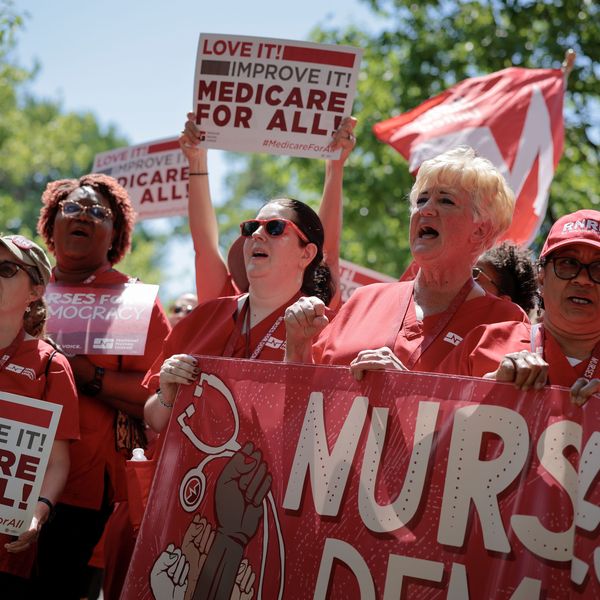
Some have attempted to downplay the scariness of recent protests against President Barack Obama's health reform efforts, noting that a lot of Americans protested George W. Bush as well.
But the anti-Obama protesters are much more extreme - and yet are treated much more respectfully. When Obama spoke in Phoenix last month, about a dozen protesters showed up carrying guns, including one who was interviewed by the national media as he strutted about freely with an assault rifle slung over his shoulder. (Anti-Bush protesters got no such media attention, and would have been arrested - if not shot - had they shown up at presidential rallies bearing assault weapons.)
While the U.S. media gave prime time to gun-toting health reform opponents, they all but ignored a Harvard study, reported last week in the American Journal of Public Health, that found nearly 45,000 people die in the U.S. each year largely because they lack health insurance.
As resistance to U.S. health reform rages on - with its inane, vicious, even racist overtones - the fiasco should remind Canadians of the dangers of allowing our public health-care system to deteriorate.
What makes health reform so elusive in the U.S. is the way its opponents - led by wealthy corporate interests - are able to play Americans off against each other.
Americans are hunkered down in their own little bunkers, watching out just for themselves and their families. Anyone proposing reforms that might result in higher taxes is met with a rifle poked out the top of the bunker.
It's this dynamic - citizens pitted against each other - that has kept Americans at each other's throats over health care for years. It's easy to understand, for instance, why middle class American taxpayers resent paying for medicaid, a public program that provides some coverage for the poor, when these same taxpayers can't afford coverage for themselves and their families.
The only real solution is public health care for all. A Canadian-style plan could save Americans $400 billion a year, Harvard's Dr. David Himmelstein wrote recently in the New England Journal of Medicine.
But Americans are so uninformed about the rest of the world that few even seem aware any Canadian can spend weeks in hospital getting state-of-the-art medical treatment and then walk out the front door without owing a penny. Such is the menace of public health care.
Universal care is extremely popular once it's in place, but it can be hard to overcome resistance to putting it in place, as the current U.S. psychodrama shows. (Canada went through a less traumatic, but still difficult initiation.)
All this should serve as a potent lesson to Canadians about the urgency of protecting our public health-care system. Once it starts to fall apart, the rich bolt from it, arrange for their own care and then object to paying taxes for a system they don't much use.
The importance of avoiding this fate has never been more apparent than now, when the snarling fury of America's current crop of right-wing extremists almost makes one nostalgic for last year's gentler, childlike lunacy of Sarah Palin.
An Urgent Message From Our Co-Founder
Dear Common Dreams reader, It’s been nearly 30 years since I co-founded Common Dreams with my late wife, Lina Newhouser. We had the radical notion that journalism should serve the public good, not corporate profits. It was clear to us from the outset what it would take to build such a project. No paid advertisements. No corporate sponsors. No millionaire publisher telling us what to think or do. Many people said we wouldn't last a year, but we proved those doubters wrong. Together with a tremendous team of journalists and dedicated staff, we built an independent media outlet free from the constraints of profits and corporate control. Our mission has always been simple: To inform. To inspire. To ignite change for the common good. Building Common Dreams was not easy. Our survival was never guaranteed. When you take on the most powerful forces—Wall Street greed, fossil fuel industry destruction, Big Tech lobbyists, and uber-rich oligarchs who have spent billions upon billions rigging the economy and democracy in their favor—the only bulwark you have is supporters who believe in your work. But here’s the urgent message from me today. It's never been this bad out there. And it's never been this hard to keep us going. At the very moment Common Dreams is most needed, the threats we face are intensifying. We need your support now more than ever. We don't accept corporate advertising and never will. We don't have a paywall because we don't think people should be blocked from critical news based on their ability to pay. Everything we do is funded by the donations of readers like you. When everyone does the little they can afford, we are strong. But if that support retreats or dries up, so do we. Will you donate now to make sure Common Dreams not only survives but thrives? —Craig Brown, Co-founder |
I'm inclined to believe the fierce resistance to health-care reform in the United States is the work of a small fringe.
The other possibility is that there's something deep in the psyche of Americans that drives them to defend to the death their right to deny health care to millions of their fellow citizens.
Some have attempted to downplay the scariness of recent protests against President Barack Obama's health reform efforts, noting that a lot of Americans protested George W. Bush as well.
But the anti-Obama protesters are much more extreme - and yet are treated much more respectfully. When Obama spoke in Phoenix last month, about a dozen protesters showed up carrying guns, including one who was interviewed by the national media as he strutted about freely with an assault rifle slung over his shoulder. (Anti-Bush protesters got no such media attention, and would have been arrested - if not shot - had they shown up at presidential rallies bearing assault weapons.)
While the U.S. media gave prime time to gun-toting health reform opponents, they all but ignored a Harvard study, reported last week in the American Journal of Public Health, that found nearly 45,000 people die in the U.S. each year largely because they lack health insurance.
As resistance to U.S. health reform rages on - with its inane, vicious, even racist overtones - the fiasco should remind Canadians of the dangers of allowing our public health-care system to deteriorate.
What makes health reform so elusive in the U.S. is the way its opponents - led by wealthy corporate interests - are able to play Americans off against each other.
Americans are hunkered down in their own little bunkers, watching out just for themselves and their families. Anyone proposing reforms that might result in higher taxes is met with a rifle poked out the top of the bunker.
It's this dynamic - citizens pitted against each other - that has kept Americans at each other's throats over health care for years. It's easy to understand, for instance, why middle class American taxpayers resent paying for medicaid, a public program that provides some coverage for the poor, when these same taxpayers can't afford coverage for themselves and their families.
The only real solution is public health care for all. A Canadian-style plan could save Americans $400 billion a year, Harvard's Dr. David Himmelstein wrote recently in the New England Journal of Medicine.
But Americans are so uninformed about the rest of the world that few even seem aware any Canadian can spend weeks in hospital getting state-of-the-art medical treatment and then walk out the front door without owing a penny. Such is the menace of public health care.
Universal care is extremely popular once it's in place, but it can be hard to overcome resistance to putting it in place, as the current U.S. psychodrama shows. (Canada went through a less traumatic, but still difficult initiation.)
All this should serve as a potent lesson to Canadians about the urgency of protecting our public health-care system. Once it starts to fall apart, the rich bolt from it, arrange for their own care and then object to paying taxes for a system they don't much use.
The importance of avoiding this fate has never been more apparent than now, when the snarling fury of America's current crop of right-wing extremists almost makes one nostalgic for last year's gentler, childlike lunacy of Sarah Palin.
I'm inclined to believe the fierce resistance to health-care reform in the United States is the work of a small fringe.
The other possibility is that there's something deep in the psyche of Americans that drives them to defend to the death their right to deny health care to millions of their fellow citizens.
Some have attempted to downplay the scariness of recent protests against President Barack Obama's health reform efforts, noting that a lot of Americans protested George W. Bush as well.
But the anti-Obama protesters are much more extreme - and yet are treated much more respectfully. When Obama spoke in Phoenix last month, about a dozen protesters showed up carrying guns, including one who was interviewed by the national media as he strutted about freely with an assault rifle slung over his shoulder. (Anti-Bush protesters got no such media attention, and would have been arrested - if not shot - had they shown up at presidential rallies bearing assault weapons.)
While the U.S. media gave prime time to gun-toting health reform opponents, they all but ignored a Harvard study, reported last week in the American Journal of Public Health, that found nearly 45,000 people die in the U.S. each year largely because they lack health insurance.
As resistance to U.S. health reform rages on - with its inane, vicious, even racist overtones - the fiasco should remind Canadians of the dangers of allowing our public health-care system to deteriorate.
What makes health reform so elusive in the U.S. is the way its opponents - led by wealthy corporate interests - are able to play Americans off against each other.
Americans are hunkered down in their own little bunkers, watching out just for themselves and their families. Anyone proposing reforms that might result in higher taxes is met with a rifle poked out the top of the bunker.
It's this dynamic - citizens pitted against each other - that has kept Americans at each other's throats over health care for years. It's easy to understand, for instance, why middle class American taxpayers resent paying for medicaid, a public program that provides some coverage for the poor, when these same taxpayers can't afford coverage for themselves and their families.
The only real solution is public health care for all. A Canadian-style plan could save Americans $400 billion a year, Harvard's Dr. David Himmelstein wrote recently in the New England Journal of Medicine.
But Americans are so uninformed about the rest of the world that few even seem aware any Canadian can spend weeks in hospital getting state-of-the-art medical treatment and then walk out the front door without owing a penny. Such is the menace of public health care.
Universal care is extremely popular once it's in place, but it can be hard to overcome resistance to putting it in place, as the current U.S. psychodrama shows. (Canada went through a less traumatic, but still difficult initiation.)
All this should serve as a potent lesson to Canadians about the urgency of protecting our public health-care system. Once it starts to fall apart, the rich bolt from it, arrange for their own care and then object to paying taxes for a system they don't much use.
The importance of avoiding this fate has never been more apparent than now, when the snarling fury of America's current crop of right-wing extremists almost makes one nostalgic for last year's gentler, childlike lunacy of Sarah Palin.