DRC: The Invisible War
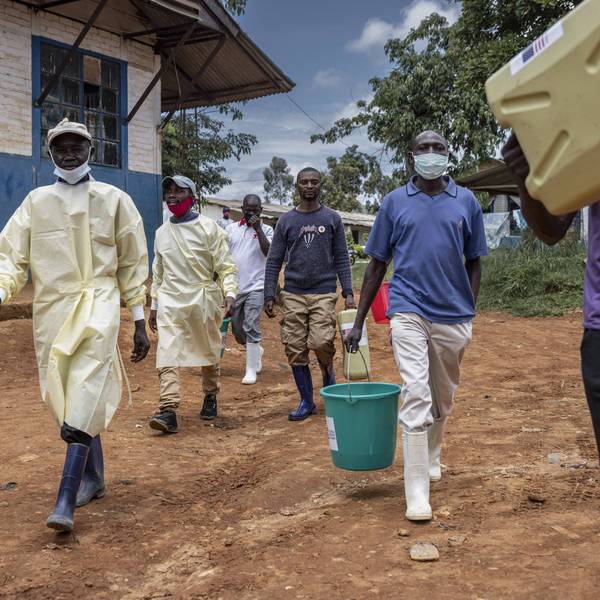
It's the deadliest conflict since World War II. More than 5 million people have died in the past decade, yet it goes virtually unnoticed and unreported in the United States. The conflict is in the Democratic Republic of Congo, in Central Africa. At its heart are the natural resources found in Congo and multinational corporations that extract them. The prospects for peace have slightly improved: A peace accord was just signed in Congo's eastern Kivu provinces. But without a comprehensive truth and reconciliation process for the entire country and a renegotiation of all mining contracts, the suffering will undoubtedly continue.
In its latest Congo mortality report, the International Rescue Committee found that a stunning 5.4 million "excess deaths" have occurred in Congo since 1998. These are deaths beyond those that would normally occur. In other words, a loss of life on the scale of Sept. 11 occurring every two days, in a country whose population is one-sixth our own.
Just a little history: After supporting the allies in World War II, Congo gained independence and elected Patrice Lumumba, a progressive Pan-Africanist, as prime minister in 1960. He was assassinated soon after in a plot involving the CIA. The U.S. installed and supported Mobutu Sese Seko, who ruled tyrannically for more than 30 years, plundering the nation. Since his death, Congo has seen war, from 1996 to 2002, provoked by invasions by neighboring Rwanda and Uganda, and ongoing conflict since then.
A particularly horrifying aspect of the conflict is the mass sexual violence being used as a weapon of war. Congolese human-rights activist Christine Schuler Deschryver told me about the hundreds of thousands of women and children subjected to rape:
"We are not talking about normal rapes anymore. We are talking about sexual terrorism, because they are destroyed-you cannot imagine what's going on in Congo. We are talking about new surgery to repair the women, because they're completely destroyed." She was describing the physical damage done to the women, and to children, one, she said, as young as 10 months old, by acts of rape that involve insertion of sticks, guns and molten plastic. Deschryver was in the U.S. as a guest of V-Day, Eve Ensler's campaign to end violence against women, in an attempt to generate public awareness of this genocide and to support the Panzi Hospital in Deschryver's hometown of Bukavu.
Maurice Carney is executive director of Friends of the Congo, in Washington, D.C.: "Two types of rape, basically, are taking place in the Congo: One is the rape of the women and children, and the other the rape of the land, natural resources. The Congo has tremendous natural resources: 30 percent of the world's cobalt, 10 percent of the world's copper, 80 percent of the world's reserves of coltan. You have to look at the corporate influence on everything that takes place in the Congo."
Among the companies Carney blames for fueling the violence are Cleveland-based OM Group, the world's leading producer of cobalt-based specialty chemicals and a leading supplier of nickel-based specialty chemicals, as well as Boston-based chemical giant Cabot Corp. Cabot produces coltan, also known as tantalum, a hard-to-extract but critical component of electronic circuitry, which is used in all cell phones and other consumer electronics. The massive demand for coltan is credited with fueling the Second Congo War of 1998-2002. A former CEO of Cabot is none other than the Bush administration's current secretary of energy, Samuel Bodman. Phoenix-based Freeport-McMoRan, which took over the Phelps Dodge company's enormous mining concession in the Congo, is also in on the game.
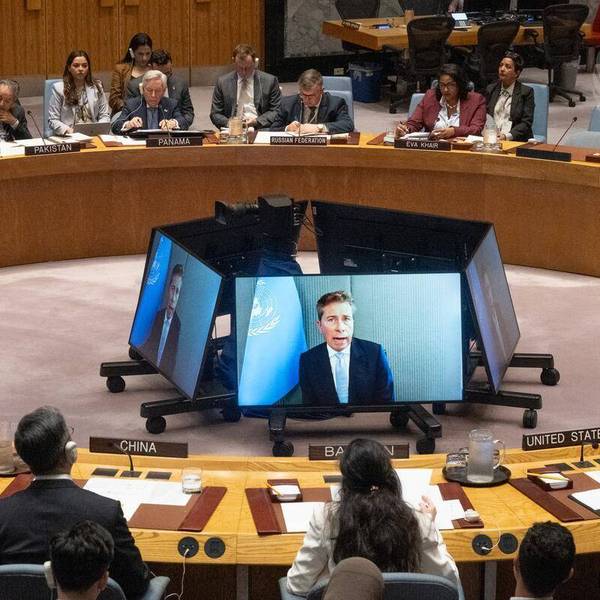
The United Nations has issued several reports that are highly critical of illegal corporate exploitation of the Congo's minerals. A Congolese government review of more than 60 mining contracts call for their renegotiation or outright cancellation. Says Carney, "Eighty percent of the population live on 30 cents a day or less, with billions of dollars going out the back door and into the pockets of mining companies." An important question for us in the U.S. is: How could close to 6 million people die from war and related disease in one country in less than a decade and go virtually unnoticed?
Amy Goodman is the host of "Democracy Now!," a daily international TV/radio news hour airing on 500 stations in North America.
(c) 2008 Amy Goodman; distributed by King Features Syndicate
An Urgent Message From Our Co-Founder
Dear Common Dreams reader, It’s been nearly 30 years since I co-founded Common Dreams with my late wife, Lina Newhouser. We had the radical notion that journalism should serve the public good, not corporate profits. It was clear to us from the outset what it would take to build such a project. No paid advertisements. No corporate sponsors. No millionaire publisher telling us what to think or do. Many people said we wouldn't last a year, but we proved those doubters wrong. Together with a tremendous team of journalists and dedicated staff, we built an independent media outlet free from the constraints of profits and corporate control. Our mission has always been simple: To inform. To inspire. To ignite change for the common good. Building Common Dreams was not easy. Our survival was never guaranteed. When you take on the most powerful forces—Wall Street greed, fossil fuel industry destruction, Big Tech lobbyists, and uber-rich oligarchs who have spent billions upon billions rigging the economy and democracy in their favor—the only bulwark you have is supporters who believe in your work. But here’s the urgent message from me today. It's never been this bad out there. And it's never been this hard to keep us going. At the very moment Common Dreams is most needed, the threats we face are intensifying. We need your support now more than ever. We don't accept corporate advertising and never will. We don't have a paywall because we don't think people should be blocked from critical news based on their ability to pay. Everything we do is funded by the donations of readers like you. When everyone does the little they can afford, we are strong. But if that support retreats or dries up, so do we. Will you donate now to make sure Common Dreams not only survives but thrives? —Craig Brown, Co-founder |
It's the deadliest conflict since World War II. More than 5 million people have died in the past decade, yet it goes virtually unnoticed and unreported in the United States. The conflict is in the Democratic Republic of Congo, in Central Africa. At its heart are the natural resources found in Congo and multinational corporations that extract them. The prospects for peace have slightly improved: A peace accord was just signed in Congo's eastern Kivu provinces. But without a comprehensive truth and reconciliation process for the entire country and a renegotiation of all mining contracts, the suffering will undoubtedly continue.
In its latest Congo mortality report, the International Rescue Committee found that a stunning 5.4 million "excess deaths" have occurred in Congo since 1998. These are deaths beyond those that would normally occur. In other words, a loss of life on the scale of Sept. 11 occurring every two days, in a country whose population is one-sixth our own.
Just a little history: After supporting the allies in World War II, Congo gained independence and elected Patrice Lumumba, a progressive Pan-Africanist, as prime minister in 1960. He was assassinated soon after in a plot involving the CIA. The U.S. installed and supported Mobutu Sese Seko, who ruled tyrannically for more than 30 years, plundering the nation. Since his death, Congo has seen war, from 1996 to 2002, provoked by invasions by neighboring Rwanda and Uganda, and ongoing conflict since then.
A particularly horrifying aspect of the conflict is the mass sexual violence being used as a weapon of war. Congolese human-rights activist Christine Schuler Deschryver told me about the hundreds of thousands of women and children subjected to rape:
"We are not talking about normal rapes anymore. We are talking about sexual terrorism, because they are destroyed-you cannot imagine what's going on in Congo. We are talking about new surgery to repair the women, because they're completely destroyed." She was describing the physical damage done to the women, and to children, one, she said, as young as 10 months old, by acts of rape that involve insertion of sticks, guns and molten plastic. Deschryver was in the U.S. as a guest of V-Day, Eve Ensler's campaign to end violence against women, in an attempt to generate public awareness of this genocide and to support the Panzi Hospital in Deschryver's hometown of Bukavu.
Maurice Carney is executive director of Friends of the Congo, in Washington, D.C.: "Two types of rape, basically, are taking place in the Congo: One is the rape of the women and children, and the other the rape of the land, natural resources. The Congo has tremendous natural resources: 30 percent of the world's cobalt, 10 percent of the world's copper, 80 percent of the world's reserves of coltan. You have to look at the corporate influence on everything that takes place in the Congo."
Among the companies Carney blames for fueling the violence are Cleveland-based OM Group, the world's leading producer of cobalt-based specialty chemicals and a leading supplier of nickel-based specialty chemicals, as well as Boston-based chemical giant Cabot Corp. Cabot produces coltan, also known as tantalum, a hard-to-extract but critical component of electronic circuitry, which is used in all cell phones and other consumer electronics. The massive demand for coltan is credited with fueling the Second Congo War of 1998-2002. A former CEO of Cabot is none other than the Bush administration's current secretary of energy, Samuel Bodman. Phoenix-based Freeport-McMoRan, which took over the Phelps Dodge company's enormous mining concession in the Congo, is also in on the game.
The United Nations has issued several reports that are highly critical of illegal corporate exploitation of the Congo's minerals. A Congolese government review of more than 60 mining contracts call for their renegotiation or outright cancellation. Says Carney, "Eighty percent of the population live on 30 cents a day or less, with billions of dollars going out the back door and into the pockets of mining companies." An important question for us in the U.S. is: How could close to 6 million people die from war and related disease in one country in less than a decade and go virtually unnoticed?
Amy Goodman is the host of "Democracy Now!," a daily international TV/radio news hour airing on 500 stations in North America.
(c) 2008 Amy Goodman; distributed by King Features Syndicate
It's the deadliest conflict since World War II. More than 5 million people have died in the past decade, yet it goes virtually unnoticed and unreported in the United States. The conflict is in the Democratic Republic of Congo, in Central Africa. At its heart are the natural resources found in Congo and multinational corporations that extract them. The prospects for peace have slightly improved: A peace accord was just signed in Congo's eastern Kivu provinces. But without a comprehensive truth and reconciliation process for the entire country and a renegotiation of all mining contracts, the suffering will undoubtedly continue.
In its latest Congo mortality report, the International Rescue Committee found that a stunning 5.4 million "excess deaths" have occurred in Congo since 1998. These are deaths beyond those that would normally occur. In other words, a loss of life on the scale of Sept. 11 occurring every two days, in a country whose population is one-sixth our own.
Just a little history: After supporting the allies in World War II, Congo gained independence and elected Patrice Lumumba, a progressive Pan-Africanist, as prime minister in 1960. He was assassinated soon after in a plot involving the CIA. The U.S. installed and supported Mobutu Sese Seko, who ruled tyrannically for more than 30 years, plundering the nation. Since his death, Congo has seen war, from 1996 to 2002, provoked by invasions by neighboring Rwanda and Uganda, and ongoing conflict since then.
A particularly horrifying aspect of the conflict is the mass sexual violence being used as a weapon of war. Congolese human-rights activist Christine Schuler Deschryver told me about the hundreds of thousands of women and children subjected to rape:
"We are not talking about normal rapes anymore. We are talking about sexual terrorism, because they are destroyed-you cannot imagine what's going on in Congo. We are talking about new surgery to repair the women, because they're completely destroyed." She was describing the physical damage done to the women, and to children, one, she said, as young as 10 months old, by acts of rape that involve insertion of sticks, guns and molten plastic. Deschryver was in the U.S. as a guest of V-Day, Eve Ensler's campaign to end violence against women, in an attempt to generate public awareness of this genocide and to support the Panzi Hospital in Deschryver's hometown of Bukavu.
Maurice Carney is executive director of Friends of the Congo, in Washington, D.C.: "Two types of rape, basically, are taking place in the Congo: One is the rape of the women and children, and the other the rape of the land, natural resources. The Congo has tremendous natural resources: 30 percent of the world's cobalt, 10 percent of the world's copper, 80 percent of the world's reserves of coltan. You have to look at the corporate influence on everything that takes place in the Congo."
Among the companies Carney blames for fueling the violence are Cleveland-based OM Group, the world's leading producer of cobalt-based specialty chemicals and a leading supplier of nickel-based specialty chemicals, as well as Boston-based chemical giant Cabot Corp. Cabot produces coltan, also known as tantalum, a hard-to-extract but critical component of electronic circuitry, which is used in all cell phones and other consumer electronics. The massive demand for coltan is credited with fueling the Second Congo War of 1998-2002. A former CEO of Cabot is none other than the Bush administration's current secretary of energy, Samuel Bodman. Phoenix-based Freeport-McMoRan, which took over the Phelps Dodge company's enormous mining concession in the Congo, is also in on the game.
The United Nations has issued several reports that are highly critical of illegal corporate exploitation of the Congo's minerals. A Congolese government review of more than 60 mining contracts call for their renegotiation or outright cancellation. Says Carney, "Eighty percent of the population live on 30 cents a day or less, with billions of dollars going out the back door and into the pockets of mining companies." An important question for us in the U.S. is: How could close to 6 million people die from war and related disease in one country in less than a decade and go virtually unnoticed?
Amy Goodman is the host of "Democracy Now!," a daily international TV/radio news hour airing on 500 stations in North America.
(c) 2008 Amy Goodman; distributed by King Features Syndicate