SUBSCRIBE TO OUR FREE NEWSLETTER
Daily news & progressive opinion—funded by the people, not the corporations—delivered straight to your inbox.
5
#000000
#FFFFFF
To donate by check, phone, or other method, see our More Ways to Give page.
Daily news & progressive opinion—funded by the people, not the corporations—delivered straight to your inbox.
"Supplies of aviation fuel reaching the military enable these war crimes," warned one human rights campaigner. "These shipments must stop now."
More than 100 people including at least 30 children were reportedly killed Tuesday in airstrikes by Myanmar's military dictatorship targeting opponents of the coup regime.
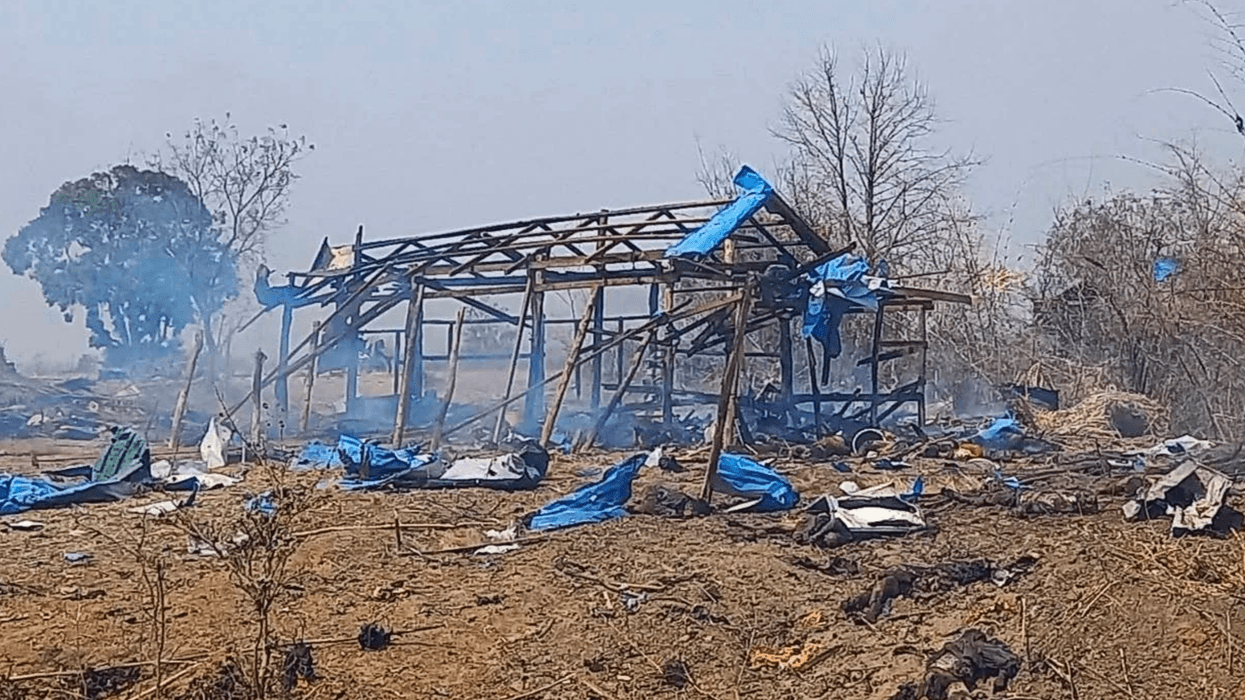
Witnesses and members of the opposition National Unity Government told reporters that a military jet and Mi-35 helicopter gunship bombed and strafed a gathering marking the opening of a new office of the People's Defense Force (PDF), a militant resistance group, in the village of Pa Zi Gyi, Kanbalu Township in the country's northwestern Sagaing region.
"This was a war crime," Byar Kyi, a resistance fighter who helped recover victims' bodies, told The New York Times. "The place they attacked was not a military target."
Tom Andrews, the United Nations' special rapporteur for human rights in Myanmar, tweeted: "The Myanmar military's attacks against innocent people, including today's airstrike in Sagaing, [are] enabled by world indifference and those supplying them with weapons. How many Myanmar children need to die before world leaders take strong, coordinated action to stop this carnage?"
One villager told the BBC that the jet bombed Pa Zi Gyi at about 7:00 am local time, followed by a sustained 20-minute attack by the helicopter.
Local residents and journalists uploaded gruesome photos and videos showing dead and dismembered children, many of their bodies burned or blasted beyond recognition, lying strewn about the bombed-out village in the wake of the attack.
"The corpses cannot be identified since they are all scattered in body parts—legs and heads," one rescue worker told The Irrawaddy, an anti-junta news site. "After gathering them all, we burned them."
"The corpses cannot be identified since they are all scattered in body parts—legs and heads."
A resident of a neighboring village told the same publication that "at the moment it's hard to say exactly how many casualties there were."
"We haven't been able to retrieve bodies and body parts, as the area where the air strike occurred is still burning," they added.
Regional media also reported at least 11 deaths in a Monday airstrike on a high school run by the Chin National Defense Force in Falam Township, Chin state.
Myanmar's military—which seized power in a February 2021 coup—frequently targets anti-regime strongholds including Sagaing and Chin state. According to a BBC analysis published at the end of January, there have been over 600 aerial attacks by the junta's forces since the coup.
Last September, a pair of military helicopters attacked a school in Sagaing, killing at least 11 children, according to the United Nations children's agency. The following month, regime warplanes bombed an outdoor concert in Kachin state, killing at least 80 people.
"The military continues its mindless war on our country's own people. Their sole aim is to consolidate power through death and destruction. They will not succeed," National Unity Government Acting President Duwa Lashi La said in a Tuesday Facebook post.
"We will continue our fight for a new Myanmar," he added. "Our goal is a Myanmar in which such atrocities cannot occur and where power derives from the will of the people, not force of arms."
Human rights groups amplified calls to suspend aviation fuel shipments to Myanmar's military in the wake of the latest airstrikes.
"The relentless air attacks across Myanmar highlight the urgent need to suspend the import of aviation fuel," Montse Ferrer, Amnesty International's business and human rights researcher, said in a statement.
"Amnesty reiterates its calls on all states and businesses to stop shipments that may end up in the hands of the Myanmar Air Force," Ferrer continued. "This supply chain fuels violations of international humanitarian law, including war crimes, and it must be disrupted in order to save lives."
Referring to the Association of Southeast Asian Nations, Ferrer added: "Instead of taking a back seat, ASEAN must step up and play a leading role in resolving the human rights catastrophe in Myanmar. The United Nations Security Council must find ways to push through effective actions to hold the Myanmar military accountable, including by referring the situation in the country to the International Criminal Court."
The European Union and countries including Canada, the United Kingdom, and the United States have moved to block the sale, supply, and shipment of aviation fuel to the Myanmarese regime and associated companies and businesspeople.
However, a March report from Amnesty International, Global Witness, and Burma Campaign U.K. showed Asian and European companies continued to be involved in supplying Myanmar's military with aviation fuel.
"Since the military's coup in 2021, it has brutally suppressed its critics and attacked civilians from the ground and the air. Supplies of aviation fuel reaching the military enable these war crimes," Ferrer said last month. "These shipments must stop now."
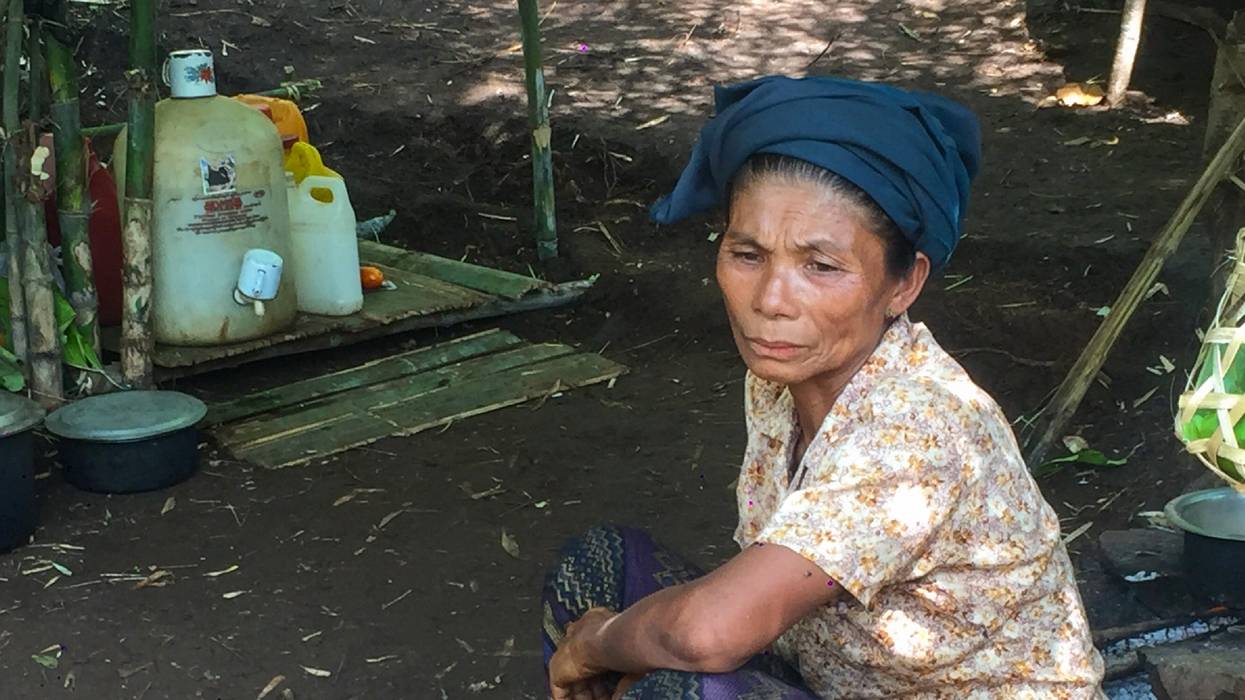
The United Nations special rapporteur for Myanmar warned Tuesday that persistent violence waged by the nation's military junta could lead to "mass deaths from starvation, disease, and exposure" as more than 100,000 people have been forced to flee for their lives into nearby forests, where they lack access to food, safe drinking water, and adequate shelter.
"It has been reported that junta forces are stopping aid from reaching these desperate people by setting up military blockades," said Tom Andrews, who has served as the U.N.'s special rapporteur for Myanmar since last year. "I have also received distressing reports that junta forces are laying landmines on public roads. Any pressure or leverage U.N. member states can put on the junta must now be exerted."
"These attacks against civilians throughout Kayah State are the latest in a series throughout Myanmar causing massive displacement and humanitarian suffering."
--Tom Andrews, U.N. special rapporteur for Myanmar
The military junta seized control of Myanmar's government in February after the nation's armed forces arrested civilian leader Daw Aung San Suu Kyi and declared a state of emergency, transferring power to top general Min Aung Hlaing.
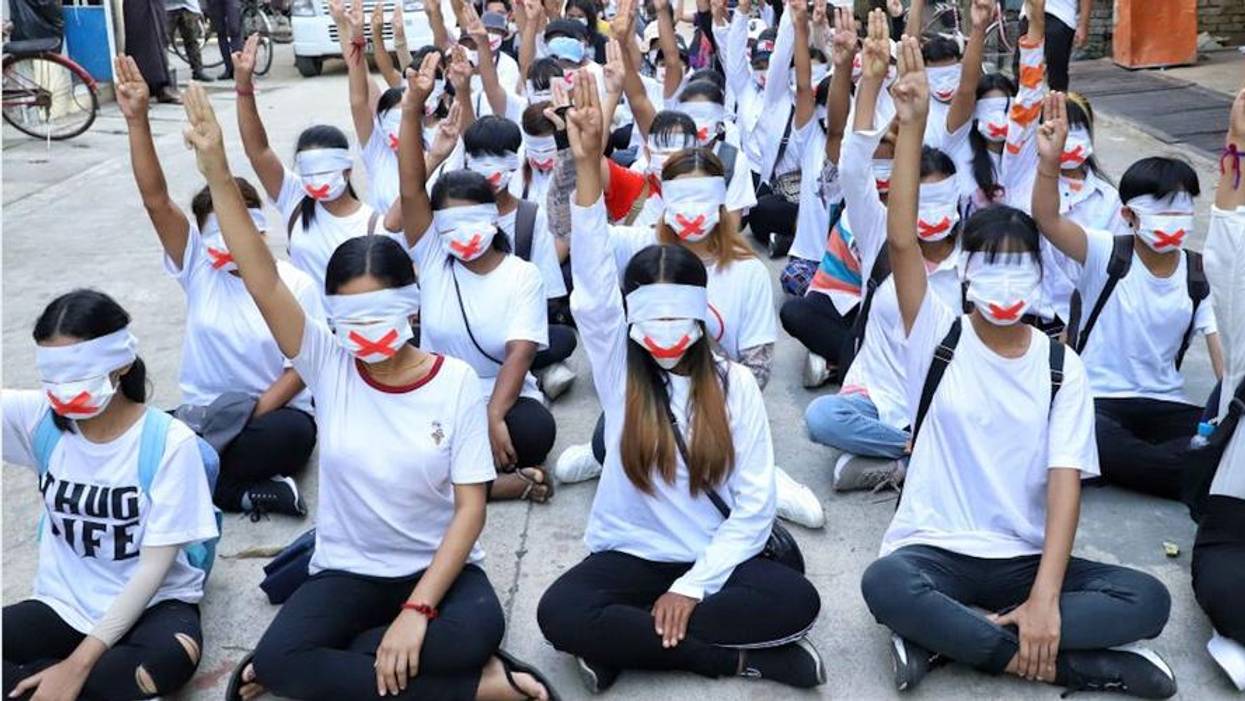
The coup sparked mass street protests that have been met with vicious repression by Myanmar's military, which since taking power has killed more than 800 civilians, detained nearly 6,000 people, and subverted the Southeast Asian country's tenuous steps toward democracy.
According to the U.N., around 100,000 men, women, and children have been internally displaced in Kayah State, where members of the People's Defense Force--a group formed in opposition to the coup regime--have fought Myanmar's heavily-armed military.
One activist in Kayah State told NBC News that some people who have been forced to flee their homes "have to survive on rice broth as we cannot deliver rice bags to them." The activist said members of the Myanmar military have been arresting people for attempting to deliver aid to the displaced.
Al Jazeera reported Tuesday that "people living in Kayah [say] the military has launched indiscriminate air attacks and shelling in civilian areas after fighting broke out on May 21 between the security forces" and the People's Defense Force.
"There have been several deaths, including that of a 14-year-old boy who was shot dead in Loikaw township and a young man who was shot in the head with his hands tied behind his back," Al Jazeera continued. "The military has repeatedly attacked churches in the predominantly Christian area, in one instance killing four people who were among 300 villagers sheltering at a Catholic church in Loikaw."
In his statement on Tuesday, Andrews said the international community must push the Myanmar regime to immediately "stop terrorizing the population" and "open access roads and allow life-saving aid to reach those in need."
"These attacks against civilians throughout Kayah State are the latest in a series throughout Myanmar causing massive displacement and humanitarian suffering, including Mutraw in Karen State, Mindat in Chin State, and Bago City, among other areas," said Andrews. "Now more than ever, the international community must cut off access to the resources the junta needs to continue these brutal attacks on the people of Myanmar."
While Myanmar's military celebrated Armed Forces Day on Saturday with a parade through the capital, the ruling junta's security forces killed more than 100 people elsewhere throughout the country in the deadliest crackdown on peaceful pro-democracy protesters since last month's coup.
According to Myanmar Now, soldiers and police had killed at least 114 people, including children, nationwide as of 9:30 pm on Saturday in Myanmar.
"The military celebrated Armed Forces Day by committing mass murder against the people it should be defending," said Tom Andrews, the United Nations special rapporteur on the situation of human rights in Myanmar. "The Civil Disobedience Movement is responding with powerful weapons of peace."
"It's past time," Andrews added, "for the world to respond in kind with and for the people of Myanmar."
Saturday's brutal massacre, which came just one day after a regional human rights group reported that the total death toll since the military regime seized power on February 1 had climbed to 328, was widely condemned by diplomats around the world.
"This bloodshed is horrifying," said U.S. Ambassador Thomas Vajda. "Myanmar's people have spoken clearly: they do not want to live under military rule."
The European Union's delegation to Myanmar tweeted: "This 76th Myanmar Armed Forces Day will stay engraved as a day of terror and dishonor. The killing of unarmed civilians, including children, are indefensible acts."
British foreign secretary Dominic Raab said that "today's killing of unarmed civilians, including children, marks a new low. We will work with our international partners to end this senseless violence, hold those responsible to account, and secure a path back to democracy."
In a statement issued Thursday, Andrews had warned that "conditions in Myanmar are deteriorating, but they will likely get much worse without an immediate robust, international response in support of those under siege."
"It is imperative that the international community heed the recent call of U.N. Secretary-General Antonio Guterres for a 'firm, unified international response,'" Andrews said. "To date, however, the limited sanctions imposed by member states do not cut the junta's access to revenue that help sustain its illegal activities, and the slow pace of diplomacy is out of step with the scale of the crisis."
Andrews noted that "the incremental approach to sanctions has left the most lucrative business assets of the junta unscathed. It needs to be replaced by robust action that includes a diplomatic offensive designed to meet the moment."
"Without a focused, diplomatic solution, including the hosting of an emergency summit that brings together Myanmar's neighbors and those countries with great influence in the region, I fear the situation of human rights in Myanmar will further deteriorate as the junta increases the rate of murders, enforced disappearances, and torture," he said.
Andrews' fears were realized Saturday as the military escalated its use of lethal violence against anti-coup demonstrators and other civilians.
"They are killing us like birds or chickens, even in our homes," resident Thu Ya Zaw told Reuters in the central town of Myingyan. "We will keep protesting regardless... We must fight until the junta falls."
The resolve of pro-democracy protesters is evident. According to Al Jazeera, citizens defied a "military warning that they could be shot 'in the head and back'" in order to take to "the streets of Yangon, Mandalay and other towns."
Kyaw Win, the director of the Burma Human Rights Network in the United Kingdom, told BBC News that the military had shown it had "no limits, no principles."
"It's a massacre, it's not a crackdown anymore," Win added.
In his statement released prior to Saturday's wholesale killing, Andrews emphasized that "it is critical that the people of Myanmar... the duly elected illegally deposed parliamentarians who make up the Committee Representing Pyidaungsu Hluttaw, and opposition leaders and activists see that the international community is working towards a diplomatic solution in support of the peaceful Civil Disobedience Movement."
"This combined course of action--domestic peaceful resistance, sustained pressure, and international diplomatic momentum--will have a greater chance for success than taking up arms," Andrews continued, "and will save untold numbers of lives."
"Member states have an opportunity to demonstrate this alternative, but the window in which this can be achieved is closing rapidly," he said, adding: "I fear that the international community has only a short time remaining to act."
That warning has become even more urgent since it was first shared.
More than 320 Burmese people have been killed by soldiers and police following the February 1 military coup in Myanmar, a regional human rights group said Friday as regime forces reportedly killed eight more pro-democracy protesters and the top United Nations expert on the country warned that conditions "will likely get much worse" absent urgent international response.
"I fear the situation of human rights in Myanmar will further deteriorate as the junta increases the rate of murders, enforced disappearances, and torture."
--Tom Andrews, U.N.
The Thailand-based Assistance Association for Political Prisoners (AAPP) said in its daily update Friday that the eight new fatalities bring the total death toll to 328 since the start of the coup. The group also said the total number of people arrested rose to 3,070.
"Although it has been 54 days since the coup, civilians are still subject to various forms of brutal repression by the junta, but demonstrations continue," AAPP said, adding that "deaths, injuries, arrests--even against children--and torture" occur daily, "as does destruction, arson, looting, and raids."
"The illegitimate military regime's terror, even against children, is intensifying," the group added.
The international charity Save the Children said earlier this week that more than 20 children have been killed by junta forces. Tuesday night, 7-year-old Khin Myo Chit was shot and killed in her family's Mandalay home as the terrified child ran to her father after police burst into their house.
May Thu Sumaya, sister of the slain girl, told the BBC that officers "kicked the door to open it" and "when the door was open, they asked my father whether there were any other people in the house." Suspecting he was lying when he said there weren't, the officers began searching the house. May said Khin ran to her father, "then they shot and hit her."
Khin's killing came the day after regime forces reportedly killed Tun Tun Aung, a 14-year-old boy, at his family's home, also in Mandalay.
"The death of these children is especially concerning given that they reportedly were killed while being at home, where they should have been safe from harm," said Save the Children. "The fact that so many children are being killed on an almost daily basis now shows a complete disregard for human life by security forces."
The latest killings came as Tom Andrews, the United Nations special rapporteur on the human rights situation in the embattled country, issued a statement Thursday warning that "conditions in Myanmar are deteriorating," and that "they will likely get much worse without an immediate robust, international response in support of those under siege."
"Without a focused, diplomatic solution, including the hosting of an emergency summit that brings together Myanmar's neighbors and those countries with great influence in the region, I fear the situation of human rights in Myanmar will further deteriorate as the junta increases the rate of murders, enforced disappearances, and torture," said Andrews.
"Member states have an opportunity to demonstrate this alternative, but the window in which this can be achieved is closing rapidly," he added. "I fear that the international community has only a short time remaining to act."
Sunday marked the deadliest day of anti-coup demonstrations in Myanmar since the country's military seized power on February 1, and after security forces opened fire on protesters this weekend--killing at least 51 people, with most casualties reported in the city of Yangon--the widely condemned ruling junta has extended the geographic reach of its martial law order.
New York Times foreign correspondent Richard Paddock described the military's intensification of violence against pro-democracy protesters this past weekend:
Despite weeks of killings by the security forces, a nationwide civil disobedience movement--which has paralyzed much of the economy as well as the government's operations--shows no sign of waning...
Late Sunday afternoon, another wave of killing began in the Hlaingthaya district of Yangon, which is heavily populated by factory workers and where the protests against military rule have been among the most aggressive. A large force of soldiers and police officers was deployed to the township and fatally shot at least 31 protesters, according to a doctor at Hlaingthaya General Hospital. It was the highest daily death toll in one location since the coup.
On Sunday evening, the ruling junta declared martial law in the district--the first such declaration since the takeover--allowing the military to assume all authority in the township from the police.
As BBC News reported Monday: "The military initially declared martial law in two districts of Yangon, the country's largest city, on Sunday after Chinese businesses were attacked. Martial law was imposed in several other areas of Yangon and Mandalay on Monday. Protesters there can now be tried in military courts."
Myanmar's troops and police have responded to the country's wave of nonviolent protests with an increasingly deadly crackdown on pro-democracy demonstrators who are demanding a return to civilian rule and the release of all imprisoned government officials.
According to the Assistance Association for Political Prisoners, more than 125 people have been killed, hundreds more wounded, and over 1,830 arbitrarily detained in Myanmar since last month, amid the junta's increasingly violent repression of widespread street protests that erupted after the country's top general, Min Aung Hlaing, seized power.
While ousted civilian leader Aung San Suu Kyi of the National League for Democracy (NLD) party has in recent years faced intense global criticism for her alleged complicity in the military's genocidal assault on Myanmar's Rohingya Muslim minority, hundreds of thousands of people throughout the Southeast Asian country have made it clear that they oppose her detention and want to be governed by elected officials, not the armed forces.
The NLD enjoyed a landslide victory in parliamentary elections last November, but most of the party leadership was arrested after the coup, which the military justified with unsubstantiated allegations of voter fraud.
Suu Kyi "has been held at an unknown location since the February 1 coup," BBC News reported. "She is due to face a slew of charges her supporters say are fabricated. On Monday, she was due to appear in court, but the virtual hearing was adjourned due to internet problems."
Some of the displaced members of parliament "have refused to accept last month's coup and have gone into hiding, forming a new group, the CRPH, or Committee for Representing the Union Parliament," the news outlet noted. Mahn Win Khaing Than, a member of the deposed NLD and leader of the committee, "urged protesters over the weekend to defend themselves against the military crackdown during what he called a 'revolution'... adding: 'the uprising must win.'"
The Associated Press reported on Khaing Than's first public address since the coup:
"This is the darkest moment of the nation and the moment that the dawn is close," he said in a video posted on the shadow government's website and social media.
"In order to form a federal democracy, which all ethnic brothers who have been suffering various kinds of oppressions from the dictatorship for decades really desired, this revolution is the chance for us to put our efforts together," he said.
He added: "We will never give up to an unjust military, but we will carve our future together with our united power. Our mission must be accomplished."
At the end of the message, he flashed the three-finger salute that has become a symbol of resistance to the military rulers.
BBC News noted that "the military considers the CRPH illegal, warning that anyone cooperating with them will face treason charges."
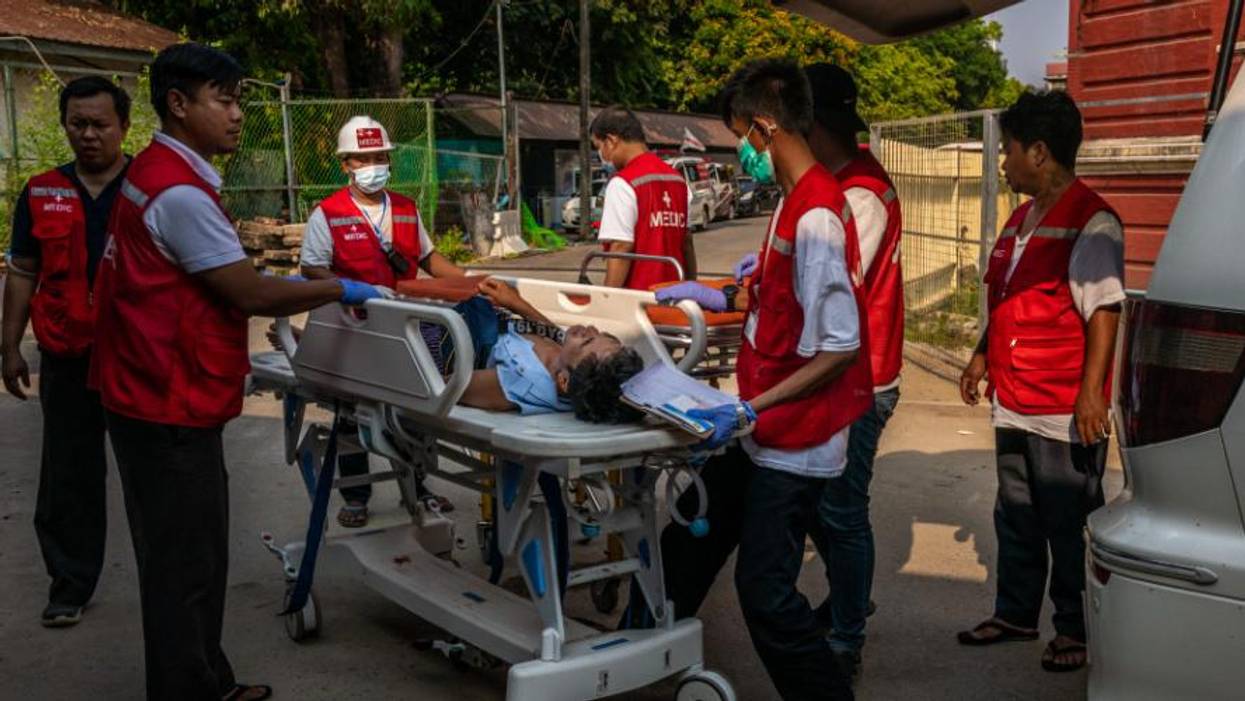
According to AP, the actual death toll of pro-democracy protesters in Myanmar is "likely higher, as police apparently seized some bodies, and some victims have had serious gunshot wounds that medical staff at makeshift clinics would be hard-pressed to treat. Many hospitals are occupied by security forces, and as a result are boycotted by medical personnel and shunned by protesters."
"Police have also aggressively patrolled residential neighborhoods at night, firing into the air and setting off stun grenades as an intimidation tactic," the news outlet added. "They have also taken people from their homes in targeted raids with minimal resistance. In at least two known cases, the detainees died in custody within hours of being hauled away."
Zaw Myat Lynn, a well-known community organizer, teacher, and activist in the NLD, is one of the individuals who was arrested and tortured to death, The Guardian reported Monday.
The ruling junta's escalation of violence against pro-democracy protesters this past weekend comes after United Nations special rapporteur Tom Andrews warned that Myanmar's military regime had likely committed "crimes against humanity," as Common Dreams reported last week.
In the Times, Paddock wrote that "the ruling generals' current strategy, it appears, is to wear down the populace with daily killings and arbitrary violence, calculating that people will abandon their hopes for democracy if enough of them are slaughtered, beaten, and arrested."
"But so far," he added, "the bloodshed has only solidified the resistance."
Andrews, for his part, urged U.N. member states to heed his call to cut off the Myanmar military's access to cash and weapons.
As soldiers and police on Thursday continued their brutal crackdown against pro-democracy demonstrators in Myanmar, United Nations special rapporteur Tom Andrews said the military regime that seized control of the nation last month has likely committed "crimes against humanity."
"Myanmar is being controlled by a murderous, illegal regime."
--Thomas Andrews,
U.N. special rapporteur
Describing what he called the "horrible truth" of mounting killings and arbitrary detentions, Andrews said in an address to the U.N. Human Rights Council that "Myanmar security forces have murdered at least 70 people" and arrested more than 2,000 since the February 1 coup.
"Those murdered were fathers, sons, mothers, daughters, husbands, and wives," said Andrews, a former Democratic congressman from Maine. "They were educators, they were engineers, they were students, they were many ages, but more than half of those murdered were members of Generation Z, or young people under the age of 25."
Andrews cited "extensive video evidence of security forces viciously beating protesters, medics, and bystanders," and of soldiers and police rampaging through neighborhoods while "firing indiscriminately into people's homes."
Meanwhile, said Andrews, "the junta has systematically destroyed legal protections, from freedom of expression, assembly, and association, [and] to the right to privacy" while empowering its forces "to invade people's homes without warning."
Andrews said the regime has also suspended habeas corpus, "criminalized any criticism of the junta... enabled sweeping surveillance authorities, decimated the free press, banned most trade unions," and proscribed "gatherings of more than five people."
"Myanmar is being controlled by a murderous, illegal regime," asserted Andrews, adding that "its current leadership perpetrated the atrocity crimes that are the focus of the charge of genocide before the International Court of Justice," a reference to the mass killing, repression, and expulsion of hundreds of thousands of Rohingya Muslims since 2017.
"The crimes against Rohingya people have continued," said Andrews. "Throughout 2020, Myanmar security forces engaged in torture, murder, and enforced disappearances of Rohingya, killing at least 33."
However, Andrews' main focus was on the anti-coup crackdown. He accused the junta of "likely engaging in crimes against humanity, including the acts of murder, enforced disappearance, persecution, torture, and imprisonment in violation of fundamental rules of international law."
These crimes, said Andrews, are being committed as part of a coordinated campaign "directed against the civilian population" and "with the knowledge of senior leadership."
"The people of Myanmar need not only words of support but supportive action," Andrews stressed. "They need the help of the international community, now."
Andrews urged U.N. member states to sanction the junta's senior officials and military-owned enterprises, outlaw arms exports to the regime, charge its leaders under applicable universal jurisdiction laws, suspend developmental aid to Myanmar, and deny recognition of the illegitimate coup government.
His remarks came amid reports that junta forces killed nine more protesters Thursday.
Junta leaders refuted Andrews' allegations. Following his address, Chan Aye, the permanent secretary of Myanmar's foreign ministry, told the Human Rights Council that junta forces "have been exercising utmost restraint to deal with violent protests."
Amnesty International, however, on Thursday published a damning report and video documenting the regime's deadly repression.
"These Myanmar military tactics are far from new, but their killing sprees have never before been livestreamed for the world to see," said Joanne Mariner, Amnesty's director of crisis response.
Maine is a small state--1.3 million. Its largest city is Portland, with a population of 66,000.
Maine is one of the few states where Presidential national delegates are chosen at local caucuses. The Maine Democratic Presidential Caucuses will be held on March 6, 2016--8 months from now. And the General Election is still 16 months away.
Last Monday evening, July 6, Democratic Presidential candidate Bernie Sanders brought his surging campaign to the Cross Insurance Arena in downtown Portland, Maine.
The Sanders campaign originally booked Portland's Ocean Gateway, a venue that holds about 800 people standing. Soon, thousands of RSVPs were pouring in and the event was moved to the much larger Cross Insurance Arena.

An hour before the rally's scheduled 7 pm start time, long lines snaked through downtown Portland with thousands waiting to get in. (The Common Dreams offices are just a block away.)
Bernie packed the house. The Bangor Daily News reported:
The 2016 election may be 16 months away, but you wouldn't know it from the thousands of people who turned out Monday evening to cheer on Democratic presidential candidate Bernie Sanders at the Cross Insurance Arena in Portland.
What was scheduled as a town hall forum had become a full-blown rally by Monday night. Sanders' speech was delayed by 20 minutes as organizers let in the throngs of people still awaiting entry. Estimates pegged the crowd at 8,000 to 9,000 people.
(At 7:15 pm, several of our staff writers were turned away at the doors to the then-full arena; a couple hundred seats behind a curtain were blocked off keeping the turnout number below the 9,500 figure.)
This campaign is catching fire for a simple reason, and the simple reason is we are telling the truth.
--Bernie SandersMaine political circles are still buzzing about the gathering--not just the size of the audience, but the crowd's youthful energy and intensity.
It was epic.
No one we spoke with could remember a recent Maine Democratic rally that could compare. We decided to do some research and found that all the large rallies over the past 25 years were either for sitting U.S. Presidents or just before General Elections/Presidential Caucuses. Here's what we found:
* * * * *
The biggest Democratic rally in Maine's history appears to be the 1960 Election Eve visit to Lewiston by candidate John F. Kennedy on November 6/7, 1960. The Lewiston Evening Journal reported that 14,000 came out for the scheduled 9 pm speech and that 8,000 remained when Kennedy arrived at the rally just before midnight.
The largest Democratic political rallies held in Maine over the past 25 years:




Craig Brown has been the director and co-founder of Portland, Maine based Common Dreams since 1997. Previously, he was Chief of Staff to the progressive former Maine Congressman Tom Andrews.

Making a tour of Asia President Obama has just landed in Burma. He just made headlines for a climate deal with China that can help save the planet. Now he has the chance to save 1.3 million people by bringing the world's attention to the growing threat of genocide against Burma's Rohingya ethnic minority. But with the government of Burma pressuring the world not to even say their name, the question is will he?
The Rohingya ethnic minority in Burma have been called "the most oppressed people on Earth".
Making a tour of Asia President Obama has just landed in Burma. He just made headlines for a climate deal with China that can help save the planet. Now he has the chance to save 1.3 million people by bringing the world's attention to the growing threat of genocide against Burma's Rohingya ethnic minority. But with the government of Burma pressuring the world not to even say their name, the question is will he?
The Rohingya ethnic minority in Burma have been called "the most oppressed people on Earth".
The 1.3 million Rohingya of Burma have been denied citizenship and stripped of all rights. They are forced to live in Aparthied conditions where they cannot travel, work, even marry without permission. Over 140,000 were forced into concentration camps after their homes and villages were burnt to the ground.
Because of these attacks, and those against other minority groups in Burma, the U.S. Holocaust Memorial Museum's Early Warning Project has named Burma as the #1 country at risk of state-led mass killing.
Now their very existence is being denied. According to Burma's President Thein Sein, "There are no Rohingya" in Burma. The government of Burma has prohibited the use of their name and is pressuring foreign officials not to utter the word, as the UN Special Rapporteur for Human Rights in Burma has noted with alarm. When Secretary of State John Kerry visited Burma in August he did not say their name in public.
Words have power.
President Obama must show the government of Burma that the United States won't be bullied into ignoring a vicious campaign of hatred by using the name Rohingya and calling for their protection.
However well intended, President Obama must recognize that his administration miscalculated when it lifted most sources of economic and diplomatic pressure on the regime two years ago.
The last two years of backsliding and broken promises in Burma have made it clear that it's time for a change in U.S.-Burma relations. Pressure on their government is the only way to guarantee the reforms needed to protect those under attack and push for political reform.
By speaking up for the Rohingya ethnic community under siege by the military dominated government, President Obama could take an important step to break the silence. The United States wields significant political and economic influence over Burma. By demanding protection of the Rohingya, and threatening punitive sanctions, we could see immediate changes.
There is a lot at stake. The Rohingya are not just a name, they are a people and a culture at risk of being erased. And they need us - and President Obama - to be demanding their protection to prevent a genocide from unfolding in Burma today.
President Barack Obama on Sunday kicked off a tour of three Southeast Asia countries meant to further an "Asia pivot" military and economic strategy that will solidify the US empire in that part of the world.
At a meeting in Cambodia on Friday, US Defense Secretary Leon E. Panetta confirmed the US commitment to "increas(ing) the size and number of exercises that we participate in the Pacific with our Southeast Asian partners, and we are devoting new funding to this goal."
Salon reports that Obama also solidified the economic aspects of the Asia pivot -- the secretive Trans-Pacific Partnership that critics argue would "extend restrictive intellectual property (IP) laws across the globe and rewrite international rules on its enforcement."
The economic policy has been "shrouded in secrecy ...(and) would have extensive negative ramifications for users' freedom of speech, right to privacy and due process, and hinder peoples' abilities to innovate," according to the Electronic Frontier Federation.
Obama's junket also met with criticism from human rights groups who focused on the hypocrisy of his offer of "the hand of friendship" in Cambodia and Thailand, where human rights abuses continue--and amid US support of Israel in its ongoing assault on Gaza.
The U.S. administration regards Thailand as a key ally for advancing an Asia pivot that Obama announced last year with an eye to an increasingly assertive China, NBC reports.
On Monday, Obama met in Myanmar--formerly Burma--with President Thein Sein and pro-democracy opposition leader Aung San Suu Kyi. Human rights groups criticized Obama for visiting the country where ethnic fighting continues, but Obama said Sunday that political prisoners have been released and that Suu Kyi, who was imprisoned for nearly 15 years until 2010, now serves in the government.
But Tom Andrews, a former member of Congress from the first Congressional District of Maine and President and CEO of United to End Genocide, said Obama's visit "recognize(d) progress that one of the most brutal regimes on the planet has made toward democracy."
Andrews continues:
Systematic hate speech and entreaties for the local population to isolate and attack the Rohingya Muslim minority is pervasive in western Burma. The Burmese military stand aside or actively participate in attacks against innocent men, women and children. More than one hundred people have already lost their lives, tens of thousands have lost their homes, and over one hundred thousand have been displaced.
What is the U.S. government doing about it? Sunday, President Obama became the first President to visit Burma. He is there to recognize and congratulate the military dominated government for making modest reforms toward democracy. As hundreds of thousands of Rohingya continue to live in fear, President Obama is congratulating a government that wants to ethnically cleanse every one of them from Burma.
Coinciding with the president's visit, the government of Myanmar announced further human rights steps to review prisoner cases and de-escalate conflicts in ethnic regions of the country.
But Obama urged even more, calling for a government where, as he put it, "those in power must accept constraints."
Read more: https://www.ctvnews.ca/world/obama-to-myanmar-u-s-will-befriend-any-nation-that-respects-human-rights-1.1043908#ixzz2CgoO3gGwStopping next in Thailand, Obama said his visit to Burma was not an endorsement of that government.A senior administration official told McClatchy that the US has pledged $170 million over two years in aid to Myanmar in return for Myanmar's agreement to end its military relationship with North Korea.
On Monday, Obama flew to Cambodia, another visit harshly criticized by human rights groups, who have said President Hun Sen is "a violent authoritarian and have voiced apprehension that Mr. Obama's visit will be perceived within Cambodia as validation of the prime minister's regime."
The Globe and Mail continues:
But administration officials say Mr. Obama, when he meets with Mr. Hun Sen on Monday, will raise concerns about the government's human rights record.
Still, many Cambodians credit Mr. Hun Sen with helping the country emerge from the horrors of the 1970s Khmer Rouge reign, when systematic genocide left 1.7 million dead. Vietnam invaded and ousted that regime in 1979. By 1985, Mr. Hun Sen had become prime minister.
Still, many Cambodians credit Hun Sen with helping the country emerge from the horrors of the 1970s Khmer Rouge reign, when systematic genocide by the communist regime left 1.7 million dead. Vietnam invaded and ousted that regime in 1979. By 1985, Hun Sen had become prime minister.Read more: https://www.ctvnews.ca/world/obama-to-myanmar-u-s-will-befriend-any-nation-that-respects-human-rights-1.1043908#ixzz2Cghxc7xS
WASHINGTON -- Sen. Olympia Snowe has apparently decided that it is better to bow to political pressure from the tea party movement than to stand up for the interests of Maine.
How else to explain her vote last week for a federal spending measure that would harm Maine's economy while punishing thousands of Mainers, including seniors, veterans, preschool children, college students and families struggling to keep their oil furnace running?
It turns out that the tea party does not have to defeat U.S. senators to claim their seat. It just has to threaten them. If what Snowe voted for last week becomes law, 700,000 jobs are likely to be lost in Maine and across the country.
This is not according to a Democratic think-tank, but an economic adviser to the presidential campaign of Sen. John McCain, Mark Zandi.
NO TO HEAT ASSISTANCE
Snowe voted to throw tens of thousands of Maine families off of a lifeline that enables them to get through a Maine winter. She voted to cut the emergency energy assistance program -- LIHEAP -- by 66 percent, literally tossing Maine families out of the program and into the cold.
She voted to undermine services to Maine seniors who benefit from the Medicare program. Payments benefitting seniors who participate in the Medicare Advantage program, for instance, would be suspended, according to Secretary of Health and Human Services Kathleen Sebelius. And Snowe's vote would create "significant disruption" to providers, suppliers and seniors who use Medicare.
Snowe voted to cut 3,500 positions from the Social Security administration, guaranteeing extended delays in the distribution of basic retirement claims and disability payments. She voted to eliminate 10,000 supportive housing vouchers for homeless veterans.
Sen. Snowe voted to knock 218,000 kids out of the Head Start program and force 16,000 classrooms to close while cutting 1.7 million college students from the Pell Grant program -- their lifeline to a college education.
From the seat once held by the environmental champion Sen. Edmund Muskie, Snowe voted to cut land and water conservation, energy efficiency and renewable energy projects, and one-third of the entire Environmental Protection Agency's budget.
Make no mistake -- this was not a vote about doing the difficult but right thing to confront the federal budget deficit.
A sober debate about reining in long-term federal deficits begins by recognizing that the first step to fiscal health is an economy that produces decent-paying jobs.
Jobs fill pockets with money to spend on goods and services that in turn create more jobs. These jobs produce revenue that reduces the federal deficit. You are not serious about fueling a fragile economic recovery when you slash hundreds of thousands of jobs with one vote.
You are not serious about balancing the federal deficit when you support maintaining the Bush tax cuts for the wealthiest of Americans at a price of $2.5 trillion over 10 years -- exactly the amount that congressional Republicans want to slash and burn from the federal budget over this same time period.
You are not serious about addressing the federal budget deficit when you repeatedly vote to borrow hundreds of billions of dollars for the war in Afghanistan.
The wars in Iraq and Afghanistan alone account for 23 percent of the federal budget deficit since 2003.
STATE CUTS HURT TOO
The Portland Press Herald's Bill Nemitz quoted a Portland middle school librarian who drove to the State House in Augusta last week to testify against similar tea party-driven cuts to Maine's state budget.
Kelley McDaniel described the cuts this way: "It's not economically sound. It's not morally sound. And I think you know that. I would be embarrassed to support something so ludicrous -- taking from the poor to give to the rich. Maybe you are testing us, checking to see if we, your constituents, are really paying attention, really listening. I hope that's what's going on, because the alternative involves me losing faith in representative government, in democracy, and in you, the elected officials."
Our fragile economic recovery, our kids, college students, seniors, veterans, environment and our health all took a hit on the floor of the U.S. Senate from a senator who was once described as independent.
Sen. Snowe might think that she made a prudent political calculation by bowing to the radical right of her party and placing her political interests ahead of the interests of her constituents. But she needs to know that Mainers are paying attention. And that the seat she is holding is Maine's U.S. Senate seat. Not the tea party's.