

SUBSCRIBE TO OUR FREE NEWSLETTER
Daily news & progressive opinion—funded by the people, not the corporations—delivered straight to your inbox.
5
#000000
#FFFFFF
To donate by check, phone, or other method, see our More Ways to Give page.
Daily news & progressive opinion—funded by the people, not the corporations—delivered straight to your inbox.
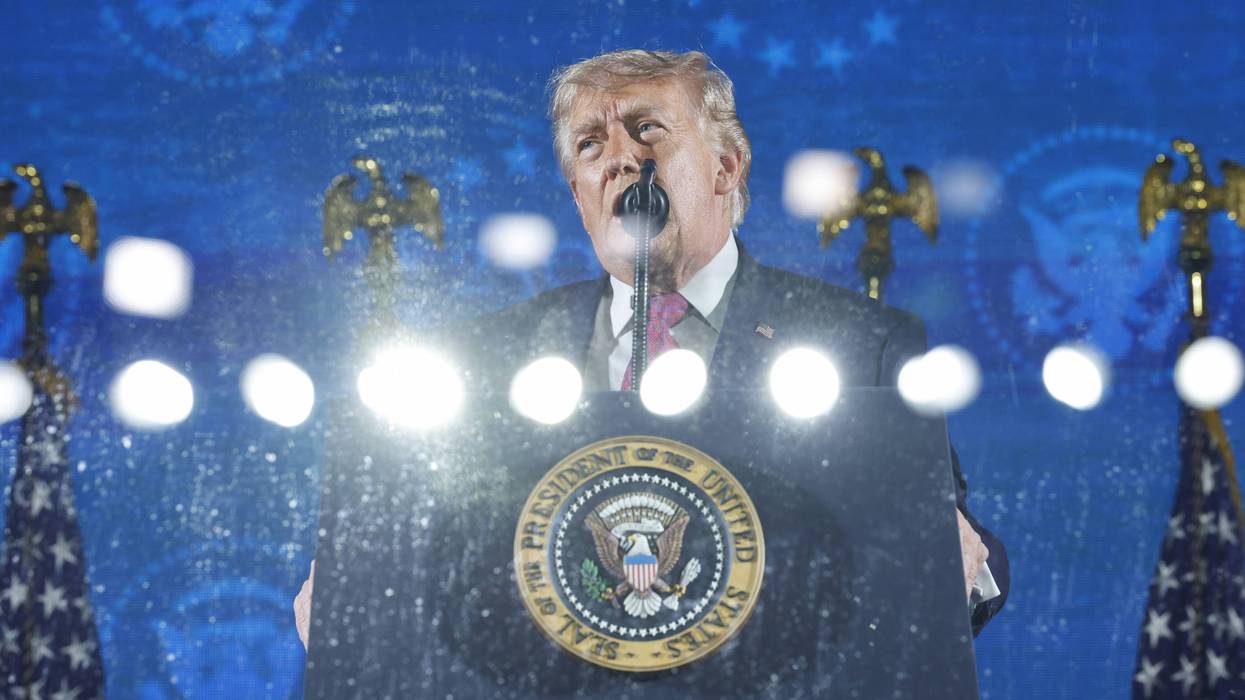
President Donald Trump has reenergized the Red Scare by labeling Democrats as communists, but this is ironic as today’s real threat is Trump’s authoritarianism and his dictatorial goals.
In his 1951 treatise, The True Believer, Eric Hoffer saw the fanatical leaders of communist and fascist states—Joseph Stalin and Adolf Hitler specifically—as fundamentally products of the same cloth, cloth different from, he quoted, the “Social-Democrat and the trade-union boss.” Stalin may have been a communist and Hitler a fascist, but similarly each a dictator.
Stalin forged a centralized, and brutal, control of the national economy under the guise of continuing the proletarian class struggle earlier led by Vladimir Lenin. Hitler led a racial struggle murdering millions of Jews and others with the goal of establishing a nation for the so-called Aryan race.
Today, with the midterm elections in November, President Donald Trump frames Democrats as the embodiment of communism, as the authoritarian threat America faces. This while Trump has also praised the communist leader, Xi Jinping, in China; Vladimir Putin in Russia; and the right-wing leadership of Viktor Orbán in Hungary, among similar leaders.
the hypocrisy is clear in Trump saying if Democrats win in the midterm elections they would threaten individual liberty as a caucus of communists.
And what is the leadership style shared by Orbán, Jinping, and Putin? Authoritarianism is the correct answer. Leaders, in Hoffer’s treatise, of the same cloth. Cloth Trump appears to want to dress himself in.
Since the defeat of Hitler, with the advent of the Cold War after World War II, communism has been seen as the major threat to the American way of life. Concern with the global spread of communism, after all, framed the context leading the US into the Vietnam War.
Richard Nixon, when the vice president, wrote on the threat of communism opening his essay in 1960 stating that, I quote, the “major problem confronting the people of the United States and free peoples everywhere in the last half of the 20th century is the threat to peace and freedom presented by the militant aggressiveness of international communism.”
Nixon’s warning followed the Red Scare that gripped America after World War II, often referred to as McCarthyism for the Wisconsin senator, Joseph McCarthy. McCarthy’s singular claim to fame, and eventual disgrace, was his anti-communism agenda in the 1950s as the chair of the Senate Permanent Investigation Subcommittee with his allegations of communist infiltration in the US government, the Army and, notoriously, Hollywood.
President Trump in his speech on July 4, during this year’s celebration of the 250th anniversary of the United States on the National Mall, hailed the triumph over both fascism and communism saying that “after we vanquished fascism [in World War II], Americans stood against the evil of communism in the Cold War.”
Ever since, as far as I am aware, he hasn’t mentioned any war against fascism. He targeted only communism in the reminder of his speech on July 4, telling the audience: “America will never be a communist country. Won’t happen... It’s like a cancer. You have to cut it out and you got to cut it out fast.”
Trump has polished his aim as the midterm elections in November have grown closer, alluding to the Democratic Party becoming the seat of communism in America. At the Republican midterm convention in Texas on September 9, Trump said that (his words) “the Democrat establishment has been overthrown and replaced by crazed lunatics and radicals. They call themselves Democrat socialists, but actually they’re communists.” Then he added that if “they win the greatest legislative body in history will for the first time ever be controlled by a communist caucus.”
In labeling Democratic candidates as communist, Trump diverts attention from failures in his policies and his growing and sustained disapproval.
The backdrop to Trump’s painting votes for Democrats as a vote for a communist takeover of the United States has been the emergence of a small minority of Democratic candidates with membership in the Democratic Socialists of America (DSA), following the success of Zohran Mamdani, New York City’s DSA-member mayor.
With that backdrop fueling Trump’s anti-communism rhetoric, other Democratic candidates in the midterm elections unaffiliated with DSA, like Michigan’s Democratic Senate candidate Abdul El-Sayed, have even had to emphasize they are not socialists and embrace capitalism.
The terms “socialism” and “communism” seem for many to represent the same entity, though in practice meaningful distinctions exist. In any case, polls have focused on opinions of socialism.
The subtitle to a research report in 2022 from Pew Research Center on views of socialism among Americans reads: “Many Democrats say socialism meets people’s basic needs; Republicans say it restricts individual freedoms.”
Among Democrats and those Democrat leaning in 2019, 65% reported viewing socialism positively, with 57% so viewing in 2022. Only 15% of Republican and Republican-leaning voters held a positive view of socialism in 2019, with 14% doing so in 2022.
In a more recent survey by Gallup in 2026, 65% of Democrats had an overall positive view of socialism compared with 45% among Independents and 14% of Republicans.
Regarding Authoritarianism. In her 2016 article at Vox, Amanda Taub chronicled research on how the rise of American authoritarianism, especially in the Republican Party, preceded and fertilized Trump’s rise to power. She highlighted the work of social scientists like Stanley Feldman, who saw authoritarianism more as a personality trait than simply a political preference. A trait highly valuing hierarchy, order, and conformity over other attributes. A trait Feldman measured by four questions on child-rearing goals, such as, “Please tell me which one you think is more important for a child to have: obedience or self-reliance?”
Vox commissioned a study in 2016 on the relationship between authoritarianism and perceived threats to one’s way of life. Summarizing some of the findings, Taub wrote:
…that 44% of white respondents nationwide scored as "high" or "very high" authoritarians, [and that] people in this 44% only vote or otherwise act as authoritarians once triggered by some perceived threat, physical or social. But that latency is part of how, over the past few decades, authoritarians have quietly become a powerful political constituency without anyone realizing it.
Over 65% of those scoring highest on Feldman’s authoritarianism scale were Republican voters. Whereas individuals whose scores were the most non-authoritarian, by always selecting the non-authoritarian parenting answers, were almost 75% Democrats.
These results, Taub emphasized, didn’t mean authoritarian-leaning folks were inherently Republicans. Rather, changes in the Republican Party’s platform attracted more authoritarians. Becoming the party promising “to stave off social change and, if necessary, to impose order happened to speak powerfully to voters with authoritarian inclinations,” Taub wrote. On the other hand, Taub wrote, “Democrats, by contrast, have positioned themselves as the party of civil rights, equality, and social progress—in other words, as the party of social change, a position that not only fails to attract but actively repels change-averse authoritarians.”
A more recent study in 2024 by the Public Religion Research Institute had related findings using a different measure of authoritarianism, the Right-Wing Authoritarian Scale. Among Republicans, 67% scored high on this authoritarianism scale, compared with only 35% among independents and 28% of Democrats.
A Perplexing Phenomenon. Those with more authoritarian inclinations, that is Republicans, are also more likely to view socialism as an authoritarian menace threatening their freedoms.
Perhaps the answer to this riddle is that the scope of concern over freedom among those with ingrained authoritarian traits may be more limited to concerns over their freedoms only, not freedoms among other groups; a hypothesis worthy of further study.
Whatever the case, the hypocrisy is clear in Trump saying if Democrats win in the midterm elections they would threaten individual liberty as a caucus of communists.
The Republican Party remains today a major seat of authoritarianism in the United States, and the supportive arm of Trump’s would-be dictatorial rule threatening individual freedoms.
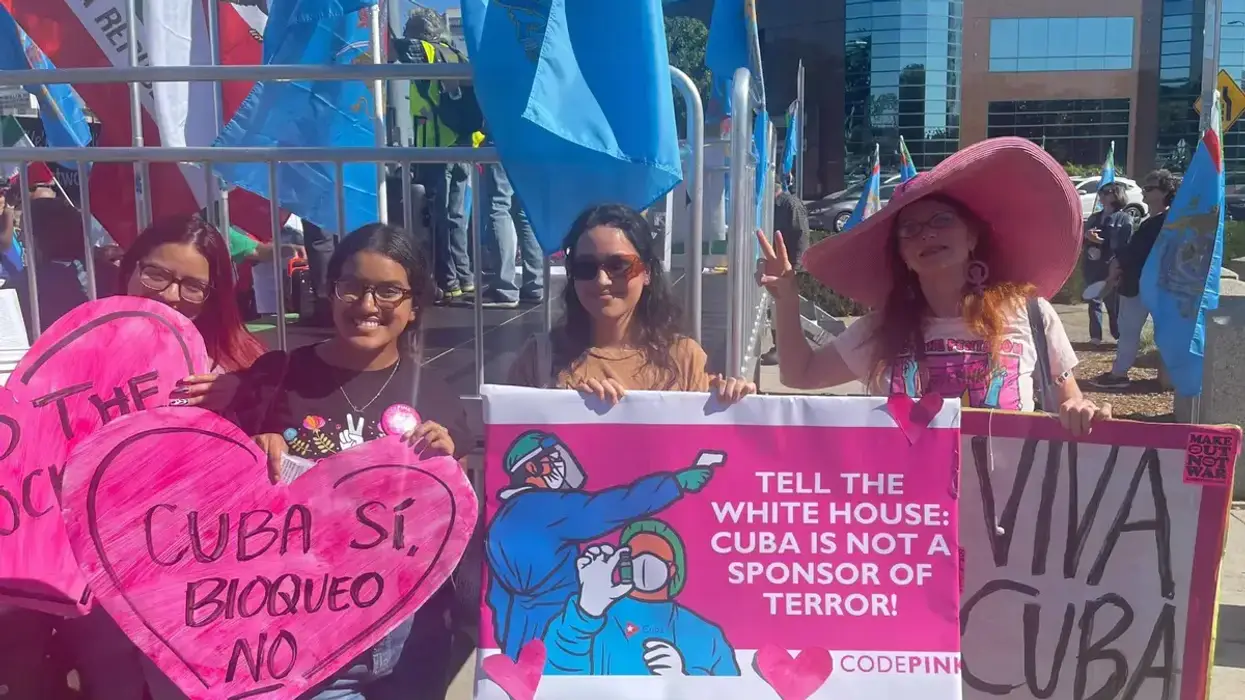
Those who challenge and protest US policies are not terrorists, and they are certainly not paid by other governments.
Thin-skinned and heavy-handed, the Trump administration apparently feels like it is being singled out by those who dissent from its policies. As a result, Trump appointees are taking drastic "McCarthy" tactics to stop dissent.
In less than one month, alleging that dissent and protests are part of attempts of other governments “to overthrow the government of the United States,” Secretary of State Marco Rubio has sponsored two major initiatives to frighten those who oppose the Trump administration's policies. The first salvo was orchestrating a conference with 60 countries participating over “Threats From Left-Wing Terrorists.” The second was the report on Cuba that alleged virtually every group that has ever visited Cuba is paid by the Cuban government.
These allegations of paid protest and travelling on the dime of another country are unfounded, untrue, and fly in the face of the history of protests in the US and travel by US citizens to see the effects of US polices on other countries.
President Donald Trump’s erratic foreign policy, including the disastrous attacks on Iran as a favor to Benjamin Netanyahu’s Israeli war machine; attacks domestically cutting health and education; horrific treatment of migrants; daily outlandish statements on just about every subject; and disregard for facts in virtually every issue all provide good reasons for protests by outraged US citizens.
I have not been paid by any country to protest US policies, nor do I know anyone who has been paid.
No one needs to be paid to be outraged!!!
In particular, Secretary of State and National Security adviser Marco Rubio, who has authored the latest "McCarthy" report to quell opposition to illegal, immoral policies of his department and the Trump administration in general, seems to have lost his grasp on the history of dissent in the US.
From his 15 years in the US Senate, he should remember that many of each administration's domestic and international policies have been lawfully and non-violently protested by US citizens in the US Congress.
Having been a part of many protests since I resigned from the State Department in March 2003 in opposition to a war policy, President George W. Bush's war on Iraq, I know that these protests are NOT a part of attempts of other governments to “overthrow the government of the United States,” but are legitimate shows of concern about specific policies. Rubio’s allegations of other countries’ influence in these protests are unfounded and untrue.
I was not paid by a foreign government to resign. I resigned because I felt the war on Iraq was illegal, immoral, and a dangerous action jeopardizing the national security of the United States.
I have not been paid by any country to protest US policies, nor do I know anyone who has been paid. Protest is a legitimate, time-consuming act of outrage about a policy that people use to bring attention to the policy, and hopefully effect change in the policy.
The first attack against legitimate protest came in the US Department of State sponsored conference on “Far-Left Terrorism” held in Washington, DC in July 2026, where Rubio and White House pit bull Stephen Miller harangued the representatives of 66 nations about terrorists from the left wanting to overthrow the US government.
In his opening statement Rubio railed: “This is a distinctive and unique evil. It has always been driven by a hatred above all else, a hatred for civilization itself. It is a revolt of the worst against the best, a revolt of the weak and the cowardly against the strong and the good.”
White House Deputy Chief of Staff Stephen Miller called left-wing extremism a growing threat aimed at “the overthrow of our system and form of government” that officials previously failed to sufficiently address. Miller railed: “We must stay the course and be completely unflinching in the pursuit of justice against these enemies of civilization. If the left is allowed to use the real or actual threat of violence to destabilize our institutions, then those institutions cannot and will not succeed.”
A White House press release stated, “Under the leadership of President Donald J. Trump, far-left extremism will be treated with the same seriousness and ferocity the world has long reserved for jihadist terrorism.”
Of course, neither Rubio nor Miller mentioned President Trump’s pardon of the over 1,500 persons who did try to violently overthrow the United States electoral process on January 6, 2021 as they attacked the Capitol police and broke into and destroyed many offices in the US Capitol.
The attempted overthrow of the 2020 election by seeking to nullify the election results through lawsuits in 62 federal and state courts was attempted by Trump’s loyal personal lawyers including the current acting US Attorney General and head of the US Department of Justice Todd Blanche and disgraced and disbarred lawyer and former New York City Mayor Rudy Giuliani. Their cases of election fraud were stopped by rulings in all 62 federal and state lawsuits that no election fraud had occurred.
The most recent and most ludicrous allegations of left-wing violence and protests being funded by other countries is in Secretary of Rubio's 10- page report on “Cuba: the Capitol of 21st Century Communism.” Rubio accuses the National Network on Cuba, National Lawyers Guild, CODEPINK: Women for Peace, the People's Forum, IFCO/Pastors For Peace, and the Democratic Socialists of America of being paid by the Cuban government whose goal, the report states, has been for 60 years the overthrow of the US government.
Talk about turning the facts on their heads! As is well-documented, 13 successive US presidential administrations since 1959—Eisenhower, Kennedy, Nixon, Ford, Carter, Reagan, Bush 1, Clinton, Bush 2, Obama (first term when CIA policies were still in effect, but changing in Obama’s second term with diplomatic recognition), Trump 1, Biden, and Trump 2—have attempted to overthrow the Cuban government in the 60-plus years of its existence.
The current attempt of overthrow of the Cuban government by the United States is centered on the brutal total blockade of fuel going to Cuba, which has left Cuban citizens without electricity for operations in hospitals, for food preparation, for the ability to conduct normal life activities. Making life so miserable for the Cuban citizenry that they overthrow their government would fulfill the longstanding hopes of Cuban-American Rubio.
Marco Rubio has been less than forthright about his heritage as a Cuban American in his quest for the overthrow of the Cuban government.
Marco Rubio, “Mr. Righteous against birthright citizenship,” is a "birthright citizen" born in the US of noncitizen parents who had immigrated in 1956 from Cuba under the Batista dictatorship, not under the 1959 revolutionary government.
Marco Rubio, “Mr. Tough on illegal immigrants,” ignores that his own grandfather entered the US illegally and was ordered to be deported but was saved from deportation by an amnesty during the Cuban missile crisis.
Despite these brutal, heavy-handed attempts to silence us, dissent is spreading to regular citizens.
Marco Rubio, “Mr. Kill the Boat Drug Runners of the Caribbean,” disregards that his own brother-in-law was convicted of drug running and his sister implicated but never charged.
Marco Rubio, “Mr. I Know All About Cuba Because I Am Cuban American,” has been to Cuba only once—where in Cuba did he go? A few hours at the US prison on the U. Naval base at Guantánamo.
No doubt, more will come in the next two years as Rubio, Miller, and others in the administration seem to think they can get away with outrageous bullying of individuals and organizations that do not agree with them and that challenge them in non-violent ways, in contrast to the January 6 gang.
In particular, there are always protests against the horrific effects of brutal sanctions that the US government uses to make life so difficult for citizens of other countries that they will overthrow their own governments, whether it be Cuba, Venezuela, Iran, or Nicaragua.
However, Rubio no doubt is thinking that since his buddies in the Netanyahu government have paid Trump’s former campaign manager, Brad Parscale, millions of dollars in a specific program to influence US public opinion to stop the massive decline in Israel’s “likability,” that other countries have paid off US persons to work clandestinely on the same scale.
Parscale's firm was hired by Israel for $6 million in September 2025 and then signed a $15 million contract with Israeli firm Havas to conduct a digital campaign on behalf of the State of Israel according to the Foreign Agents Registration Act (FARA). Parscale and his team sent conservative influencers suggested positive language about Israel for posts on social media sites such as X, Instagram, and TikTok. The influencers are then compensated based on how many “likes” each post gets from readers.
Israeli Prime Minister Netanyahu’s government has dramatically increased spending on influence operations. Earlier this year, Israel increased by four times its “public diplomacy” influence budget from $150 million in 2025 to $730 million in 2026.
But even The Times of Israel says it’s too late for a “face lift” as a Pew Research Center poll reported that 60% of Americans now view Israel unfavorably, up seven points in a single year, with only 37% viewing it favorably after Israel has committed genocide of Palestinians in Gaza; pillaged and plundered homes, farms, animals in the ethnic cleansing of Palestinian West Bank; destroyed southern Lebanon; and got the Trump administration up to its neck in the war on Iran.
The two recent major attempts of the Trump administration to quell dissent show how serious challenging illegal, immoral, and criminal policies has become and how important it is that we push back hard against these attempts intimidating citizens to silence their dissent.
However, despite these brutal, heavy-handed attempts to silence us, dissent is spreading to regular citizens. In a recent letter to the editor of my hometown newspaper Honolulu Star Advertiser, which serves a large US military population, a resident of Hawaii summarized the challenge very well: “The true domestic enemy includes those who monopolize political and economic power. The real enemy includes individuals who misinform, threaten, and disenfranchise the less powerful. The true enemy are those who are antidemocratic, have little or no concern regarding the welfare of others, and enrich themselves, family, and a few friends at the expense of the general population.”

"We stand firmly against this report and other efforts by the Trump administration to weaponize the federal government against dissent, which is a patriotic tradition."
President Donald Trump's escalating claims that Cuba and its supporters poses a threat to US security have been denounced as "laughable" and "crazy," but progressive lawmakers are warning that the State Department's report alleging that the country of roughly 10 million people aims to "conquer" the United States and is backing "left-wing terrorism on American soil" represents a genuine attack on Trump's perceived political enemies.
"Trump appears hell-bent on taking America back 70 years to the height of Cold War McCarthyism, when hawkish foreign policy was paired with unsubstantiated accusations of communist subversion and political repression against dissidents at home," said a group of Democrats led by progressive Rep. Ilhan Omar (D-Minn.), chair of the Congressional Progressive Caucus Peace and Security Taskforce. “We condemn this report’s attack on Americans’ constitutional rights to free speech and assembly."
Omar on Thursday was joined by 10 other lawmakers, including Reps. Alexandria Ocasio-Cortez (D-NY), Jim McGovern (D-Mass.), Delia Ramirez (D-Ill.), and Rashida Tlaib (D-Mich.), in speaking out days after the State Department released its report titled “Cuba: The Capital of 21st Century Communism."
The report, said the lawmakers, was a "McCarthyite attack on Americans’ free speech rights."
The 100-page document claims that Cuba's communist government "has waged a sustained campaign of subversion against the United States" and recruited "generations" of activists in the US, listing by name people who have participated in solidarity campaigns in support of Cuban people as the Trump administration has imposed a destructive oil blockade on the island nation.
"Trump appears hell-bent on taking America back 70 years to the height of Cold War McCarthyism."
In January, Trump issued an executive order declaring that Cuba posed an "extraordinary threat" to US national security and threatened countries with tariffs should they provide oil to the Cuban government. The administration had already cut off Cuba's top source of energy by taking control of Venezuela's vast oil reserves. The blockade has left the Cuban healthcare and education systems and other daily public services struggling to operate.
US groups and citizens named in the report as having spoken out against the administration's blockade and its threats of military action against Cuba include commentator Hasan Piker, Amazon Labor Union founder Christian Smalls, the National Lawyers Guild, and campus activist Isra Hirsi—Omar's daughter.
"We denounce this administration’s irresponsible attacks against civil society organizations, activists, journalists, labor leaders, members of Congress, elected officials, and private individuals based on their advocacy for peaceful foreign policy and social justice at home," said Omar and the Democrats who joined her in the statement.
The lawmakers said they would use their "full oversight power as members of Congress and elected officials to stop the persecution of Trump’s perceived political enemies," including those who speak out publicly against the president's policies in Cuba—activity that is protected by the First Amendment.
"We stand firmly against this report and other efforts by the Trump administration to weaponize the federal government against dissent, which is a patriotic tradition," they said.
The report is the administration's latest attack on the free speech rights that are integral to the US Constitution and American history. The White House has pushed to deport foreign students who protested the US-backed Israel war on Gaza, designated anti-fascist organizers as "terrorists," and, nearly a year after issuing a presidential memo demanding a strategy to "disrupt" left-wing networks, recently convened a summit to launch a "global offensive against the transnational threat of Radical Left terrorism."
Meanwhile, said Omar on Thursday, Trump and Secretary of State Marco Rubio—the son of Cuban immigrants and a long-time proponent of regime change on the island—"are intensifying decades of economic war" against the people of Cuba and deliberately depriving "the entire island’s population of adequate food, fuel, and medicine."
Along with ending his attacks on those who oppose his policies, said Omar, "it is past time for Trump to obey the Constitution and end the dangerous, cruel, and illegal naval blockade causing collective punishment against Cuba.”
From the Iran War to the World Cup, President Donald Trump follows his destructive urges.
I want to play sockhim (oh, sorry, sockher) for President Donald Trump. In our world today, there’s nothing, it seems, he can’t fiddle with or kick around or, for that matter, sock. And whenever he feels it’s necessary (or simply has the urge to do so), he’s always been willing to sockthem, whoever they might be. If something then goes wrong, as with Iran and the global economy right now, thanks to his wild and wildly destructive acts, so what? He’s still Donald Trump and can do the equivalent again somewhere else in some other way the next second-minute-hour-day-week-month-year.
I’m thinking, of course, not just about his unbearable urge to bomb Iran for the 940th (9,400th?) time, as oil and gas prices surge once again, but about his relatively recent intervention in the soccer World Cup to ensure that one of the best players on the US team, who had committed a foul, was red-carded off the field by a referee, and then was denied permission to play in the next game against the Belgian team, could instead compete in that very game. And of course, since everything You Know Who does is headlined, you know just what happened next: The World Cup organization, FIFA, gave way instantly, that player was indeed in the next game, and the US team still lost to Belgium by a significant margin.
And Donald J. Trump just rolled right on. No matter what goes wrong, he never loses. (If you think otherwise, ask him and you’ll find out that you couldn’t be more off base!)
I sometimes try to imagine telling my parents, who died deep in the last century, about “our” president. The only way I could do so, I suspect, would be by comparing him to Sen. Joseph McCarthy, the Donald Trump of the early 1950s, who claimed that his opponents were “commies” and, in a distinctly Trumpian fashion, swore that he had a (fictional) list of 205 State Department employees who were members of the American Communist Party and later that the US Army, too, had been infiltrated by commies. His charges would be the focus of the 1954 televised Army-McCarthy Hearings, which did me the great favor (at age 10) of putting a television set in our apartment for the first time so that my mom, Irma Selz, then a well-known political and theatrical caricaturist, could draw McCarthy and crew for the New York Post.
At a time when this planet of ours needed rescuing (from us, of course), the American people reelected a man who continues to openly promise to send us—all too literally—to the blazes.
And yes, he was an all-American monster, distinctly clobbering various figures and destroying certain American lives. Still, in the end, he was condemned by the Senate and essentially drank himself to death, only affecting our all-American world for a few years and (at least in comparison with You Know Who) in a relatively modest way.
Historically speaking, Donald Trump, president (no less!) of the United States of America twice, puts him to shame. Of course, once upon a time (believe it or not), Joseph McCarthy and Donald Trump had the very same adviser (at different moments, of course), Roy Cohn, who, in the (all too literal) end, may have helped create a president from beyond the grave.
McCarthy only had a relatively brief moment at center stage before falling apart in a big-time fashion. Donald Trump, on the other hand, simply goes on and on and (yes!) on, whacking away at so many of the rest of us—Iran being at the top of his list, right now—day after day, week after week, year after year, while our world begins to disintegrate under us. (Oh, sorry, my mistake even to refer in passing to climate change when “our” president considers it a first-class “con job“!)
Joe McCarthy was functionally ejected from his political world and then essentially ejected himself from ours. Unfortunately, Donald Trump took our world by storm, two (out of three) times, while tossing out so many others in the process. And now, at least in climate terms, he seems intent on ejecting us all from Planet Earth.
If I had told you his tale early in this century, you would never have believed me. In fact, you would have thought me an idiot and a half (maybe even three-quarters). Donald Trump, the president of the United States (at least) twice and so many others of us his apprentices? You must be kidding! Once upon a time, that would have seemed beyond inconceivable for even a second, no less at least eight years. You simply wouldn’t have believed that so much of the Republican Party (and all too many other Americans) would ever have become Trumpublicans.
Under the circumstances, can there be any question that we now live in an upside-down, gloom-and-doom version of a fairy-tale world? Why, just as I was writing this, President Trump decided to launch a new series of air strikes against Iran (yes, Iran!), claiming that “we have a score to settle.” And he’s certainly a big-time score-settler, though who really knows what he’s doing or why—probably not even him. He just seems to get the urge to sockittothem and we’re off to the races.
Isn’t it strange that the man who, once upon a time, wrote The Art of the Deal can’t quite seem to imagine making a deal with anyone anymore? Actually, as he said recently when it comes to Iran: “We’re going to have a deal. We may just do it without a deal, because you know what, it’s easier.” Perhaps he should now change the title of his book to The Art of Doing Without a Deal.
And, of course, that shouldn’t be surprising when the people he’s dealing with there are, as he put it recently, “scum. They’re sick people. They’re led by sick people, and they’re vicious, violent people,” He summed things up this way when it comes to Iran, “Far as I’m concerned, it’s just a waste of time dealing with them. They’re liars… there’s something wrong with them. They’re cuckoo. As far as I’m concerned, it’s over.” (No matter at all that, only weeks earlier, he had praised them as “very rational people,” “nice to deal with.”)
And what do you do when you’re dealing with sick scum? You bomb the crap out of them. Or, to put it in sports terms, you sockthem to hell.
At a time when this planet of ours needed rescuing (from us, of course), the American people reelected a man who continues to openly promise to send us—all too literally—to the blazes. He’s simply hot, hot, hot, the very word he used for Trumpian rapper and “White House Barbi” Nicki Minaj. (”We also have a woman that is so respected and so hot and so great and such a great friend of, I don’t say conservative, I say of common sense.”)
You, of course, could say the very same thing about Donald J. Trump. He’s so hot, and the one thing he seems determined to do on this overheating planet of ours is heat ever more of it (which war, of course, accomplishes in a particularly striking fashion).
So, here we all are with a president determined to play sockher, sockhim, sockthem, and sockplanetEarth for at least another two and a half years. And where will we all be then? Sockme if I know?
Trump is just following in McCarthy’s footsteps by launching his latest BIG LIE yet to firm up his shrinking base of Trumpy MAGA voters: that rising Democratic Socialists are the greatest threat to America.
After progressives, including self-described Democratic Socialists, won numerous primary victories in New York and elsewhere, President Donald Trump launched a whopper of a lie, even by his crazed standards. He declared that the “communist” Democratic Socialists are “the biggest threat to our nation there is, maybe since our founding…. That includes World War I, World War II, September 11, it includes the Pearl Harbor attack.” This comes after his November 2025 White House meeting with New York City Mayor Zohran Mamdani, where Trump praised Mamdani strongly, saying they would work together to make a better New York City.
Trump is singing a different tune now. He is like Senator Joe McCarthy on steroids, who in the 1950s smeared political opponents, activists, and others, falsely accusing them of being communists. Snarling Joe then maliciously exploited the post-war fear of the Soviet Union. Today, Trump is just following in McCarthy’s footsteps by launching his latest BIG LIE yet to firm up his shrinking base of Trumpy MAGA voters.
Look for Trump, an authentic fascist, to dittohead himself on his “communist” tirade. He knows that the pro-Israel, corporate Democrats are distancing themselves from the rising new progressive candidates who, if they’re smart, will make populist domestic demands that are heavily favored in the polls.
These Democratic candidates should push for a much higher minimum wage than the present frozen federal minimum of $7.25 per hour; full Medicare for All; restore corporate and super-wealthy taxation to the levels of the prosperous 60s; crack down on corporate crimes against consumers, workers, and the environment; and adopt the long-time Western European social safety net of childcare, paid worker and family sick leave, and paid vacations. A real child tax credit would cut child poverty nearly in half and would benefit over 60 million children. They should raise the Social Security taxes on upper-income people to pay for raising Social Security benefits frozen for over 45 years.
Jeffries and Schumer are perfect foils for Trump to pit them against the rising progressive revolt inside their party. Why? Because they will dig in their heels, reflect their paymasters’ demands against most of these reforms, and create the very cleavage Trump wants.
Candidates should push to cut the bloated military budget, end hundreds of billions of dollars in corporate welfare, and direct the savings to public works and safety net services in the community, USA.
These changes have substantial left-right voter support because they are concrete improvements for all families who need and deserve such social benefit returns from the tax dollars they send to Washington.
There are other left-right supported reforms, such as public funding of campaigns; ending the gross, corrupt selling of our elections to the highest toxic profiteering bidders; ending military arms shipments to countries that violate human rights (already federal law but unenforced); and stopping Israel’s ongoing genocide of Palestinians, committed with US weapons and unconditional political backing, which violates five federal laws.
All these measures should be integrated into a heavily publicized “Contract for the American People” and turned into a daily vocal call for a commitment to this agenda by these candidates. The class message is that corporations, all created by government charters, should be our servants, not our masters, as the Kleptocratic Trump regime continues to balloon the Trump Dump.
Bolstered by support of such concrete commitments, Trump’s “communist bellowing” will look ridiculous and will be ripe for the sharpest of counterattacks, dragging the GOP’s wreckage out into the open by comparison. To paraphrase Shakespeare, the Republicans will be hoisted by their own petard.
The real hurdle to this “Contract for the American People” are the corporate Democrats—indentured to the same Wall Street crowd and military-industrial Empire of war and vast profits. The chief corporate Democrats are the party’s leaders—Hakeem Jeffries in the House and Chuck Schumer in the Senate. When asked by a reporter about impeaching Trump (the cruel, corrupt, violent, America-wrecking outlaw, using the White House as corporate-occupied territory to enrich himself), Jeffries replied, “I don’t want to get out ahead of that discussion.” What about getting ahead of Trump’s daily despicable efforts to destroy our democracy and wrecking America?
How about just representing the vast majority of the Democratic voters and about 60% of all polled Americans who think Trump is “a dangerous dictator” and want him impeached and removed from office?
Jeffries and Schumer are perfect foils for Trump to pit them against the rising progressive revolt inside their party. Why? Because they will dig in their heels, reflect their paymasters’ demands against most of these reforms, and create the very cleavage Trump wants.
If Trump does not steal the election with his many voter suppressions, redistricting, and other attempted usurpations of state election controls, he’ll work to paralyze a Democratic-run Congress. Jeffries and Schumer, to preserve their leadership, are susceptible to not rocking the boat and not fiercely rolling back all the Republican Party’s devastating enactments since January 20, 2025.
Let’s see if the incumbent and newly elected progressives know how NOT to marginalize themselves by pushing distractingly marginal ideas instead of showing just how popular the above components of this proposed Contract for the American People are with the voters.
These challenges should also focus on the growing drive for Impeachment around the country, which both Trump, Jeffries, and Schumer oppose (The Hill reports neither Jeffries nor Schumer have endorsed any of the removal efforts)—the latter two enforcing a “Now is not the time” policy. What smug insensitivity to the fears of millions of Americans hurting from Trump’s cruel decrees every day and night NOW!
Jeffries and Schumer are creating their own Achilles heels for emboldening their progressive Democrats to move to replace them in January 2027.
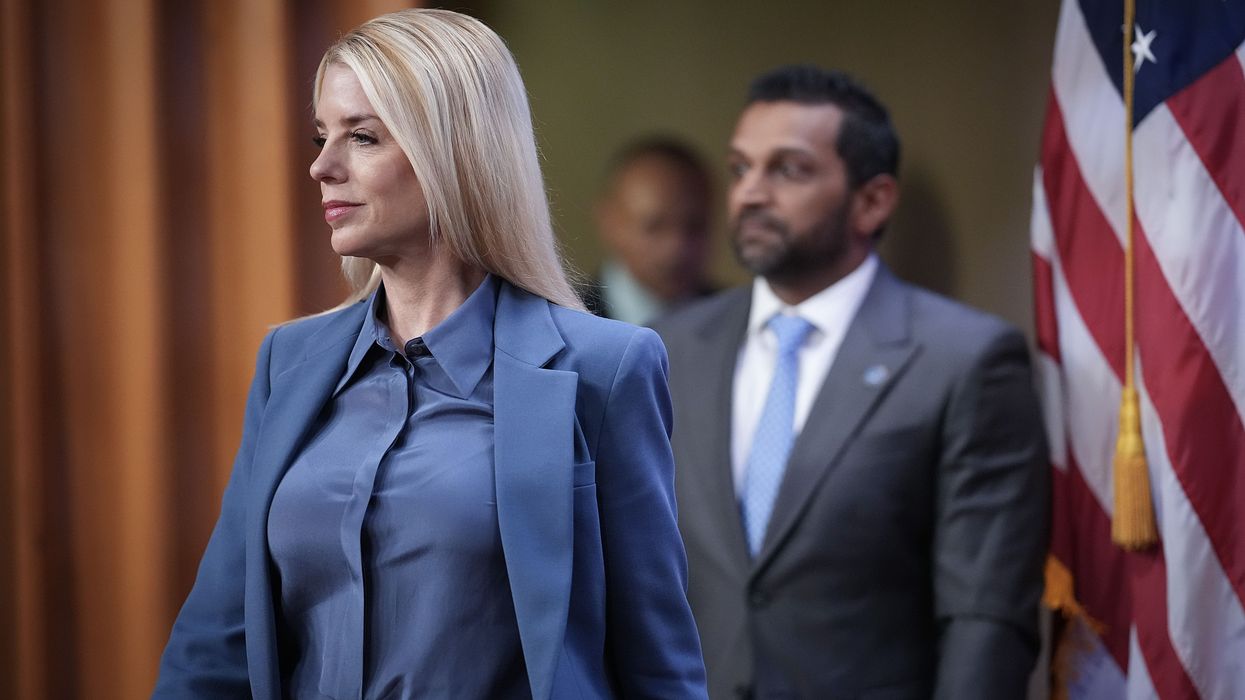
A former official from Trump’s first term said the FBI will be able to throw the full might of the surveillance state at “Americans whose primary ‘offense’ may be ideological dissent.”
The Trump administration is about to embark on a massive crackdown on what it describes as a scourge of rampant left-wing “terrorism.”
But the US Department of Justice (DOJ) memo ordering the crackdown has critics fearing it will go far beyond punishing those who plan criminal acts and will instead be used to criminalize anyone who expresses opposition to President Donald Trump and his agenda.
Earlier this month, independent journalist Ken Klippenstein reported that Attorney General Pam Bondi had sent out a memo ordering the FBI to “compile a list of groups or entities engaging in acts that may constitute domestic terrorism.”
As part of this effort, Bondi set Thursday as a deadline for all law enforcement agencies to "coordinate delivery" of intelligence files related to “antifa” or “antifa-related activities” to the FBI.
The memo identifies those who express “opposition to law and immigration enforcement; extreme views in favor of mass migration and open borders; adherence to radical gender ideology,” as well as “anti-Americanism,” “anti-capitalism,” and “anti-Christianity," as potential targets for investigation.
This language references National Security Presidential Memorandum-7, or NSPM-7, a memo issued by Trump in September, which identified this slate of left-wing beliefs as potential "indicators" of terrorism following the assassination of right-wing activist Charlie Kirk in September.
In comments made before the alleged shooter's identity was revealed, Trump attributed the murder to "those on the radical left [who] have compared wonderful Americans like Charlie to Nazis," adding that "this kind of rhetoric is directly responsible for the terrorism that we’re seeing in our country and must stop right now."
Weeks after Kirk's shooting, Trump designated "antifa" as a "domestic terrorism organization," a move that alarmed critics because "antifa," short for "anti-fascist," is a loosely defined ideology rather than an organized political group.
Senior Trump adviser Stephen Miller, meanwhile, promised that the Trump administration would use law enforcement to "dismantle" left-wing groups he said were "fomenting violence." He suggested that merely using heated rhetoric—including calling Trump and his supporters "fascist" or "authoritarian"—"incites violence and terrorism."
Klippenstein said that “where NSPM-7 was a declaration of war on just about anyone who isn’t MAGA,” the memo that went into effect Thursday “is the war plan for how the government will wage it on a tactical level.”
In comments to the Washington Post, former FBI agent Michael Feinberg, who is now a senior editor at Lawfare, said it was "a pretty damn dangerous document," in part because "it is directed at a specific ideology, namely the left, without offering much evidence as to why that is necessary."
Studies have repeatedly shown that while all political factions contain violent actors, those who commit acts of political violence are vastly more likely to identify with right-wing causes.
Miles Taylor, who served as chief of staff for the Department of Homeland Security under the first Trump administration, pointed out in a blog post the extraordinary surveillance capability that the FBI will have at its disposal to use against those it targets.
He said it "includes the FBI’s ability to marshal facial recognition, phone-tracking databases, license-plate readers, financial records review, undercover operations, and intelligence-sharing tools against Americans whose primary 'offense' may be ideological dissent."
"Unfortunately, once you are fed into that system, there is no real 'due process' until charges are brought," Taylor said. "It’s not like you get a text-message notification when the FBI begins investigating you for terrorism offenses, and there’s certainly no 'opt-out' feature. For this to happen, you don’t need to commit violence. You don’t even need to plan it. Under the administration’s new guidelines, you merely need to be flagged for association with the anti-fascist movement to become a potential target."
Sen. Ron Wyden (D-Wash.), a member of the Senate Intelligence Committee, told the Post, "It is a throwback to McCarthyism and the worst abuses of [Former FBI Director J. Edgar] Hoover’s FBI to use federal law enforcement against Americans purely because of their political beliefs or because they disagree with the current president’s politics."
Taylor argued: "He’s right, but it’s actually more dangerous than that. Joseph McCarthy had subpoenas and hearings and created his blacklists of 'communist' Americans from Capitol Hill. And while controversial FBI Director J. Edgar Hoover may have had old-school wiretaps and informants, Donald Trump’s team has algorithmic surveillance, bulk data collection, and a post-9/11 security state designed for permanent emergency. It’s like comparing a snowflake with a refrigerator."
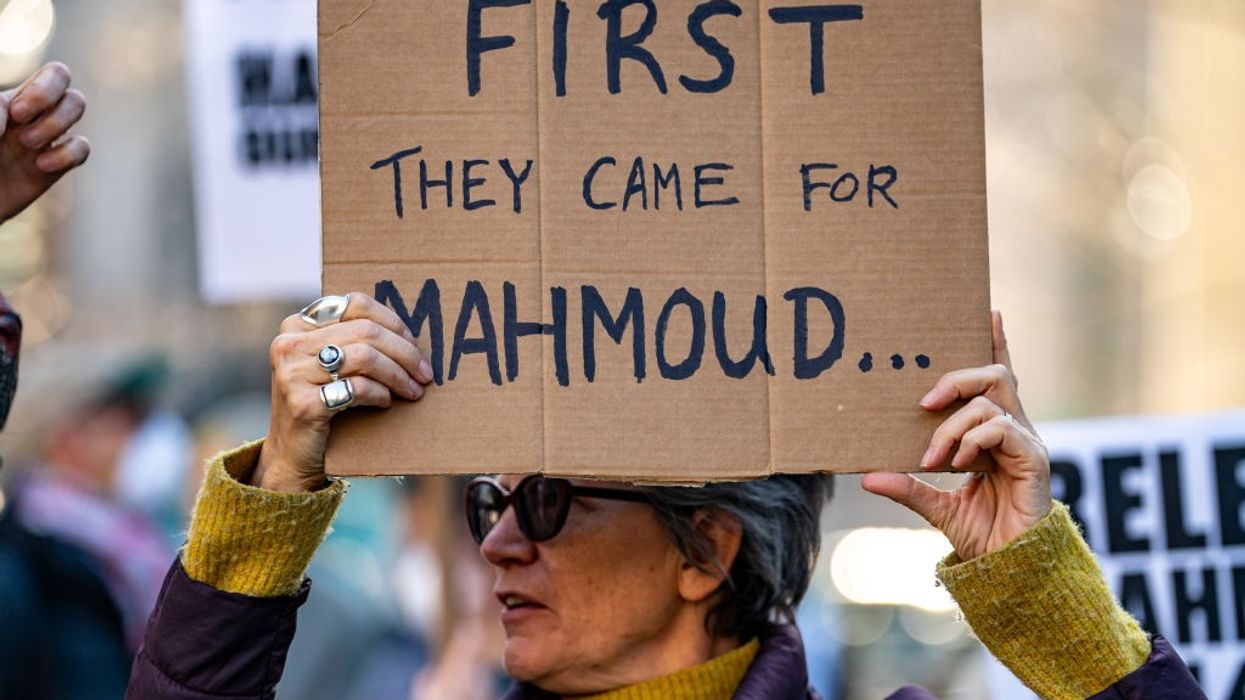
Not just silence, but liberal “appeasement” of the right has brought us here.
It’s one of the most rousing calls to conscience to come out of the 20th century. I’m thinking of Martin Niemöller’s “First they came for the communists.”
You know how it goes. It begins, “First they came for the communists, and I did not speak out because I was not a communist.” And it ends, “Then they came for me—and there was no one left to speak for me.”
It’s a powerful statement, and you’ll see it on T-shirts and posters and placards at demonstrations. But when you actually look at our history, it’s not just that good people didn’t speak out. It’s that many Americans threw other Americans under the bus.
The story of the Danish king who wore a yellow star in solidarity with Jewish Danes during World War II is apocryphal. It never happened. So too, while our cultural memory about the McCarthy era romances the refuseniks, hundreds of Americans did comply with the Red Scare, identifying colleagues or associates as communists to protect themselves or preserve their careers. The Levin Center for Oversight and Democracy reports that of the more than 500 people who were called to testify in front of Joseph McCarthy’s Senate Permanent Subcommittee on Investigations, only about 100 invoked the Fifth Amendment, refusing to answer questions on self-incrimination grounds. The rest went along.
When someone comes for the anti-fascists, the odds are that some will say, “Antifa is us.” But how many?
This phenomenon was even more pronounced before HUAC (House Un-American Activities Committee), which paralleled McCarthy’s Senate investigations. The “Hollywood 10” refused to testify, but Elia Kazan wasn’t alone in supplying the committee with lists of colleagues who had supposedly suspect ties. Their cooperation frequently allowed them to continue working in the film industry, while those who refused were blacklisted for years.
So too, in our time, when the press and the pundits, and the politicians, and the courts have come for the abortion providers, the anti-Zionists, the teachers of critical race theory, and the nonconforming queers, many didn’t just stay silent. They actively participated in creating suspicion around those people and their principles.
Citing electoral calculus and political pragmatism, liberal “compromises” on abortion law, dating back to Roe v. Wade, contributed to the erosion of reproductive autonomy well before the 2022 Dobbs decision. After 2021, laws restricting “race-conscious instruction” spread to 45 states meeting minimal resistance.
LGBTQ rights have always been dispensable—depending on the political climate. Today, trans Americans, even kids, are isolated, afraid, and at the nation’s highest risk for suicide.
Not just silence, but liberal “appeasement” of the right has brought us here.
Now President Donald Trump and his mob are trying to vilify “Antifa,” an entity that he thinks exists but really doesn’t. Are we going to allow “anti-fascist” to be made suspect?
Innumerable signs held by countless Americans at No Kings protests suggest it won’t be easy. From the older women carrying versions of “Auntie Fa’s cookies don’t crumble for kings” to the green-clad members of Amphifa (Amphibians Against Fascism), to the 76-year-old who walked in Washington, DC with a straightforward “I am Antifa” sign. When someone comes for the anti-fascists, the odds are that some will say, “Antifa is us.” But how many? Others will always seek refuge in cowardice and caving. Our history is brimming with both.
I had a chance to talk with longtime organizer Dolores Huerta, and theater artist Ellen Gavin about their new short video “The People United” recently on my TV and radio program, Laura Flanders & Friends. Find out more at lauraflanders.org.
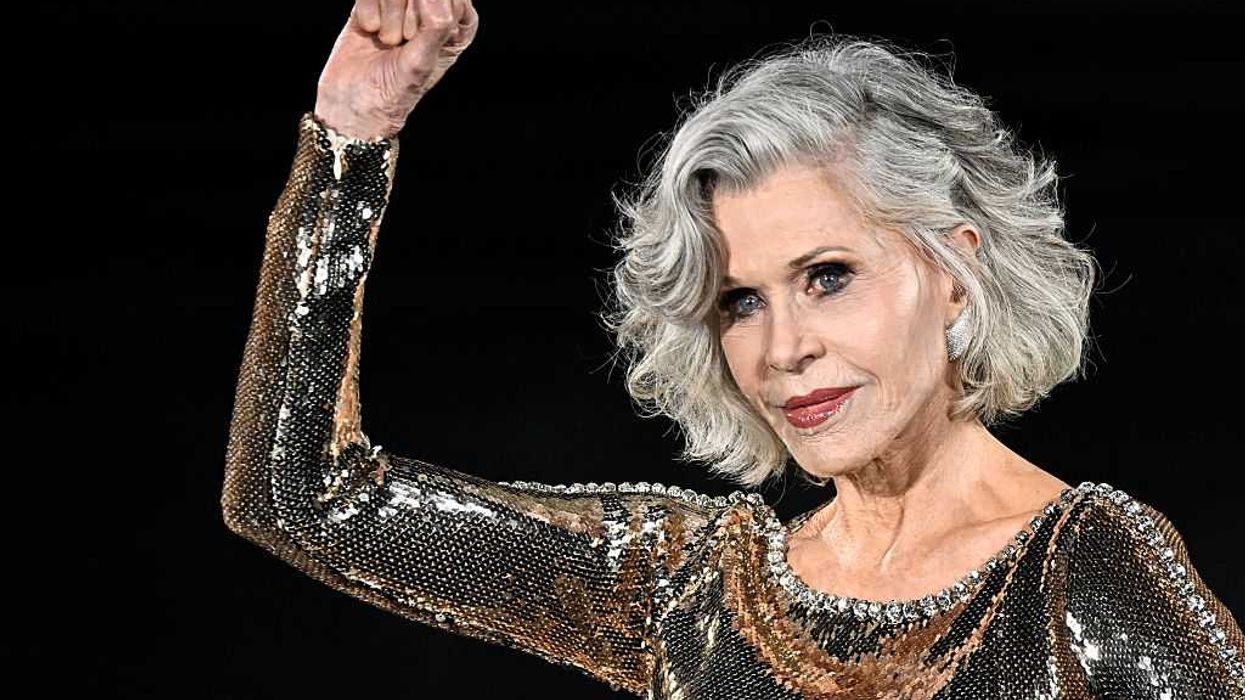
“They’re betting on our fear and our silence,” Fonda said. “But our industry—and artists around the world—have a long history of refusing to be silenced, even in the darkest times.”
As the US descends into authoritarianism under President Donald Trump and Republicans, hundreds of celebrities led by actor and progressive activist Jane Fonda on Wednesday revived a free speech initiative originally launched by Hollywood stars including her father during the right-wing repression of the post-World War II McCarthy era.
Fonda and over 550 celebrities rebooted the Committee for the First Amendment, which was first formed in 1947 by a bevy of actors including Henry Fonda in response to hearings held by the House Un-American Activities Committee (HUAC) and blacklisting of actual and suspected communists throughout US society, including Hollywood.
“The federal government is once again engaged in a coordinated campaign to silence critics in the government, the media, the judiciary, academia, and the entertainment industry,” the renewed committee said in a statement. “We refuse to stand by and let that happen.”
Other members of the newly re-formed committee include filmmakers Spike Lee, Barry Jenkins, J.J. Abrams, Patty Jenkins, Aaron Sorkin, and Judd Apatow; TV show creator Quinta Brunson; musicians Barbra Streisand, John Legend, Janelle Monáe, Gracie Abrams, and Billie Eilish; comedians Tiffany Haddish and Nikki Glaser; as well as actors Mark Ruffalo, Anne Hathaway, Kerry Washington, Pedro Pascal, Natalie Portman, Viola Davis, and Ben Stiller. Another signatory is actor Fran Drescher, who last month ended a term as the president of the SAG-AFTRA union.
"This committee was initially created during the McCarthy era, a dark time when the federal government repressed and persecuted American citizens for their political beliefs," the initiative's founders wrote. "They targeted elected officials, government employees, academics, and artists. They were blacklisted, harassed, silenced, and even imprisoned."
"The McCarthy era ended when Americans from across the political spectrum finally came together and stood up for the principles in the Constitution against the forces of repression," they added. "Those forces have returned. And it is our turn to stand together in defense of our constitutional rights."
Fonda’s committee revival comes after Jimmy Kimmel's late-night talk show was temporarily removed from ABC's airwaves earlier this month following pressure form Brendan Carr, Trump’s Federal Communications Commission (FCC) chief, over a monologue by the comedian about far-right podcaster Charlie Kirk’s accused assassin. Kimmel's show returned amid massive public backlash.
Fonda has more than 60 years of political activism under her belt, starting with the civil rights and anti-Vietnam War movemements and continuing through Fire Drill Fridays, #StopLine3, and the Jane Fonda Climate PAC in more recent years.
"I'm 87 years old. I've seen war, repression, protest, and backlash. I've been celebrated, and I've been branded an enemy of the state," Fonda said in a letter inviting people to join the committee.
"But I can tell you this: This is the most frightening moment of my life," she continued. "When I feel scared, I look to history. I wish there were a secret playbook with all the answers—but there never has been. The only thing that has ever worked—time and time again—is solidarity: binding together, finding bravery in numbers too big to ignore, and standing up for one another."
“They’re betting on our fear and our silence,” Fonda added without identifying anyone by name. “But our industry—and artists around the world—have a long history of refusing to be silenced, even in the darkest times.”
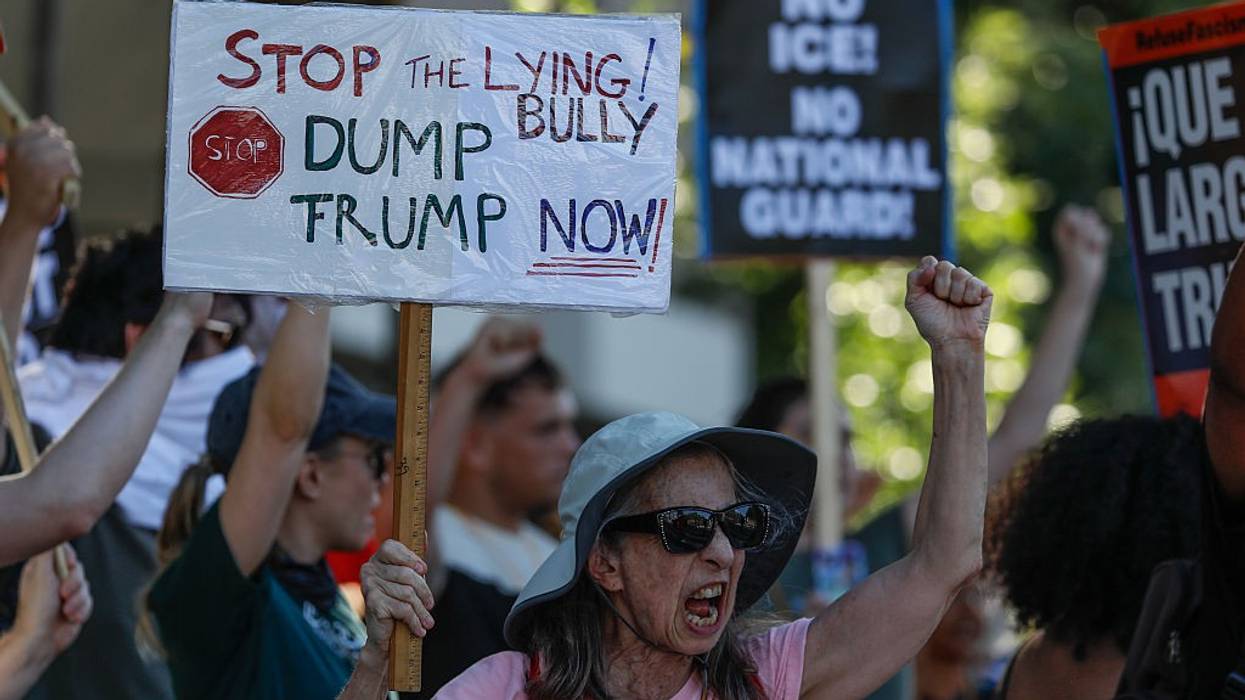
The Trump administration is abusing federal power to silence dissenting voices in a manner that has not been seen in over 70 years. The country survived Sen. Joseph McCarthy, but will it survive what Trump has wrought?
Free speech stole the show last week during the joint press conference between US President Donald Trump and UK Prime Minister Keir Starmer after a British reporter asked point-blank the Yankee wannabe dictator whether free speech is more under attack in Britain or in America, following Jimmy Kimmel’s suspension over Charlie Kirk comments.
At this historical juncture, both Britain and America are at a new low when it comes to freedom of expression. In fact, free speech is under serious attack in most Western societies.
Britain has no equivalent to the First Amendment, but the current draconian speech laws are so outrageous that even traditional liberties are vanishing. British police are arresting people for offensive online speech at record numbers while the right to protest has been severely curtailed.
In Germany, the situation is just as bad, if not worse. Long before recent efforts to stifle pro-Palestinian voices, the country’s laws on freedom of expression stood on tenuous grounds. As the late German jurist Weinfried Brugger noted nearly a quarter of a century ago in a study comparing German and American law on hate speech, if a protester was to shout on the steps of the US Capitol “our President is a pig” and even held painted pictures of the president as a pig “engaged in sexual conduct with another pig in a judge’s robe;” or that “all our soldiers are murders;” or that “the Holocaust never happened,” none of these allegations would lead to criminal prosecution as the First Amendment would protect them. However, criminal law would apply to all of the above messages if the protester made the speech on the steps of the German Bundestag. As further elucidated by Brugger, freedom of speech in Germany is not a “preferred right” and does not deserve “absolute protection.”
For the duration of Trump 2.0, we must be prepared for a barrage of further anti-democratic actions taking aim at any individual, group, or organization whose ideas, beliefs, and actions threaten the ego of the “beloved leader” or simply irritate his idiotic whims
In this sense, conservatives in the US, like Vice President JD Vance, are not totally wrong when they criticize Europe over free speech, even though they are complete hypocrites. Indeed, the problem with Vance and the rest of the MAGA Republicans who are seemingly disturbed by the backsliding of free expression in Europe is that they are not interested in free speech as such; they are interested in controlling it. They only want to protect speech that is aligned with their own ideological beliefs and values. Thus, in his speech to the Munich Security Conference in February, where he scolded Europeans for their failings on free speech, Vance not only spread a lie when he claimed that the Scottish government had sent letters to citizens instructing them that “even private prayer within their own homes may amount to breaking the law” but kept silent about UK government anti-protest legislation, which, as British academic Eric Heinze astutely noted, targets exactly the kind or protests that Trump fears.
Trump returned to the White House with a promise to protect free speech from government censorship. Indeed, just a few hours after his second inauguration, Trump signed Executive Order 14149, titled “Restoring Freedom of Speech and Ending Federal Censorship.” But Trump is a master of doublespeak. His administration has, in turn, carried out a wide-ranging crackdown on universities, student protesters, journalists, lawyers, and the press. The wannabe dictator has accused the press on multiple occasions of being “the enemy of the American people” and has filed personal lawsuits against several news organizations. Under his administration, we are also witnessing the intrusion of the military into civilian life. This type of government action is tantamount to dictatorship, as it constitutes an all-out assault on democracy and the rule of law.
The Trump administration is abusing federal power to silence dissenting voices in a manner that has not been seen since the McCarthy era. Democrats and Republicans alike played the Red Card back in the 1940s and throughout the 1950s in order to silence critics and quash dissent. Trump is doing the same thing by trying to create a climate of fear and suspicion across the country with the boogeyman of the so-called “far left,” especially in the aftermath of Charlie Kirk’s killing.
To be sure, there should be no illusions about the evolution of free speech in the United States. The current situation is by no means unique, and the First Amendment has never been as sacred as people seem to think. Despite its exalted status, the First Amendment has been “a dead letter for much of American history” and did not come to life until the early 20th century. And when it did, freedom of expression suffered some major blows, thanks to World War I, which created a wave of jingoism, and the Bolshevik Revolution in Russia, which gave rise in turn to an anti-communist alarm known as the Red Scare. In Debs v United States, the Supreme Court upheld Deb’s conviction under the Espionage Act of 1917. Eugene Debs, a leading member of the Socialist Party of America, was convicted for his outspoken opposition to US involvement in World War I and sentenced to ten years in federal prison.
Throughout the 1940s and the 1950s, the First Amendment was censored in the shadows as the suppression of political and social views became a widespread occurrence, spearheaded by a second Red Scare and the rise of McCarthyism. The Smith Act, which was passed by Congress and signed by President Roosevelt on June 28, 1940, was used to monitor immigrants and prosecute members of the Communist Party. In 1951, in a 6-2 decision, the Supreme Court delivered a massive blow to the First Amendment by upholding the constitutionality of the Smith Act in Dennis v United States. In 1947, the Truman administration initiated a loyalty program aimed at rooting out “subversives” and getting rid of homosexuals. Such programs were also established for employment in the private sector as well.
It was only in the 1960s, thanks to growing opposition to the Vietnam War and government attempts to curb protests, that the First Amendment entered mass public consciousness in the United States. When a group of students in Des Moines, Iowa, was suspended for wearing black armbands to school in protest of the Vietnam War and in support of a Christmas truce, the students’ parents challenged the suspensions as a violation of free speech. In a landmark victory for student rights and the First Amendment, in a 7-2 decision, the Supreme Court ruled in Tinker v Des Moines (1969) that schools are not “enclaves of totalitarianism” and that “neither students nor teachers shed their constitutional rights to freedom of speech at the schoolhouse gate.” The Pentagon Papers case defended further the right of free speech, although subsequent US administrations, from Ronald Reagan and Barack Obama to Donald Trump, indicted scores of people “for leaking secrets to the press,” as Lincoln Caplan has underscored in an essay for the Harvard Law Bulletin.
The democratic left has stood up for free speech rights throughout its history. It should remain steadfast in its commitment to freedom of expression and fully and unconditionally reject “cancel culture.”
We are not exactly sure who made the remark that “while history doesn’t repeat itself, it often rhymes,” but it surely applies to the free speech case in the United States. We are now in the midst of a new McCarthy era, and possibly worse. In forcing a comedian and television host like Jimmy Kimmel off the airwaves (Disney reinstated his show after five days of suspension), Trump and his goon FCC Chairman Brendan Carr are following in the footsteps of Nazi minister of propaganda Joseph Goebbels who, in 1939, as the New York Times reported, banned five German entertainers because they “made witticisms about the Nazi regime.”
Thus, for the duration of Trump 2.0, we must be prepared for a barrage of further anti-democratic actions taking aim at any individual, group, or organization whose ideas, beliefs, and actions threaten the ego of the “beloved leader” or simply irritate his idiotic whims. The so-called "radical left" will surely be the main target. In the wake of Charlie Kirk’s killing, Trump described the left-wing activist group Antifa a “sick, dangerous, radical left disaster” and signed an executive order designating it a “domestic terrorist organization.”
Antifa (shorthand for “antifascist”) exists around the world but is not a unified organization and has no leader. As such, it is not clear how the US government plans to prosecute Antifa activists. Either way, this is yet another orchestrated attack on political dissent and freedom of speech by the emerging dictatorial regime in Washington, D.C., under the reign of Donald J. Trump.
The democratic left has stood up for free speech rights throughout its history. It should remain steadfast in its commitment to freedom of expression and fully and unconditionally reject “cancel culture.” Censorship of speech is the first step toward political repression, which is precisely why Trump and his goons are now threatening to punish anyone who speaks ill of their newfound martyr, Charlie Kirk.
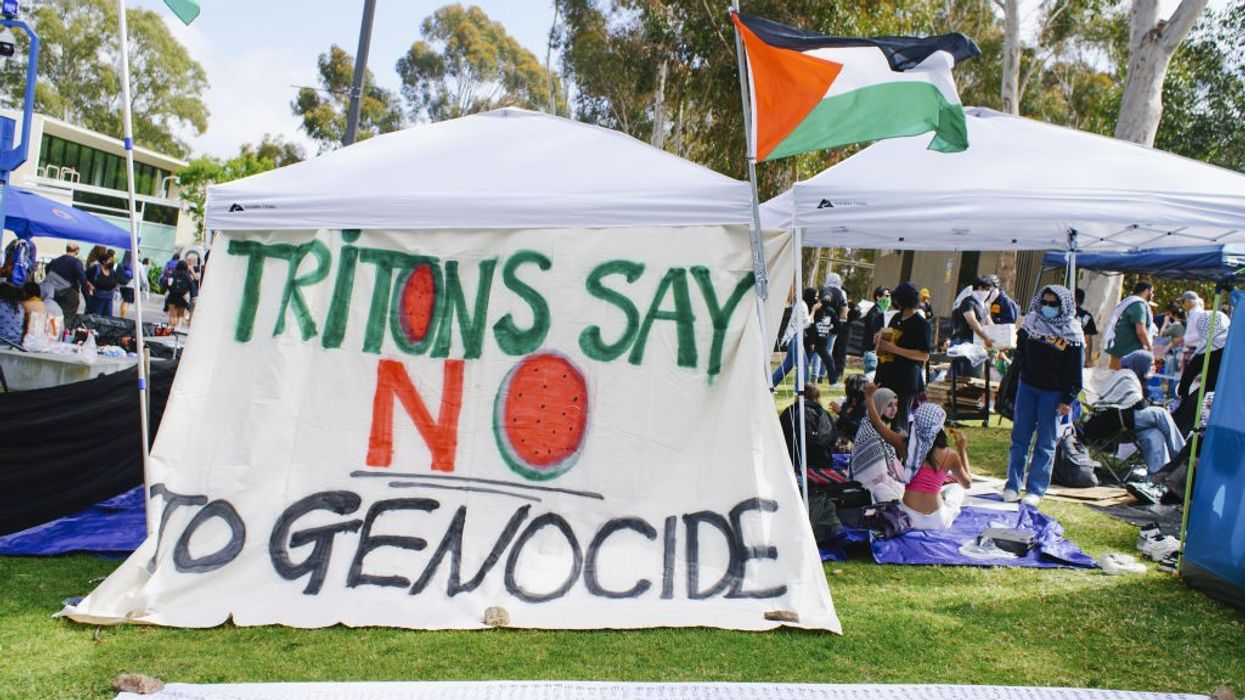
A protest and its aftermath at the University of California, San Diego illustrates the moral myopia of administrators.
Evidencing America’s profound moral depravity is the targeting of campus protesters rather than the genocidal actions of America’s closest ally Israel. President Donald Trump, members of Congress, Christian and Jewish nationalists, and university task forces on antisemitism all charge campus protesters with widespread antisemitism through singling out and demonizing Israel. Ominously, these accusations have prompted universities to impose far-reaching restrictions on campus speech and assembly which match or exceed the crackdowns of the McCarthy era. Consequently, while Israel’s genocide endures, to the silence or approval of leading political, media, and university leaders, it is the protesters who have been substantially silenced.
Granted, within the surge of campus protests in 2023-2024, a few protesters crossed the line into crude antisemitism or other offensive behavior. The partisan university task force reports on antisemitism at places like Harvard, Columbia, and UCLA have seized upon these scattered instances and lumped them with controversial but defensible chants, such as “Globalize the intifada,” to paint a manufactured picture of rampant hostility toward Jews. Conveniently, neither the task forces nor university officials address the cause of these protests: the ongoing destruction of Gaza, judged to be genocide by Amnesty International and other human rights groups, and the complicity of many U.S. universities. To illustrate this moral myopia, I review a recent tempest at UC San Diego.
On May 19, the Murray Galinson San Diego Israel Initiative (MGSDII) collaborated with UCSD’s School of Global Policy and Strategy (GPS) to host a lecture by Ido Aharoni, a leading Israeli propagandist. In response, the UCSD Faculty Defense Group, GPS students, and the San Diego chapter of Students for Justice in Palestine (SJP) converged in waging a vigorous protest. While the first two groups featured silent protests, SJP recited, with the help of amplification, multiple chants, including “Israel is an apartheid state. Genocide you celebrate” and “UCSD, you can’t hide. You’re supporting genocide.” Although the atmosphere was heated and a few participants yelled out “baby killer,” “Zionists not welcome here,” and personal insults at attendees entering the lecture hall, the protesters avoided direct altercations and did not try to shut down the talk.
Ironically, in her rebuke of the protests, Dean Freund urged that UCSD continue “to uphold the values that define our community: curiosity, compassion, and a shared commitment to a more peaceful and just world.” The protesters did just that.
An irate MGSDII staff accused the demonstrators of hurling “dangerous antisemitic slurs” and asked for punitive action. Obligingly, the UCSD chancellor and the faculty senate chair issued a joint message that curiously declared anti-genocide protests “an affront to the mission of our university” and promised an investigation for violation of university rules. Dean Caroline Freund apologized for “the disappointment and discomfort this caused for many in attendance, as well as for others in our broader community.”
Following a familiar pattern of selective outrage, Dean Freund and the chancellor ignored the circumstances prompting the dissent. Most importantly, the event was a university platforming of a professional propagandist who founded the government’s “Brand Israel” program. The MGSDII, which funds visiting teaching positions by Israelis, sponsored the talk as part of its mission to exert “a significant potential impact on the image of Israel that is different to, but on par with or exceeding, results of pro-Israel advocacy organizations.” “[M]ore than ever,” it proclaimed in an email blast after October 7, “we need to bring Modern Israel studies to our university classrooms to counteract the hate and biased education being taught by too many faculty.”
The MGSDII chose well in sponsoring Aharoni. Just two months earlier at San Diego State, he boasted of Israeli accomplishments, praised the U.S.-Israeli alliance, defended Israel’s assault on Gaza, and attacked campus protesters. For good measure, Aharoni quipped “I hope he’s deported to Gaza” in reference to the then-detained Columbia graduating student Mahmoud Khalil. As a skilled diplomat, Aharoni evaded the one critical question he received. The MGSDII was right to see the UCSD event as another propaganda opportunity, this time where the dean was lending prestige by introducing the speaker.
A second important dynamic ignored by Dean Freund and the chancellor was the chilling of Israel-related protests for the past year. In spring 2024, UCSD had become a hotspot for Gaza protests. On May 1, a coalition led by the campus chapters of SJP and Jewish Voice for Peace (JVP) assembled an encampment that grew to several hundred participants. The organizers avoided violent altercations with counterprotesters and facilitated cultural, educational, and religious activities, including an anti-Zionist Jewish Shabbat service, that attracted many visitors. This remarkable display of community activism ended abruptly on May 6 when the chancellor authorized police in riot gear to demolish the encampment and arrest resisters.
Although the city has not filed criminal charges, UCSD has disbanded the SJP and JVP chapters, withheld diplomas from graduating students, and consigned continuing students to a prolonged academic probation while they await completion of investigations. In the fall of 2024, the UC and Cal State systems released revised time, place, and manner regulations, which prohibit encampments, establish new restrictions on protests, and impose harsher sanctions. Combined with the draconian moves from the Trump administration, UCSD’s crackdown has had the intended effect. As professor Gary Fields, a faculty mentor to many UCSD protesters reflected, “What happened in the aftermath of the encampment is that there is still on our campus a climate of surveillance and fear—and self-censorship.”
The UCSD protest of Aharoni marks a courageous effort to revive anti-genocide protests. I would have preferred a more disciplined message that did not insult attendees. Moving forward, protesters would be well advised to devote more planning in coordination with faculty and veteran protesters to wage effective protests. The Faculty Defense Group got the balance right in its press statement: “Our aim in this protest is not to cancel or censor the speech of Ambassador Aharoni. Instead, we want to call attention to the one-sidedness of the event at a time when speech on our campus, and campuses everywhere, decrying the genocide perpetrated by Israel and enabled by the U.S., is being censored and criminalized.”
Above all, students are right to be angry. These frightening times demand robust protest, including the dreaded “disruption” that panics so many university officials. As of June 25, the official death toll in Gaza has surpassed 56,000. Having just joined Israel in a lawless attack on Iran, the U.S. continues to bestow Israel complete impunity to wreak destruction throughout Gaza and the West Bank. Ironically, in her rebuke of the protests, Dean Freund urged that UCSD continue “to uphold the values that define our community: curiosity, compassion, and a shared commitment to a more peaceful and just world.” The protesters did just that. Let us hope that Dean Freund and campus officials across the country absorb the lessons from the brave students on what moral responsibility demands.