

SUBSCRIBE TO OUR FREE NEWSLETTER
Daily news & progressive opinion—funded by the people, not the corporations—delivered straight to your inbox.
5
#000000
#FFFFFF
To donate by check, phone, or other method, see our More Ways to Give page.
Daily news & progressive opinion—funded by the people, not the corporations—delivered straight to your inbox.
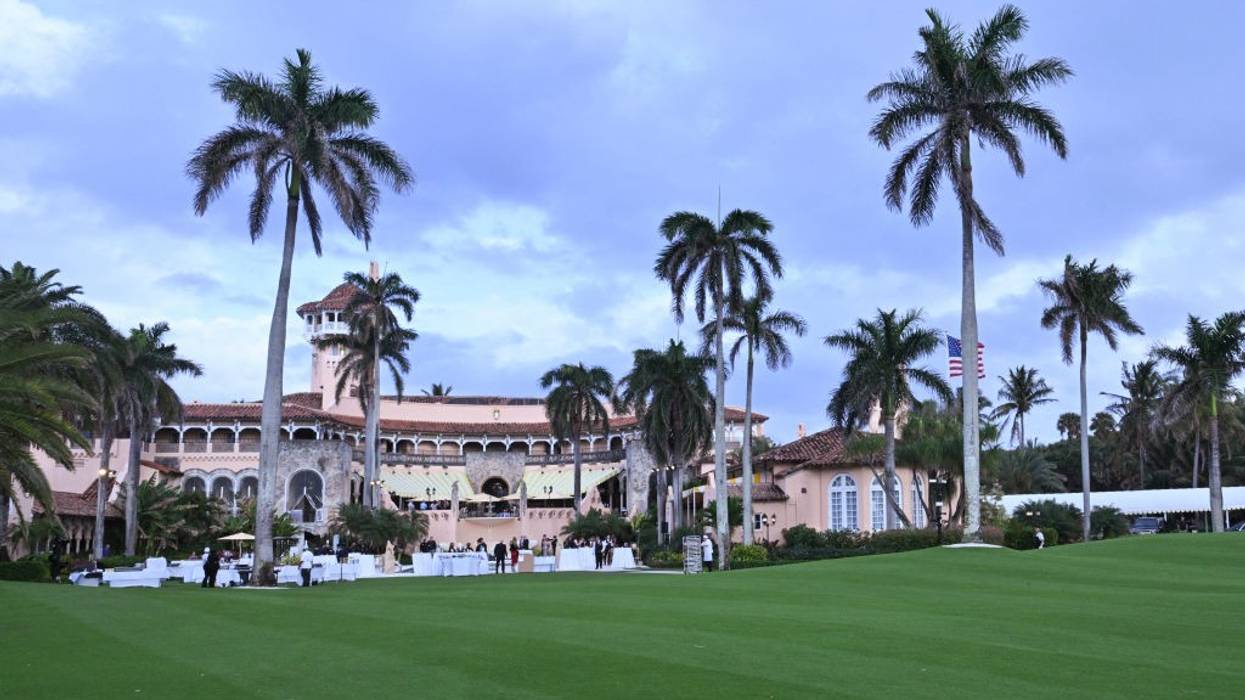
Trump has said that communities that don't want data centers "want to end up being backwards and poor."
President Donald Trump has said every American should want a data center in their town. But his home county in Florida just voted to block them.
In a 6-0 vote, commissioners in Palm Beach County—home to the president's luxurious private club and second residence, Mar-a-Lago—voted to enact a one-year moratorium on the construction of new "large-scale" data centers that use at least 50 megawatts of power.
The moratorium, approved on Thursday, came after Palm Beach residents expressed concerns shared by Americans around the country who’ve seen data centers move into their communities. Palm Beach already has some smaller data centers. But in July, it rejected a proposal for the 600MW Project Tango, following warnings about its potential effects on local wetlands and on families’ pocketbooks.
"Many communities want the economic benefits that data centers bring, but we all fear the higher power bills, the negative environmental impact, disruptive noise, and the depletion of water resources," explained one supporter of the moratorium at a county commission meeting on Thursday, according to the local ABC affiliate.
A poll conducted last month by Embold Research and published by Heatmap Pro found that 75% of Americans now oppose the building of AI data centers in their area, including 61% who registered strong opposition. Aversion to data centers crosses party lines, with majorities of Democrats, Republicans, and independents viewing them negatively.
As AI companies spend tens of millions bankrolling Trump and Republican candidates, members of the president's Cabinet, including Commerce Secretary Howard Lutnick and Energy Secretary Chris Wright, have scoffed at Americans' concerns about the tremendous water and energy use of data centers, which have been well documented as jacking up utility prices.
In a social media post last month, Trump himself said the only reason communities would not want a data center nearby is if they "want to end up being backwards and poor." Before that, he said that "smart communities" were "begging for them."
Sen. Bernie Sanders (I-Vt.), who has become one of Capitol Hill's leading critics of data centers and the artificial intelligence models they power, has said that if Trump truly finds data centers so desirable, he should “lead by example” by having his friend and megadonor, tech billionaire Elon Musk, build one at Mar-a-Lago.
"Trump says communities that oppose data centers will end up 'backwards' and 'poor,'" Sanders remarked Friday on social media. "Yesterday, Mar-a-Lago’s own Palm Beach County passed a year-long ban on these facilities."
"Maybe," the senator said, "Trump’s neighbors know something he doesn’t."
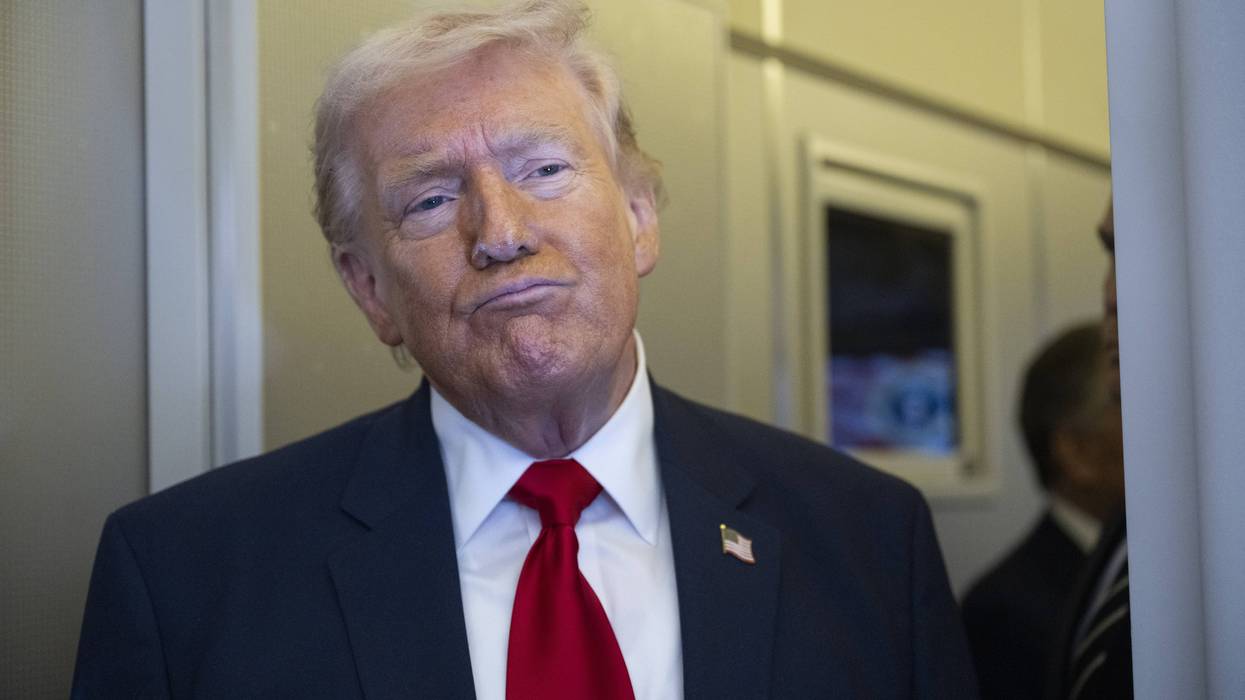
Even Trump's mail-in ballot was not enough to keep Democrat Emily Gregory from winning the seat over Republican Jon Maples in a district swing of more than 13 points.
A Democrat in Florida running to win a state house seat in the Palm Beach district that includes US President Donald Trump's Mar-a-Lago estate was declared the winner in a special election on Tuesday night, defeating the Trump-endorsed Republican in yet another powerful rebuke to the running of the country by the president and his party.
Emily Gregory flipped Florida's House District 87, defeating Republican Jon Maples, who Trump loudly endorsed and cast his vote for personally via mail-in ballot—something he wants to bar other voters nationwide from being able to do. Trump said on Monday that Maples, a financial planner who previously held office at the municipal level, was the choice of "so many of my Palm Beach County friends.”
But with almost all votes counted late Tuesday night, the Associated Press reported Gregory led by 2.4 percentage points, or 797 votes. In 2024, the district went to Republicans by 11 points.
"Republicans are vulnerable everywhere.”
Political strategist Sawyer Hackett named the obvious implication by saying, at least through November of 2026, "Trump will be represented by a Democrat in the Florida legislature."
“I think it demonstrates where the Florida voter is,” Gregory, who runs a fitness center for postpartum mothers, told Politico in an interview following her victory. “They want someone who is focused on solutions and the issues and not focused on the noise.”
“If Mar-a-Lago is vulnerable, imagine what’s possible this November,” said Heather Williams, president of the Democratic Legislative Campaign Committee, in response to the victory. Williams noted that Gregory's win was the 29th seat that Democrats have flipped from GOP control since Trump returned to office last year.
“Gas prices are spiking, grocery costs are up, and families can’t get by," she said. "It’s clear voters at the polls are fed up with Republicans. A Trump +11 district in his own backyard shouldn’t be in play for Democrats, but tonight proves Republicans are vulnerable everywhere.”
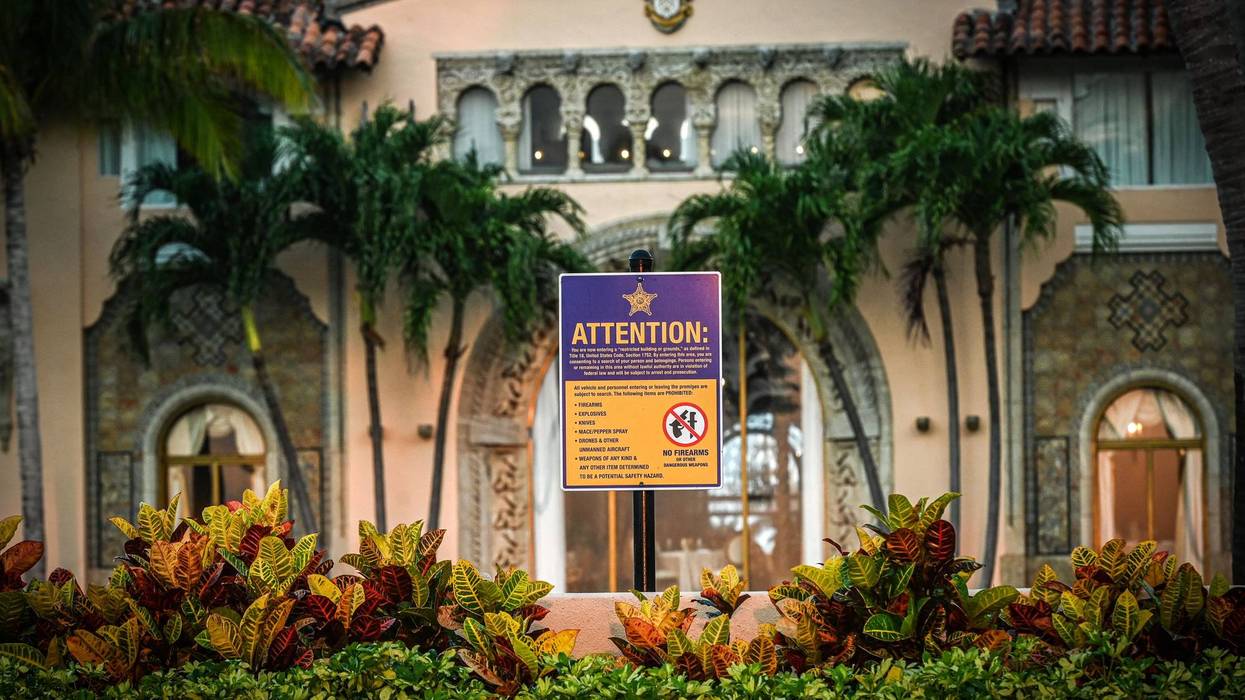
"The individual was observed by the north gate of the Mar-a-Lago property carrying what appeared to be a shotgun and a fuel can," according to US Secret Service.
This is a developing story… Please check back for updates…
The US Secret Service announced Sunday that its agents fatally shot a man armed with a shotgun overnight at President Donald Trump's Mar-a-Lago Club in Palm Beach, Florida, while the president and first lady were at the White House.
Secret Service spokesperson Anthony said the suspect is from North Carolina and was recently reported missing by his family. Citing a person familiar with the matter, the Associated Press reported that investigators have identified him as 21-year-old Austin Tucker Martin.
A statement posted on social media by Guglielmi says:
On February 22, around 1:30 am, a male in his early 20s was shot by US Secret Service agents and a deputy from the Palm Beach County Sheriff's Office (PBSO) following an unauthorized entry into the secure perimeter at Mar-a-Lago.
The individual, whose identity is being withheld pending notification of next of kin, was pronounced deceased. The individual was observed by the north gate of the Mar-a-Lago property carrying what appeared to be a shotgun and a fuel can.
US Secret Service agents and a PBSO deputy confronted the individual and shots were fired by law enforcement during the encounter. No US Secret Service or PBSO personnel were injured. There were no Secret Service protectees present at the location at the time of the incident.
The incident, including the individual's background, actions, potential motive, and the use of force, is under investigation by the FBI, the US Secret Service, and the Palm Beach County Sheriff's Office. In accordance with agency policy, the involved Secret Service agents will be placed on routine administrative leave pending the outcome of the investigation.
During a press conference, Palm Beach County Sheriff Rick Bradshaw said that the suspect, a white man, "was ordered to drop those two pieces of equipment that he had with them, at which time he put down the gas can, raised the shotgun to a shooting position. At that point in time, the deputy and the two Secret Service agents fired their weapons and neutralized the threat."
Trump has faced multiple security incidents during his two terms and three campaigns, including an assassination attempt during a July 2024 rally in Butler, Pennsylvania, and another the following September at Trump International Golf Club in West Palm Beach, Florida.
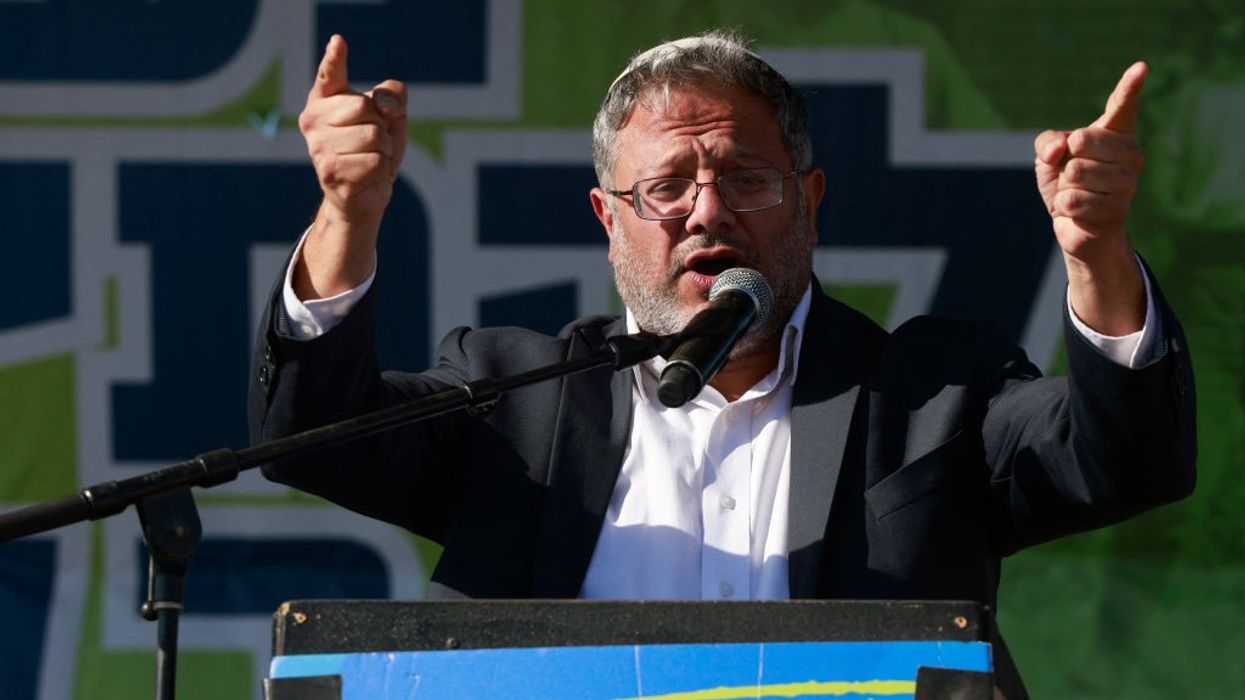
The remarks by the Israeli national security minister, who is visiting the United States, came ahead of Israel's bombing of a food distribution center in central Gaza that killed three people, including at least one child.
An Israeli drone strike on a food distribution center in central Gaza that killed three Palestinians on Thursday underscored remarks earlier in the week by Itamar Ben-Gvir, Israel's national security minister, who said that Republican leaders told him during a meeting at U.S. President Donald Trump's Mar-a-Lago resort that they agree with his policy of bombing humanitarian aid depots in the embattled enclave.
Eyewitnesses said that an Israeli drone bombed a food distribution point in the town of al-Zawayda, killing three people, including at least one child, and wounding others. The bombing came amid a crippling Israeli blockade of Gaza that has fueled widespread starvation and sickness, with the United Nations relief coordination office warning earlier this week that the humanitarian crisis in Gaza has reached "unprecedented levels."
The Palestinian news outlet Wafa reported that Israeli airstrikes killed 52 civilians across the Gaza Strip since dawn Thursday, bringing the death toll from 566 days of Israel's U.S.-backed genocidal assault to at least 51,355, with more than 117,000 others injured, over 14,000 people missing and feared dead and buried beneath rubble, and millions more forcibly displaced, starved, or sickened.
Thursday's attacks came after Ben-Gvir, leader of the far-right Jewish Power party, said that "senior Republican Party officials" whom he met Tuesday at Mar-a-Lago in Palm Beach, Florida "expressed support for my very clear position" that Gaza "food and aid depots should be bombed in order to create military and political pressure to bring our hostages home safely."
More than 250 Israeli and other hostages were taken during the Hamas-led October 7, 2023 attack on Israel. It is believed that 24 hostages are still alive in Gaza. Israeli Prime Minister Benjamin Netanyahu, a fugitive from the International Criminal Court, has been widely accused of trying to scupper cease-fire and hostage release efforts in order to prolong the war and delay his criminal corruption trial.
On Wednesday, Ben-Gvir was invited by Shabtai, a secretive society co-founded in 1996 by Yale University graduate students including Cory Booker—who is now a Democratic U.S. senator—to speak at the elite Connecticut school. After his speech, Ben-Gvir waved and flashed the "victory" sign to pro-Palestinian protesters gathered outside the event, prompting some to throw water bottles at him.
Following a Tuesday night protest which it did not organize, the Yale chapter of Students for Justice in Palestine was stripped of its official club status by university officials, who cited concerns over "disturbing antisemitic conduct at the gathering"—without providing any evidence to support their claim.
Ben-Gvir continued his U.S. tour on Thursday, with planned visits to Jewish neighborhoods in New York City's Brooklyn borough.
Tuesday's remarks were not the first time Ben-Gvir—who was convicted in 2007 by an Israeli court of incitement to racism and supporting the Kahanist militant group Kach—has endorsed war crimes against Palestinians.
"Let's bomb the food reserves in Gaza, let's bomb all the power lines in Gaza. Why are there lights in Gaza? There must not be a single light. Stop the electricity," he said last month.
In January, Ben-Gvir resigned from Netanyahu's government in protest of its cease-fire and hostage release agreement with Hamas. He rejoined the government after it renewed its genocidal assault on Gaza last month.
District Court Judge Aileen Mercedes Cannon was confirmed by the Senate on November 12, 2020, nine days after Trump lost the presidential election, despite having only four minor jury trials on her resume as a practicing attorney.
Amid all the excitement generated by the indictments against Donald Trump in Washington, D.C., and in Fulton County, Georgia, for election subversion, it’s easy to lose sight of the Mar-a-Lago documents case, which is set for trial next May. But of all Trump’s legal woes, that case is the only one that looks like a slam dunk.
Trump stands accused of committing 40 felonies for absconding from the White House with a trove of classified and top-secret papers, stashing them at his Palm Beach golf resort, and refusing to return them to the federal government on demand. Two other defendants—Walt Nauta, Trump’s longtime valet; and Carlos de Oliveira, the resort’s property manager—are accused of committing some crimes jointly with Trump and others on their own.
Unfortunately, there is one big problem facing Special Counsel Jack Smith’s team in the Sunshine State: The trial will be presided over by District Court Judge Aileen Mercedes Cannon, who may just be in the metaphorical tank for the former President.
Given the broad authority of federal trial judges and her obvious pro-Trump bias, Cannon will be uniquely positioned to help the ex-President as the case unfolds.
Cannon, who was born in Colombia and grew up in Miami, was nominated by Trump in May 2020 to serve on the United States District Court for the Southern District of Florida. She was 39-years-old, relatively young by federal judicial standards.
Cannon was confirmed by the Senate on November 12, 2020, nine days after Trump lost the presidential election, despite having only four minor jury trials on her resume as a practicing attorney. Her scant record as a published author at the time of her nomination included a series of human-interest pieces she wrote as an undergraduate for El Nuevo Herald, a Miami-based Spanish-language daily newspaper. Among the topics she covered were prenatal yoga, the health benefits of tomatoes, and flamenco dance.
By all appearances, Cannon grew more serious in law school at the University of Michigan, joining the Federalist Society and establishing herself as a staunch conservative. She served as an assistant U.S. attorney in southern Florida from 2013 to 2020, and in that capacity, caught the eye of the Trump Administration as a worthy candidate to add to the growing cadre of right-wing judges the ex-President had appointed.
Once enrobed, Cannon was assigned to a courtroom in Fort Pierce, north of West Palm Beach. Under normal circumstances, she would have remained under the radar for years, handling a challenging but standard docket of civil and criminal litigation. The FBI’s search of Mar-a-Lago on August 8, 2022, changed that trajectory in a flash.
Cannon was assigned to hear a highly unusual civil lawsuit Trump’s lawyers filed on August 22, seeking an emergency protective order to block the government from indicting Trump until the propriety of the search could be reviewed by an independent arbiter known as a “special master.” Suddenly, she found herself in the national spotlight.
To the shock and dismay of many legal observers, Cannon ruled quickly in Trump’s favor, issuing an order on September 5, appointing a special master, and reasoning that Trump was entitled to be treated differently than other criminal suspects in order to avoid the “reputational harm” that could have resulted from a hasty indictment. “As a function of Plaintiff’s former position as President of the United States,” Cannon wrote, “the stigma associated with the subject seizure is in a league of its own.”
At the Special Counsel’s request, the 11th Circuit Court of Appeals quickly intervened and rebuked Cannon in a stinging reversal, holding:
The law is clear. We cannot write a rule that allows any subject of a search warrant to block government investigations after the execution of the warrant. Nor can we write a rule that allows only former presidents to do so. Either approach would be a radical reordering of our case law limiting the federal courts’ involvement in criminal investigations. And both would violate bedrock separation-of-powers limitations.
Incredibly, now that Trump has actually been indicted, Cannon is once again presiding, apparently impervious to demands that she recuse herself due to the appearance of bias. According to the district-court clerk, she was randomly selected to act as the trial judge from a total pool of seven active judges.
Given the broad authority of federal trial judges and her obvious pro-Trump bias, Cannon will be uniquely positioned to help the ex-President as the case unfolds. She will rule on all pretrial motions, including any motions to suppress the documents on Fourth Amendment grounds, as well as any that seek to dismiss the indictment for selective prosecution or prosecutorial misconduct. She will also have the last word on the admissibility of evidence at trial.
Cannon’s greatest impact, however, may be on jury selection. Under the federal rules of criminal procedure, the prosecution will only have six peremptory jury challenges, allowing it to automatically exclude potential jurors it believes will be unfair. After that, the prosecution will be limited to challenges for cause (such as implied or actual bias), which Cannon will have the sole power to grant or deny. It will only take one rogue juror who holds out for acquittal regardless of the evidence to spare Trump.
Even if Cannon were not biased herself, there is good reason to doubt her ability to supervise the high-profile selection of Trump’s jury. In a recent criminal case, according to a transcript obtained by Reuters, she arguably committed an egregious Sixth Amendment error when she excluded the family of a criminal defendant and the general public from her courtroom during jury selection, pointing to a lack of space. She also neglected to swear in the jury pool, and was forced to restart jury selection after realizing her mistake.
Cannon could also play a decisive role post-trial if Trump’s attorneys ask her to issue a directed verdict that would take the question of guilt out of the jury’s hands. Such motions are routinely made in criminal trials, but are rarely granted.
If all this seems like a prescription for disaster, take heart: Trump will soon be in the dock in the District of Columbia, Georgia, and New York State—all far beyond Judge Cannon’s reach.

"The charges—and evidence—grow every day," said Rep. Adam Schiff.
Donald Trump on Thursday was hit with additional federal charges in connection with his alleged mishandling of classified documents, while a third person—a worker at the former president and 2024 Republican candidate's Mar-a-Lago resort—was newly indicted in the case.
Already facing 37 federal charges for his alleged unlawful possession and concealment of classified documents at his Palm Beach, Florida resort, Trump was charged by Special Counsel Jack Smith with four additional counts, according to a superseding indictment filed in the United States District Court for the Southern District of Florida.
Also named in the indictment is Mar-a-Lago maintenance worker Carlos De Oliveira, the second Trump aide to be charged in the case. De Oliveria allegedly helped Waltine "Walt" Nauta—who stands charged with six counts, including making false statements to federal investigators—move boxes containing classified documents and lied to federal agents about it.
According to the new indictment, Trump, Nauta, and De Oliveira asked another Mar-a-Lago worker to "delete security camera footage" at the resort in order to prevent it "from being provided to a federal grand jury."
One of the new charges against Trump involves his alleged willful retention of a top secret document about a plan to attack Iran, which he discussed during a recorded interview with biographers at his golf resort in Bedminster, New Jersey. The former president was taped saying that "as president I could have declassified" the document, adding "now I can't, you know, but this is still secret."
Trump reacted to the new charges in a Thursday evening Fox News Digital interview, saying, "They're harassing my company, they're harassing my family and by far, least importantly of all, they're harassing me."
Steven Cheung, a spokesperson for Trump, called the new charges "a continued desperate and flailing attempt" to thwart the 2024 GOP frontrunner's bid to return to the White House.
Trump—who last month pleaded not guilty to the federal charges—has also been indicted in New York on 34 felony counts related to alleged hush money payments during the 2016 presidential election meant to cover up previous sex scandals, charges to which he has also pleaded not guilty.
The twice-impeached former president may also face charges in Fulton County, Georgia, where prosecutors have been investigating his attempt to overturn his 2020 election loss. Earlier this month, the Georgia Supreme Court unanimously rejected Trump's bid to effectively end Fulton County District Attorney Fani Willis' probe of his efforts, which culminated in the deadly January 6, 2021 Capitol insurrection.

"The criminal evidence unsealed in the indictment shows in painstaking detail that he acted as if he is above the law, while willfully and recklessly endangering our national security," said MoveOn Political Action's executive director. "Now is the time for Donald Trump to be held accountable."
As the unsealed indictment against former President Donald Trump and aide Walt Nauta provoked shocked and horrified reactions on Friday, Special Counsel Jack Smith vowed to seek a speedy trial while also emphasizing the severity of the 38 charges.
"Today an indictment was unsealed charging Donald J. Trump with felony violations of our national security laws as well as participating in a conspiracy to obstruct justice," said Smith, who was appointed by U.S. Attorney General Merrick Garland in November, after the twice-impeached former president announced he is seeking the 2024 Republican presidential nomination.
"This indictment was voted by a grand jury of citizens in the Southern District of Florida and I invite everyone to read it in full to understand the scope and the gravity of the crimes charged," he continued. "Our laws that protect national defense information are critical to the safety and security of the United States and they must be enforced. Violations of those laws put our country at risk."
"We have one set of laws in this country and they apply to everyone," Smith added. "It's very important for me to note that the defendants in this case must be presumed innocent until proven guilty beyond a reasonable doubt in a court of law. To that end, my office will seek a speedy trial in this matter, consistent with the public interest and the rights of the accused."
The indictment—which journalist Judd Legum described as "absolutely devastating"—outlines that Trump faces 31 counts related to withholding national defense information. Additionally, he and Nauta face five counts related to concealing possession of classified documents. They also each face a count related to making false statements to the Federal Bureau of Investigation (FBI).
In what Norman Eisen—a Brookings Institution senior fellow in governance studies who was special counsel to the U.S. House Judiciary Committee from 2019-20, including for Trump's first impeachment and trial—called "perhaps one of the most damning statements ever made about an American president," the indictment says:
The classified documents Trump stored in his boxes included information regarding defense and weapons capabilities of both the United States and foreign countries; United States nuclear programs; potential vulnerabilities of the United States and its allies to military attack; and plans for possible retaliation in response to foreign attack. The unauthorized disclosure of these classified documents could put at risk the national security of the United States, foreign relations, the safety of the United States military, and human sources and the continued viability of sensitive intelligence collection methods.
The indictment explains that after leaving office in January 2021 "Trump caused scores of boxes, many of which contained classified documents, to be transported" to Mar-a-Lago, his Florida residence, where FBI agents executed a search warrant last August. Even though "Trump was not authorized to possess or retain those classified documents," the document adds, he stored them throughout the club, "including in a ballroom, a bathroom and shower, an office space, his bedroom, and a storage room."
The indictment accuses Trump of showing classified materials to people who lacked security clearance to see them at least twice at his golf club in New Jersey. The first time was in July 2021, during an audio-recorded meeting with a writer, a publisher, and two members of his staff.
The former president "showed and described a 'plan of attack' that Trump said was prepared for him by the Department of Defense and a senior military official," according to the document. "Trump told the individuals that the plan was 'highly confidential' and 'secret.' Trump also said, 'As president I could have declassified it,' and, 'Now I can't, you know, but this is still a secret.'"
Then, in August or September 2021, Trump allegedly showed a representative of his political action committee "a classified map related to a military operation," told the unnamed individual that he should not be doing so, and said not to get too close.
After the FBI launched a criminal investigation in March 2022, which led to a grand jury issuing a subpoena for all records with classification markings in mid-May, "Trump endeavored to obstruct the FBI and grand jury investigations and conceal his continued retention of classified documents," the document details.
It goes on to share some comments Trump supposedly made to his attorneys in late May 2022, when the lawyers said they needed to search for materials to comply with the subpoena:
In a series of tweets after the indictment was unsealed, Noah Bookbinder, head of the watchdog group Citizens for Responsibility and Ethics in Washington (CREW), said that "this is consistent with what we expected and what had been previously reported, but the details make Donald Trump's alleged conduct even worse than we knew."
"The national security importance of the documents at issue is striking: Documents about American and foreign nuclear capabilities and military vulnerabilities, as well as about plans for possible military action. The damage if this information was compromised is not trivial," Bookbinder added. "That Trump allegedly on two occasions showed highly classified documents to and discussed them with civilians with no security clearance is just shocking. It violates the most basic understanding of how classified information works."
"The indictment also cleverly goes through Trump's many statements about the importance of enforcing laws governing classified materials and of having presidents and former officials who understand and follow those laws," the CREW leader noted. "So it becomes awfully hard for him to say he didn't know or didn't understand. The indictment makes even more clear that, if proven, he knew what he was doing and chose to subordinate national security interests and the law to his own whims. It sure doesn't look good."
Trump—whom the Manhattan district attorney in April charged with 34 felony counts related to alleged multiple hush money payments—and his supporters continued to frame his latest historic indictment as a "sad day for our country," with the former president maintaining his innocence and saying in a Friday fundraising email, "If our Free Republic has ANY hope of survival, then our movement MUST win in 2024 and DISMANTLE the Deep State for good."
As Common Dreams reported earlier Friday, survey results shared with The Guardian show 12 million people in the United States, or 4.4% of the adult population, think the use of violence is justified to restore Trump to power. While the ex-president's critics called for allowing the legal process to play out and welcomed that he may be convicted in the case—and even face prison time—some also acknowledged the risk of violence.
"No one is above the law—including Donald Trump," U.S. Senate Majority Leader Chuck Schumer (D-N.Y.) and House Minority Leader Hakeem Jeffries (D-N.Y.) said in a joint statement. "This indictment must now play out through the legal process, without any outside political or ideological interference. We encourage Mr. Trump's supporters and critics alike to let this case proceed peacefully in court."
MoveOn Political Action executive director Rahna Epting said Friday that "Donald Trump has regularly flouted and violated the law for much of his time as a political candidate and elected official. The criminal evidence unsealed in the indictment shows in painstaking detail that he acted as if he is above the law, while willfully and recklessly endangering our national security."
"Now is the time for Donald Trump to be held accountable," she continued, noting that MoveOn members have previously signed petitions calling for Trump to be disqualified from running for office again for his role in inciting insurrection—which Smith is also investigating. "No matter his front-runner status, Donald Trump does not belong on anyone's ballot. He belongs in a courtroom."
MoveOn is part of the Not Above the Law coalition, which also includes CREW, Common Cause, Free Speech for People, Greenpeace USA, Indivisible, NextGen America, Our Revolution, People for the American Way, Public Citizen, Sierra Club, Stand Up America, and other groups.
"In the United States, no one is above the law—not even a former president," the coalition declared Friday. "The rule of law is a basic principle—everyone must equally abide by our nation's laws, and those laws should be equally enforced. Trump must not be held to a different standard because he's rich, famous, or a former president."

While the front-runner for the 2024 GOP nomination faces various legal issues, it is the first time a former U.S. president has faced federal charges.
Former President Donald Trump said Thursday night that he has been indicted in the special counsel investigation into his handling of classified documents, a development that sources familiar with the matter also confirmed to multiple media outlets.
While the Manhattan district attorney in April charged Trump with 34 felony counts involving alleged multiple hush money payments during the 2016 election cycle, the latest indictment marks the first time an ex-president has faced federal charges. Both CNN and The New York Times reported that he faces seven new criminal counts.
According to ABC News, the charges "include willful retention of national defense information, conspiracy to obstruct justice, withholding a document or record, corruptly concealing a document or record, concealing a document in a federal investigation, scheme to conceal, and false statements and representations."
"Today is a historic day for accountability and upholding the principles upon which our democracy was founded. No one is above the law—not even an ex-president," said Lisa Gilbert, executive vice president for Public Citizen, in response to the news. "This fact should unite us, not divide us."
"The Justice Department has found what numerous legal scholars have found: sufficient evidence that Trump committed a federal crime in the handling of classified documents since he left office," added Gilbert. "Even Trump's own attorney general, Bill Barr, told CBS News that 'This would have gone nowhere had the president just returned the documents, but he jerked them around for a year and a half… There is no excuse for what he did here.'"
"What's left is for the courts to decide," she said, "as they would in any criminal case."
Trump, the front-runner for the 2024 Republican presidential nomination, announced the indictment in a series of posts on his Truth Social platform. After taking aim at President Joe Biden, who beat him in 2020 and is seeking reelection, Trump said that he has been summoned to appear at the federal courthouse in Miami on Tuesday afternoon.
The ex-president proclaimed his innocence and declared that "this is indeed a DARK DAY for the United States of America." He posted a four-minute video about what he called "A CONTINUATION OF THE GREATEST WITCH HUNT OF ALL TIME" and is already fundraising off of the development, urging supporters to "prove that YOU will NEVER surrender our country to the radical Left."
After Trump announced his 2024 campaign in November, U.S. Attorney General Merrick Garland appointed Jack Smith, a longtime federal prosecutor, as special counsel to oversee probes into the twice-impeached former president's role in the January 6, 2021 attack on the U.S. Capitol and his handling of classified documents.
Smith's appointment came after the Federal Bureau of Investigation executed a search warrant at Mar-a-Lago, Trump's Florida residence, last August. Later that month, the U.S. Department of Justice released a redacted affidavit which explained what prompted the raid, during which agents retrieved several boxes of materials.
Ahead of Trump's announcement Thursday, David Rothkopf argued in a piece for the Daily Beast that "my brothers and sisters in the media and the D.C. commentariat need to stop referring to the former president's theft of classified documents vital to our national security as merely 'the documents case.'"
Rothkopf continued:
Based on evidence that has already been made public we know that Trump did not mistakenly shift a classified document or two from the White House to Mar-a-Lago. He was briefed repeatedly on the proper handling of classified materials. He has even acknowledged, on tape, that he understood how such sensitive, easily weaponizable documents should be treated.
But he ignored the law. He ignored the advice he was repeatedly given. And, based on reporting to date, he stole scores of items that were not his, to which he had no right, which could put the lives of Americans and our national interests and those of our allies at risk.
Linking to the article, Noah Bookbinder, head of the watchdog group Citizens for Responsibility and Ethics in Washington, tweeted: "This is important. Donald Trump is likely to be charged soon not for mishandling documents, but for endangering America's national security. How we talk about this matters, and that is a more accurate and appropriate description."