

SUBSCRIBE TO OUR FREE NEWSLETTER
Daily news & progressive opinion—funded by the people, not the corporations—delivered straight to your inbox.
5
#000000
#FFFFFF
To donate by check, phone, or other method, see our More Ways to Give page.
Daily news & progressive opinion—funded by the people, not the corporations—delivered straight to your inbox.
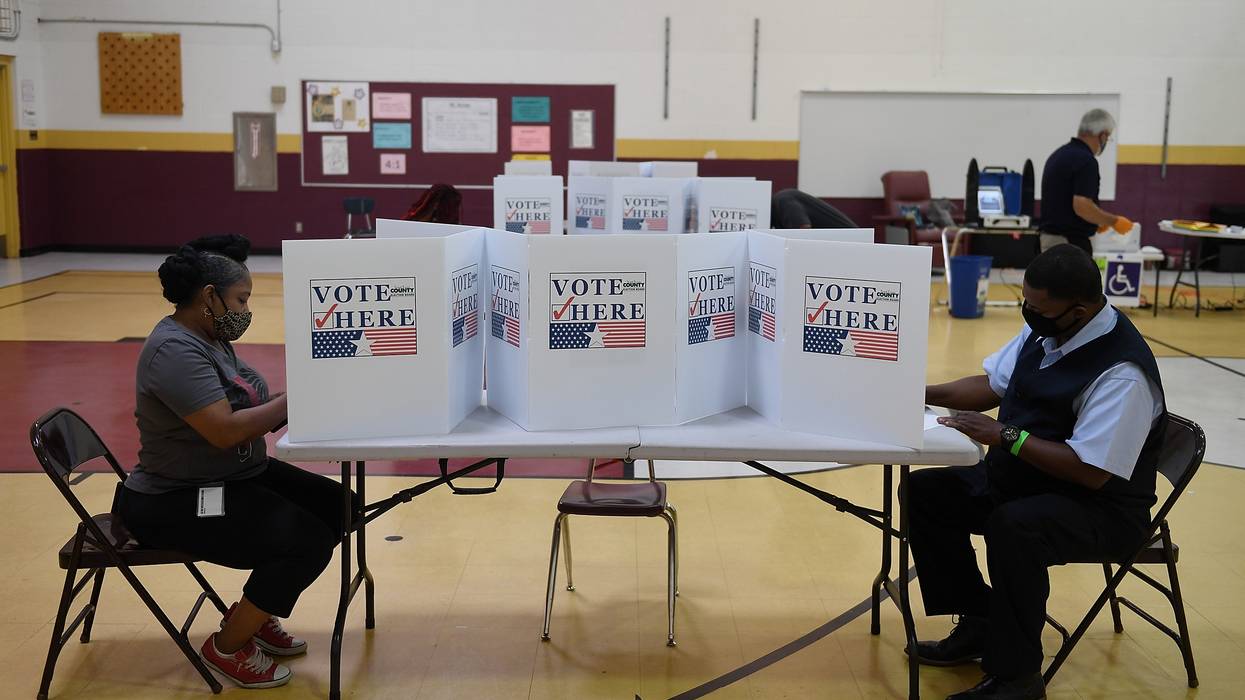
As these attacks target communities of color, we’re witnessing the systematic disenfranchisement of people who’ve fought hardest for economic justice and workers’ rights.
Today, I’m writing as someone who believes deeply in democracy, especially as a group of anti-worker Missouri lawmakers prepare to divide our community so that they can silence our voices, including my own.
States usually redraw electoral district boundaries every 10 years following the US Census to account for population shifts and demographic changes. But for political reasons, Texas lawmakers have gone ahead and redrawn their political map. And now several other states, including Missouri, are trying to do the same thing.
The NAACP is suing the State of Missouri to stop this action, calling it an “unconstitutional redistricting process” and a “blatant effort to silence Black voters and strip them of their fundamental rights.”
In Missouri’s 5th Congressional District, where I live, the clear aim of this gerrymandering is to dilute the voting power of Black and brown communities instead of letting us choose leaders who reflect our values. This isn’t just politics as usual. It’s a calculated assault on democracy and a power grab for an elite few.
As these attacks target communities of color, we’re witnessing the systematic disenfranchisement of people who’ve fought hardest for economic justice and workers’ rights. These same corporate-backed lawmakers recently repealed guaranteed sick days for more than 700,000 workers, including me and my coworkers.
My community deserves a voice in choosing our representation instead of having politicians strip it away—politicians who care more about protecting themselves instead of the people they were elected to represent.
A couple years ago, I got sick with what I thought was the flu. I didn’t have health insurance, so I couldn’t see a doctor. I stayed home from my shift at Taco Bell to protect my coworkers and customers from a potentially contagious illness. I was already falling behind on rent after management cut my hours prior to getting sick, and taking time to recover was the final straw. I missed $450—over half my rent. I came home from work to an eviction notice. My son Rashaad and I lost our home.
As a parent, few things are more heartbreaking than not being able to care for your children properly. Had I been able to take a few days off while still getting paid, we could have stayed housed. I couldn’t help getting sick, but the greedy corporation I worked for chose to abandon me as soon as I stopped making them rich.
If I had paid sick days, that wouldn’t happen. And ironically enough, I previously helped win paid sick days through a ballot initiative. Despite promises to respect the will of the people, Missouri politicians sided with big business over working families and overturned our right to paid leave. By gutting this policy, these corporate-backed politicians didn’t just force workers like me to go to work sick—they stole money from our pockets and food from our cupboards.
This redistricting scheme is clearly part of a two-pronged plan to suppress voter participation and double down on attacking the rights of working people. In fact, they’re using the same special session they’ve called to pass redistricting to also destroy a 115-year old ballot initiative process in our state constitution that won us—across party lines—paid leave, Medicaid expansion, and restored abortion rights.
But working people like me don’t back down when our lives are on the line. We stay committed to the fight for our rights, from the streets, to the strike line, to the statehouse. My community deserves a voice in choosing our representation instead of having politicians strip it away—politicians who care more about protecting themselves instead of the people they were elected to represent.
We were already living in modern-day economic slavery. Now they’re trying to put us in political slavery too. But we won’t let them. Across this country, working people will not be silenced or divided. Our political leaders need to stop trying to rig the rules and let the people decide who represents us.
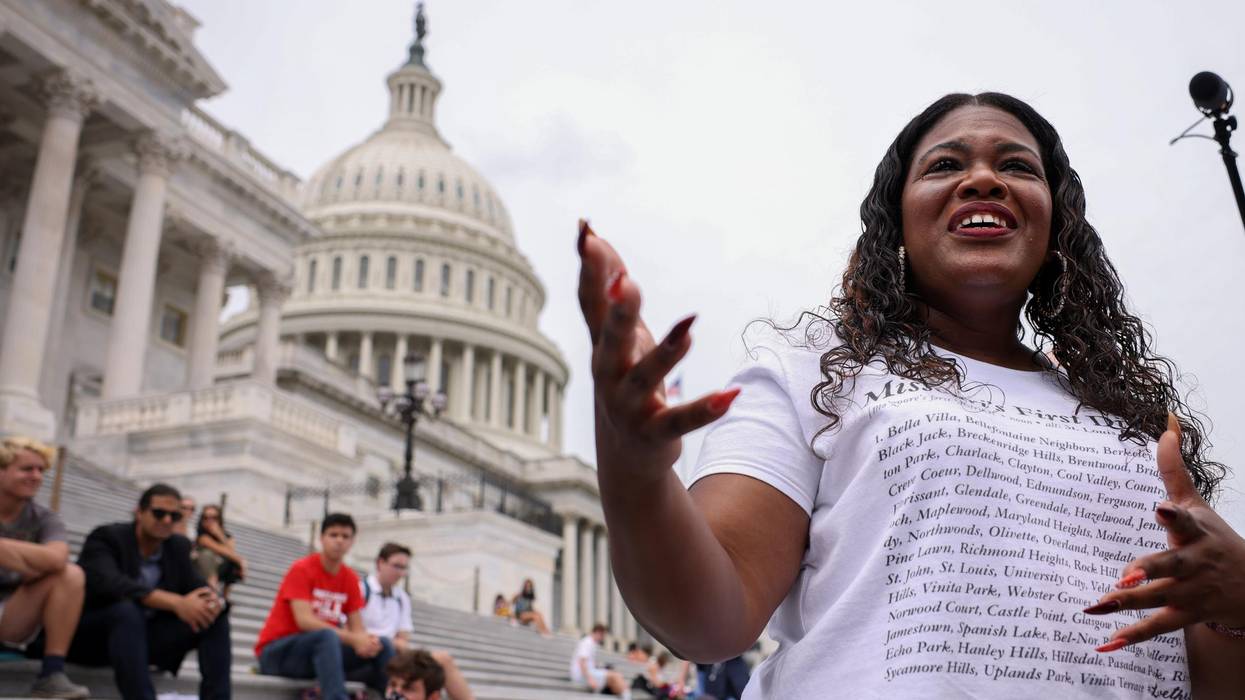
"Missouri has some of the weakest gun laws in the country," said the St. Louis Democrat. "So to the Missouri Republicans who are pointing their finger at the people of Kansas City... this blood is on your hands."
A day after a deadly shooting at the Kansas City Chiefs' Super Bowl victory parade, Democratic Missouri Congresswoman Cori Bush on Thursday took aim at Republicans from her state who "continue to eviscerate and obstruct gun safety laws."
"St. Louis and I rise to send our love and condolences to Kansas City, Missouri in the wake of yesterday's mass shooting," Bush said on the floor of the U.S. House of Representatives. "This preventable and despicable epidemic of gun violence, it affects us all. It impacts my district in St. Louis; it impacts your districts; it impacts our entire country. And it does not need to be this way."
"Missouri has some of the weakest gun laws in the country," she noted. "So to the Missouri Republicans who are pointing their finger at the people of Kansas City, Missouri and calling them 'thugs'... this blood is on your hands. You don't get to scapegoat the victims of this shooting when you are actively blocking gun violence prevention legislation."
Republicans lawmakers' allegiance to the National Rifle Association (NRA), a powerful gun lobby group, over the needs of the people is "absolutely shameful," the "Squad" member declared. "Missouri needs you to act. Join us in passing meaningful commonsense gun safety legislation, so that we can put an end to this crisis and save lives."
The Wednesday shooting left at least one person dead—Lisa Lopez-Galvan, a disc jockey and mother of two—and 22 others injured, according to The Kansas City Star. No charges have been filed but two unidentified teenage suspects are in police custody.

"Today we continue the cycle of fear and grieving in Kansas City during a parade," said one gun control group.
This is a developing story… Please check back for possible updates...
Officials in Kansas City, Missouri on Wednesday said at least one person was killed and another 21 people were injured in a shooting at the Kansas City Chiefs' Super Bowl victory parade, with multiple in critical condition.
The police said three people had been taken into custody.
The shooting took place near Union Station, where a rally was held following the parade to celebrate the football team's victory on Sunday.
A spokesperson for University Health told The New York Times that four people had been taken to the hospital with gunshot wounds and eight people were there being treated for other injuries. Chaos erupted at the rally when the shooting began, causing thousands of fans to flee.
The shooting took place on the sixth anniversary of the Parkland, Florida shooting at a high school, which launched a nationwide student-led effort to push for tighter gun control regulations.
"As we wait for more details, we know this: We are horrified by the American nightmare that is gun violence," said March for Our Lives, the group founded by Parkland survivors. "NO PLACE IS SAFE."
The parents of Joaquin Oliver, one of the young students killed on February 14, 2018 in Parkland, were scheduled to appear on CNN as the news broke about the Kansas City shooting.
Manuel Oliver and Patricia Padauy-Oliver were there to discuss "The Shotline," a new program that uses artificial intelligence technology to recreate the voices of gun violence victims and demand action from lawmakers.
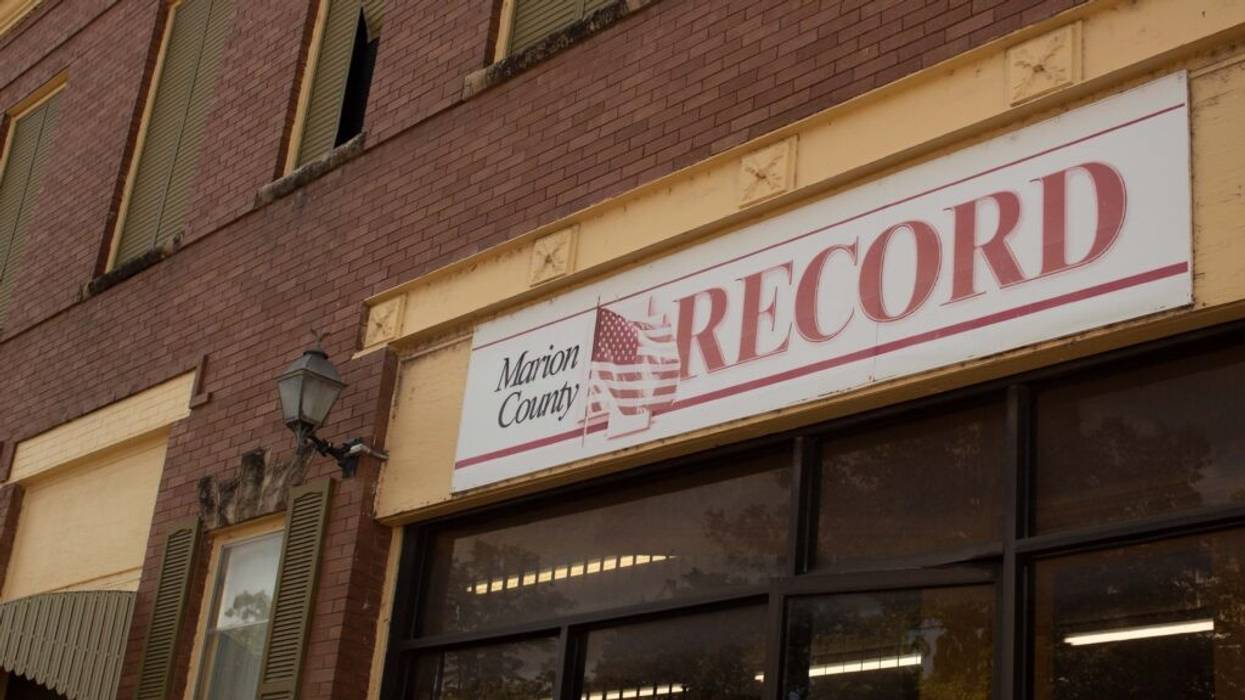
The case is a reminder that the United States is no stranger to local powers using their authority to silence what is left of critical journalism.
As the police raided Marion County Record editor and publisher Eric Meyer’s home August 11 (Committee to Protect Journalists, 8/12/23; AP, 8/13/23; New York Times, 8/13/23), his 98-year-old mother was aghast, watching the cops rummage through her things. “She was very upset, yelling about ‘Gestapo tactics’ and ‘where are all the good people?’” Meyer told FAIR. He said that after the raid she “was beside herself, she wouldn’t eat, she couldn’t sleep, and finally went to bed about sunrise.” Meyer’s mother, a co-owner of the paper, eventually told her son that the whole affair was “going to be the death of me.”
And it was. She died the next afternoon. And Meyer blames the police (Daily Beast, 8/12/23).
By that afternoon, Meyer had been fielding calls all day with lawyers and journalists, as the raid on the paper’s offices and his home suddenly made his small-town Kansas paper world-famous. He spoke to FAIR from his office line, because his cellphone had been seized, along with other equipment.
Meyer explained that current town police chief Gideon Cody—a retiree of the Kansas City, Missouri, police department—has harbored animosity toward the paper ever since it started asking uncomfortable questions about his hiring.
The raid was “authorized by a search warrant that alleged identity theft and unlawful use of a computer,” The Guardian (8/12/23) reported, leading authorities to take “publishing and reporting materials that the newspaper relied on to publish their next edition.”
The reason, according to news reports, seems fairly petty, sparked by the complaints of local restaurateur Kari Newell, who had demanded that Meyer and a reporter be removed from an event with area Congressmember Jake LaTurner (R-Kan.). She alleged later that the paper had unlawfully obtained personal records showing that she, according to The Guardian, had allegedly been “convicted of drink-driving and continued using her vehicle without a license,” but that “the paper never published anything related to it.”
But that’s not what Meyer thinks this is really about. Meyer explained that current town police chief Gideon Cody—a retiree of the Kansas City, Missouri, police department—has harbored animosity toward the paper ever since it started asking uncomfortable questions about his hiring (Handbasket, 8/12/23; Washington Post, 8/13/23). Meyer’s paper, after hearing anonymous allegations about his tenure, questioned town leaders as to whether they vetted Cody before hiring him (the paper never published any of the allegations, Meyer said). This led to a confrontation between the paper and the chief, and Meyer believes that the restaurateur’s antics were merely an excuse to exert power over the paper.
When an anti-corruption newspaper in Guatemala gets shut down and its publisher is thrown in jail (Washington Post, 5/15/23), or a Hong Kong publisher known for opposing the expanding powers of police is imprisoned (AP, 10/25/22), Americans might be outraged but figure that these are the tribulations of less open and democratic societies. The Marion County Record case is a reminder that the United States is no stranger to local powers using their authority to silence what is left of critical journalism.
Consider how officials in Delaware County in the Catskills region of New York reacted to the critical reporting of a local paper, the Reporter. “The county stripped the newspaper of a lucrative contract to print public notices,” The New York Times (6/18/23) reported, noting that the county admitted to the Reporter that the “decision was partly based on ‘the manner in which your paper reports county business.’” This hit the paper where it hurts, as the “move cost the Reporter about $13,000 a year in revenue.” This kind of retaliation has occurred in several states, the Times said.
Missouri has seen several attempts to intimidate or impede journalists. In St. Louis, a judge forbade “the St. Louis Post-Dispatch from publishing material from the mental health evaluation of a man accused of killing a police officer” (Riverfront Times, 5/25/23), an apparently unconstitutional prior restraint on the press. Missouri’s then-Attorney General Eric Schmitt, now a Republican senator, “filed a request in June [2022] asking for three years of emails sent and received by… professors while they worked at the Columbia Missourian” (AP, 9/2/22), a clear intimidation tactic towards journalists whose publications are attached to public universities. The state’s governor also pursued a criminal investigation into a Post-Dispatch reporter who found security breaches on a government website, although no charges were ultimately filed (USA Today, 2/12/22).
Officials rationalize many of these actions against news outlets by the fact that journalists received information or witnessed something they weren’t supposed to. But that is, in fact, what journalism is.
The city of Los Angeles sued both a Knock LA reporter and a police accountability group for publishing information about Los Angeles Police Department officers (KTLA, 4/6/23); the LA Times (5/7/23) and other outlets came to the reporter and group’s defense.
And FAIR has covered the prosecution (and an eventual acquittal) of a Des Moines Register reporter who was covering a Black Lives Matter protest (FAIR.org, 3/16/21), and the trespassing convictions of two Asheville Blade reporters who were covering the police clearing of a homeless encampment (FAIR.org, 6/8/23).
Officials rationalize many of these actions against news outlets by the fact that journalists received information or witnessed something they weren’t supposed to. But that is, in fact, what journalism is. The point of reporting is not to rewrite press releases or glue official statements together, but to cultivate a trusted network of sources within government agencies, businesses, civic organizations, and other halls of power who pass on the real story because the public deserves to hear it.
Meyer sees the raid on his paper as part of the current moment when “respect for the media is at an all time low.” A lot of that has to do with Trumpism’s hatred of a free press and the branding of all journalistic criticism as “fake news”; Republican voters now use Nazi phrases to attack the free press (Time, 10/25/16) and even attack reporters physically (Guardian, 5/24/17). Trump’s election was followed by a spate of assaults on journalists who had the temerity to ask questions of elected officials and politicians (FAIR.org, 5/25/17).
But this sentiment within state power predates the Trump administration. The “War on Terror” gave the second Bush administration an excuse to threaten whistleblowers, and the Obama administration escalated those threats into prosecutions of leakers (Extra!, 9/11). Corporate media often took the side of the government when it silenced leaks to protect state power, especially after Edward Snowden revealed evidence of widespread National Security Agency spying on the US public (FAIR.org, 10/6/16).
The urge to silence high-level, national security leakers like Snowden or Manning is the same impulse that led a police raid into Meyer’s home and his paper’s office.
It might seem quaint to equate the predicament of the Marion County Record with the case against Wikileaks founder Julian Assange (New York Times, 12/21/20), whose reporting based on Chelsea Manning’s leak exposed potential U.S. war crimes. But the Kansas case shouldn’t be dismissed as provincial. Small local newspapers really are the main source challenging the sheriffs, county executives, and business leaders who call the shots in a great deal of the United States.
As The Kansas City Star (8/12/23) said, Meyer and the rest of his paper “represent one of the green shoots sprouting in a nation of expanding news deserts.” They are the “watchdogs of communities too small or too remote to attract the attention of big metropolitan dailies or TV stations.”
The urge to silence high-level, national security leakers like Snowden or Manning is the same impulse that led a police raid into Meyer’s home and his paper’s office. And the ability of police in prominent news settings like Washington, D.C., to arrest journalists for covering protests without provoking widespread condemnation from media power centers (FAIR.org, 9/26/17) sends a signal to authorities in less-visible venues that critics in the press are fair game. The temptation to swat the gadfly is so powerful at every level that journalists and press advocates have to constantly fight to keep from losing ground.
Meyer is doing just that, and promises to bring litigation. “We’re suing, not to get our stuff back. We want it back, but it’s not crucial,” he told FAIR, noting that this fight was about principles. “The big thing is, I don’t want to set a precedent and fold on this.” He added, “I don’t want anyone to go through this crap.”
When asked what he hopes will come out of this case, he laughed and said, “I’d like to see some people lose their jobs.”

"There can be no excuse for the release of this armed and dangerous suspect after admitting to shooting an unarmed, non-threatening, and defenseless teenager that rang his doorbell," said a lawyer for 16-year-old Ralph Yarl's family.
Gun control advocates were among the progressives calling for criminal charges on Sunday for a Kansas City, Missouri resident who allegedly shot a Black teenager last week when the 16-year-old mistakenly knocked on his door.
Ralph Yarl reportedly meant to pick up his two younger brothers at a home on 115th Terrace in Kansas City on Thursday evening, but accidentally went to a house on 115th Street and rang the doorbell.
A suspect who has not been identified allegedly opened the door and shot Yarl once in the head and then in the arm after he had fallen to the ground.
Attorneys for Yarl's family say the shooter was a white male.
Yarl was able to run to three different neighbors' houses before finally reaching someone to ask for help, and has been hospitalized with a "life-threatening injury," according to The Guardian.
Protests broke out in the city over the weekend after the suspect was released, under Missouri law, from a "24-hour hold" and allowed to walk free without being charged.
Kansas City Police Chief Stacey Graves has said the police department is currently compiling evidence and needs a victim's statement in order to press charges, but attorneys for Yarl's family have joined local community members and gun control advocates in demanding a prompt investigation and charges for the suspect.
"There can be no excuse for the release of this armed and dangerous suspect after admitting to shooting an unarmed, non-threatening, and defenseless teenager that rang his doorbell," said civil rights attorney Lee Merritt, who has been retained by Yarl's family.
The Kansas City Defender, a local news outlet, reported that community members assembled in front of the house where Yarl was shot on Sunday, holding a protest that "was absolutely unprecedented in this area of Kansas City."
Shannon Watts, founder of the national gun control advocacy group Moms Demand Action, said volunteers with her organization joined the protest, where supporters called on prosecutors to charge the suspect with a hate crime.
Graves said in a statement that police are investigating whether the suspect may be protected legally by Missouri's "stand your ground" law, which permits residents to use deadly force if they believe they are at risk of a crime including a robbery, burglary, or murder. A defendant in a stand your ground case only needs to convince a jury that they believed their safety was at risk before they shot someone, not that they were actually in danger.
Missouri also has a law called the "castle doctrine," which allows a person to use deadly force to protect their home from an intrusion.
Benjamin Crump, another civil rights attorney who is representing Yarl's family, told the Kansas City Star that prosecutors should charge the man regardless of Missouri's pro-gun laws.
"You can't just shoot people without having justification when somebody comes knocking on your door and knocking on your door is not justification," Crump said. "This guy should be charged."
As Common Dreams reported last year, a study by public health researchers found that stand your ground laws that went into into effect between 2000 and 2016 were linked to an "abrupt and sustained" 11% spike in gun deaths.
Missouri saw one of the most dramatic increases in gun deaths over those years, with a 31% rise.
Civil rights advocate Bernice King noted that justice is "a continuum" and won't be secured in Yarl's case just through criminal charges for the suspect.
Justice, she said, "means the man who did this should be charged AND we need to work for the legislative and heart change to prevent these tragedies."

"When you side with the people, you win. When you come with ideas, you win. When you organize your neighbors, you win."
A tenants union in Kansas City on Tuesday credited a major grassroots effort with ensuring its six endorsed progressive candidates for city council seats moved on to the general election, bringing the city a step closer to what Mayor Quinton Lucas said could become "the most progressive city council that we have seen in Kansas City's history."
KC Tenants was formed in 2019 and has organized tenants unions at several apartment complexes as well as winning a Tenants' Bill of Rights and tenants' right to counsel.
The group endorsed candidates including Michael Kelley, a policy director for a non-profit that works to make Kansas City's streets more walkable and safe for bikers, and Jenay Manley and Johnathan Duncan, both KC Tenants organizers.
KC Tenants also backed three incumbent City Council members: Melissa Robinson, Eric Bunch, and Andrea Bough, who helped pass legislation to invest in a trust fund for affordable housing in the city, creating more than 120 transitional housing units for people facing homelessness.
In races with just two candidates, both move on to the general election, and in races with three or more contenders, the top two advance. With the exception of Robinson, all of KC Tenants' endorsed contenders were in races with three or more candidates, and all advanced to the general election, which will be held on June 20.
The union's success in the primary election represented "a resounding win for poor and working-class people in Kansas City," said KC Tenants Power, the political lobbying arm of KC Tenants.
The group attributed Tuesday's victories to a grassroots campaign in which organizers knocked on more than 12,000 doors, called nearly 9,000 voters, and ensured at least 10,541 people saw the organization's voter guide.
"This is about us coming together and building power together," said Manley. "We are not done tonight. We are not done in June. We are not done after we win the election... Our city is living and breathing, and we will always knock on our neighbors' doors in pursuit of a better city and a better world."
Another organizer, Brandon Henderson, said in a statement that the group has demonstrated that "a new type of political muscle is possible in Kansas City and the nation."
"We ran the biggest volunteer program this cycle in the state of Missouri," he said. "KC Tenants Power is a force to be reckoned with."
KC Tenants Power noted that Duncan will now face an opponent, former county legislator Dan Tarwater, who is more widely known to Kansas City voters.
"What his opponent has in name recognition, Johnathan has in vision, people power, and clear-eyed conviction," said the group. "It's a ground game in this race, and there's no stronger ground game than ours."
The advancement of the group's supported candidates "was not a given," said KC Tenants Power. "It was the result of diligent organizing."
KC Tenants Power now aims to knock on 30,000 doors before the general election.
"There's so much work ahead, but a better Kansas City is within reach," said the group. "You better believe we will be hitting the pavement, knocking more doors than ever, and organizing like our lives depend on it—they do."