

SUBSCRIBE TO OUR FREE NEWSLETTER
Daily news & progressive opinion—funded by the people, not the corporations—delivered straight to your inbox.
5
#000000
#FFFFFF
To donate by check, phone, or other method, see our More Ways to Give page.
Daily news & progressive opinion—funded by the people, not the corporations—delivered straight to your inbox.
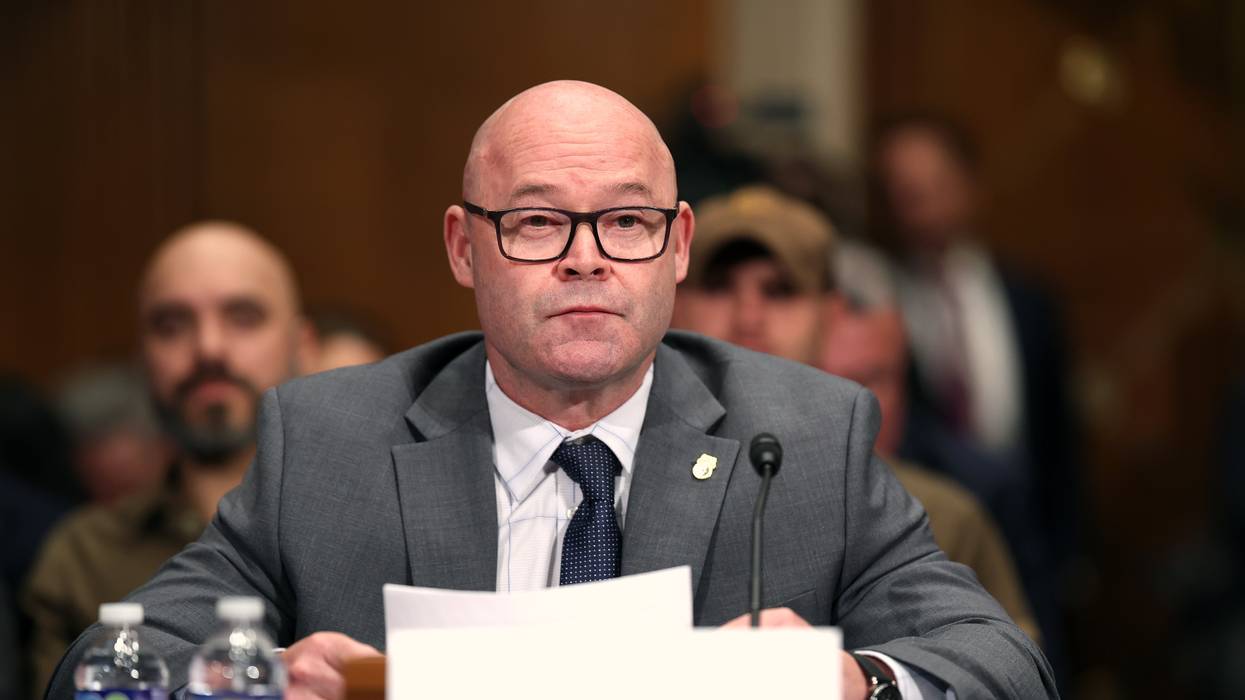
One Teamsters official warned the union leader's scheduled appearance "only normalizes and makes the most anti-union party and president I've seen in my lifetime seem palatable."
Teamsters general president Sean O'Brien is facing mounting internal pressure to cancel his planned speech to the Republican National Convention in Milwaukee next week, with the union's vice president at large accusing the labor leader of kowtowing to a viciously anti-worker party and a GOP presidential hopeful whose first four years in the White House were marked by open attacks on the labor movement.
John Palmer, the Teamsters' vice president at large, wrote in an op-ed in New Politics earlier this week that O'Brien's scheduled appearance at Donald Trump's invitation "only normalizes and makes the most anti-union party and president I've seen in my lifetime seem palatable."
"Does O'Brien intend to remind the anti-union delegates that labor unions exist to ensure that workers—regardless of their race, sex, gender, gender identity, or religion—equally enjoy the security and fairness that a written labor agreement provides?" Palmer asked. "Is he going to state the obvious fact that unions' ability to achieve these goals is being stripped away by the current overzealous Supreme Court? The majority of these justices have been appointed by the same Republicans who will be at this convention."
Palmer, who urged union members to demand that O'Brien cancel his planned convention appearance, isn't the only Teamsters official who has publicly raised concerns over what one commentator described as O'Brien's "Trumpian tilt."
"We will not allow the working-class labor movement to be destroyed by a scab masquerading as a pro-union advocate after doing everything in his power to destroy the very fabric of unions," James Curbeam, national chairman of the Teamsters National Black Caucus, wrote in a letter to Teamsters members after O'Brien announced a meeting with Trump earlier this year.
O'Brien has also met with President Joe Biden.
During his first term in the White House, Trump moved aggressively to gut worker protections and stacked federal courts and key agencies with anti-union officials. Trump's two labor secretaries, Alexander Acosta and Eugene Scalia, were both hostile to organized labor.
The Republican Party more broadly has long worked in concert with its corporate allies to weaken organized labor through so-called right-to-work laws and other means—a decadeslong effort that has had devastating material consequences for workers across the country.
Capital & Main reported Friday that Republicans' upcoming convention in Milwaukee has shined a spotlight on the Wisconsin GOP's "anti-union agenda." Former Gov. Scott Walker, a notorious enemy of organized labor, is a delegate to the Republican National Convention.
"We will not allow the working-class labor movement to be destroyed by a scab masquerading as a pro-union advocate after doing everything in his power to destroy the very fabric of unions."
O'Brien is scheduled to address the convention in a primetime address Monday night. A Teamsters spokeswoman told The New York Times earlier this week that O'Brien "looks forward to addressing a crowd that hasn't traditionally been open to union voices."
"But that is what democracy is all about," she added.
The Guardian's Michael Sainato noted Friday that O'Brien's appearance in Milwaukee will be the first time a Teamsters president has ever spoken at the Republican convention.
"In January 2024, the Teamsters PAC donated $45,000 to both the Democratic and Republican national committees, marking its first large donation to the Republican Party in years," Sainato wrote.
The American Prospect's Harold Meyerson wrote Thursday that "it's always possible that O'Brien may use his allotted speaking time to ask the Republicans to adopt the pro-union initiatives that Democrats support and that Republican members of Congress have to a person opposed, like the PRO Act, which would enable workers to unionize without fear of being fired, or raising the national minimum wage from its current $7.25."
"If O'Brien really wants to do the nation a service, he might speak forcefully against Trump's commitment to deporting undocumented immigrants," Meyerson added. "In my years covering labor, I've met a number of Teamsters who are themselves undocumented—the very workers and their families whom Trump has continually vowed to arrest, lock up, and deport. It's atop Trump's to-do list. It's hard to see how this would be good for the Teamsters."
O'Brien's conciliatory posture toward Trump and the Republican Party stands in sharp contrast with the approach taken by United Auto Workers (UAW) president Shawn Fain, who has called Trump a "scab" and a pawn of the billionaire class of which he is a part.
The UAW endorsed Biden—the first sitting U.S. president to join striking workers on a picket line—in January, but the union is now grappling with mounting calls for the incumbent to end his reelection campaign following his disastrous debate performance against Trump last month.
Reuters reported Friday that Fain "met with the union's executive board late on Thursday to discuss his deep concerns with President Joe Biden's ability to defeat Donald Trump in the November election."
"Fain called together top officials at the nearly 400,000-member union to discuss concerns and what the union's options are," the news agency reported, citing unnamed sources. "The union is considering its next steps."
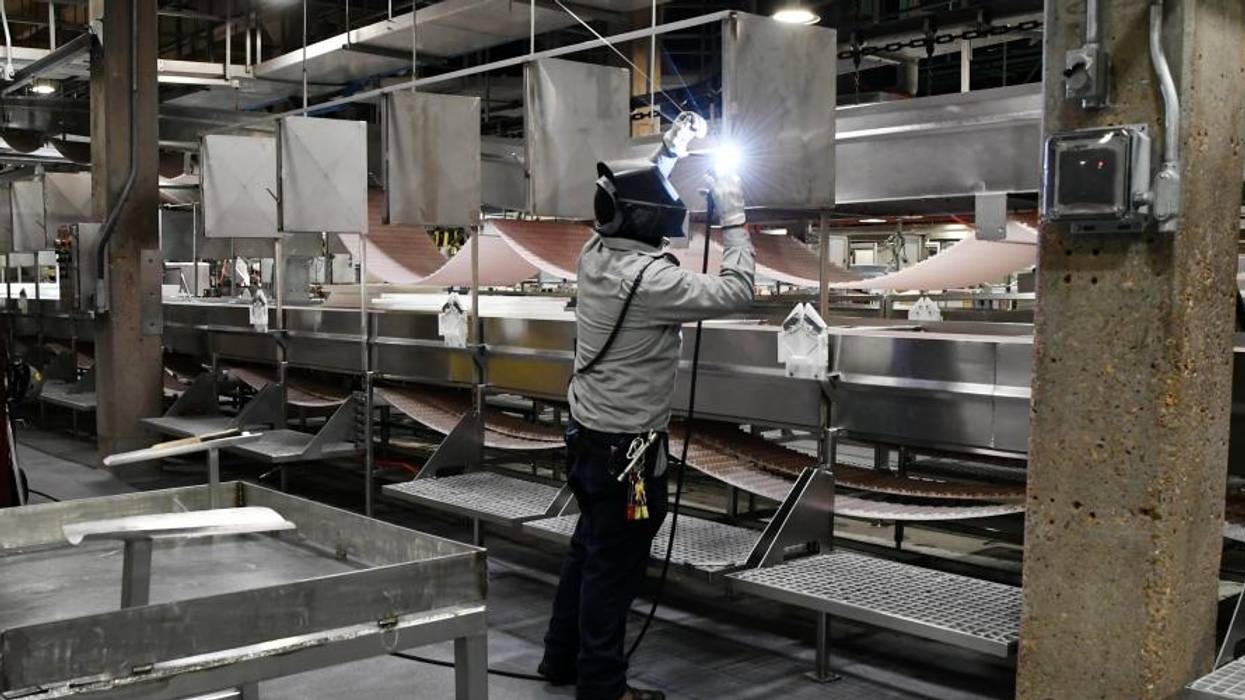
The stated mission of the Occupational Safety and Health Administration is to protect workers, but the agency is signaling that it may actively defend meatpacking corporations against workplace safety lawsuits filed by employees who contract Covid-19 on the job if the companies show they made a "good faith" effort to comply with federal health guidelines.
"We all need to stop for a second to think about how crazy this is. OSHA is the agency that is supposed to protect people at work. Under this administration, it is now deciding it will defend bad employers in court because the employer 'tried.'"
--Nate Ring, labor attorney
In a statement Tuesday shortly after President Donald Trump invoked the Defense Production Act (DPA) to keep meat processing plants open amid the coronavirus pandemic, Solicitor of Labor Kate O'Scannlain and OSHA principal deputy secretary Loren Sweatt urged meatpacking employers to comply with the agency's non-binding safety guidelines.
But O'Scannlain and Sweatt said companies will have leeway to flout standards that they determine are not "feasible in the context of specific plants and circumstances," provided that they "document why that is the case."
"Where a meat, pork, or poultry processing employer operating pursuant to the president's invocation of the DPA has demonstrated good faith attempts to comply with the Joint Meat Processing Guidance and is sued for alleged workplace exposures," said O'Scannlain and Sweatt, "the Department of Labor will consider a request to participate in that litigation in support of the employer's compliance program."
Jordan Barab, former deputy assistant secretary at OSHA, said Wednesday that the Labor Department's statement constitutes "a free pass to meat and poultry processors."
In an interview on MSNBC Tuesday night, former OSHA senior policy adviser Debbie Berkowitz slammed her former agency for abdicating its responsibility to safeguard workers.
"The agency has essentially abandoned its responsibility to ensure that employers keep workers safe from Covid-19."
--Debbie Berkowitz, National Employment Law Project
"OSHA... has chosen--this is a choice--not to enforce any requirements in the meat industry to protect workers," said Berkowitz, who is currently the director of the worker health and safety program at the National Employment Law Project. "The [meatpacking] industry looked at these recommendations--they're voluntary--and in the end didn't implement them."
"There's a real price to pay for this kind of, I would call it government malfeasance," Berkowitz added.
Meatpacking plants across the country have become coronavirus hot spots in April. The United Food and Commercial Workers International Union (UFCW), the largest meatpacking union in the U.S., said in a statement Tuesday that at least 20 meatpacking workers have died of Covid-19 and more than 5,000 "have been hospitalized or are showing symptoms."
"The reality is that these workers are putting their lives on the line every day to keep our country fed during this deadly outbreak," said UFCW president Marc Perrone. "For the sake of all our families, we must prioritize the safety and security of these workers."
Critics warned that Trump's executive order mandating meatpacking plants remain open amid the pandemic could lead to another surge in Covid-19 infections and deaths among workers in the industry. According to the Washington Post, at least 20 meatpacking plants have closed in recent weeks due to coronavirus outbreaks at the facilities.
"We have a president forcing hazardous meat plants to reopen, threatening workers' health," Sen. Bernie Sanders (I-Vt.) tweeted Wednesday. We have a Labor Department siding with corporations over workers' safety. Disgusting."
"Maybe this is too 'radical,'" Sanders added, "but we need a White House that protects public health during a pandemic."
Between January and early April, OSHA was flooded with thousands of worker complaints accusing employers of violating federal coronavirus guidelines and endangering employee safety by failing to provide adequate protective equipment.
But the agency, overseen by Labor Secretary Eugene Scalia, has thus far refused to use its authority to force employers to comply with Covid-19 safety guidelines. OSHA is also massively understaffed with vacancies at 42% of its top career leadership positions, including such crucial spots as director of enforcement and director of whistleblower protection.
"OSHA's mission to protect workers in the most dangerous jobs has been seriously compromised under the Trump administration," Berkowitz said in a statement Tuesday. "The agency has essentially abandoned its responsibility to ensure that employers keep workers safe from Covid-19."
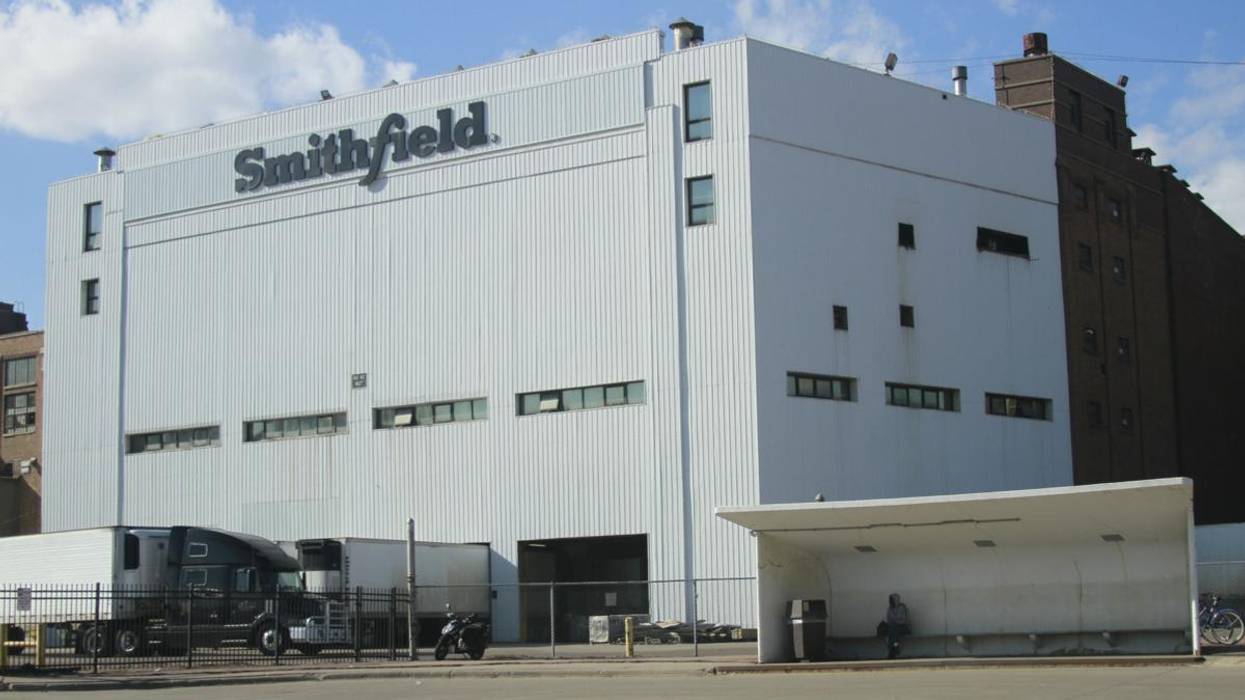
In Sioux Falls, South Dakota, over 600 people connected to a Smithfield pork plant have contracted the COVID-19 virus--and two workers have died. Workers at the plant had access to hand sanitizer only after the first confirmed case. Then, even after it was clear COVID-19 was present in the plant, Smithfield offered a "responsibility bonus" of $500 to employees that didn't miss work in April.
Smithfield should have shown some responsibility to their workers and taken immediate action to keep their workers safe. They did not. Now, two workers have lost their lives, hundreds of people are sick, and the company shut the plant down. They have since announced the closure of two other plants in Wisconsin and Missouri.
American corporations have again and again gotten away with putting workers in harm's way.
Unsafe working conditions aren't a new thing to the hundreds of thousands of workers in America's meatpacking industry. The meat industry has historically been a bad actor in safeguarding workers on the job. And regulators have done little to hold companies accountable for their blatant disregard for the health and lives of their workers.
Under Donald Trump, things have gone from bad to worse, and not just in the meatpacking industry. Fatalities in the workplace reached a 10-year-high in 2018. The U.S. Occupational Safety and Health Administration (OSHA) is toothless under this president. The swamp full of corporate shills he has assembled in his cabinet includes Labor Secretary Eugene Scalia, a lawyer with a long history of busting unions and filing lawsuits against worker safeguards on behalf of his corporate clients. As Secretary of Labor, Scalia oversees OSHA.
Scalia may be the fox guarding the henhouse. But, Donald Trump is the man who put the fox there.
This new crisis has brought a bright spotlight to how little Trump--and his administration--values the lives of working people. OSHA has done next to nothing to protect workers in the age of COVID-19. The agency has broad power and the authority to help workers right now. But, under Trump, it has done nothing but put out statements and take only the bare minimum action that allows it to say that it at least did something. Instead of issuing a set of emergency rules to keep workers safe, OSHA has published some guidance that industry can--and likely will--ignore. Just like industry often ignores the paltry fines levied when workers die.
American corporations have again and again gotten away with putting workers in harm's way. It took pressure from the public in the form of drive-by protests for Smithfield to protect workers by shutting down the plant to stop the spread. Where was OSHA? Why didn't the agency step in to protect workers?
We can't solely rely on companies to do right by workers but there are good actors out there. For example, public utility company American Water--which provides services to 14 million Americans in 46 states--has been working with its union members from the Utility Workers Union of America to ensure the water keeps running but also that workers are protected on the job. They have implemented preventative measures, including only allowing single occupants in all work vehicles, implementing A/B shifts (one week on, one week off) based on outbreaks by location, and creating a hardship fund that employees can apply for to receive resources.
Unfortunately, not all companies live up to the responsibility to protect their workers. Congress created OSHA to protect workers and ensure they didn't have to rely on their company's good graces to put live-saving measures in place. Under Trump, the agency is missing in action.
If Donald Trump won't make OSHA do its job, Congress must step in immediately and force it to protect workers.
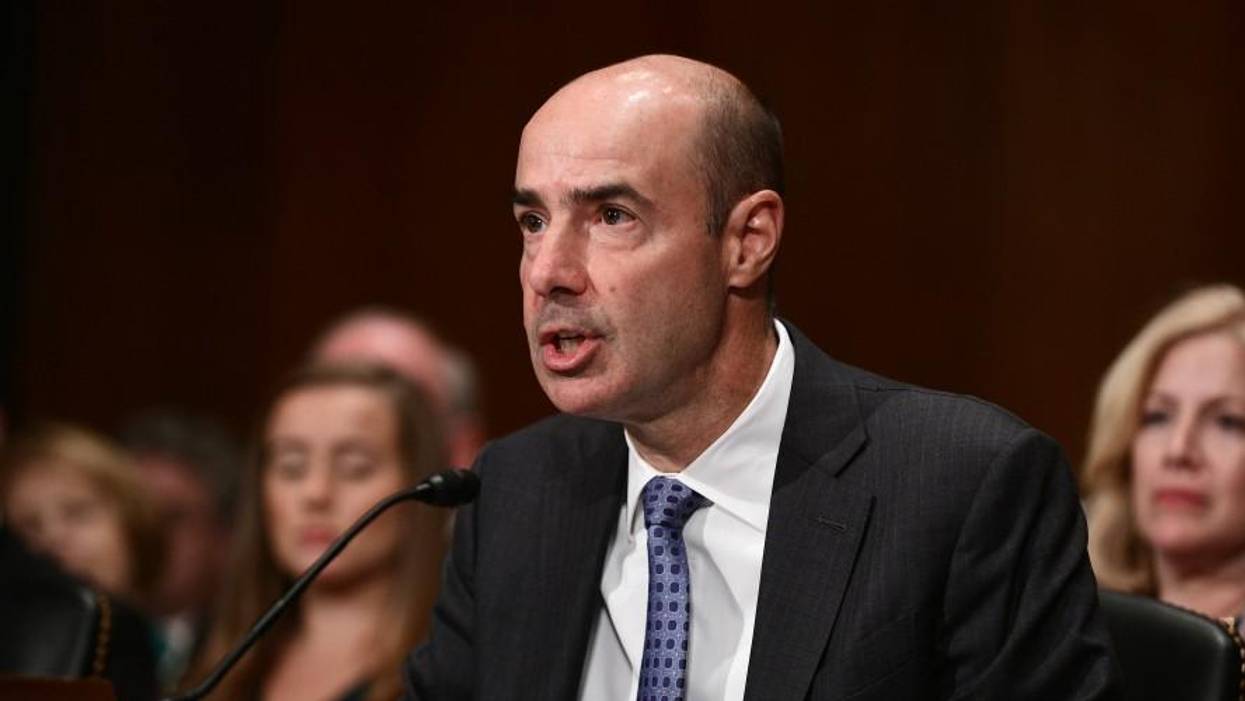
"Scalia will undoubtedly be yet another stooge for rich and powerful interests at the very agency designed to curb that influence." -Morris Pearl, chair of the Patriotic Millionaires
Senate Republicans are under fire from progressive advocacy groups, trade unions, and congressional Democrats for voting Thursday to confirm corporate attorney Eugene Scalia, President Donald Trump's nominee to lead the U.S. Department of Labor.
"For too long, our political system has prioritized the interests of the wealthy at the expense of regular, hardworking Americans," declared Morris Pearl, chair of the Patriotic Millionaires. "Scalia will undoubtedly be yet another stooge for rich and powerful interests at the very agency designed to curb that influence."
"Senate Republicans' decision to confirm him is an absolute betrayal to the American worker," Pearl added.
The new labor secretary, who is the son of late U.S. Supreme Court Justice Antonin Scalia, was confirmed by a 53-44 vote along party lines in the Republican-controlled chamber. Presidential primary candidates Sens. Cory Booker (D-N.J.), Bernie Sanders (I-Vt.), and Elizabeth Warren (D-Mass.) were not present for the vote, but both Sanders and Warren called out their Republican colleagues for approving Scalia, who has spent his career as a private attorney representing big corporations.
Sanders, a longtime advocate for workers, decried Trump's nomination and the Senate's confirmation vote as "obscene."
Warren concurred, tweeting, "This is a disgrace."
Sen. Kamala Harris (D-Calif.), a 2020 White House hopeful who voted against Scalia's confirmation, wrote on Twitter Thursday that "the last person we need in charge of protecting our labor force is someone with a record of putting corporate interests over working people."
Trump nominated Scalia in July, just days after former Labor Secretary Alex Acosta announced his resignation following mass outrage over a sweetheart deal he struck with convicted sex offender Jeffrey Epstein. In the months since then, advocates for workers have raised concerns about Scalia's record as both a partner in the Washington, D.C. office of the corporate law firm Gibson, Dunn & Crutcher as well as the Labor Department's chief legal officer during President George W. Bush's administration.
"Scalia becomes the seventh former lobbyist to hold a Cabinet-level post in the Trump administration," according to The Associated Press. "Disclosure records show Scalia was registered in 2010 and 2011 to lobby for the U.S. Chamber of Commerce."
As Patriotic Millionaires chair Pearl put it: "At every turn, Eugene Scalia has proven himself to be on the side of big corporations and Wall Street."
"He has never advocated for the workers who struggle for basic rights or for the millions of Americans decimated by the 2008 financial crisis," Pearl said. "But as secretary of labor, he will be charged with representing those same interests he's spent nearly two decades ripping apart."
AFL-CIO president Richard Trumka, whose union had implored the Senate to #RejectScalia, said in a statement Thursday that "it is insulting and dangerous that lifelong union-buster Eugene Scalia is the country's top labor official. His track record is well documented, and it's clear he has yet to find a worker protection he supports or a corporate loophole he opposes."
"Making the Labor Department--whose mission is to defend the rights of workers and enforce the law--a satellite office of a corporate right-wing law firm flies in the face of working people's clearly expressed desires," Trumka added.
Emily Martin, vice president for education and workplace justice at the National Women's Law Center, expressed worries about Scalia's oversight of the Labor Department's interpretation and enforcement of anti-discrimination laws.
"Eugene Scalia is charged with protecting working people--yet in his career he has shown no interest in upholding, much less advancing, their rights," said Martin. "For decades he has enabled employers to escape responsibility for protecting workers from discrimination--including sexual harassment, race discrimination, and disability discrimination. He has shown persistent hostility to the worker and consumer protections the Department of Labor is charged to uphold."

Labor rights advocates and progressive economists slammed the Trump administration after the Department of Labor announced Tuesday a final rule on overtime pay to replace a bolder Obama-era proposal blocked by a federal court in Texas.
"President Trump is literally taking money from the pockets of workers to please corporate interests."
--Amit Narang, Public Citizen
"While the administration may be trumpeting this rule as a good thing for workers, that is a ruse," said Heidi Shierholz, director of policy at the Economic Policy Institute (EPI). "In reality, the rule leaves behind millions of workers who would have received overtime protections under the much stronger rule, published in 2016, that Trump administration abandoned."
The Labor Department outlined in a statement Tuesday four key results of its final rule, which is set to take effect on Jan. 1, 2020:
The current standard salary threshold of $23,660 hasn't been updated since 2004. The Labor Department projected Tuesday that about 1.2 million more workers "will be entitled to minimum wage and overtime pay as a result of the increase to the standard salary level" and another 101,800 workers "will be entitled to overtime pay as a result of the increase to the HCE compensation level."
The federal government sets the minimum salary level but, as CNBC noted Tuesday, "several states including California and New York have salary thresholds for determining overtime eligibility that are higher than the federal standard."
However, EPI's Shierholz pointed out that millions more workers would have benefited from the blocked Obama-era rule, which would have raised the salary level to $47,476 and updated it every three years to account for increases in costs of living. Based on her analysis of the Trump administration's overtime pay proposal from March--which had a slightly lower salary threshold of $35,308 per year--Shierholz explained:
I estimate that roughly 8.2 million workers who would have benefited from the 2016 rule will be left behind by the Trump administration's rule. This 8.2 million is made up of 3.2 million workers who would have gotten new overtime protections under the 2016 rule and won't get them under the Trump rule, and 5.0 million who would have gotten strengthened overtime protections under the 2016 rule and won't get them under the Trump rule.
Additionally, unlike the 2016 rule, the Trump administration's version does not automatically update, meaning workers' annual losses will grow over time.
Shierholz was not alone in issuing a scathing critique of the final rule on Tuesday.
"This is a disaster for those 8 million workers, and further undermines worker power and protections, which ultimately hurts everyone," tweeted Roosevelt Institute fellow Michael Linden.
"With this rule, the Trump administration continues to undermine the economic security of working families, forgoing overtime protections for millions of workers who were covered by the Obama administration's rule," Tanya Goldman, a senior wage and hour policy adviser in the Obama administration who is now an attorney at the Center for Law and Social Policy, told Bloomberg Law. "The white-collar overtime salary level has become so out-of-date, that people are working long hours away from their families, without needed overtime pay, losing out on time and money."
"There's really no doubt any longer. DOL doesn't endeavor to serve the workers in this country; these days, it exists to do the bidding of corporate America."
--Christine Owens, NELP
Critics of the new rule were quick to accuse President Donald Trump and his administration of prioritizing the interests of corporations and executives over those of American workers.
Amit Narang, a regulatory policy advocate at the consumer advocacy group Public Citizen told the Wall Street Journal that "by weakening the overtime rule, President Trump is literally taking money from the pockets of workers to please corporate interests."
"No one should be fooled by the Labor Department's new overtime regulation," declared Christine Owens, executive director of the National Employment Law Project (NELP). "It is not a pro-worker regulation, but rather, another gift to corporate America--one that will allow it to continue to require far too many workers in this country to work in excess of 40 hours per week without any additional compensation for doing so."
"NELP has continually posed the question: who does the Labor Department really work for? Well, there's really no doubt any longer," she continued. "DOL doesn't endeavor to serve the workers in this country; these days, it exists to do the bidding of corporate America."
"We are confident that legal action will be pursued to challenge this regulation," Owens added. "We will not sit by while DOL refuses to be an ally of this nation's workforce."
EPI's Shierholz noted that "the administration did not need to undertake a new rulemaking--they could have defended the 2016 rule, and supported middle-class workers and their families."
"Instead, once again, President Trump has sided with the interests of corporate executives over those of working people," she charged.
The Labor Department's unveiling of the overtime pay rule came shortly before the Republican-controlled Health, Education, Labor, and Pensions (HELP) Committee advanced the nomination of corporate attorney Eugene Scalia, Trump's pick to serve as the next chief of the Labor Department, to a full vote by the upper chamber.
Scalia--the son of late U.S. Supreme Court Justice Antonin Scalia--is opposed by labor unions and some Democratic lawmakers. Sen. Patty Murray (D-Wash.), the HELP Committee's ranking member, said last week that "instead of nominating a Secretary of Labor, President Trump has nominated a Secretary of Corporate Interests."
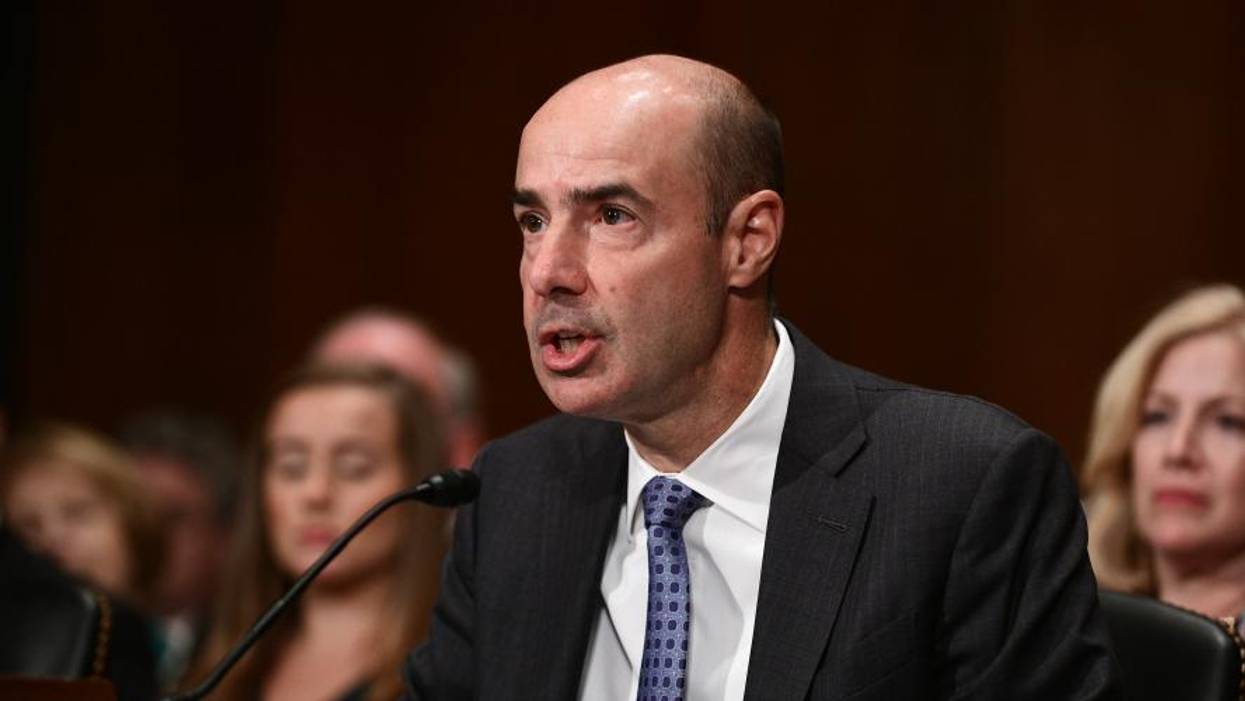
Progressive groups and Democratic lawmakers expressed serious concerns Thursday about corporate attorney Eugene Scalia--President Donald Trump's pick to lead the Labor Department--as the Senate Health, Education, Labor, and Pensions Committee met to consider his nomination.
"If there's one consistent pattern in Mr. Scalia's long career, it's hostility to the very workers he would be charged with protecting, and the very laws he would be charged with enforcing."
--Sen. Patty Murray
"Instead of nominating a Secretary of Labor, President Trump has nominated a Secretary of Corporate Interests," declared Sen. Patty Murray (D-Wash.), the committee's ranking member. "If there's one consistent pattern in Mr. Scalia's long career, it's hostility to the very workers he would be charged with protecting, and the very laws he would be charged with enforcing if he were confirmed."
The committee is expected to decide next week whether to advance Scalia, the son of late U.S. Supreme Court Justice Antonin Scalia, to a full Senate vote. Given the Republican majority in the Senate, he is expected to be appointed to the post in Trump's cabinet. However, that has not stopped lawmakers and others from sounding the alarm on Scalia's record as an attorney representing corporate giants like Walmart and the Labor Department's chief legal officer during President George W. Bush's administration.
"Eugene Scalia has demonstrated that he remains committed to protecting corporations over working people and is unfit to lead as Secretary of Labor," Lee Saunders, president of AFSCME, the country's largest trade union, said in a statement after Thursday's hearing.
"In both private practice and as the Labor Department's top attorney, Scalia supported the growth of unchecked corporate power and neglected the welfare of working people," Saunders said. "After the Great Recession, Scalia led financial services industry efforts to challenge the 2010 Dodd-Frank law needed to protect working families."
"He opposed efforts to raise the minimum wage for federal workers and advocated for eliminating the fiduciary rule, which requires financial advisors to work in their customers' best interest," Saunders continued. "Scalia also sided against workers and their unions in lawsuits alleging corporations like Boeing and UPS were retaliating and discriminating against employees."
Urging senators to reject Scalia's nomination, the union leader concluded that "we need a champion for working people in the Department of Labor who will advance standards that protect overtime pay, strengthen workplace safety, and defend workers' rights over corporate interests."
Scalia is a partner in the Washington, D.C. office of the corporate law firm Gibson, Dunn & Crutcher and, like his far-right father, a member of the Federalist Society.
Heidi Hess, co-director of CREDO Action, also released a scathing statement condemning Scalia after the hearing Thursday.
"Eugene Scalia's testimony today proved that if the Senate confirms him as our next Secretary of Labor," she warned, "it would be a huge victory for corporations and an absolute disaster for working families, consumers, and communities of color."
"Scalia cut his teeth as a lawyer by fighting for corporations and making sure big businesses like Walmart, Ford, and UPS made every dollar possible at the expense of workers and consumers," Hess said. "With Scalia in charge, Trump's Department of Labor would go even further down the path of siding with big corporations over workers and the American people."
During the hearing Thursday, Bloomberg Law reported, "Scalia looked to counter Democrat and union criticisms about his representation of many Fortune 500 companies." Several Republicans on the committee indicated that they plan to support his nomination, according to the outlet.
Scalia is preparing to take over the Labor Department at a critical moment in Trump administration workplace policy. An active regulatory agenda is already underway, including a landmark rule to expand overtime pay access that cleared White House review and could be released within the next week.
Lawmakers from both sides of the aisle pressed Scalia on big-ticket ongoing DOL rulemakings that he would inherit if confirmed. But Scalia cited the regulations' incomplete status in avoiding a commitment to take specific actions.
Trump nominated Scalia to the post in July, less than a week after former Labor Secretary Alex Acosta announced his resignation following days of controversy over a sweetheart deal Acosta struck with convicted sex offender Jeffrey Epstein, who killed himself in government custody in August. Some politicians and observers had expected Trump to nominate Deputy Labor Secretary Patrick Pizzella, who has been serving as acting secretary since Acosta's departure.
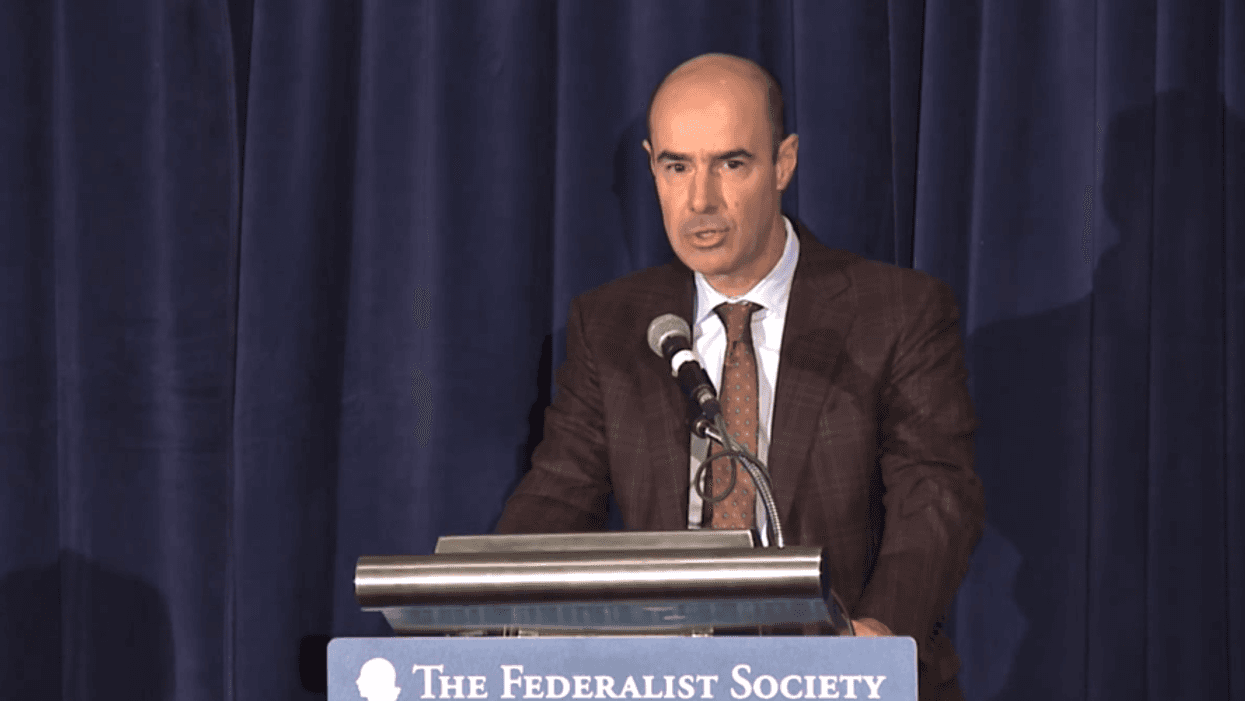
Workers and labor rights advocates expressed outrage after President Donald Trump announced on Twitter late Thursday that he intends to nominate former Walmart attorney Eugene Scalia--son of the late U.S. Supreme Court Justice Antonin Scalia--to replace outgoing Labor Secretary Alex Acosta.
Less than a week after Acosta announced his resignation following days of controversy over a sweetheart plea deal he struck with alleged child rapist Jeffrey Epstein, Trump revealed his nomination plans in a pair of tweets, claiming that Scalia "has led a life of great success in the legal and labor field."
The president's announcement came as a surprise to some politicians and observers who had expected Patrick Pizzella--Acosta's deputy who is temporarily leading the Labor Department--to receive a formal nomination for the role.
Scalia reportedly accepted Trump's offer. The 55-year-old is currently a partner in the Washington, D.C. office of the corporate law firm Gibson, Dunn & Crutcher.
According to The Associated Press:
In private practice, Scalia has been known for his challenges to federal regulations on behalf of corporate clients. Scalia's law firm biography cites his "success bringing legal challenges to federal agency actions."
If confirmed, Scalia will be returning to the department where he previously served as solicitor in President George W. Bush's administration, overseeing litigation and legal advice on rulemakings and administrative law. He has also worked for the U.S. Department of Justice. From 1992-93, Scalia served as a special assistant to Attorney General William Barr during his first stint as attorney general.
Heidi Shierholz, senior economist and director of policy at the Economic Policy Institute, said in a statement Friday that Scalia "has spent his career fighting for the interests of financial firms, corporate executives, and shareholders rather than the interests of working people."
"He actually argued in court against the 'fiduciary' rule, the Department of Labor rule that would have simply required retirement advisers to work in the best interest of their clients--outlawing common practices such as financial advisers steering retirement savers toward investments that provide a good commission, but a lower rate of return," Shierholz pointed out. "This is another fox-guarding-the-hen house selection that defines the Trump cabinet."
Like his infamously far-right father, the younger Scalia "is a member of the Federalist Society, a conservative legal organization that has attained enormous influence within the Trump administration," The New York Times reported Thursday.
"The appointment is likely to be contested by Democrats and labor unions because Mr. Scalia has a long record of representing Walmart and other companies that pushed back against unions and tougher labor laws," the Times noted. "In 2006, he helped Walmart triumph in a prominent fight against a Maryland law that would have required companies with more than 10,000 workers to either spend at least 8 percent of their payroll costs on healthcare, or pay into a state Medicaid fund."
Scalia's history with Walmart--and his broader record as an advocate for corporate interests--sparked swift calls for the Republican-held U.S. Senate to reject his nomination.
"This guy was a management-side attorney for Walmart--one of the most anti-union and anti-worker corporations in our country," tweeted Aryeh Alex, a local public official from Ohio. "The Labor Dept should be a champion for workers, not corporations that pay minimum wages."
Eunic Ortiz, national political communications lead at the Service Employees International Union (SEIU), also referenced the Walmart case in a tweet:
Given his record, critics concluded Scalia "has no business representing working people as your next Secretary of Labor."
"President Trump has again chosen someone who has proven to put corporate interests over those of worker rights," Democratic Senate Minority Leader Chuck Schumer (N.Y.) said Thursday. "Workers and union members who believed candidate Trump when he campaigned as pro-worker should feel betrayed."
This post has been updated with comment from the Economic Policy Institute.