

SUBSCRIBE TO OUR FREE NEWSLETTER
Daily news & progressive opinion—funded by the people, not the corporations—delivered straight to your inbox.
5
#000000
#FFFFFF
To donate by check, phone, or other method, see our More Ways to Give page.
Daily news & progressive opinion—funded by the people, not the corporations—delivered straight to your inbox.

"In every previous administration, including Trump's first, this woman would not have been a priority for enforcement," said one immigration expert.
A US Army staff sergeant saw his young wife taken away by immigration agents at his military base in Louisiana last week.
Matthew Blank, 23, who is set to begin training for deployment next month, was preparing to move into his home at the Fort Polk Army base with his 22-year-old wife, Annie Ramos, whom he married just weeks ago.
According to a report out Monday from The New York Times, Ramos is an undocumented Honduran immigrant who was brought to the United States as a toddler. She works as a Sunday school teacher and is months away from finishing a biochemistry degree. She has no criminal record.
Undocumented immigrants who marry US citizens become eligible for green cards and can apply for full citizenship three years after receiving them. Prior to their marriage, Blank and Ramos had already hired a lawyer to begin the process.
Ramos had also applied for Deferred Action for Childhood Arrivals (DACA) in 2020, but her application was never processed after the Trump administration halted it for new applicants.
Blank said he and his wife were following the procedures to get her legal status: "We were doing everything the right way.”
In the meantime, they were planning to begin their lives as newlyweds. On April 2, the couple headed to the base's visitor center to get Ramos registered for military spouse benefits.
They showed Ramos' birth certificate, Honduran passport, their marriage license, and Blank’s military ID. When asked whether Ramos had a visa or green card, they explained that she did not, but that they had completed the application and planned to file it within days. That's when the trouble began.
After the attendant made a "flurry of calls," they were told Ramos would be detained.
Soon enough, she was led away in shackles and taken more than an hour away to the privately owned South Louisiana Immigration and Customs Enforcement (ICE) Processing Center in Basile, where she waits with hundreds of other women who have been rounded up as part of President Donald Trump's mass deportation effort.
"She was going to move in after the Easter weekend," Blank said. "Instead, she got ripped away from me.”
The Department of Homeland Security issued a statement following initial reports of Ramos' arrest.
“She has no legal status to be in this country and was issued a final order of removal by a judge,” the statement read. “This administration is not going to ignore the rule of law.”
The statement also said that Ramos was arrested "after she attempted to enter a military base," seeming to imply she was in the process of illicit activity rather than there as a military spouse.
Ramos had been issued a deportation order in absentia in 2005, when she was 22 months old, after her family failed to show up for an immigration court hearing.
However, experts told the Times that it is very rare for people who have been issued prior deportation orders to be detained and that it's typically easy for them to adjust their paperwork.
"In every previous administration, including Trump's first, this woman would not have been a priority for enforcement," concurred Aaron Reichlin-Melnick, a senior fellow at the American Immigration Council, who wrote about the incident on social media.
While prior deportation orders can affect an undocumented person's ability to receive legal status, he said, "discretion is part of the enforcement of every law."
"She got a deportation order when she was a small child. It's quite possible that, like many people, she didn't even know about it. That's a common situation," he explained. "Immigration law has always involved choices about whether deportation makes sense or not."
Citing a YouGov/Economist poll from February, he noted that just 21% of Americans support deporting undocumented people brought to the US as kids, while just 16% support deporting those married to US citizens.
Contrary to previous administrations, which tended to target immigrants with criminal records and recent arrivals for deportation, around three-quarters of those currently in ICE detention have no criminal convictions, according to data published in February.
While there is no complete data on how long the average ICE detainee has lived in the US, the Deportation Data Project found that during the first nine months of the second Trump administration, the number of arrests away from the border increased by a factor of 4.6, suggesting that it was going after undocumented immigrants who have been in the US for longer periods of time.
According to Blank's parents, who were there as their son's young spouse was taken away, even the ICE agents who enforced the order to arrest Ramos did not appear proud of what they were doing.
“They told us that they didn’t have a choice, they said they had to take Annie,” recalled Blank's mother, who said the agents apologized.
“I begged them not to take her,” she said. “They said the higher-ups made them do it.”
Ramos told the Times that she knows no other home besides the United States.
"I grew up here like any American,” she said over the phone. “My husband and family are here.”
The facility where she is being held, run by GEO Group, a multibillion-dollar private prison company, has been the subject of dozens of complaints from current and former female detainees who have claimed they were denied basic medical treatment, hygiene supplies, and edible food.
Others have said they've faced sexual abuse and harassment and were subject to forced labor. In December, a former guard pleaded guilty in federal court to sexually abusing a Nicaraguan detainee in mid-2025.
Ramos' detention comes as thousands of US service members deploy to fight Trump's war in Iran. ICE has also been deployed to military bases to screen the family members of Marine recruits at their graduation as recently as last week.
Blank, who has previously been deployed to the Middle East and Europe, said he was "going to fight with everything I have" to secure his wife's freedom.
"She is going to move in with me. We will start a family," Blank said. "I am going to be with her and serve my country."
Their lawyer has petitioned the court to reopen her removal order, which could freeze her deportation. Until it is reopened, however, she could be deported at any moment.
They have also continued to push forward with the effort to get Ramos a green card. But the guards at Basile have refused to let them bring the completed forms inside to get Ramos' signature.
The Congressional Hispanic Caucus said on social media that Blank "should be focused on training today," but "instead, he was forced into a fight against his own government to free his wife."
A GoFundMe campaign created by Blank's sister to pay for the legal fight has raised more than $20,000 since Saturday.
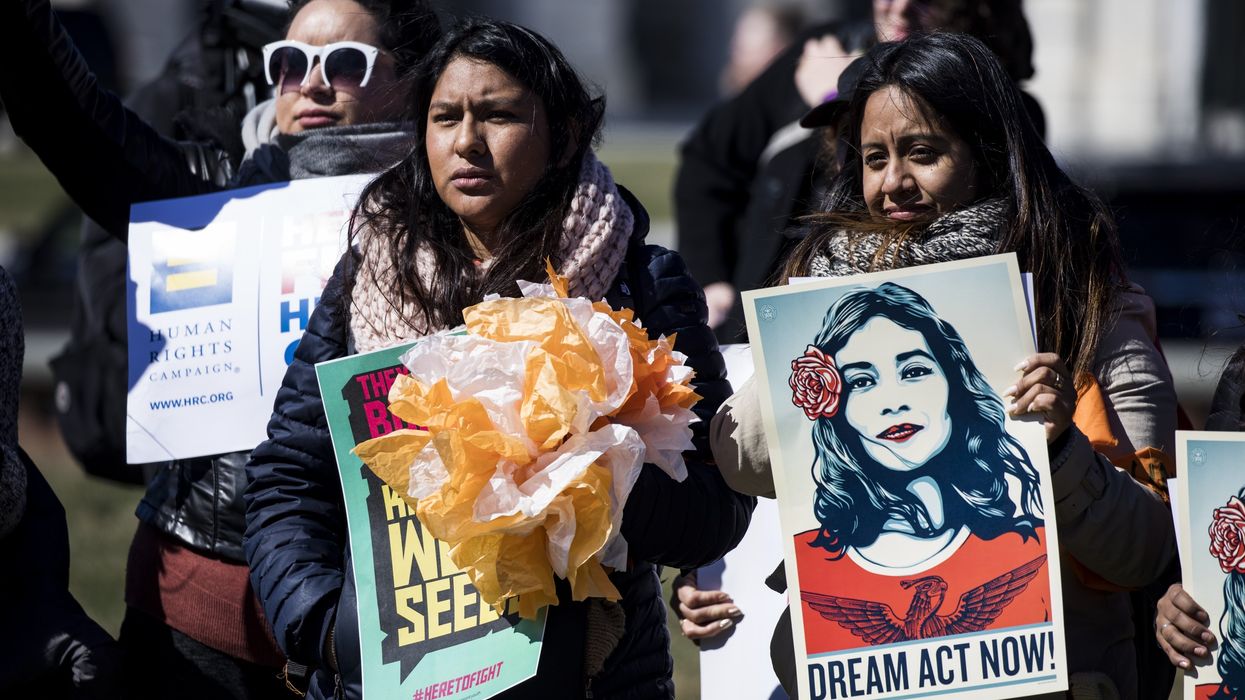
You could have been born here, gone to school here, worked here, served in this country’s military, followed the laws, learned the language and history, and yet still not be American enough to belong.
On December 4, Senators Dick Durbin and Lisa Murkowski reintroduced the bipartisan Dream Act to Congress—24 years after it was first introduced. If passed, it would create a pathway for citizenship for people who were brought to the US as children and meet certain requirements.
The Dream Act, whether now or in 2001, is a commonsense measure. Even if one believes that undocumented immigrants have committed a crime, their children are innocent. To meet the eligibility requirements, they must have proficiency in English; be knowledgeable of US history; not have committed any serious crimes; and have either served in the military, worked, or gained an education. These are not the “illegal alien gang members” that President Donald Trump insists must be deported.
Trump himself acknowledges this. In a 2024 interview with Kristen Welker, he said, “In many cases, they become successful. They have great jobs. In some cases, they have small businesses, some cases they might have large businesses. And we’re going to have to do something with them.” When Welker asked him to clarify whether he wants “them to be able to stay,” he replied, “I do.”
Unfortunately, that doesn't matter. The Dream Act will fail again. Trump’s Department of Homeland Security has already tried to strip 525,000 DACA recipients of their benefits this year. DHS Assistant Press Secretary Tricia McLaughlin has even urged recipients to self-deport, noting that they “are not automatically protected from deportations.”
What it means to be an American is not something Trump gets to decide.
In fact, Trump is one Supreme Court decision away from creating a new class of Dreamer.
On December 5, the Supreme Court agreed to hear Trump’s challenge to birthright citizenship. His executive order would deny citizenship to children born in the US of undocumented immigrants or those on temporary visas.
Those children, despite being born here, will effectively become neo-Dreamers. Another group of people whom the US government would be failing to recognize and protect. The major difference between Dreamers and these neo-Dreamers would be the basis of their belonging—the reason why, despite everything, they are Americans.
The Dreamers are American by virtue of having lived and built a life here. Their identity, values, and communities are tied to the US. As Marie Gonzalez-Deel explains, “No matter what, I will always consider the United States of America my home. I love this country. Only in America would a person like me have the opportunity to tell my story to people like you. Many may argue that because I have a Costa Rican birth certificate, I am Costa Rican and should be sent back to that country. If I am sent back there, sure I'd be with my Mom and Dad, but I'd be torn away from loved ones that are my family here, and from everything I have known since I was a child.” The Dreamers are American by action and deed.
For the neo-Dreamers, the justification would rest largely on the legality and constitutionality of their birthright claim. The neo-Dreamers would be American by right.
The Dreamers and neo-Dreamers represent two different ways of conceptualizing what it means to be an American. Yet, for the Trump administration, neither is sufficient. You could have been born here, gone to school here, worked here, served in this country’s military, followed the laws, learned the language and history, and yet still not be an American. But then, who is?
Trump claims that he’s “America First.” But who exactly is he putting first? Whether it's defunding the Supplemental Nutrition Assistance Program, letting Obamacare subsidies expire, limiting states’ ability to regulate artificial intelligence, conducting military-style raids in American cities, rolling back Environmental Protection Agency air quality protections, recommending controversial vaccine schedules, imposing tariffs that raise prices for everyone, eliminating the SAVE student loan repayment plan, or dismantling the Consumer Financial Protection Bureau, his policies overwhelmingly harm US citizens and immigrants alike.
In Trump’s America, only the Trump family and the ultra wealthy benefit. So perhaps instead of focusing on him, we should start thinking about what we, as Americans, think about who we are and what we represent. I’ll start: To me, Americans have contributed to the US and allowed the US to shape their lives and sense of self. By contributing, I don’t simply mean in the economic sense. Cultural and interpersonal contributions are just as if not more significant. We are more than laborers. The value we add to our communities cannot be reduced to GDP or market value.
By shaping their lives and sense of self, I don’t simply mean assimilation or acculturation. Being with others is always a two-way street. Each of us enriches the lives of others, and our lives are enriched in turn. We grow together.
A community, at its core, is a collective achievement. Citizens and immigrants, in many diverse ways, work together to maintain and nourish that achievement. We build together. Whatever problems we face, we solve them together. And yes, sometimes, we stumble and lose our way together. Progress is not a straight line. But we must never lose sight of who we are and what we represent.
What it means to be an American is not something Trump gets to decide. It’s our country, we decide.
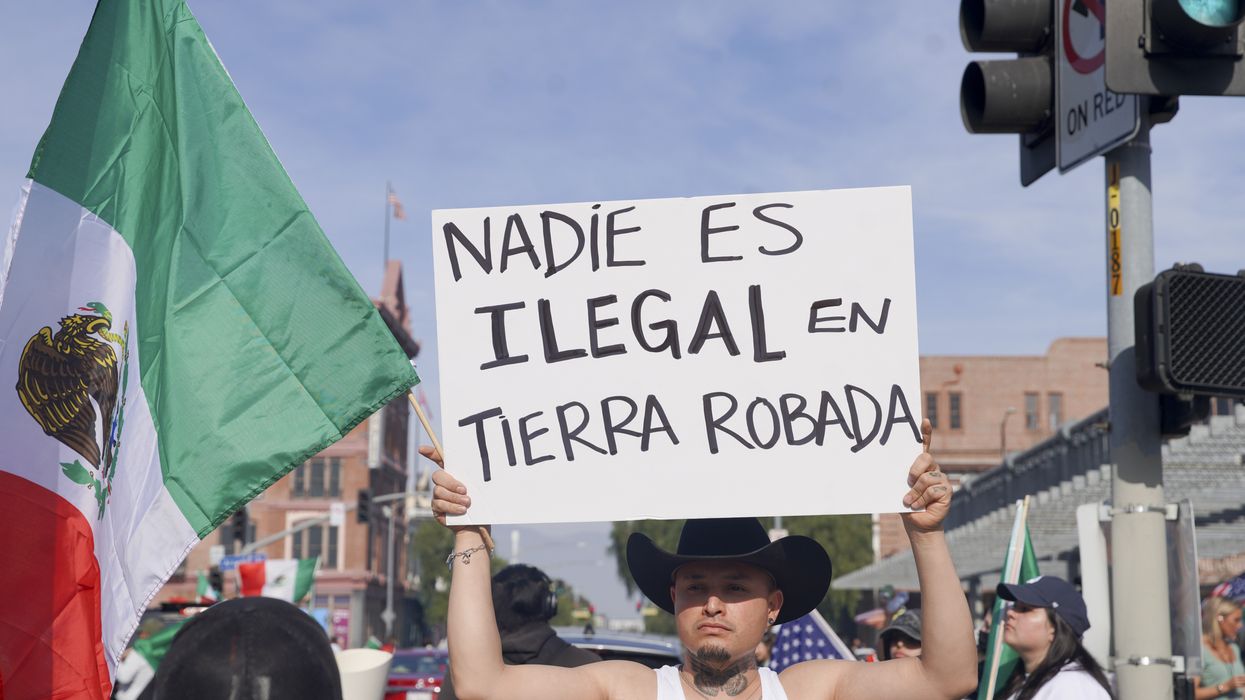
When we reject the state’s power to define who belongs, and instead build systems of care that honor all people’s right to exist and thrive, we move toward real justice.
I am one of the 11 million undocumented immigrants who refuse to live in the shadows of the United States. Now that President Donald Trump’s policies are violently escalating, it’s critical to understand that none of this is new. Family separations, concentration camps, and the displacement of people are part of a long history of ethnic cleansing disguised as immigration policy. U.S. citizens are only now seeing it for what it’s always been.
I once believed anti-immigrant sentiment stemmed from a misunderstanding or a lack of empathy. But over the last decade, I’ve begun to accept what I need other undocumented people and allies to understand: U.S. citizenship is not the answer. True liberation for undocumented people will never come from assimilating into a colonial system built on our oppression. Instead, we must center the fight for Indigenous sovereignty, recognizing that dismantling these colonial ways of existing in the world—not gaining U.S. citizenship—is the key to our collective liberation.
At its core, U.S. citizenship is a legal and political status that grants individuals rights and privileges in exchange for adhering to certain laws and being loyal to its institutions. While it’s often framed as a beacon of belonging, security, and inclusion, in practice citizenship has functioned as a tool of exclusion. Programs like Deferred Action for Childhood Arrivals (DACA), introduced by former President Barack Obama in 2012, highlight this tension, offering relief to some while reinforcing the “good immigrant” versus “bad immigrant” narrative.
Citizenship alone won’t free us—but solidarity will.
I was sitting in my high school English class when the program was first announced. What started as hope quickly devolved into disappointment when I realized I was ineligible due to when I arrived in the United States. To qualify, applicants must have arrived before age 16, lived in the U.S. continuously since 2007, and meet education or military service requirements. They must also pass background checks. These requirements underscore that only undocumented individuals who contribute to the U.S. economy through intellectual achievements or who advance the nation’s war machine are deemed worthy of living without the constant fear of deportation.
While DACA has shifted the material realities of some young undocumented people by providing work permits, it simultaneously puts them in danger. Recipients must voluntarily disclose their undocumented status to federal authorities, submitting fingerprints, addresses, and other personal information—a process that must be renewed every two years. Despite being billed as a relief program, DACA inadvertently creates a new system of surveillance targeting undocumented youth.
The disclosure of personal information not only risks recipients’ safety but also discourages resistance. With their standing in the U.S. contingent on being “productive” and “deserving,” DACA recipients are pressured to become complacent and silent about the broader criminalization of undocumented people. Immigration and Customs Enforcement has targeted undocumented activists from across the country in retaliation for their advocacy efforts. Thus, DACA is not merely a program meant to protect; it also functions as a system to surveil and neutralize a whole generation of young people.
At the same time Obama instituted the DACA program, his administration also militarized the border and expanded deportations. The actions of the so-called “Deporter-in-Chief” demonstrate that programs like DACA are insidiously compatible with anti-immigrant sentiment. By creating a distinction between so-called “good” and “bad” immigrants, citizenship divides our community and reinforces the narrative that our worth is conditional. We are reduced to exploitable and expendable resources, mere cogs in a capitalist system.
Moving forward, we must center the material realities of undocumented people who don’t have an immediate path toward legal citizenship on the horizon. As a short-term strategy, we must continue to support harm-reducing legislation such as the New Way Forward Act, which severs ties between the immigration and carceral systems. In the longer term, we must also attend to Land Back movements, acknowledging that Indigenous people are the rightful stewards of this land.
Citizenship alone won’t free us—but solidarity will. When we reject the state’s power to define who belongs, and instead build systems of care that honor all people’s right to exist and thrive, we move toward real justice. Our futures are intertwined, and only by dismantling these violent structures together can we create the world we all deserve.
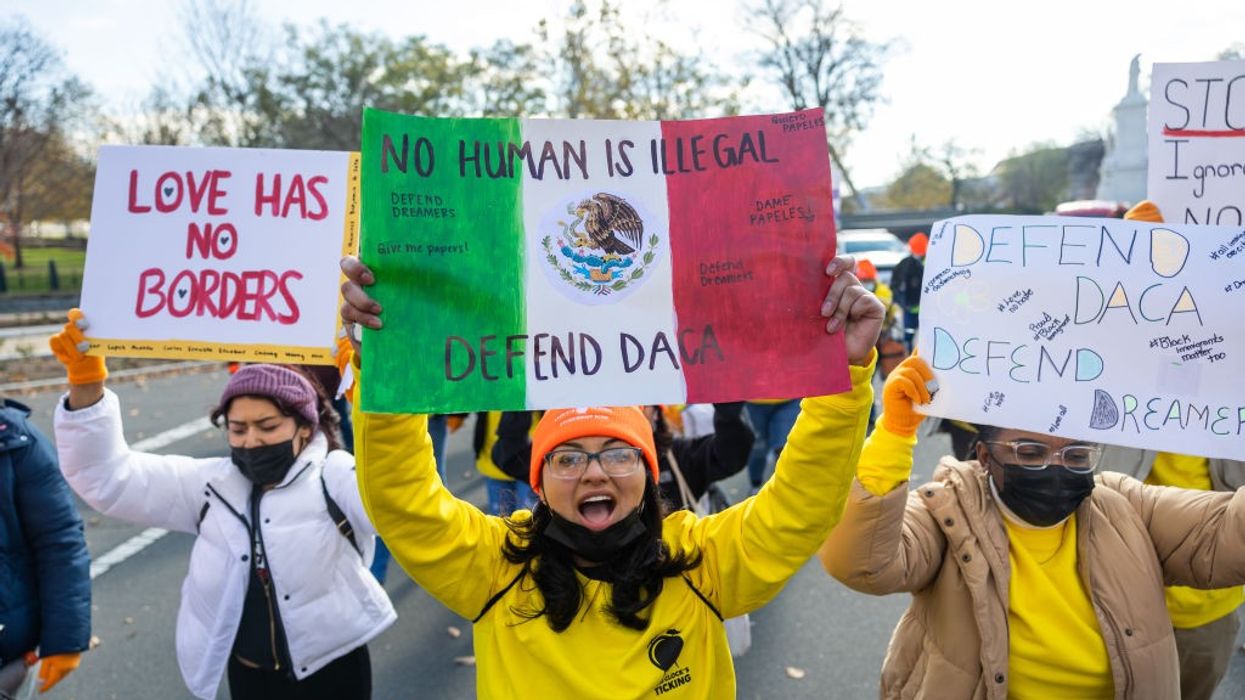
"It is long past time for DACA recipients, and so many others, to have a pathway to citizenship," said one migrant rights advocate.
Migrant rights advocates vowed to keep fighting after a federal appeals court on Friday dealt a blow to a program providing work permits and deportation relief to hundreds of thousands of undocumented immigrants brought to the United States as children—shortly before the Monday inauguration of Republican President-elect Donald Trump, who campaigned on mass deportations.
Deferred Action for Childhood Arrivals (DACA) has been ensnarled in legal battles since it was first introduced by the Obama-Biden administration in 2012. Friday's ruling from a three-judge panel of the U.S. Court of Appeals for the 5th Circuit stems from Republican-led states challenging the Biden-Harris administration's attempt to strengthen the program in 2022.
In 2023, U.S. District Court Judge Andrew Hanen from the Southern District of Texasfound that the DACA rule from the previous year was unlawful and issued a nationwide injunction, though he left the program in place for current recipients. On Friday, the panel partly agreed but limited the injunction to Texas and blocked its decision from taking effect pending further appeal.
"We demand Congress find a way to urgently pass permanent protections for as many people as possible."
"The ruling restores DACA in 49 states, providing temporary relief for thousands of young people who study, work, and contribute to our nation. And all current DACA recipients remain protected, and able to renew their DACA grants, until this case concludes its journey through the courts," explained Nina Perales, vice president of litigation at MALDEF, which represents DACA recipients—often called Dreamers, due to related federal legislation that's never made it through Congress.
MALDEF president and general counsel Thomas A. Saenz said that "the panel's overreliance on the 5th Circuit's previous flawed analysis of standing and of the legality of DACA in its entirety make this decision itself ill-informed and nonconforming with respect to current federal law. Thus, we will be carefully considering, with our clients, the best options for preserving the work authorization (and forbearance) of all DACA recipients and DACA-eligible immigrants."
Saenz added that the panel's unanimous decision "presents squarely the question to be answered by Congress and the new administration: Will you finally accede to the expressed desires of bipartisan supermajorities of voters nationwide to preserve and protect the national asset that is made up of our DACA recipients and other DACA-eligible immigrants?"
Advocates for Dreamers, including some Democrats in Congress, also criticized the panel's ruling and called for legislative action.
National Immigration Law Center president Kica Matos
said Friday that the "ruling, just days before Donald Trump takes office, adds to the cruel uncertainty that immigrant youth have endured throughout years of politicized attacks on DACA."
"We also recognize that the incoming administration is likely to resume its assault on DACA and immigrant youth," Matos continued, referencing the Trump-Pence administration's effort to kill the program. "We will confront these attacks with the same force we used to defeat Trump's last attempt to end DACA. It's past time for politicians and courts to stop playing games with the lives of immigrant youth."
FWD.us president Todd Schulte said the new decision "is important and should be read in full," stressing that even the conservative court "made clear in its ruling the deep value of DACA by highlighting that ending the policy would do substantial harm to DACA recipients."
"A few weeks ago, President-elect Trump made welcome comments acknowledging that providing a pathway to citizenship for Dreamers is the best path forward for our country," he noted. "He now has a unique opportunity to protect DACA recipients and secure permanent protections for Dreamers."
"First, he should ensure that DACA stays in place by continuing to enact the policy as president and not supporting litigation against it," Schulte argued. "Second, he should also work with Republicans and Democrats to pass narrowly targeted legislation that specifically provides Dreamers the permanent protections that are best for them and all Americans."
"No one should have to live their life from court decision to court decision, nor in two-year increments. DACA has transformed the lives of so many. It is long past time for DACA recipients, and so many others, to have a pathway to citizenship," he added. As of October, there were over 537,000 active DACA recipients, according to federal data.
Greisa Martinez Rosas, executive director of United We Dream, said that the panel's decision "continues to baselessly attack immigrant young people, while also proving that our communities are essential to the economy and the future of the United States. This is why the 5th Circuit Court has kept renewals alive."
The advocate, who is undocumented, asserted that "the court's insistence on attacking DACA is especially concerning given" that 10 Senate Democrats on Friday joined Republicans in advancing the Laken Riley Act, "a bill that will put the lives of millions of people in danger of racial profiling as well as inhumane and indefinite detention."
"All the while, Trump is set to take office in just two days, pledging to carry out destructive mass raids and deportations quickly and forcefully," she pointed out. Late Friday,
The Wall Street Journal reported that the Trump-Vance administration is set to begin its promised deportations on Tuesday with an operation targeting residents of Chicago, Illinois.
"The pieces of Trump's destructive agenda have been laid out clearly," said Martinez Rosas. "Congress cannot continue to willfully ignore Trump's goal to target as many immigrants as possible and wreak complete havoc on families, cities, local economies, workplaces, and more nationwide. We demand Congress find a way to urgently pass permanent protections for as many people as possible, and for elected officials at every single level—from governors, mayors, and more—to seize every opportunity to reject Trump's agenda now and immediately shore up protections for immigrants nationwide."
Senate Democratic Leader Chuck Schumer (D-N.Y.) said in a statement about the Friday ruling that "the 5th Circuit is a renegade court. To say DACA is unconstitutional is not only cruel but way out of the mainstream of legal thinking."
"President-elect Donald Trump has said that he wants to do 'something about the Dreamers' and that he will work with Democrats on a plan, something I will take him up on while he is in office," he pledged.
Schumer wasn't alone. Sen. Alex Padilla (D-Calif.) said the "terrible" ruling "is another harsh reminder of the constant uncertainty DACA recipients face," while Sen. Dick Durbin (D-Ill.)—who has fought for Dreamers on Capitol Hill for over two decades—declared "the 5th Circuit DACA decision creates a force that will require a Washington response."
Even Sen. Catherine Cortez Masto (D-Nev.), who helped Republicans tee up the Laken Riley Act for a final vote next week, said that "I strongly disagree" with the ruling and called for a legislative fix.
In the House of Representatives—also narrowly controlled by Republicans—Democrats similarly urged action. Rep. Delia Ramirez (D-Ill.), the daughter of Guatemalan immigrants whose district includes part of Chicago, said that the ruling "only adds to the uncertainty and fear of countless immigrant and mixed-status families."
"If you are eligible, renew your DACA—don't wait!" she said. "To our Dreamers—¡Esta lucha no termina aquí! The fight continues until each of our immigrant neighbors has the safety, stability, and dignity they deserve."
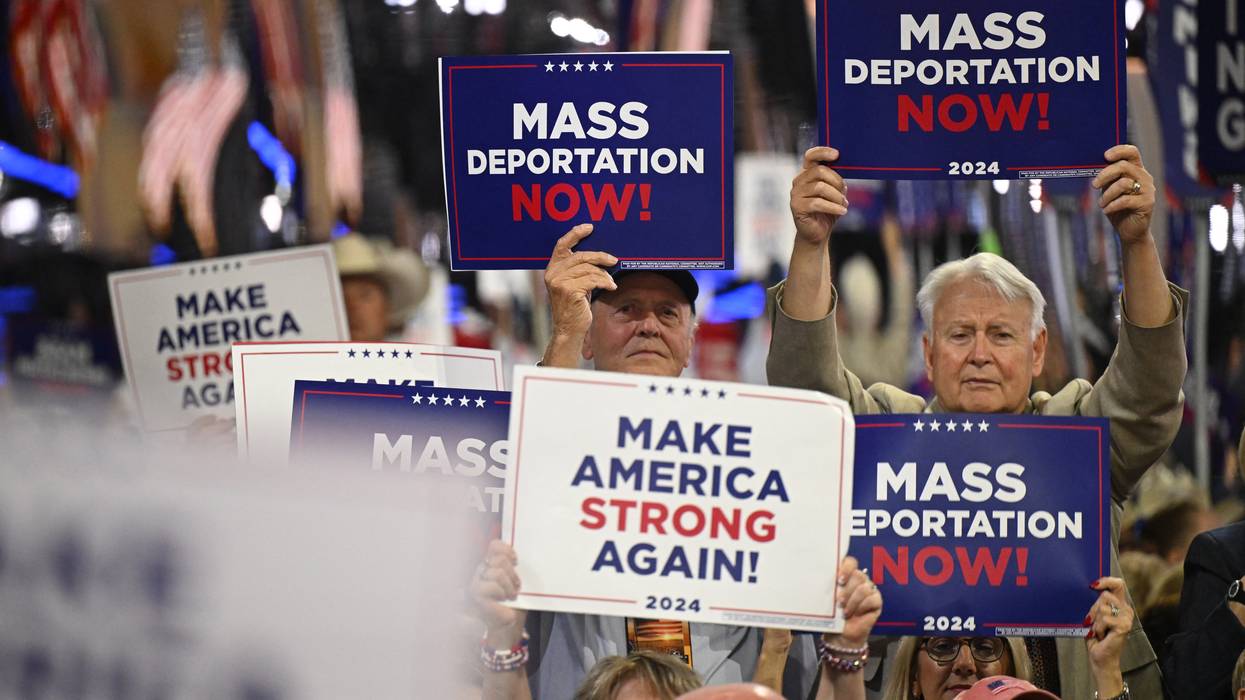
The mass deportations promised by Project 2025 would sweep away the dreams of DACA recipients like me and cause a logistical disaster, taking decades and costing billions.
There’s an image that’s stayed with me for weeks: A sea of people holding up “Mass Deportation Now” signs at the Republican National Convention.
Since then, I’ve been plagued with nightmares of mass raids by the military and police across the country. I see millions of families being torn apart, including families with citizen children. And I see DACA recipients—like me—carried away from the only life we’ve ever known.
Mass deportation wasn’t just a rallying cry at the GOP convention. It’s a key plank of Project 2025, a radical document written by white nationalists listing conservative policy priorities for the next administration.
Imagine your friends, neighbors, colleagues, peers, and caretakers being dragged away from their homes.
And it would be a disaster—not just for immigrants, but for our whole country.
I moved to the United States when I was six. Until my teenage years, I didn’t know I was undocumented—I only knew I was from the Philippines. I grew up in Chicago with my twin brother. Our parents worked hard, volunteered at my elementary school, and ensured we always had food on the table. They raised us to do well and be good people.
But when my twin and I learned that we were undocumented, we realized that living our dreams was going to be complicated—on top of the lasting fear of being deported.
Everything changed right before I entered high school in 2012: The Obama administration announced the Deferred Actions for Childhood Arrivals policy, or DACA. The program was designed to protect young people like my twin and me who arrived in the U.S. at a young age with limited or no knowledge of our life before. We’re two of the 600,000 DACA recipients today.
DACA opened many doors for us. It’s allowed to drive, attend college, and have jobs. And we’re temporarily exempt from deportation, a status we have to renew every two years.
DACA helped me set my sights high on my studies and career. Although I couldn’t apply for federal aid, with DACA I became eligible for a program called QuestBridge that granted me a full-ride scholarship to college. Today I work in public policy in the nation’s capital, with dreams of furthering my career through graduate school.
But if hardliners eliminate DACA and carry out their mass deportations, those dreams could be swept away. And it would be ugly—mass deportation would be a logistical disaster, taking decades and costing billions.
Imagine your friends, neighbors, colleagues, peers, and caretakers being dragged away from their homes. For me, it would mean being forced back to the Philippines, a place I haven’t seen in two decades. My partner, my friends, my work—all I’ve ever known is here, in the country I call home.
This country would suffer, too.
An estimated 11 million undocumented people live here. We’re doctors, chefs, librarians, construction workers, lawyers, drivers, scientists, and business owners. We fill labor shortages and help keep inflation down. We contribute nearly $100 billion each year to federal, state, and local taxes.
Fear-mongering politicians want you to believe we’re criminals, or that we’re voting illegally. But again and again, studies find that immigrants commit many fewer crimes than U.S.-born Americans. And though some of us have been long-time residents of this country, we cannot vote in state or federal elections.
Despite all the divisive rhetoric, the American people agree with immigration advocates: Our country needs to offer immigrants a path to legalization and citizenship. According to a Gallup poll last year, 68% of Americans support this.
My dark dreams of mass deportations are, thankfully, just nightmares for now. And my dreams of a secure future for my family and all people in this country outweigh my fears. We must do everything possible to keep all families together.

"While his recent asylum ban order was the wrong approach, we commend President Biden for meeting the moment," said one campaigner. "This proves that leading with morality, compassion, and a smart approach is possible."
Just weeks after blasting U.S. President Joe Biden's asylum ban as "a monstrosity" that echoed the approach of his predecessor, migrant rights advocates on Tuesday pointed to new executive action as proof that humane immigration policies are possible and necessary.
Biden announced that the Department of Homeland Security (DHS) will take action so that certain noncitizen spouses and children of U.S. citizens can "apply for lawful permanent residence—status that they are already eligible for—without leaving the country," which is expected to protect approximately half a million spouses and 50,000 children.
"Tackling the challenges faced by migrants and American families of mixed-immigration status requires bold and visionary leadership," declared Yareliz Mendez-Zamora, the Florida Immigrant Coalition (FLIC) federal campaign lead. "While his recent asylum ban order was the wrong approach, we commend President Biden for meeting the moment with this order."
"This proves that leading with morality, compassion, and a smart approach is possible," Mendez-Zamora stressed. "With this, he also starts fulfilling the promises he made to our communities during his 2020 campaign. More of this, please!"
"President Biden has finally chosen to listen to advocates who have relentlessly pushed for action from his administration."
The Democratic president—who is set to face former Republican President Donald Trump, infamous for forcibly separating migrant families at the southern border, in the November election—is also easing the work visa process for Deferred Action for Childhood Arrivals (DACA) recipients and other Dreamers who have graduated from U.S. colleges.
"Offering talented workers the opportunity to continue contributing to our country and economy is timely as DACA hangs by a thread," said FLIC executive director Tessa Petit. "This does not eliminate the need for bold congressional action; DACA recipients are Americans in all measures but paperwork, and giving them a permanent solution is morally imperative."
Several other advocates and lawmakers in Congress—including some who have criticized Biden when he has pursued anti-migrant policies reminiscent of Trump's first term—also celebrated the new moves.
"From winning DACA 12 years ago, to winning healthcare for more undocumented folks earlier this year, to now delivering even more expansive, life-changing relief for hundreds of thousands of people, none of these victories would have been possible without our movement showing up every day to fight for our lives and our rights," said Greisa Martinez Rosas, executive director of United We Dream.
"We recognize this moment as a victory for our movement, a step in the right direction for President Biden, and a recommitment to continue to fight for the day where ALL people have the dignity and freedom to stay and freedom to thrive," she added.
Praising the plan to help families stay together, Analilia Mejia and DaMareo Cooper, executive directors of the Center for Popular Democracy, said that "this win is emblematic of decades of work immigrant communities have been doing to create a more dignified system."
"President Biden has finally chosen to listen to advocates who have relentlessly pushed for action from his administration," the pair added. "We're ready to continue the work alongside his administration to fix our broken immigration system and provide a pathway to citizenship for all."
The ACLU—which last week filed a lawsuit over the Biden administration's recently unveiled asylum restrictions—also welcomed Tuesday's developments.
"We applaud President Biden," said Deirdre Schifeling, the ACLU's chief political and advocacy officer. "This policy will help keep committed, loving families together, which strengthens all of our communities and is popular with voters. This act by the president is the type of humane and commonsense action that has made America stronger, with resilient, hardworking, and patriotic people coming to our cities and small towns, building lives and vibrant, stable communities, generation upon generation."
Other supporters of the actions include America's Voice, American Immigration Lawyers Association, CASA in Action, FWD.us, Living United for Change in Arizona, Make the Road New York, National Immigration Law Center, NETWORK Lobby for Catholic Social Justice, and Poder Latinx as well as progressive leaders in Congress, such as Reps. Pramila Jayapal (D-Wash.), Delia Ramirez (D-Ill.), and Greg Casar (D-Texas).
"Disappointingly, the announced policy continues to harness the same framing of 'national security' and 'public safety.'"
Sirine Shebaya, executive director of the National Immigration Project, said that "we join our communities and fellow advocates in celebrating the tremendous grassroots efforts that led to this executive action. The announcement is a hard-fought victory that will provide much-needed relief and stability to hundreds of thousands of families who will finally be able to live without fear of being torn apart."
"We urge the administration to implement this relief broadly, without exclusions," she emphasized. "Disappointingly, the announced policy continues to harness the same framing of 'national security' and 'public safety' that DHS has long used as pretexts to exclude many Black, brown, Muslim, Arab, Asian, and other immigrants of color from critical protections."
"While this is a step in the right direction, we urge the administration to use this momentum to truly deliver on the promise it made to protect immigrant communities," she added. "As we enter another election season, our communities urgently need bold, permanent, and inclusive relief. We join the chorus of voices advocating for permanent protections for all of our community members, including the many who were excluded in today's announcement."

While continuing to push Congress to establish a pathway to citizenship for undocumented immigrants, said Biden, "we need to give Dreamers the opportunities and support they deserve."
U.S. Rep. Pramila Jayapal was among the immigrant rights advocates who praised an announcement by the Biden administration on Thursday regarding a rule change that will allow immigrants who arrived in the U.S. as children to obtain health coverage under the Medicaid and Affordable Care Act programs—a move that could benefit up to 580,000 people who are recipients of the Deferred Action for Childhood Arrivals program, or DACA.
President Joe Biden announced that the Department of Health and Human Services (HHS) will move to change the definition of people who have a "lawful presence" in the U.S. for the purposes of obtaining healthcare under the ACA and Medicaid—amending it to include DACA recipients.
The change is expected to be final "by the end of the month," said the president.
Jayapal called the proposal "a long overdue step toward justice."
The Washington Democrat chairs the Congressional Progressive Caucus, which released its 2023 Executive Action Agenda last month that included a call for the administration to "eliminate all eligibility barriers to health services under the Affordable Care Act for DACA recipients."
The president emphasized that he is still pushing the U.S. Congress to establish a pathway to citizenship for undocumented immigrants including DACA recipients, but said that in the meantime, "we need to give Dreamers the opportunities and support they deserve," referring to the name rights advocates use for people who benefit from the Obama-era program.
Nearly half of undocumented immigrants lack health insurance, and HHS Secretary Xavier Becerra noted Thursday that number includes about one-third of the 580,000 people who are currently enrolled in DACA.
"Today's rule would change that," said Becerra.
The national advocacy group Mi Familia Vota said the "expansion of critical healthcare programs to DACA recipients" was a positive step as advocates "work to create structural changes to fully include all immigrants."
"While we continue fighting for a pathway to citizenship for DACA recipients, it's important to ensure they have access to the healthcare they deserve," said Cristina Tzintzún Ramirez, president of Next Gen America. "This will improve the way of life of hundreds of thousands of people."
The new proposed rule comes nearly three years after the U.S. Supreme Court rejected former Republican President Donald Trump's attempt to dismantle the DACA program.
Republican plaintiffs won a case in Texas in 2021 in which they claimed former Democratic President Barack Obama acted unlawfully when he created the program without an act of Congress. The Biden administration appealed that ruling and a federal appeals court sent the case back the the lower court in October, but allowed current DACA recipients to renew their status and retain the work permits and deportation protections the program affords them.

At least 13 migrant justice advocates were arrested Thursday during a Washington, D.C. protest denouncing a federal court's decision that an Obama-era program shielding hundreds of thousands of undocumented youth from deportation is illegal.
"We are here to stay and will keep fighting as we have been for so long."
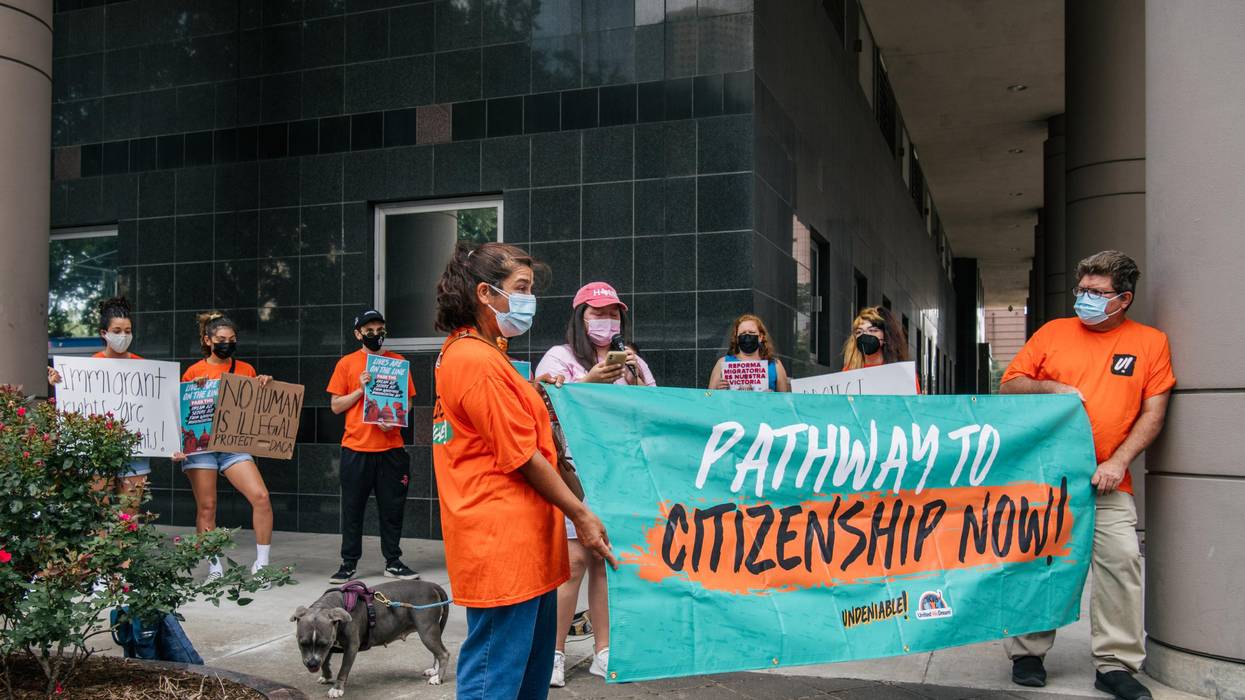
Activists from groups including United We Dream Action (UWD) and CASA rallied outside the Hart Senate Office Building a day after a three-judge panel on the right-wing U.S. 5th Circuit Court of Appeals found the 2012 Obama administration memo establishing the Deferred Action for Childhood Arrivals (DACA) program unlawful.
DACA protects around 600,000 people--known as "Dreamers"--who unlawfully entered the United States as children from being deported.
The activists marched while chanting slogans like "yes we can," "here we are and we are not leaving," and "the people united will never be defeated" in Spanish before Capitol Police began arresting demonstrators after giving them three warnings to disperse.
A spokesperson for the Capitol Police said 13 protesters were arrested. CASA said the number was 15.
"I have had DACA for 10 years now, since the Obama administration brought the program to life," said protester Cindy Kolade, a 29-year-old DACA recipient from Baltimore who has lived in the United States since she was 12.
"I am extremely upset about the decision made yesterday and today took time away from the essential work I perform at a hospital to participate in an action with CASA and UWD to make sure Congress hears our voices," she added. "We are here to stay and will keep fighting as we have been for so long."
Protester Flor Sapunar told The Washington Post that while she is thankful for DACA, the program has "never been enough."
"The only thing that can stop this roller coaster of emotions," she said, "is offering citizenship to the millions of immigrants who have had DACA and beyond."
Two years ago, the U.S. Supreme Court narrowly blocked a Trump administration effort to end DACA, with Chief Justice John Roberts joining the court's liberal justices in a 5-4 ruling that called then-President Donald Trump's attempt to terminate the policy "arbitrary and capricious."
However, the justices did not rule on the legality of DACA's implementation.
On his first day in office, President Joe Biden--who campaigned on a platform plank of citizenship for Dreamers--directed the U.S. Department of Homeland Security "to take all actions" to "preserve and fortify DACA."
In August, Biden took executive action to strengthen DACA protections, while calling on Republicans in Congress to pass legislation giving Dreamers a pathway to citizenship.
Dreamers and their allies, including numerous congressional Democrats, have repeatedly called on Congress to codify DACA protections in law.
"We need Congress to act on citizenship now," said Kolade, "so we no longer have to live in fear and can continue to prosper in this country we call home."
Related Content

The Center for Law and Social Policy, an anti-poverty advocacy group, said following the 5th Circuit Court's ruling that "DACA recipients have grown up, built careers, and raised families in this country."
"We need Congress to codify a path to citizenship," the group added, "which has historically had bipartisan support."

A day after President Joe Biden's State of the Union address, immigrant youth from across the U.S. rallied outside the White House on Wednesday, demanding an end to all deportations.
Organized by United We Dream--the largest immigrant youth-led group in the country--activists at the rally drew attention to the president's failed immigration policies and unveiled a banner acknowledging the over two million people who have been deported or expelled under the Biden administration.
"President Biden can praise his administration's purported achievements all he wants, but at the end of the day, young, Black, brown, and immigrant people from across the country know of his failures to protect our communities," said Cynthia Garcia, national campaigns manager for community protection at United We Dream, in a statement.
Garcia criticized Biden for failing to revoke Title 42 and the "Remain in Mexico" policies implemented under the Trump administration. Both policies are widely denounced as cruel by human rights experts, including United Nations officials.
"We feel the trauma every time lives are torn apart and loved ones are deported. We feel the pain of community members languishing in detention centers," Garcia continued. "We feel the damage on our physical and mental health when the president chooses to fund profit-driven surveillance technology over our well-being. It's up to all of us, across movements, to continue taking action to protect our communities when millions of lives are left on the line."
Yazmin Valdez--a Deferred Action for Childhood Arrivals (DACA) recipient who belongs to United We Dream and Kansas/Missouri Dream Alliance--said in a statement that Biden had failed on his campaign promises to stand up for immigrant, racial, and climate justice.
Related Content

Valdez said that her father was one of over 80,000 first-time DACA applicants whose applications have stalled after a federal ruling in Texas and that every day she lives with "the constant fear that my dad could be separated from our family and deported."
"This is the state of our country's immigration system; a system that willfully puts millions of families like mine in positions where we could be broken apart at any time," lamented Valdez. "I refuse to remain silent as President Biden chooses to keep my family--and millions more just like ours--at constant risk of detention, deportation, and family separation."
I grew up in Honduras with my grandparents, as my mom came to the United States years prior with the dream of setting up a better life for me and my younger brothers. Five years ago, when I was 17 years old, I was in the middle of school classes when I received a text from her asking "Are you ready to come to the US next week?" She had arranged for a coyote. I managed to cross the border by car, inflatable raft and walking, and once stateside, immediately crossed paths with border patrol who took me to a detention center in McAllen, Texas. There was only one bathroom for 75 people, the food offered was terrible. They gave me an aluminum cover wrap, but it did nothing to keep away the bitter cold. I was released after a day and a half and sent to a shelter in Miami, and then to Metairie, New Orleans where I reunited with my mom. We were able to hug for the first time since I was six years old.
Although we've done everything we can to assimilate here and be self-sustainable, we could still be deported at any time, our now-reunited family ripped apart.
For someone like me, it was never possible to fly or to drive across the border. A visa was impossible. I could never have entered the country normally to be able to see my mom. At the moment, I'm undocumented. I don't have anything right now that helps me in my day-to-day life here, like a driver's license or a social security card. I have applied for asylum, which cost me $5000--but so far we don't have enough money for my younger brothers to apply. That's why programs such as DACA (Deferred Action for Childhood Arrivals) are so important--they give protection for young immigrants to be able to stay by family and work towards building a solid, productive future in the United States. Yet we need more. Congress needs to pass a new version of the Budget Reconciliation Bill (BRB) with a pathway to citizenship for Dreamers and the millions of other undocumented immigrants trapped in the United States with no avenue to legalize.
My mom has done well for herself here. Immigrants are much more likely to start businesses than the U.S.-born and my mom follows that trend--she owns her own business at the French Market. She has made sure to educate us well here. When I arrived I didn't speak a word of English, but she enrolled me in high school anyway where I went on to take classes in the next two and a half years like Geometry, Algebra 2, American History and English. Like approximately 98,000 other undocumented immigrants that graduate high school every year in the US, I was a proud graduate in 2019. I loved learning everything I could.
Yet although we've done everything we can to assimilate here and be self-sustainable, we could still be deported at any time, our now-reunited family ripped apart. In 2018, Customs and Border Protection (CBP) and Immigration and Customs Enforcement (ICE ) together carried out 337,287 removals of unauthorized immigrants, a 17% increase from the previous year, according to the Department of Homeland Security.
With my current status, I'm not protected in basic ways. We used to live in an apartment, but two years ago, my mom moved to a house and I decided to stay in the apartment. I was there until the pandemic. I didn't work for three months and the landlords told me to move. They took me to court and the judge told me you have literally one day to move. I thought you couldn't get evicted during the pandemic. Every person in the United States is protected by the Fair Housing Act. Supposedly, a person's immigration status does not affect his or her federal fair housing rights or responsibilities--but that was definitely not the case in my personal experience.
Since I moved from Honduras to New Orleans I have lived so many experiences and have learned so many things I wouldn't have been able to learn in Honduras, There are so many things I still want to learn. My goal after graduating from high school was to go to college, but undocumented, I wasn't able to do so. It's much more expensive for education--no in-state tuition is available for me as an immigrant in Louisiana--and I wasn't working. Right now, I'm working construction under the table and I do plan on saving money to be able to go to college. My mom is always telling me to be strong and always stay positive and I think that's good advice.
Politics aside, I feel my story is simple. I, like many Americans, have a mother who only wants the best for her sons. I want to work to support myself and my family. I want to have a driver's license to be able to drive myself to work. I want to be able to attend college in my state and pay the same amount that everyone I went to high school with pays. According to the Migration Policy Institute, as of March 2021 there are 616,030 active DACA recipients who are legally protected from deportation, but that is less than half of us young immigrants in the US who should be immediately eligible.
We need to immediately expand the number of immigrants who receive DACA protection-- immigrants who, like myself, simply want to be able to focus on bettering themselves and their family without the possibility of being deported. The best way to do so? Pass a new version of the Budget Reconciliation Bill--with provisions to permanently protect Dreamers, once and for all.