

SUBSCRIBE TO OUR FREE NEWSLETTER
Daily news & progressive opinion—funded by the people, not the corporations—delivered straight to your inbox.
5
#000000
#FFFFFF
To donate by check, phone, or other method, see our More Ways to Give page.
Daily news & progressive opinion—funded by the people, not the corporations—delivered straight to your inbox.

From the International Criminal Court to the home of Ilhan Omar, the use of government power demands more than another news cycle of outrage.
I am tired of writing about Donald Trump.
I have spent years writing about this man, and lately I find myself wondering what more there is to say. Another attack on an institution, another spectacle, another announcement that sends the news cycle spinning. An editor at City Watch LA recently told me he was no longer interested in receiving Trump pieces because readers were tuning out. I understood. I have felt that fatigue myself.
Still, four developments in the first 12 days of October have been difficult to ignore. The Trump administration imposed sanctions on the International Criminal Court, announced plans to live stream a military execution, struck an agreement for Russian diesel, and sent federal agents to search the Washington home of Rep. Ilhan Omar (D-Minn.)
What matters now is whether the public continues to demand explanations, whether institutions retain the independence to do their jobs, and whether the law applies equally to the powerful and their critics.
These events are different. They should not be collapsed into a single accusation of wrongdoing. But together they raise a question that reaches beyond the latest controversy: What happens when the exercise of government power becomes so relentless that the public begins to accept what once would have demanded sustained scrutiny?
Consider the International Criminal Court (ICC). Navi Pillay, the South African jurist whose career challenged apartheid and advanced the prosecution of sexual violence as a weapon of genocide, was recently awarded the Nobel Peace Prize for her human rights work. She also led a United Nations commission that concluded Israel had committed genocide in Gaza, a finding Israel rejects.
Trump responded by resharing a social media post claiming he deserved the prize. His administration imposed sanctions on the ICC, accusing the court of unfairly targeting Americans.
The timing does not establish that the Nobel decision caused the sanctions. The underlying issue is more consequential than presidential resentment. International courts exist to investigate grave crimes, including those committed by people with political power. Their decisions can be challenged, their jurisdiction disputed, and their procedures scrutinized. None of this gives governments a blank check to punish institutions for examining their conduct.
Martin Luther King Jr. wrote in his Letter from Birmingham Jail, “Injustice anywhere is a threat to justice everywhere.” King was confronting a country that repeatedly found reasons to delay accountability for its own injustices. His words remain relevant when governments invoke sovereignty to resist scrutiny they expect other nations to accept.
The United States cannot credibly demand accountability abroad while treating the prospect of international accountability as an intolerable affront at home.
The proposed military execution raises a different concern. Nidal Malik Hasan, a former Army psychiatrist, murdered 13 people and wounded 32 others at Fort Hood in 2009. His scheduled execution by firing squad on December 3 is expected to be live streamed, according to Associated Press reporting.
The victims and their families deserve to remain at the center of any discussion of Hasan's crimes. Their suffering does not, however, settle the question of what the state should make of an execution.
Capital punishment is already an assertion of the government's power to take a human life. Broadcasting that act introduces another question: What purpose does the spectacle serve?
In Reflections on the Guillotine, Albert Camus called capital punishment “the most premeditated of murders.” He was challenging the assumption that the state's decision to kill becomes morally uncomplicated once it has passed through a legal process.
A sentence can be lawful and still invite serious moral examination. If a public broadcast is supposed to deter violence, the administration should explain the evidence supporting that claim. We should be wary of a government that treats the public display of death as a demonstration of strength.
The Russian diesel agreement presents a more practical contradiction. On October 9, Trump announced that Russia would supply more than 300,000 tons of diesel, with additional shipments expected. The announcement came as the administration was pursuing economic pressure on Moscow over its invasion of Ukraine.
Negotiating with an adversary is not inherently wrong. Fuel prices matter to families, workers, and businesses, and a president has a responsibility to address them. An energy agreement might have an economic rationale.
But the administration owes the public an explanation of how this arrangement fits its broader policy. If economic pressure is meant to persuade Moscow to change its conduct, what happens when Washington purchases a major energy supply from Russia? What are the terms, when will the fuel arrive, and how much relief can consumers reasonably expect?
For Ukrainians living with the consequences of the invasion, American commitments matter. For Americans struggling with fuel costs, promised savings matter. Neither group should have to rely on presidential boasts in place of a clear accounting.
Then, on Monday morning, federal agents searched Ilhan Omar's home in Washington, DC.
The Justice Department confirmed that Homeland Security Investigations had executed a judicially authorized search warrant as part of an ongoing criminal investigation. Authorities provided few details about the inquiry. Reporting indicated that it involved immigration-related allegations, which Omar has denied.
A search warrant does not establish guilt. The public does not yet have enough information to determine whether the search was justified or whether political considerations influenced the investigation. Those distinctions are essential.
But the circumstances deserve attention. Trump has repeatedly attacked Omar, questioned her patriotism, and told her to return to where she came from. The search occurred weeks before the November midterm elections, as Omar seeks reelection. Omar described the action as an attempt to target political enemies and weaponize federal law enforcement. Democratic congressional leaders also questioned the timing.
The Justice Department must be able to investigate credible allegations against elected officials. No member of Congress should be above the law. But the reverse principle matters just as much: No president should be able to use federal law enforcement to intimidate political opponents.
The question is not whether Omar should receive special treatment. It is whether she is receiving the same treatment any other American would receive, under the same standards, free of political interference.
When a president repeatedly singles out an opponent and federal agents subsequently search her home shortly before an election, the public has legitimate reasons to demand answers. The government should welcome the scrutiny necessary to establish that its actions are lawful and impartial.
These four stories concern different institutions and different forms of power. Their connection lies in the questions they leave unanswered. Who holds powerful people accountable? What limits should constrain the state's use of violence? Can a government reconcile its economic decisions with its international commitments? Can federal law enforcement remain independent when the president has made a political opponent the target of repeated attacks?
I hesitate to call any particular week a turning point. American history contains too many grave injustices for that claim to come easily. The country has survived slavery, segregation, political repression, and wars justified by falsehoods. Yet history offers no guarantee that democratic institutions will protect themselves. They depend on people willing to defend their purpose and insist on their independence.
I do not expect this article to change the administration's course. I am not even certain that writing another article about Trump will reach readers who have stopped paying attention. But exhaustion is not an argument for silence. It is a condition that those who benefit from public distraction can exploit.
A threshold is not always crossed in a single dramatic moment. It can become visible through a series of decisions, each defended on its own terms, until the accumulation begins to change what a country considers acceptable.
The Nobel Prize, the proposed execution broadcast, the diesel agreement, and the search of Omar's home may ultimately be remembered as separate episodes. Their consequences will depend on facts still emerging and decisions yet to be made. What matters now is whether the public continues to demand explanations, whether institutions retain the independence to do their jobs, and whether the law applies equally to the powerful and their critics.
I am tired of writing about Donald Trump. I am more concerned about what happens if we become too tired to ask what his administration is doing in our name.
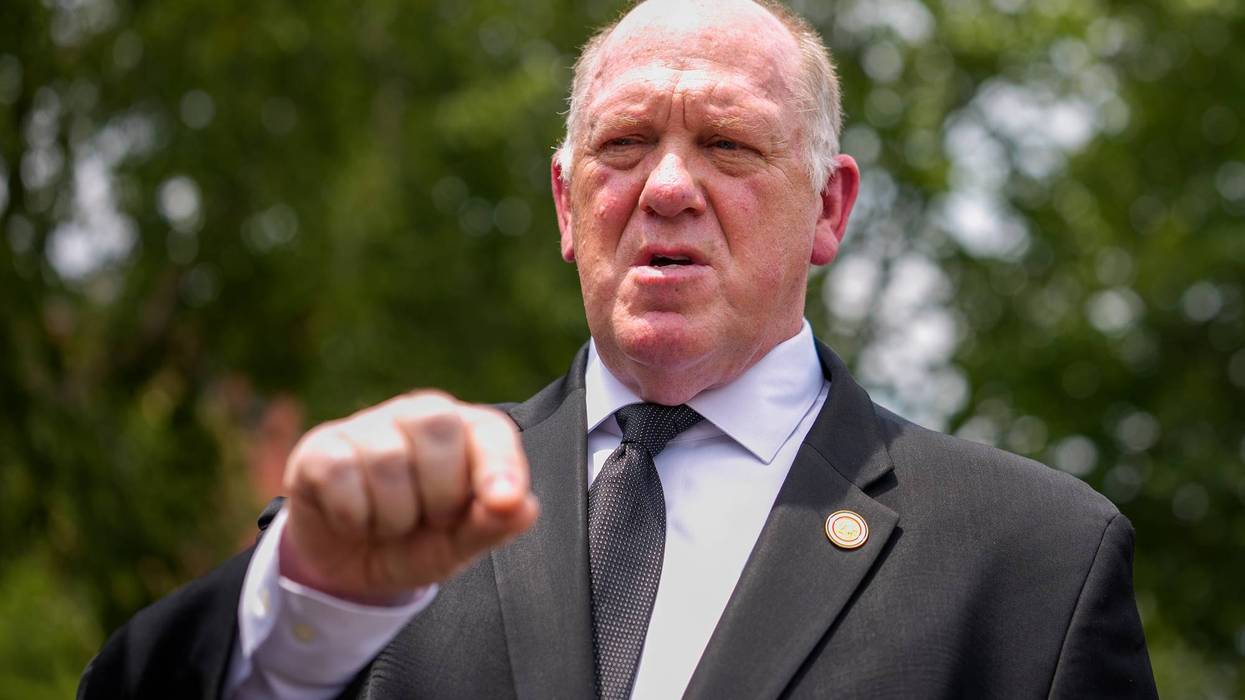
"If the administration wants to investigate anyone, maybe they should look at themselves first."
Progressive US Rep. Pramila Jayapal this week not only joined a growing chorus outraged by President Donald Trump's "rogue" Department of Homeland Security agents raiding Congresswoman Ilhan Omar's home, the Washington Democrat took it a step further.
After putting out a nearly three-minute video decrying Trump's repeated attacks on her Democratic colleague from Minnesota, Jayapal reminded social media users of the president's "border czar," Tom Homan, allegedly accepting a bribe in the form of a paper bag stuffed with $50,000 in cash.
As part of a probe launched under the Biden administration, Homan was the target of a Federal Bureau of Investigation sting operation. In September 2024, he was recorded taking the bag of cash from undercover FBI agents posing as businessmen interested in securing government contracts if Trump returned to the White House.
"If the administration wants to investigate anyone, maybe they should look at themselves first. Anyone remember this?" Jayapal wrote alongside a photo of media coverage that notes Trump's Department of Justice (DOJ) closed the probe into Homan last year.
Before former US Attorney General Pam Bondi was fired by Trump this past April, she insisted last year that "the investigation into Mr. Homan was subjected to a full review by the FBI, agents, and DOJ prosecutors," who "found no credible evidence of any wrongdoing."
However, congressional Democrats as well as the groups Democracy Defenders Fund and Democracy Forward have fought for access to records, including the recording of Homan and the undercover agents.
Homan is far from the only member of Trump's second administration to face credible allegations of corruption. In fact, according to polling results released Tuesday, 59% of Americans believe the president himself has done illegal or unethical things to cash in on his return to power.
Jayapal also isn't the only critic of the Omar raid to point a finger at Trump's border czar this week. Rep. Don Beyer (D-Va.) similarly wrote on social media that "Tom Homan, the man leading Trump’s authoritarian 'investigation' of Rep. Ilhan Omar right before the midterm, was caught by the FBI accepting a bribe of $50,000 in cash in a paper bag."
"But Trump's Justice Department simply dropped the case and covered it up," Beyer stressed. "The most corrupt presidential administration in history."
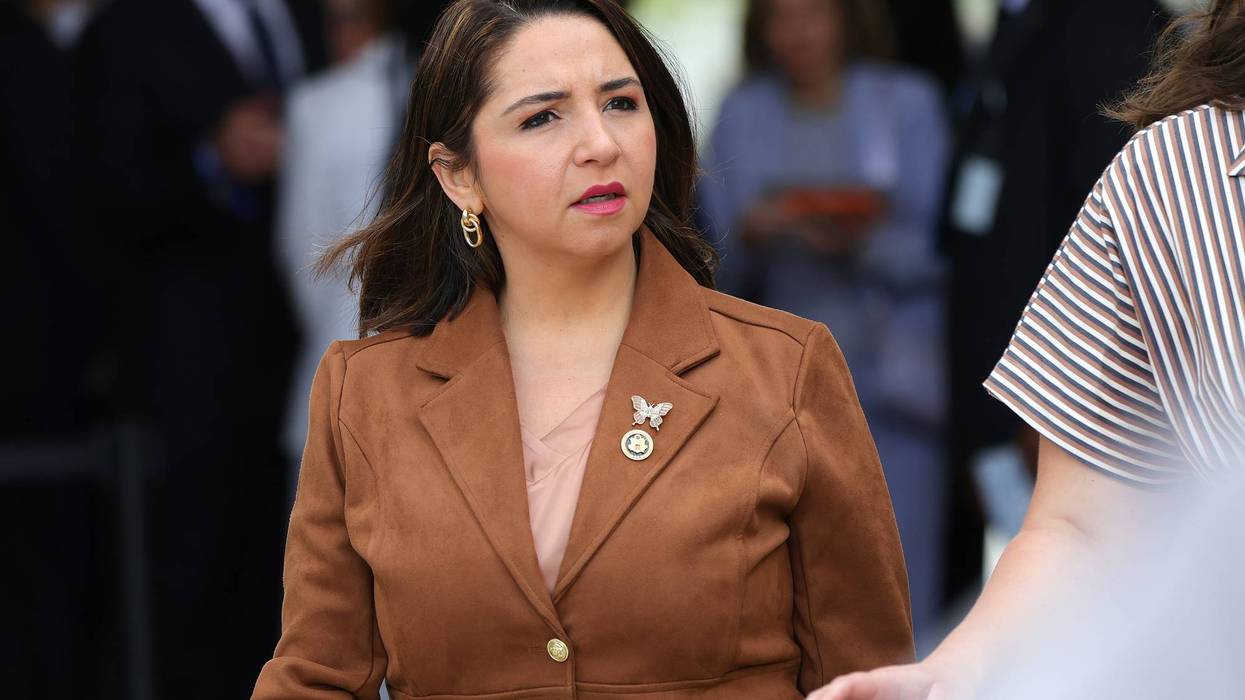
"For 23 years, since its inception, DHS has been utilized by the government to target and persecute those they consider the public enemy," Ramirez said.
In response to the agency's rampant abuses during President Donald Trump's second term, many elected Democrats have warmed to the idea of abolishing US Immigration and Customs Enforcement. But one progressive lawmaker is pushing to go a step further: abolishing the entire Department of Homeland Security.
Rep. Delia Ramirez (D-Ill.) introduced legislation on Tuesday that would repeal all “duplicative and overreaching terrorism laws,” including getting rid of DHS, which was created in 2003 following the September 11 terrorist attacks.
The bill, titled the Reimagining Safety Act, would not only eliminate ICE and Customs and Border Protection (CBP). It seeks to eliminate immigration detention altogether and begin the process of replacing it with a civil court-based immigration system run through the US Department of Justice (DOJ).
In a dramatic departure from current immigration procedures, all deportations would need to be approved by Congress before they could proceed.
The bill comes just one day after agents with the DHS Investigations unit raided the home of Ramirez's colleague, Rep. Ilhan Omar (D-Minn.), as part of a federal criminal investigation related to her citizenship documents.
The investigation---which follows years of attacks by President Donald Trump and other Republicans against Omar's Somali background and Muslim faith, and comes just weeks before an election---has been described by critics as intimidation against a political opponent.
"For almost a decade, Trump and Republicans have lied about Congresswoman Omar to silence her dissent," Ramirez said on Monday. "My sister [Ilhan] has not backed down, so now they are using DHS and the federal government to target and persecute her."
"We must strip them of their weapons," she said. "We must dismantle DHS."
Under Ramirez's legislation, a new agency called the Department of Community Safety would assume DHS's duties. This would include running the Federal Emergency Management Agency (FEMA), which handles the federal response to natural disasters and other emergencies.
The new agency would use DHS's massive pot of federal funding for programs that aim to stop gun violence and other crime; provide support to asylum seekers at the border; redirect federal resources toward community needs like healthcare, housing, education, and emergency preparedness; and support community-based safety programs that do not adopt the militarized law enforcement of DHS.
Other functions of DHS would be scattered across different agencies: Immigration enforcement would belong to the DOJ, the Department of Transportation would take over the Transportation Security Administration and Coast Guard, and the Treasury Department would conduct customs enforcement.
Some of the expansive powers introduced during the War on Terror would also be rolled back: Those without criminal convictions or warrants would no longer be able to be put on "no-fly" lists, which civil liberties advocates have long criticized for stripping people of their right to travel on arbitrary, often racist, grounds.
The legislation would also eliminate the authority of the secretary of state to declare "foreign terrorist" organizations, a power that has been wielded to criminalize protest.
Ramirez told The Intercept that the need to abolish the agency was also underscored by an ICE agent's shooting of 28-year-old Oscar Belgal in the neck last week in New York. Belgal was shot through the window of his car while his 5-year-old child was in the back seat. In the past year, ICE agents have shot at least 25 people, and six of those shootings have been fatal.
Since Trump's return to office in January 2025, at least 58 people have died in immigration custody, according to the ACLU—a dramatic spike from previous administrations.
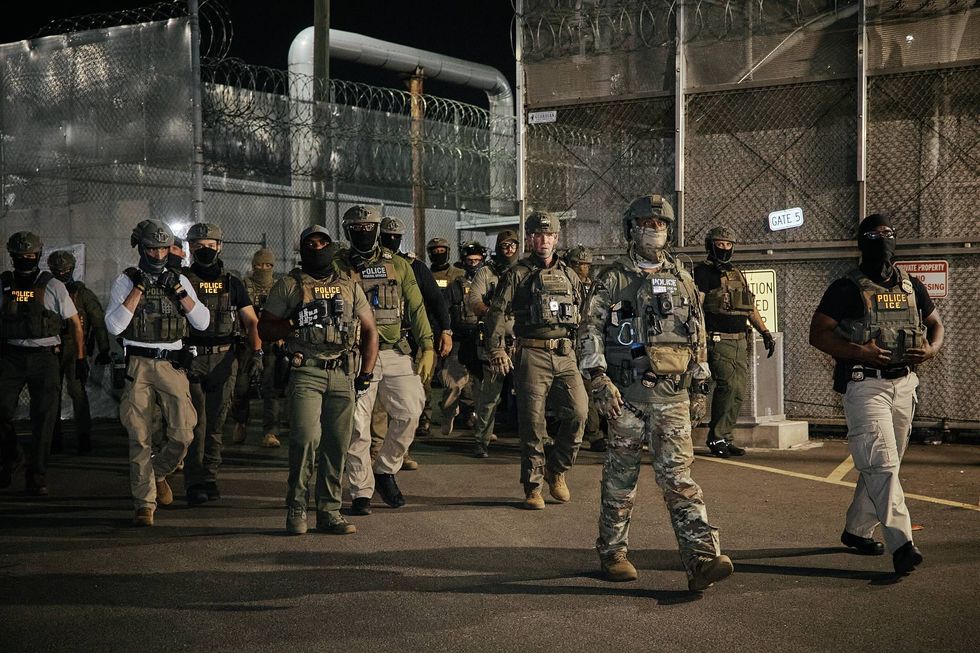 ICE agents arrive to clear protesters from a gate outside the Delaney Hall detention facility during a demonstration protesting the transfer of detainees and conditions inside the facility on June 11, 2026, in Newark, New Jersey. (Photo by Andres Kudacki/Getty Images)
The rising death toll comes as the Trump administration and Republican Congress have dramatically expanded DHS and its budget to create a massive network of new detention camps, where immigrants (and some US citizens)—most of whom have not been convicted of crimes—have been disappeared, often arbitrarily, denied access to legal representation, and subjected to severe physical mistreatment.
Some noncitizens have been targeted explicitly over their political speech, including the hundreds of students who suddenly found their legal status stripped over their participation in pro-Palestine protests, many of whom were summarily arrested and faced with the threat of deportation.
Ramirez told The Intercept all of these were examples of how DHS is "not rogue," but working as designed.
"For 23 years, since its inception, DHS has been utilized by the government to target and persecute those they consider the public enemy," she said, "whether it is Muslim Americans, Haitians escaping violence, Latinos yearning for a better life, or dissenting voices demanding an end to the genocide in Palestine and the kidnapping of our neighbors.”
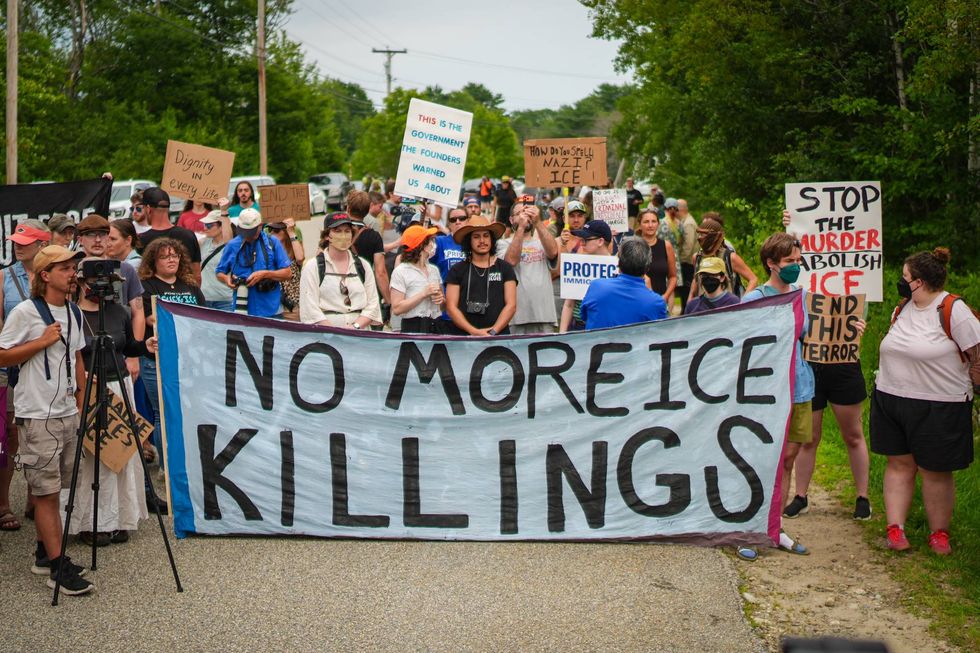 People protest outside a federal immigration office after a man was fatally shot by ICE agents on July 14, 2026, in Scarborough, Maine. (Photo by Ryan Murphy/Getty Images)
During the second Trump administration, public opinion has dramatically shifted against ICE, to the point where a plurality of voters, 48%, said they wanted the agency abolished in a July YouGov poll. In a February poll by the Public Religion Institute, 60% said they opposed increasing ICE's budget, compared with just 36% who favored it.
“In the past, the type of policy we are fighting for would have been written off as outlandish, too ‘extreme,’ or simply put, impossible," said Viviana Baraja, a Chicago-based immigrants' rights advocate who has helped to launch Ramirez's proposal.
"I have seen this administration make the most impossible nightmares possible," Baraja said. "And in the most distorted way, it has strengthened my resolve that if the worst can be possible, we can also dare to dream and to believe that the best can be possible too."
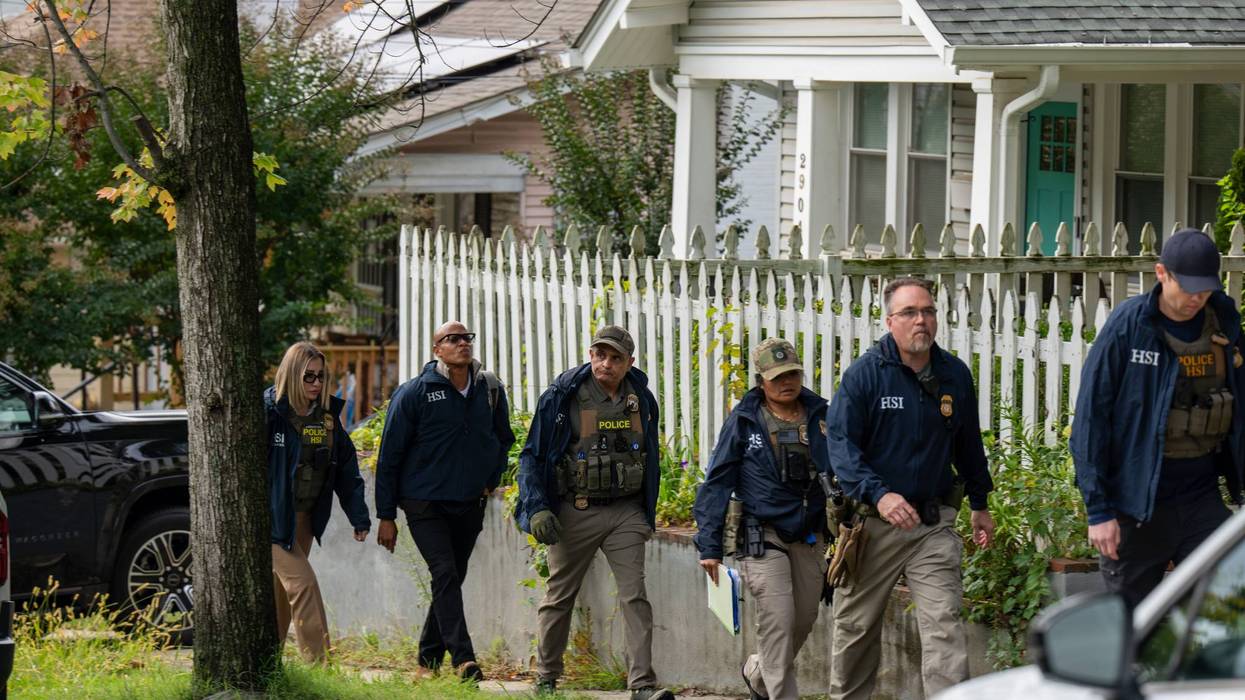
If Democrats regain control of the House, they must investigate this flagrant abuse of power by Trump, Vance, and the Department of Justice.
Right now, I want to bring your attention to Monday's raid by federal agents on the Washington-area home of Rep. Ilhan Omar — 22 days before she faces reelection to Minnesota’s 5th Congressional District.
The raid reportedly concerns Omar’s immigration history, including allegations of fraud that she has repeatedly denied.
Omar accuses the Trump regime of weaponizing law enforcement against a political opponent:
“Make no mistake: this is an attempt to target political enemies and weaponize federal law enforcement. For ten years, Trump has targeted me with baseless lies and smear campaigns. This is just the latest escalation in his campaign of political intimidation. I will not be silenced.”
Months ago, Trump called Omar — a Somali-born Muslim who became a U.S. citizen and was elected to Congress in 2018 — “garbage.” He said she shouldn’t be allowed to be a congresswoman and stood by as his supporters chanted to “send her back” to her native Somalia.
This past weekend — before today’s raid — Trump renewed his attacks on Omar. “She comes from Somalia,” Trump said, where “they don’t have a government, they don’t have police, all they have is crime and squalor.” He continued:
“She comes into our country and she says ‘my Constitution allows me.’ She’s talking about our Constitution. What they’ve done to Minnesota, these people from Somalia, should never be allowed.”
Let me remind you that this is the president of the United States mouthing this bigoted, racist, nationalistic filth.
In this weekend’s rant, Trump also stated that “JD Vance and our people are looking at it” — referring to Omar.
After Monday's raid on her home, Trump said he has “always found [Omar] to be totally crooked” and called her “a terrible person.”
JD Vance has previously accused Omar of immigration fraud without providing any evidence. In March, Vance reiterated that claim, which he said he had discussed with White House senior aide Stephen Miller.
“We actually think that Ilhan Omar definitely committed immigration fraud,” Vance told a conservative podcaster. The next step, he said, was to figure out how to “build a case.”
In a democracy, the highest officials of one party do not “build cases” to pursue legislators from the opposing party.
Nor do they investigate their political opponents within days of an election, in violation of explicit Department of Justice rules.
The Department of Justice guidance for protecting election integrity explicitly states that the department should not engage in investigative measures that might “chill legitimate voting and campaign activities” or “interject an investigation itself into ongoing campaigns.”
The Justice Manual further states that federal prosecutors and agents “may never select the timing” of investigative steps, charges, or public statements for the purpose of affecting an election or giving an advantage or disadvantage to a candidate or political party.
Election-year guidance dating back to at least 2008 has emphasized that “politics must play no role” in investigative or charging decisions and that prosecutors should exercise particular caution close to elections.
If Democrats regain control of the House, they must investigate this flagrant abuse of power by Trump, Vance, and the Department of Justice.
In the meantime, you might consider making a contribution to Ilhan Omar’s campaign, here. And if you’re able to volunteer for her campaign, do so here.
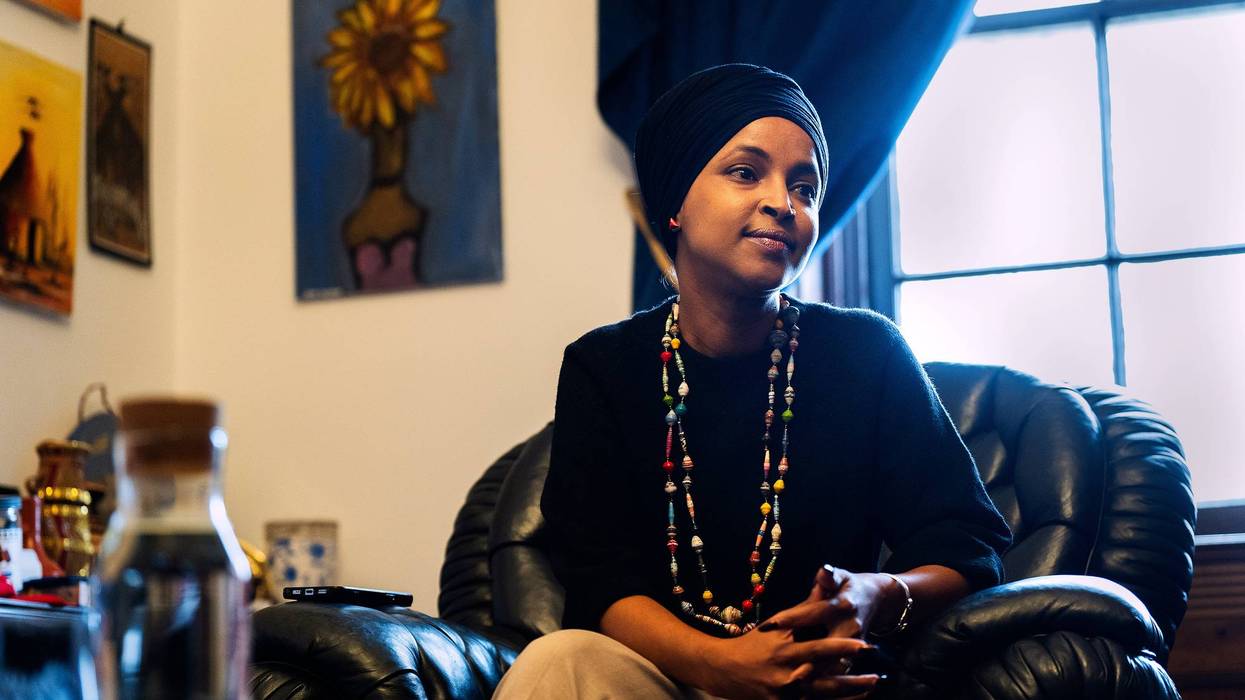
"For ten years, Trump has targeted me with baseless lies and smear campaigns. This is just the latest escalation in his campaign of political intimidation. I will not be silenced."
US Rep. Ilhan Omar on Monday forcefully condemned the Department of Homeland Security's raid on her Washington, DC home as part of a broader effort to weaponize federal law enforcement against progressives who oppose President Donald Trump's agenda.
"This is part of the fascist playbook to rile up Trump's die-hard supporters and give them a big distraction in advance of the midterms," Omar (D-Minn.) wrote in an email distributed by the Progressive Change Campaign Committee hours after the raid. "With this obviously political investigation, Trump is telling his voters: 'Ignore the price of gas, ignore the war in Iran, ignore that you're losing your healthcare—we want you to get angry about this instead.'"
The email followed a statement issued by Omar's office saying that the congresswoman "has done nothing wrong" and condemning the raid as "an outrageous abuse of power."
"For a decade, Donald Trump has relentlessly targeted Congresswoman Ilhan Omar with inflammatory rhetoric, repeatedly putting a target on her back," the statement read. "Now, those attacks have escalated to a pointless federal raid."
The Trump Justice Department said the raid, executed by the investigative arm of DHS, was "part of an ongoing federal criminal investigation." Trump administration officials are reportedly probing whether Omar, who entered the US as a child refugee from Somalia and became a citizen in 2000, is in the country illegally. CBS News reported that the investigation centers on paperwork completed by Omar's late father when she was a child.
Trump told reporters at the White House on Monday that he has "nothing to do with" the Omar investigation while attacking her as a "terrible person." Omar and the Somali American community in Minnesota have been frequent targets of the president's bigoted attacks, and Trump has called for the Democratic lawmaker to be jailed or deported.
"For ten years, Trump has targeted me with baseless lies and smear campaigns. This is just the latest escalation in his campaign of political intimidation. I will not be silenced," Omar wrote in a social media post on Monday.
In the campaign email, Omar called the federal investigation a "sham" and "further proof" that Trump is "willing to use the power of the federal government to try to intimidate and silence anyone who stands up to him."
"It's up to us to make sure it doesn't work," Omar added.
The raid on Omar's home drew widespread condemnation, including from top Democrats in Congress. The leadership of the House Democratic caucus issued a statement calling the raid a "deeply disturbing" act that "raises serious questions about the continued corrupt weaponization of the federal government against Donald Trump’s adversaries."
Rep. Sydney Kamlager-Dove (D-Calif.) denounced the raid as "fascism in the extreme."
"Trump is weaponizing the federal government to escalate his racist attacks against Rep. Omar, undermine her ahead of the midterms, and distract from his failures as president," Kamlager-Dove added.
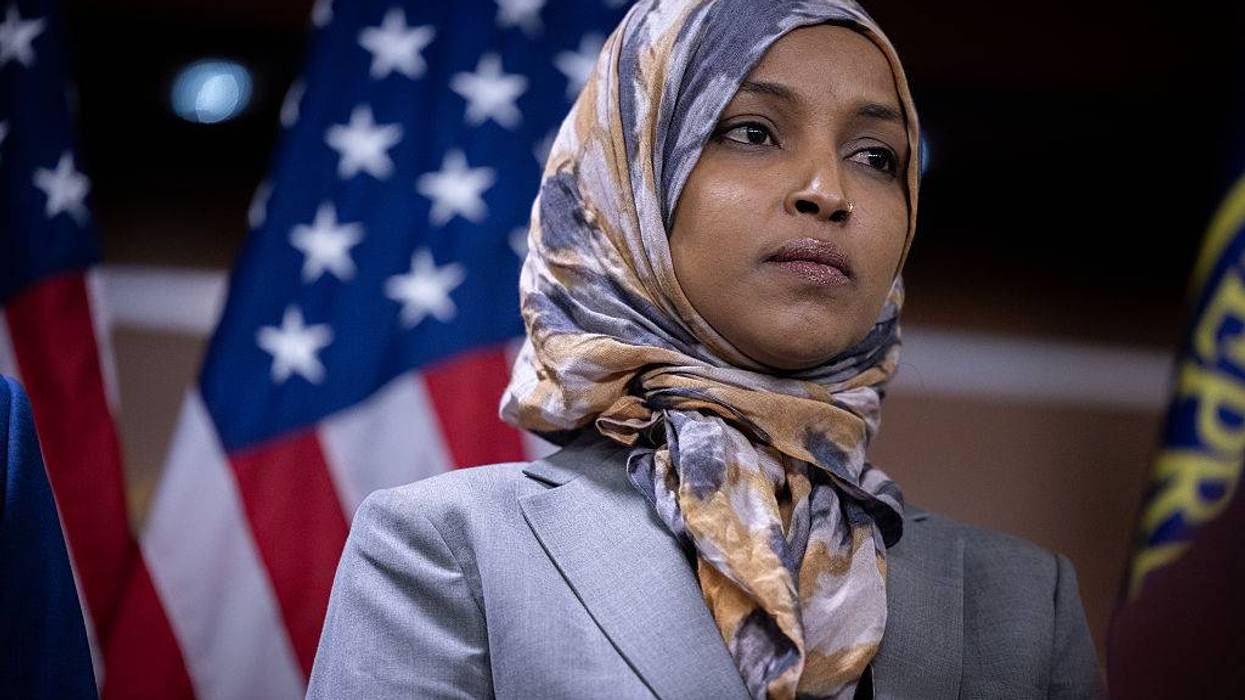
Trump and other Republicans have called for Omar to be stripped of her citizenship and deported for years.
Following years of threats from President Donald Trump and other Republicans to deport Rep. Ilhan Omar, the Minnesota congresswoman's Washington, DC home was raided on Monday morning by agents with the Department of Homeland Security.
The US Department of Justice (DOJ) has confirmed that the raid was carried out as part of a judicially authorized warrant, which it said was part of an ongoing criminal investigation.
Fox News, which first reported news of the raid, said it was part of a probe into the naturalization paperwork filed by Omar's late father when she became a US citizen in 2000 after immigrating to the US as a refugee from Somalia in 1995.
In September, The New York Post reported that federal investigators were examining whether Omar may have been older than 17 when she obtained citizenship through her father as a minor in 2000. The allegation, which stems partly from a discrepancy in historical records of her birth year, has not been substantiated.
Aaron Reichlin-Melnick, a fellow at the American Immigration Council, argued that the case was "even weaker than it already seems," since federal immigration law includes a waiver for people who obtain legal status through fraud they were unaware of.
Joyce Vance, who served as the US attorney for the Northern District of Alabama under President Barack Obama, noted that the raid took place just weeks before the November 3 midterms, inside the 60-day window where DOJ typically avoids such dramatic actions.
"To state what’s obvious to prosecutors here, we are within the period before an election where DOJ doesn’t take overt steps in an investigation that might influence its outcome," she said, adding that it was "another hard norm out the window."
Omar has not yet commented on the raid as of Monday morning, and the DOJ has not indicated what, if any, specific charges have been filed against her.
The search comes after years of demands from Trump and other Republicans for Omar—who has served in the US House of Representatives since 2019—to be deported, imprisoned, or otherwise removed from office.
In a statement Monday morning, Joel Payne, a spokesperson for the progressive advocacy group MoveOn condemned the raid on Omar as a political attack.
“Rep. Omar is a dedicated public servant and a true ally for working families, and Donald Trump has done nothing but use racist tropes and stereotypes to attack her," he said. "Now, he’s abusing his power to physically intimidate and harass her."
Last November, Trump remarked that Omar should be thrown out of the country because she is "always complaining" and referenced her religious attire, referring to it as a "swaddling hijab." In another post that day, he called for the US to "denaturalize migrants who undermine domestic tranquility."
He also said Rep. Rashida Tlaib (D-Mich.), the only Palestinian American member of Congress, should be "sent back" along with Omar after the two protested his state of the Union address in February.
Trump has often referenced Omar while calling for all Somali immigrants to be deported from the country—even though most are US citizens. Trump has referred to Somalis collectively as "garbage" and said they have "low IQs."
Last week, Trump called for the people of Minnesota to "fight back" against Somalis living there in a post on Truth Social, which was widely interpreted as an incitement to violence.
In March, Vice President JD Vance said on a podcast that the administration believed Omar had "definitely committed immigration fraud against the United States of America" and that he'd discussed with senior Trump adviser Stephen Miller—who is not a federal prosecutor—how to "go after" her.
Beau Tremitiere, counsel and deputy director of impact programs for Protect Democracy, told Common Dreams that "raiding the home of a prominent critic and longtime target of President Trump’s racist attacks on the eve of an election is an obvious attempt to intimidate the opposition."
“This administration already has a long track record of failed political prosecutions," he said. "Each new one should both anger and stiffen the spine of those standing up for our democracy.”
Several Republican members of Congress have referenced Omar's religion and political viewpoints as reasons for her to be stripped of citizenship and deported.
Rep. Randy Fine (R-Fla.), who introduced a resolution to expel Omar from Congress last year, referred to her as a "Muslim terrorist" because of her outspoken criticism of Israel's genocide in Gaza and said she should not "be a citizen."
Rep. Brandon Gill (R-Texas) has also called for her deportation, claiming she helped to facilitate the "invasion" of the US after she discussed informing Somali American residents of her district of their constitutional rights should they encounter immigration officers.
In a statement Monday, House Democratic leadership called the raid on Omar's residence "deeply disturbing" and said it "raises serious questions about the continued corrupt weaponization of the federal government against Donald Trump’s adversaries."
"For years, Donald Trump and far-right extremists have relentlessly targeted Congresswoman Omar with vile personal attacks and baseless accusations," they said. "Now, less than 30 days until the midterm election, his violent mass deportation machine has descended upon the home of a duly elected Member of Congress and her family."
They added that "the American people deserve transparency, and we will deliver full accountability for the rogue abuse of power from the Department of Homeland Security and Department of Justice."
This article has been updated to include comments from House Democratic leadership and Beau Tremitiere at Protect Democracy.
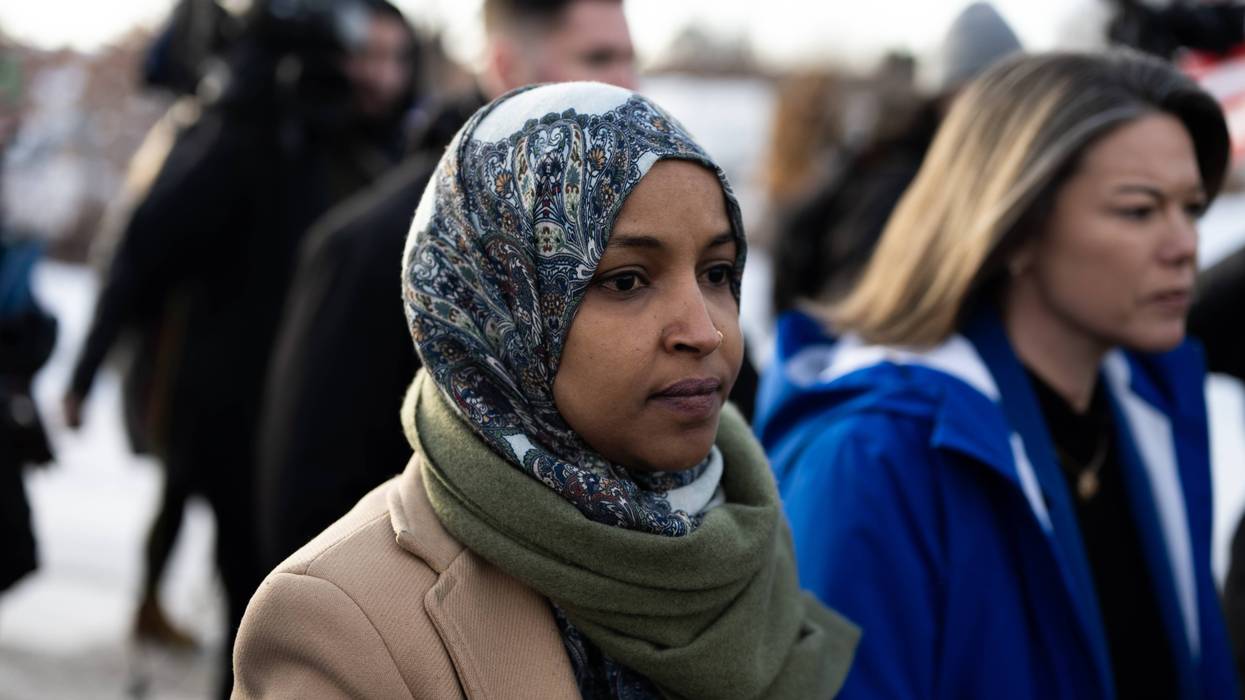
"Our bill will force ICE to pay the price for the damage they’ve left in their wake and ensure that these devastating operations can never be repeated," said the Minneapolis congresswoman.
On January 10, days after US Immigration and Customs Enforcement agents fatally shot US citizen and mother of three Renee Nicole Good in Minneapolis, US Rep. Ilhan Omar stood in the bitter cold of her home city, surrounded by a crowd of angry residents who'd taken to the streets.
It was just over a month into the Trump administration's "Operation Metro Surge"—a campaign that would come to be marked by the staggering scale of racial profiling that led to the arrests of US citizens, brazen defiance of court orders, and stunning displays of force, including two more shootings, one of them fatal.
Of the thousands of armed and masked agents who'd arrived to inflict terror upon the Twin Cities, Omar (D-Minn.) declared, "We are going to make sure that these people pay for what they have done to us." A cheer erupted from the crowd.
On Thursday, Omar introduced a piece of legislation aimed at fulfilling that promise. Titled the Make ICE Pay Act, the bill would block the roughly $140 billion allocated to immigration enforcement in last year's massive Republican budget law and redirect it to recovery efforts in communities reeling from ICE sieges.
"For over a year, ICE has been tearing through our nation, leading racist terror campaigns that have caused devastating damage to our cities, to our businesses, and to the lives of our constituents," Omar said.
"In Minneapolis, Operation Metro Surge cost our community nearly $700 million," she said, citing an estimate by the city of Minneapolis. "We have a moral responsibility to end this abuse of power. Our bill will force ICE to pay the price for the damage they’ve left in their wake and ensure that these devastating operations can never be repeated."
The Trump administration has used this funding to construct an enormous network of detention camps that have often held people in squalid conditions without contact with their loved ones or lawyers and to launch a hiring blitz that has swelled the agency's ranks with poorly vetted recruits, some of whom have gone on to commit deadly abuses of their newfound power.
It has also been used to supercharge ICE's footprint nationwide. With 51,000 arrests, August was the third consecutive month in which the agency set detention records.
And more than ever, the agency has gone after immigrants without criminal records, as well as asylum seekers, green card and visa holders, and Haitian and Syrian immigrants the administration abruptly stripped of Temporary Protected Status.
Through the US Department of Housing and Urban Development, Omar's bill would redirect this funding to states and cities on the receiving end of ICE abuses.
It would be used to provide them with economic relief, reimburse them for extra costs and lost economic activity resulting from raids, support schools and colleges that were disrupted, and provide mental health and social support to those affected.
Funds could also be allocated to support record-keeping and investigations into immigration agencies' conduct and to commissions that allow members of the public to testify about their experiences.
In addition to Minnesota, Omar's bill identifies several other localities that would be eligible for funding after being besieged by ICE, including California, Illinois, Louisiana, Maine, North Carolina, and Oregon, where numerous incidents of misconduct have also been documented.
The legislation is co-sponsored by Rep. Jesús "Chuy" García (D-Ill.), Rep. Rashida Tlaib (D-Mich.), Rep. Chellie Pingree (D-Maine), Rep. Sydney Kamlager-Dove (D-Calif.), Rep. Janelle Bynum (D-Ore.), and Rep. Angie Craig (D-Minn.).

“May we not remain silent at a time of injustice and what feels like a quiet genocide on the Cuban people. We will end this blockade. It’s the responsibility of Congress to do its darn job to end it,” said Rep. Delia Ramirez. It is also the responsibility of all people of conscience
On September 2, 2026, Democratic Congresswomen Delia Ramírez of Illinois and Ilhan Omar of Minnesota hosted a shadow hearing in Congress on “Breaking the Blockade: Reassessing the Moral and Legal Failures of US-Cuba Policy.” A shadow hearing, called by the minority party, has all the formalities of an official hearing of Congress. Four distinguished witnesses gave testimony about the current state of life in Cuba under the oil blockade imposed by the Trump administration in January, and additional coercive measures that have been steadily imposed since then.
Dr. Tania Zakrison of the University of Chicago Medical Center described a “humanitarian catastrophe” due to cumbersome licensing and state overcompliance with sanctions, which mean that supplies are not available to prevent loss of limbs in diabetes patients, for example, and that children and cancer patients are dying due to lack of medicines. The lack of oil to fuel the electrical grid and pump water has caused a severe water shortage. “One-third of the population now has no water at all and are digging into the ground to drink muddy, untreated water,” said Dr. Zakrison. This, coupled with a lack of supplies such as IV fluid bags, is contributing to the recent doubling of infant mortality; research clearly attributes the causality of thousands of excess child deaths to the blockade. Food production is down 60% since January. Doctors “are bearing witness to the preventable deaths that we in the US are causing.”
Rev. Dr. Robert Turner of Empowerment Temple in Baltimore, Maryland visited Cuba in July: “What I found was not a hostile, defeated, nor broken people. I found peaceful, loving, resilient, ingenious people surviving decades of a US embargo and now a blockade that has turned survival itself into a daily act of will.” Our government “has decided that disagreement over the political and economic system justifies collective punishment. That is more than reprehensible,” said Rev. Turner. “It is sinfully wicked and an abuse of the power God has allowed America to possess… What I saw was a constructed crisis, suffering manufactured by policy—our policy.”
Attorney Suzanne Adely, president of the National Lawyer’s Guild, listed several ways in which the US blockade of Cuba violates international law and is repeatedly condemned by the international community. Yet it escalates and is now accompanied by threats of illegal US military aggression. She stated: “The US justification—that Cuba poses an ‘extraordinary threat’ to national security—is legally untenable. A small island subjected to six decades of economic warfare cannot credibly threaten the United States. Likewise, Cuba’s designation as a 'State Sponsor of Terrorism' is arbitrary and politically motivated. It contradicts objective counter-terrorism criteria and ignores documented violations by other states, undermining the credibility of the list itself.”
“We have to talk about Cuba every single day until it becomes part of our algorithm."
Ms. Adely indicated that while Cuba is under siege and being denied the right to sovereignty, the US is arguably committing crimes against humanity and possibly even genocide.
Felix Sharpe Caballero, a Cuban-American living in Detroit who frequently visits family on the island, said: “I testify at great peril. There is a lot of patent hostility in the Cuban-American community. But to be silent, would be a betrayal.”
Caballero continued: “The injustices perpetrated on the Cuban people today have reached the point, quite frankly, of genocide. We are using hunger, lack of medicine, electricity to cook and draw water, food, and basic hygiene products… on the Cuban people to achieve the economic overthrow of the Cuban government. There are 7,000 containers sitting across the world that are not being delivered to Cuba because of State Department activity. The United States of America has been fighting a proxy war on behalf of the Cuban American aristocracy in South Florida.”
Mr. Caballero has learned from his physician cousin in Havana what happens to babies in the NICU when the power goes out. As his voice cracked, he indicated that “some of those babies are not going to recover when the power comes back on.”
With six other members of her Progressive Caucus in attendance, including Reps. Pramila Jayapal (D-Wash.), Maxine Dexter (D-Ore.), Jonathan Jackson (D-Ore.), Chuy Garcia (D-Ill.), Rashida Tlaib (D-Mich.), and Omar, Congresswoman Ramírez concluded the session by saying, “This shadow hearing is just the beginning.” She urged the American people to raise the profile of this issue. “We have to talk about Cuba every single day until it becomes part of our algorithm.” Ramírez vowed to keep pressuring her colleagues to pass three key pieces of legislation:
Congresswoman Ramírez’s concluding words were: “May we not remain silent at a time of injustice and what feels like a quiet genocide on the Cuban people. We will end this blockade. It’s the responsibility of Congress to do its darn job to end it.”
It is also the responsibility of all people of conscience to make sure that happens.
A video recording of the shadow hearing can be found here.

"Trump is continuing to use ICE and DHS to intimidate Americans who disagree with him."
Rep. Ilhan Omar is demanding the US Department of Homeland Security explain why a federal immigration enforcement officer was stationed outside one of her monthly town hall gatherings in Richfield, Minnesota.
In a letter sent last week to Michael McCarthy, interim special agent in charge of the St. Paul Homeland Security Investigations (HSI) field office, Omar (D-Minn.) explained that local law enforcement officials on Thursday spotted a woman sitting in a Ford Explorer who appeared to be monitoring the building where her town hall was taking place.
A Richfield Police officer scanned the woman's license plates and found they were registered to a different vehicle. As noted in a Monday report from HuffPost, it is illegal under Minnesota state law for federal immigration agents to drive in vehicles with mismatched plates.
The officer then approached the car and asked the woman to identify herself, and she said she was an agent for HSI, which is an agency within US Immigration and Customs Enforcement (ICE).
Although the agent left the property without incident, Omar nonetheless said that HSI "put an entire community at risk" by improperly deploying personnel there.
"Instead of monitoring the area for those who might wish harm to me and my constituents," Omar wrote, "Richfield Police were required to devote time to investigating why an HSI agent was outside of a congressional event in a vehicle with mismatched plates."
Omar then linked the HSI agent's presence with "many Americans' growing concern that the Trump administration uses ICE to surveil political opponents and interfere with our democracy."
The Minnesota Democrat demanded to know more details about the agent's deployment, including why she was stationed outside of Omar's town hall event, an overview of the agent's training, and the coordination that HSI is supposed to have with local law enforcement before engaging in such an operation.
In a separate social media post, Omar said that President Donald Trump "is continuing to use ICE and DHS to intimidate Americans who disagree with him," although she offered no specific evidence that this HSI agent was sent as part of an intimidation campaign.

"We stand firmly against this report and other efforts by the Trump administration to weaponize the federal government against dissent, which is a patriotic tradition."
President Donald Trump's escalating claims that Cuba and its supporters poses a threat to US security have been denounced as "laughable" and "crazy," but progressive lawmakers are warning that the State Department's report alleging that the country of roughly 10 million people aims to "conquer" the United States and is backing "left-wing terrorism on American soil" represents a genuine attack on Trump's perceived political enemies.
"Trump appears hell-bent on taking America back 70 years to the height of Cold War McCarthyism, when hawkish foreign policy was paired with unsubstantiated accusations of communist subversion and political repression against dissidents at home," said a group of Democrats led by progressive Rep. Ilhan Omar (D-Minn.), chair of the Congressional Progressive Caucus Peace and Security Taskforce. “We condemn this report’s attack on Americans’ constitutional rights to free speech and assembly."
Omar on Thursday was joined by 10 other lawmakers, including Reps. Alexandria Ocasio-Cortez (D-NY), Jim McGovern (D-Mass.), Delia Ramirez (D-Ill.), and Rashida Tlaib (D-Mich.), in speaking out days after the State Department released its report titled “Cuba: The Capital of 21st Century Communism."
The report, said the lawmakers, was a "McCarthyite attack on Americans’ free speech rights."
The 100-page document claims that Cuba's communist government "has waged a sustained campaign of subversion against the United States" and recruited "generations" of activists in the US, listing by name people who have participated in solidarity campaigns in support of Cuban people as the Trump administration has imposed a destructive oil blockade on the island nation.
"Trump appears hell-bent on taking America back 70 years to the height of Cold War McCarthyism."
In January, Trump issued an executive order declaring that Cuba posed an "extraordinary threat" to US national security and threatened countries with tariffs should they provide oil to the Cuban government. The administration had already cut off Cuba's top source of energy by taking control of Venezuela's vast oil reserves. The blockade has left the Cuban healthcare and education systems and other daily public services struggling to operate.
US groups and citizens named in the report as having spoken out against the administration's blockade and its threats of military action against Cuba include commentator Hasan Piker, Amazon Labor Union founder Christian Smalls, the National Lawyers Guild, and campus activist Isra Hirsi—Omar's daughter.
"We denounce this administration’s irresponsible attacks against civil society organizations, activists, journalists, labor leaders, members of Congress, elected officials, and private individuals based on their advocacy for peaceful foreign policy and social justice at home," said Omar and the Democrats who joined her in the statement.
The lawmakers said they would use their "full oversight power as members of Congress and elected officials to stop the persecution of Trump’s perceived political enemies," including those who speak out publicly against the president's policies in Cuba—activity that is protected by the First Amendment.
"We stand firmly against this report and other efforts by the Trump administration to weaponize the federal government against dissent, which is a patriotic tradition," they said.
The report is the administration's latest attack on the free speech rights that are integral to the US Constitution and American history. The White House has pushed to deport foreign students who protested the US-backed Israel war on Gaza, designated anti-fascist organizers as "terrorists," and, nearly a year after issuing a presidential memo demanding a strategy to "disrupt" left-wing networks, recently convened a summit to launch a "global offensive against the transnational threat of Radical Left terrorism."
Meanwhile, said Omar on Thursday, Trump and Secretary of State Marco Rubio—the son of Cuban immigrants and a long-time proponent of regime change on the island—"are intensifying decades of economic war" against the people of Cuba and deliberately depriving "the entire island’s population of adequate food, fuel, and medicine."
Along with ending his attacks on those who oppose his policies, said Omar, "it is past time for Trump to obey the Constitution and end the dangerous, cruel, and illegal naval blockade causing collective punishment against Cuba.”