SUBSCRIBE TO OUR FREE NEWSLETTER
Daily news & progressive opinion—funded by the people, not the corporations—delivered straight to your inbox.
5
#000000
#FFFFFF
To donate by check, phone, or other method, see our More Ways to Give page.
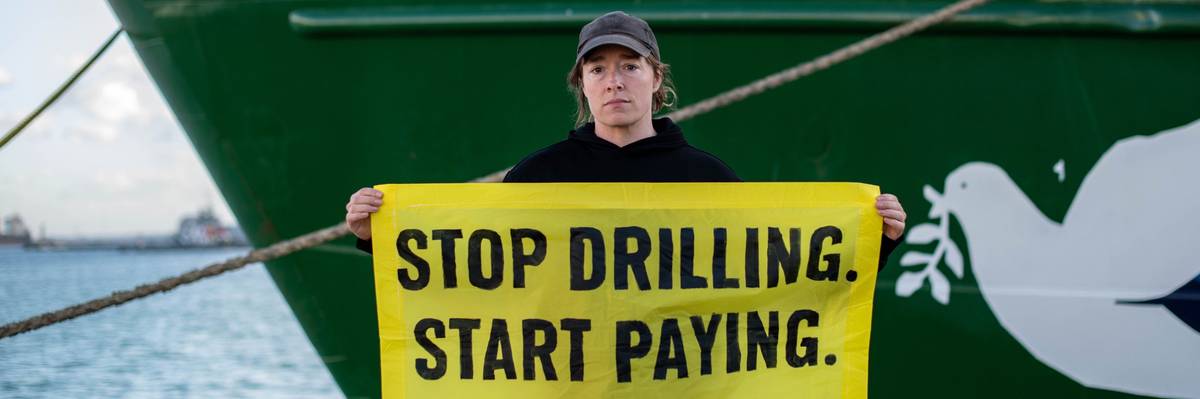
As a farmworker in Applegate, Oregon, I learned the delicate balance of nature. Water, soil, air, and countless other factors all play their role in creating life. From season to season I saw how even small changes would affect the health of the crops. But the changes in recent years have been anything but small. Today, that farm’s once lush, fertile fields are dry and arid, a victim of extreme drought brought on by the climate crisis.
My story has become common. Nearly three-quarters of U.S. farmers surveyed in August saw a reduction in harvest yields due to drought. The Colorado River, which supplies 40 million people, teeters on the brink of collapse. We are currently in the worst megadrought in 1,200 years. There can no longer be any doubt: climate change is happening. Unless we address it now, the fate of our farm will become the fate of the planet.
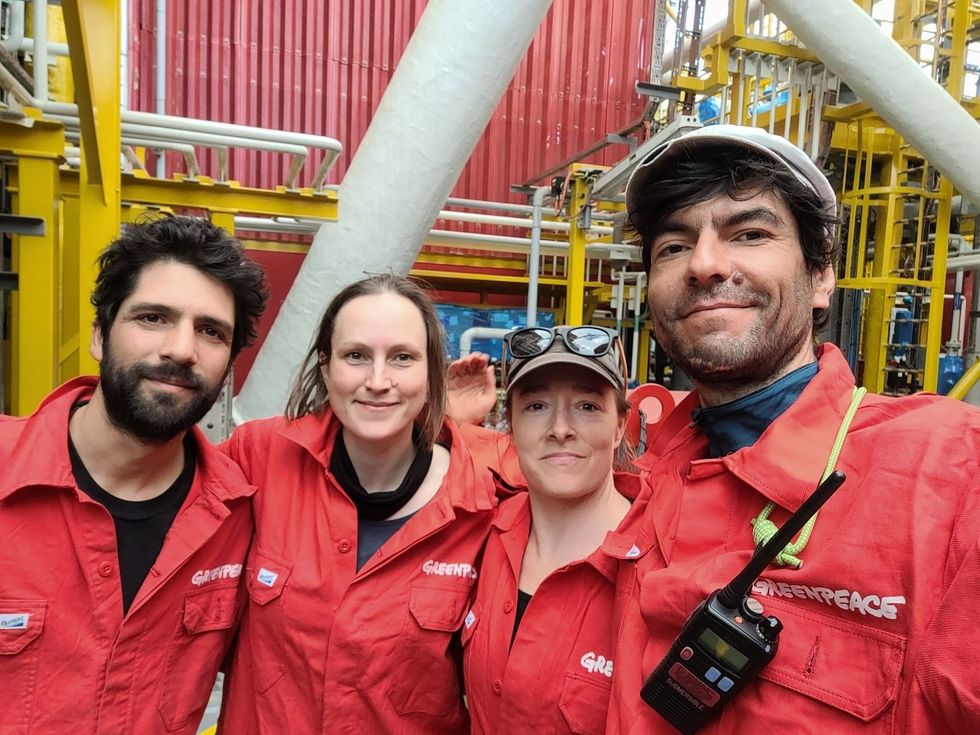 Greenpeace climate justice activists, including the author (second from right), onboard Shell platform en route to major oilfield in the North Sea.(Photo: © Greenpeace)
I climbed on board Shell’s ship along with three other activists from Greenpeace International to send them a message: Stop Drilling, Start Paying. Shell must take responsibility for its historic role in climate change; pay up for loss and damage; stop its oil and gas expansion around the world; and pivot to renewables. Without an end to new oil and gas projects and a transition to clean energy, we cannot keep our farms alive and our planet habitable.
If the ship reaches its final destination in the North Sea, Shell will be able to pump out the equivalent of more than 100 million barrels of oil.
If the ship reaches its final destination in the North Sea, Shell will be able to pump out the equivalent of more than 100 million barrels of oil. Burning all of that oil would create the equivalent of 45 million tonnes of CO2. That’s more than the annual emissions of Nevada. This pollution will contribute to climate catastrophe. The science is clear. We cannot continue to expand oil and gas use if we hope to limit climate change.
Oil and gas companies offer us a false choice between a healthy planet and a healthy economy. The truth is that with fossil fuels we get neither. We are already producing more oil and gas than ever before. Yet gasoline prices still skyrocketed to record highs. Instead of lowering prices, wealthy oil and gas CEOs gave themselves million-dollar bonuses. Shell’s CEO made 57 times more than the company’s average employee in 2021.
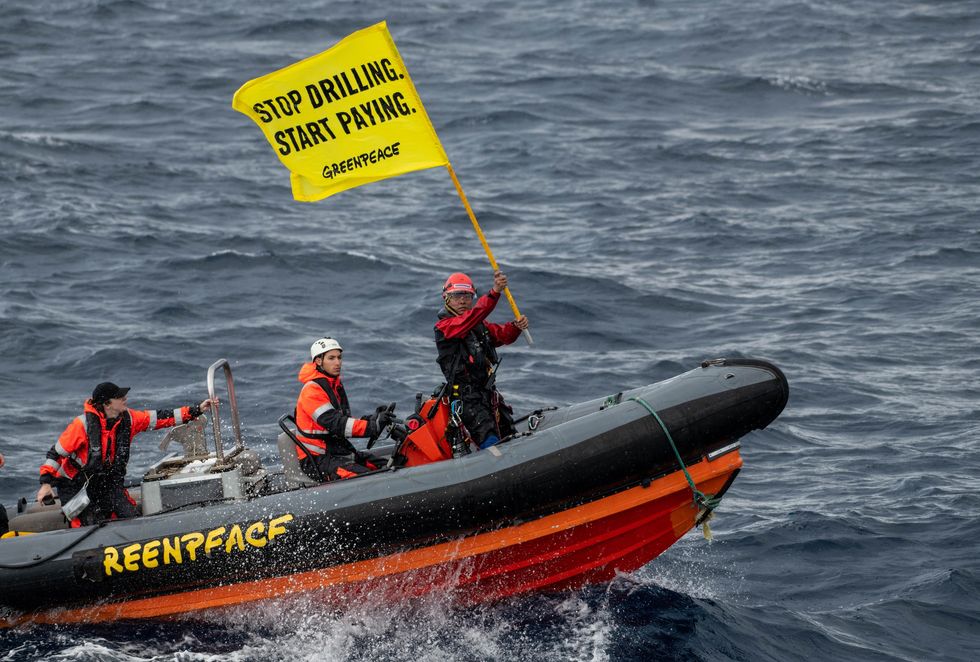 Greenpeace climate justice activists approaching Shell platform en route to major oilfield with message: ‘STOP DRILLING. START PAYING.’ (Photo: © Chris J Ratcliffe / Greenpeace)
Continuing to increase oil and gas production will worsen both the climate and economic crisis. Climate disasters caused $165 billion in damage in 2022. Financial regulators have called the climate crisis an emerging threat to the stability of the U.S. financial system. Deepening our dependence on expensive fossil fuels is harming our health, polluting communities, and worsening wealth inequities.
Companies like Shell have downplayed the climate crisis for decades. Between 2000 and 2016, fossil fuel interests spent nearly $2 billion to derail climate legislation. Now, in the face of widespread support for climate action, these companies, and the politicians they fund, are attempting to delay the renewable energy transition we need for a livable future so they can continue to make billions in profits.
We already have the technology to transition away from oil and gas to renewables like solar and wind. Technology isn’t the problem.
People around the world are already suffering from fossil fuel pollution and climate-fueled disasters. We have the opportunity to stop it. We are going to put people, not oil and gas companies and wealthy elites, back at the heart of governance and public life. We already have the technology to transition away from oil and gas to renewables like solar and wind.
Technology isn’t the problem. The problem is the political willpower of our global leaders. It’s time to stop these companies from extracting fossil fuels and start forcing them to pay for the damage they have wrought on our planet and our health.
As a farmworker in Applegate, Oregon, I learned the delicate balance of nature. Water, soil, air, and countless other factors all play their role in creating life. From season to season I saw how even small changes would affect the health of the crops. But the changes in recent years have been anything but small. Today, that farm’s once lush, fertile fields are dry and arid, a victim of extreme drought brought on by the climate crisis.
My story has become common. Nearly three-quarters of U.S. farmers surveyed in August saw a reduction in harvest yields due to drought. The Colorado River, which supplies 40 million people, teeters on the brink of collapse. We are currently in the worst megadrought in 1,200 years. There can no longer be any doubt: climate change is happening. Unless we address it now, the fate of our farm will become the fate of the planet.
Greenpeace climate justice activists, including the author (second from right), onboard Shell platform en route to major oilfield in the North Sea.(Photo: © Greenpeace)
I climbed on board Shell’s ship along with three other activists from Greenpeace International to send them a message: Stop Drilling, Start Paying. Shell must take responsibility for its historic role in climate change; pay up for loss and damage; stop its oil and gas expansion around the world; and pivot to renewables. Without an end to new oil and gas projects and a transition to clean energy, we cannot keep our farms alive and our planet habitable.
If the ship reaches its final destination in the North Sea, Shell will be able to pump out the equivalent of more than 100 million barrels of oil.
If the ship reaches its final destination in the North Sea, Shell will be able to pump out the equivalent of more than 100 million barrels of oil. Burning all of that oil would create the equivalent of 45 million tonnes of CO2. That’s more than the annual emissions of Nevada. This pollution will contribute to climate catastrophe. The science is clear. We cannot continue to expand oil and gas use if we hope to limit climate change.
Oil and gas companies offer us a false choice between a healthy planet and a healthy economy. The truth is that with fossil fuels we get neither. We are already producing more oil and gas than ever before. Yet gasoline prices still skyrocketed to record highs. Instead of lowering prices, wealthy oil and gas CEOs gave themselves million-dollar bonuses. Shell’s CEO made 57 times more than the company’s average employee in 2021.
Greenpeace climate justice activists approaching Shell platform en route to major oilfield with message: ‘STOP DRILLING. START PAYING.’ (Photo: © Chris J Ratcliffe / Greenpeace)
Continuing to increase oil and gas production will worsen both the climate and economic crisis. Climate disasters caused $165 billion in damage in 2022. Financial regulators have called the climate crisis an emerging threat to the stability of the U.S. financial system. Deepening our dependence on expensive fossil fuels is harming our health, polluting communities, and worsening wealth inequities.
Companies like Shell have downplayed the climate crisis for decades. Between 2000 and 2016, fossil fuel interests spent nearly $2 billion to derail climate legislation. Now, in the face of widespread support for climate action, these companies, and the politicians they fund, are attempting to delay the renewable energy transition we need for a livable future so they can continue to make billions in profits.
We already have the technology to transition away from oil and gas to renewables like solar and wind. Technology isn’t the problem.
People around the world are already suffering from fossil fuel pollution and climate-fueled disasters. We have the opportunity to stop it. We are going to put people, not oil and gas companies and wealthy elites, back at the heart of governance and public life. We already have the technology to transition away from oil and gas to renewables like solar and wind.
Technology isn’t the problem. The problem is the political willpower of our global leaders. It’s time to stop these companies from extracting fossil fuels and start forcing them to pay for the damage they have wrought on our planet and our health.
As a farmworker in Applegate, Oregon, I learned the delicate balance of nature. Water, soil, air, and countless other factors all play their role in creating life. From season to season I saw how even small changes would affect the health of the crops. But the changes in recent years have been anything but small. Today, that farm’s once lush, fertile fields are dry and arid, a victim of extreme drought brought on by the climate crisis.
My story has become common. Nearly three-quarters of U.S. farmers surveyed in August saw a reduction in harvest yields due to drought. The Colorado River, which supplies 40 million people, teeters on the brink of collapse. We are currently in the worst megadrought in 1,200 years. There can no longer be any doubt: climate change is happening. Unless we address it now, the fate of our farm will become the fate of the planet.
Greenpeace climate justice activists, including the author (second from right), onboard Shell platform en route to major oilfield in the North Sea.(Photo: © Greenpeace)
I climbed on board Shell’s ship along with three other activists from Greenpeace International to send them a message: Stop Drilling, Start Paying. Shell must take responsibility for its historic role in climate change; pay up for loss and damage; stop its oil and gas expansion around the world; and pivot to renewables. Without an end to new oil and gas projects and a transition to clean energy, we cannot keep our farms alive and our planet habitable.
If the ship reaches its final destination in the North Sea, Shell will be able to pump out the equivalent of more than 100 million barrels of oil.
If the ship reaches its final destination in the North Sea, Shell will be able to pump out the equivalent of more than 100 million barrels of oil. Burning all of that oil would create the equivalent of 45 million tonnes of CO2. That’s more than the annual emissions of Nevada. This pollution will contribute to climate catastrophe. The science is clear. We cannot continue to expand oil and gas use if we hope to limit climate change.
Oil and gas companies offer us a false choice between a healthy planet and a healthy economy. The truth is that with fossil fuels we get neither. We are already producing more oil and gas than ever before. Yet gasoline prices still skyrocketed to record highs. Instead of lowering prices, wealthy oil and gas CEOs gave themselves million-dollar bonuses. Shell’s CEO made 57 times more than the company’s average employee in 2021.
Greenpeace climate justice activists approaching Shell platform en route to major oilfield with message: ‘STOP DRILLING. START PAYING.’ (Photo: © Chris J Ratcliffe / Greenpeace)
Continuing to increase oil and gas production will worsen both the climate and economic crisis. Climate disasters caused $165 billion in damage in 2022. Financial regulators have called the climate crisis an emerging threat to the stability of the U.S. financial system. Deepening our dependence on expensive fossil fuels is harming our health, polluting communities, and worsening wealth inequities.
Companies like Shell have downplayed the climate crisis for decades. Between 2000 and 2016, fossil fuel interests spent nearly $2 billion to derail climate legislation. Now, in the face of widespread support for climate action, these companies, and the politicians they fund, are attempting to delay the renewable energy transition we need for a livable future so they can continue to make billions in profits.
We already have the technology to transition away from oil and gas to renewables like solar and wind. Technology isn’t the problem.
People around the world are already suffering from fossil fuel pollution and climate-fueled disasters. We have the opportunity to stop it. We are going to put people, not oil and gas companies and wealthy elites, back at the heart of governance and public life. We already have the technology to transition away from oil and gas to renewables like solar and wind.
Technology isn’t the problem. The problem is the political willpower of our global leaders. It’s time to stop these companies from extracting fossil fuels and start forcing them to pay for the damage they have wrought on our planet and our health.