

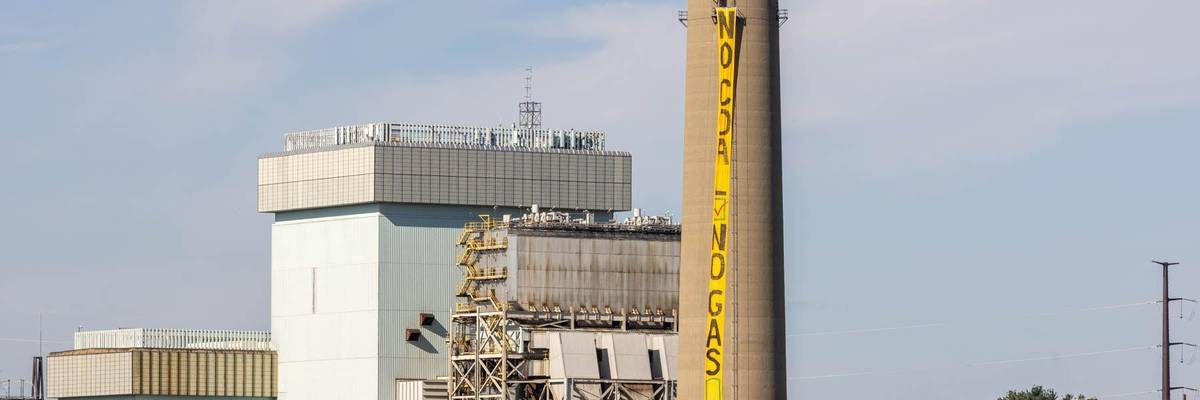
Clean energy activists unfurl a banner reading, “No coal, no gas” down the smokestack of peaker power plant Newington Station in New Hampshire.
We Don’t Need Fossil Fuel Peaker Plants
New Englanders are fighting for a just transition to a better electric system.
Our electric system is intentionally complicated. We are expected to receive our bills from the electric companies every month, pay without question, and have little say in what that money is used for.
In the New England, New York, and PJM regions, a portion of our electric bills every month goes to a mysterious “auction” in the “capacity markets” that promise power plants funding into the future even if they never operate. We are told this is the system we have to work within to ensure reliable energy. But that is not true.
Just because a system is in place does not mean it is the best way to operate. When I was in elementary school I learned how to use the lattice method for multiplication. My Mom taught me long multiplication. Both methods got me to the solution to the equation. So why can’t our electric grid think like this?
The time is now—for energy efficiency, community conservation, and clean energy in New England and beyond.
Our regional electric grid operators here in New England, ISO New England (ISO-NE), oversee a process called the “Forward Capacity Auction,” which enables fossil fuel power plants across the region to stay in operation. They claim that this market approach will ensure certain energy sources can stay on our grid for backup energy. Instead of being a mechanism for reliable energy supplies though, this auction has become a huge waste of money and an enabler of climate chaos. Right now this system keeps fossil fuel peaker plants online. Peaker plants are those oil, methane gas, and coal burning plants that are only called on during peak energy usage—like during a cold snap or heatwave—and thus only get turned on a handful of days a year. These plants currently get hundreds of thousands of dollars to mostly sit idle.
This doesn’t have to be the way we handle our electric grid. We can do better—we just have to imagine better.
The No Coal No Gas campaign showed up at the fossil fuel peaker plants in New Hampshire this August to demand a transition to clean energy, community conservation, and a better grid system. There are three peaker plants in New Hampshire without closing dates that are really harming our communities: Newington Station on the Piscataqua River, Lost Nation in Groveton, and White Lake in Tamworth. Our electric bills gave each of these plants hundreds of thousands of dollars last year despite the fact that they ran just a handful of times (10-15% of our bills fund the system this money came from). These three plants burn oil, methane gas, or jet fuel on the occasion that they do get turned on, resulting in all sorts of pollution impacting the communities they inhabit.
The thing is, if we changed the way we managed our energy grid, we wouldn’t need these peaker plants. They could easily be replaced with solar and battery storage. The regional electric grid operators could prioritize more immediate energy conservation resources both from the public and from large energy users to reduce the peaker energy load so that we don’t need as much backup on the grid. We could improve energy efficiency across the board to reduce the amount of energy we need as a region, even with an increase in electric vehicles. We could decrease electricity bills for people across the region if we didn’t need to promise all this money to peaker plants.
We can have clean energy and reliable energy—this isn’t a compromising situation. Transitioning off of fossil fuels does not make our energy less reliable—especially when those fossil fuels cause the devastating storms we’ve seen lately that cost a whole lot of money to recover from. On top of that, most of the failures on our grid, including huge price spikes like what the grid saw on December 24, 2022, were caused by fossil fuel plants. This situation is reflective of the problems other regional grids across the country are facing as climate change gets worse.
So what’s the hold up? ISO-NE board and staff members who say, “This is the way it’s been.” Elected officials and Granite Shore Power (who owns the New Hampshire peaker plants) who want to protect the profits of fossil fuel corporations. Grid operators who claim that electric grid management needs to be “fuel neutral” in their policies. The fact is, we need to stop thinking inside these tiny boxes we’ve given ourselves. If new ideas are not working in the system we have, it means it’s time to change the system.
When I watched friends drop a massive banner down the side of Newington’s smokestack just a few weeks ago, I thought about how they were not stuck in what doesn’t seem possible. Instead, they acted. They didn’t think a 175-foot banner would be impossible to make. They just made it. They showed the owners of that peaker plant that we can do difficult things, including transitioning off of oil and gas. They showed all of us that we can imagine a better future together.
I walk into energy regulatory meetings with experts even though the people there made those spaces inaccessible to the general public and community organizers. I have been working to understand the complexities of the energy system even though the people I’m challenging to think outside the system don’t want me there. I know a transition to clean energy and justice-focused solutions to the climate crisis won’t happen overnight, but I also know that people in positions of power are dragging their feet in the fossil-fueled past.
We don’t need fossil fuel peaker plants when much simpler solutions to energy reliability exist. The time is now—for energy efficiency, community conservation, and clean energy in New England and beyond. I know we can build an energy system that works for the everyday people who this grid is meant to serve.
We are at a crossroads
This country and this world are at a monumental crossroads. In a few short weeks, US voters will have an opportunity to beat back the forces of fascism and confront the billionaires who are rigging the economy, our media system, and our democracy, making it increasingly impossible for ordinary people to get by. We’re not just talking about the election. We’re talking about what must be done once these fascist elements are vanquished from power. We need a bolder set of solutions than what either major party has so far been willing to offer and a working-class movement ready to fight like hell for it. Trump didn't emerge from nowhere. The conditions that fueled MAGA authoritarianism were created by decades of radical neoliberal economic policies and a corrupt political system dominated by corporate interests. They slashed taxes on the super-rich, promising that the benefits would trickle down. They said giveaways to the corporate titans would make life more affordable for the rest of us. It was all bullshit. And when a bitter, betrayed populace searches for someone to blame, right-wing demagogues have little trouble finding scapegoats. People know when they're being lied to, but you won't hear any of this from the corporate media. Only independent journalism—powered and funded by people who believe in building a better world—can deliver truly trustworthy daily news. Our Fall Campaign is underway, and we need your help. To power our newsroom through the rest of the year, we need to raise $125,000 by midnight on October 31. So if you share our vision, please contribute whatever you can to sustain our work. |
Our electric system is intentionally complicated. We are expected to receive our bills from the electric companies every month, pay without question, and have little say in what that money is used for.
In the New England, New York, and PJM regions, a portion of our electric bills every month goes to a mysterious “auction” in the “capacity markets” that promise power plants funding into the future even if they never operate. We are told this is the system we have to work within to ensure reliable energy. But that is not true.
Just because a system is in place does not mean it is the best way to operate. When I was in elementary school I learned how to use the lattice method for multiplication. My Mom taught me long multiplication. Both methods got me to the solution to the equation. So why can’t our electric grid think like this?
The time is now—for energy efficiency, community conservation, and clean energy in New England and beyond.
Our regional electric grid operators here in New England, ISO New England (ISO-NE), oversee a process called the “Forward Capacity Auction,” which enables fossil fuel power plants across the region to stay in operation. They claim that this market approach will ensure certain energy sources can stay on our grid for backup energy. Instead of being a mechanism for reliable energy supplies though, this auction has become a huge waste of money and an enabler of climate chaos. Right now this system keeps fossil fuel peaker plants online. Peaker plants are those oil, methane gas, and coal burning plants that are only called on during peak energy usage—like during a cold snap or heatwave—and thus only get turned on a handful of days a year. These plants currently get hundreds of thousands of dollars to mostly sit idle.
This doesn’t have to be the way we handle our electric grid. We can do better—we just have to imagine better.
The No Coal No Gas campaign showed up at the fossil fuel peaker plants in New Hampshire this August to demand a transition to clean energy, community conservation, and a better grid system. There are three peaker plants in New Hampshire without closing dates that are really harming our communities: Newington Station on the Piscataqua River, Lost Nation in Groveton, and White Lake in Tamworth. Our electric bills gave each of these plants hundreds of thousands of dollars last year despite the fact that they ran just a handful of times (10-15% of our bills fund the system this money came from). These three plants burn oil, methane gas, or jet fuel on the occasion that they do get turned on, resulting in all sorts of pollution impacting the communities they inhabit.
The thing is, if we changed the way we managed our energy grid, we wouldn’t need these peaker plants. They could easily be replaced with solar and battery storage. The regional electric grid operators could prioritize more immediate energy conservation resources both from the public and from large energy users to reduce the peaker energy load so that we don’t need as much backup on the grid. We could improve energy efficiency across the board to reduce the amount of energy we need as a region, even with an increase in electric vehicles. We could decrease electricity bills for people across the region if we didn’t need to promise all this money to peaker plants.
We can have clean energy and reliable energy—this isn’t a compromising situation. Transitioning off of fossil fuels does not make our energy less reliable—especially when those fossil fuels cause the devastating storms we’ve seen lately that cost a whole lot of money to recover from. On top of that, most of the failures on our grid, including huge price spikes like what the grid saw on December 24, 2022, were caused by fossil fuel plants. This situation is reflective of the problems other regional grids across the country are facing as climate change gets worse.
So what’s the hold up? ISO-NE board and staff members who say, “This is the way it’s been.” Elected officials and Granite Shore Power (who owns the New Hampshire peaker plants) who want to protect the profits of fossil fuel corporations. Grid operators who claim that electric grid management needs to be “fuel neutral” in their policies. The fact is, we need to stop thinking inside these tiny boxes we’ve given ourselves. If new ideas are not working in the system we have, it means it’s time to change the system.
When I watched friends drop a massive banner down the side of Newington’s smokestack just a few weeks ago, I thought about how they were not stuck in what doesn’t seem possible. Instead, they acted. They didn’t think a 175-foot banner would be impossible to make. They just made it. They showed the owners of that peaker plant that we can do difficult things, including transitioning off of oil and gas. They showed all of us that we can imagine a better future together.
I walk into energy regulatory meetings with experts even though the people there made those spaces inaccessible to the general public and community organizers. I have been working to understand the complexities of the energy system even though the people I’m challenging to think outside the system don’t want me there. I know a transition to clean energy and justice-focused solutions to the climate crisis won’t happen overnight, but I also know that people in positions of power are dragging their feet in the fossil-fueled past.
We don’t need fossil fuel peaker plants when much simpler solutions to energy reliability exist. The time is now—for energy efficiency, community conservation, and clean energy in New England and beyond. I know we can build an energy system that works for the everyday people who this grid is meant to serve.
Our electric system is intentionally complicated. We are expected to receive our bills from the electric companies every month, pay without question, and have little say in what that money is used for.
In the New England, New York, and PJM regions, a portion of our electric bills every month goes to a mysterious “auction” in the “capacity markets” that promise power plants funding into the future even if they never operate. We are told this is the system we have to work within to ensure reliable energy. But that is not true.
Just because a system is in place does not mean it is the best way to operate. When I was in elementary school I learned how to use the lattice method for multiplication. My Mom taught me long multiplication. Both methods got me to the solution to the equation. So why can’t our electric grid think like this?
The time is now—for energy efficiency, community conservation, and clean energy in New England and beyond.
Our regional electric grid operators here in New England, ISO New England (ISO-NE), oversee a process called the “Forward Capacity Auction,” which enables fossil fuel power plants across the region to stay in operation. They claim that this market approach will ensure certain energy sources can stay on our grid for backup energy. Instead of being a mechanism for reliable energy supplies though, this auction has become a huge waste of money and an enabler of climate chaos. Right now this system keeps fossil fuel peaker plants online. Peaker plants are those oil, methane gas, and coal burning plants that are only called on during peak energy usage—like during a cold snap or heatwave—and thus only get turned on a handful of days a year. These plants currently get hundreds of thousands of dollars to mostly sit idle.
This doesn’t have to be the way we handle our electric grid. We can do better—we just have to imagine better.
The No Coal No Gas campaign showed up at the fossil fuel peaker plants in New Hampshire this August to demand a transition to clean energy, community conservation, and a better grid system. There are three peaker plants in New Hampshire without closing dates that are really harming our communities: Newington Station on the Piscataqua River, Lost Nation in Groveton, and White Lake in Tamworth. Our electric bills gave each of these plants hundreds of thousands of dollars last year despite the fact that they ran just a handful of times (10-15% of our bills fund the system this money came from). These three plants burn oil, methane gas, or jet fuel on the occasion that they do get turned on, resulting in all sorts of pollution impacting the communities they inhabit.
The thing is, if we changed the way we managed our energy grid, we wouldn’t need these peaker plants. They could easily be replaced with solar and battery storage. The regional electric grid operators could prioritize more immediate energy conservation resources both from the public and from large energy users to reduce the peaker energy load so that we don’t need as much backup on the grid. We could improve energy efficiency across the board to reduce the amount of energy we need as a region, even with an increase in electric vehicles. We could decrease electricity bills for people across the region if we didn’t need to promise all this money to peaker plants.
We can have clean energy and reliable energy—this isn’t a compromising situation. Transitioning off of fossil fuels does not make our energy less reliable—especially when those fossil fuels cause the devastating storms we’ve seen lately that cost a whole lot of money to recover from. On top of that, most of the failures on our grid, including huge price spikes like what the grid saw on December 24, 2022, were caused by fossil fuel plants. This situation is reflective of the problems other regional grids across the country are facing as climate change gets worse.
So what’s the hold up? ISO-NE board and staff members who say, “This is the way it’s been.” Elected officials and Granite Shore Power (who owns the New Hampshire peaker plants) who want to protect the profits of fossil fuel corporations. Grid operators who claim that electric grid management needs to be “fuel neutral” in their policies. The fact is, we need to stop thinking inside these tiny boxes we’ve given ourselves. If new ideas are not working in the system we have, it means it’s time to change the system.
When I watched friends drop a massive banner down the side of Newington’s smokestack just a few weeks ago, I thought about how they were not stuck in what doesn’t seem possible. Instead, they acted. They didn’t think a 175-foot banner would be impossible to make. They just made it. They showed the owners of that peaker plant that we can do difficult things, including transitioning off of oil and gas. They showed all of us that we can imagine a better future together.
I walk into energy regulatory meetings with experts even though the people there made those spaces inaccessible to the general public and community organizers. I have been working to understand the complexities of the energy system even though the people I’m challenging to think outside the system don’t want me there. I know a transition to clean energy and justice-focused solutions to the climate crisis won’t happen overnight, but I also know that people in positions of power are dragging their feet in the fossil-fueled past.
We don’t need fossil fuel peaker plants when much simpler solutions to energy reliability exist. The time is now—for energy efficiency, community conservation, and clean energy in New England and beyond. I know we can build an energy system that works for the everyday people who this grid is meant to serve.