SUBSCRIBE TO OUR FREE NEWSLETTER
Daily news & progressive opinion—funded by the people, not the corporations—delivered straight to your inbox.
5
#000000
#FFFFFF
To donate by check, phone, or other method, see our More Ways to Give page.
Daily news & progressive opinion—funded by the people, not the corporations—delivered straight to your inbox.
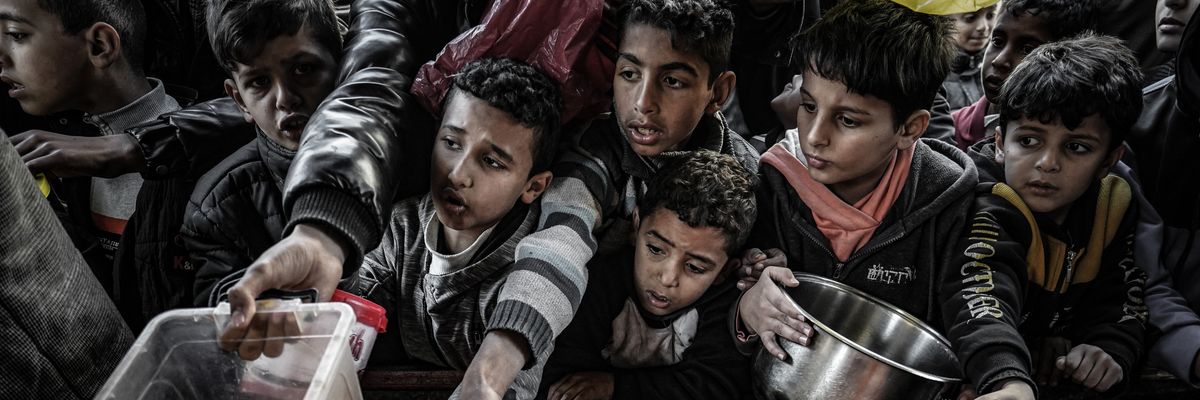
Children reach with their empty containers for food distributed by charity organizations as Israeli attacks continue in Rafah, Gaza on February 5, 2024.
A peace treaty that has been the cornerstone of Egyptian-Israeli relations for nearly half a century could be about to crack wide open.
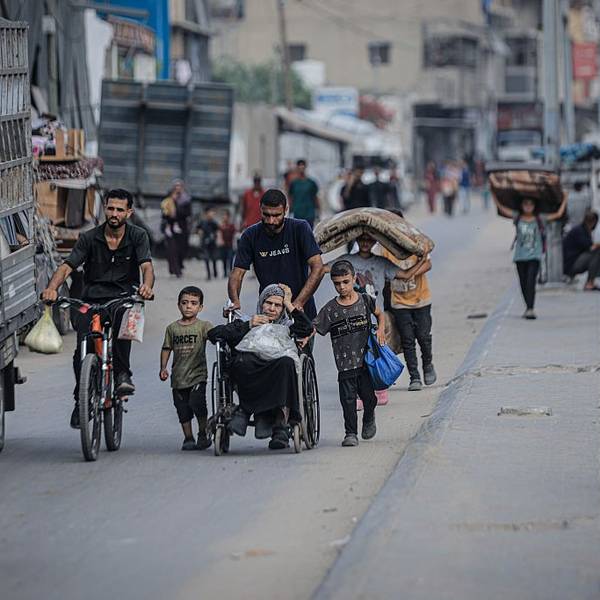
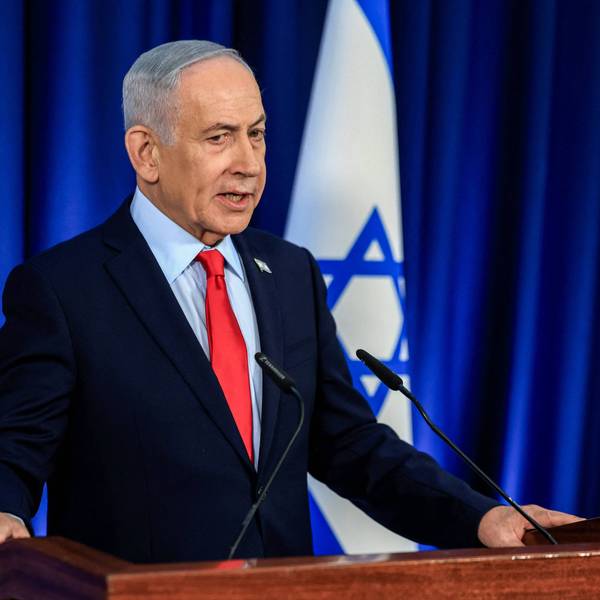
It is being widely reported based on press leaks that the Egyptian government of President Abdel Fattah al-Sisi has privately threatened Israel. Cairo is said to have warned that the 1978 Camp David Peace Treaty will be suspended “with immediate effect” if the government of Binyamin Netanyahu tries to take over the Philadelphi Corridor at the Gaza-Egypt Border and if it expels the Palestinians of Gaza into Egypt’s Sinai Peninsula at the Rafah border crossing as a result of an invasion of Rafah City. Israel attempted to convince an Egyptian delegation to Tel Aviv on Friday that Cairo should cooperate with the Israeli war plan, but allegedly was rebuffed.
The peace treaty has been the cornerstone of Egyptian-Israeli relations for nearly half a century.
The Egyptian government had not said much in public about these reports until yesterday. Mahmud `Abd al-Raziq of al-Khalij 35 reports reports that on Sunday, the Egyptian Foreign Ministry issued a stern warning to Israel that any operation in Rafah City would have “severe consequences.” The communique said that Egypt “continues its contacts and actions with various parties in order to arrive at an immediate ceasefire, enforce calm, and achieve an exchange of hostages and prisoners.” That is, Egypt is seeking another Israel-Hamas agreement, along with the US and Qatar.
The ministry asked responsible international actors (we’re looking at you, Joe Biden) to pressure Israel not to do anything that would “complicate the situation further and cause harm to the interests of everyone without exception.”
Prominent Egyptian parliamentarian and journalist (he has a talk show!) Mustafa Bakri had openly said earlier that the Egyptian border is a “red line” and its breach would threaten the Camp David Accords.
In an interview with Sky News, the former deputy head of Egyptian military intelligence, Gen. Ahmad Ibrahim, had said that from his country’s point of view any Israeli take-over of the Philadelphi Corridor would constitute a breach of the Camp David Accords. He warned that Egypt’s military is “powerful.”
The Saudi foreign ministry also condemned the planned attack on Rafah City and any further coerced displacement of the Palestinians there. The Saudis called for an immediate ceasefire and a UN Security Council resolution against Netanyahu’s plan.
This position was echoed by the spokesman for the Gulf Cooperation Council, which rejected the Israeli plan to assault Rafah after forcibly expelling the civilian population.
Saudi Arabia, Qatar and other Arab states called Friday for immediate, concrete and irreversible steps to recognize a Palestinian state.
It seems clear that even countries that are more or less at peace with Israel, whether formally (Egypt, Jordan, the United Arab Emirates) or informally (Saudi Arabia) have their hair on fire about the proposed Rafah operation.
Although American newspapers depict Egypt as broke, desperate, and easily manipulated, my own estimation is that Cairo absolutely will not accept the Palestinians of Gaza as refugees on its soil. The Sinai is already a security problem for Cairo, and 2 million radicalized Palestinians would make it ungovernable. No amount of debt forgiveness would make such a bitter pill go down.
Dear Common Dreams reader, It’s been nearly 30 years since I co-founded Common Dreams with my late wife, Lina Newhouser. We had the radical notion that journalism should serve the public good, not corporate profits. It was clear to us from the outset what it would take to build such a project. No paid advertisements. No corporate sponsors. No millionaire publisher telling us what to think or do. Many people said we wouldn't last a year, but we proved those doubters wrong. Together with a tremendous team of journalists and dedicated staff, we built an independent media outlet free from the constraints of profits and corporate control. Our mission has always been simple: To inform. To inspire. To ignite change for the common good. Building Common Dreams was not easy. Our survival was never guaranteed. When you take on the most powerful forces—Wall Street greed, fossil fuel industry destruction, Big Tech lobbyists, and uber-rich oligarchs who have spent billions upon billions rigging the economy and democracy in their favor—the only bulwark you have is supporters who believe in your work. But here’s the urgent message from me today. It's never been this bad out there. And it's never been this hard to keep us going. At the very moment Common Dreams is most needed, the threats we face are intensifying. We need your support now more than ever. We don't accept corporate advertising and never will. We don't have a paywall because we don't think people should be blocked from critical news based on their ability to pay. Everything we do is funded by the donations of readers like you. When everyone does the little they can afford, we are strong. But if that support retreats or dries up, so do we. Will you donate now to make sure Common Dreams not only survives but thrives? —Craig Brown, Co-founder |
It is being widely reported based on press leaks that the Egyptian government of President Abdel Fattah al-Sisi has privately threatened Israel. Cairo is said to have warned that the 1978 Camp David Peace Treaty will be suspended “with immediate effect” if the government of Binyamin Netanyahu tries to take over the Philadelphi Corridor at the Gaza-Egypt Border and if it expels the Palestinians of Gaza into Egypt’s Sinai Peninsula at the Rafah border crossing as a result of an invasion of Rafah City. Israel attempted to convince an Egyptian delegation to Tel Aviv on Friday that Cairo should cooperate with the Israeli war plan, but allegedly was rebuffed.
The peace treaty has been the cornerstone of Egyptian-Israeli relations for nearly half a century.
The Egyptian government had not said much in public about these reports until yesterday. Mahmud `Abd al-Raziq of al-Khalij 35 reports reports that on Sunday, the Egyptian Foreign Ministry issued a stern warning to Israel that any operation in Rafah City would have “severe consequences.” The communique said that Egypt “continues its contacts and actions with various parties in order to arrive at an immediate ceasefire, enforce calm, and achieve an exchange of hostages and prisoners.” That is, Egypt is seeking another Israel-Hamas agreement, along with the US and Qatar.
The ministry asked responsible international actors (we’re looking at you, Joe Biden) to pressure Israel not to do anything that would “complicate the situation further and cause harm to the interests of everyone without exception.”
Prominent Egyptian parliamentarian and journalist (he has a talk show!) Mustafa Bakri had openly said earlier that the Egyptian border is a “red line” and its breach would threaten the Camp David Accords.
In an interview with Sky News, the former deputy head of Egyptian military intelligence, Gen. Ahmad Ibrahim, had said that from his country’s point of view any Israeli take-over of the Philadelphi Corridor would constitute a breach of the Camp David Accords. He warned that Egypt’s military is “powerful.”
The Saudi foreign ministry also condemned the planned attack on Rafah City and any further coerced displacement of the Palestinians there. The Saudis called for an immediate ceasefire and a UN Security Council resolution against Netanyahu’s plan.
This position was echoed by the spokesman for the Gulf Cooperation Council, which rejected the Israeli plan to assault Rafah after forcibly expelling the civilian population.
Saudi Arabia, Qatar and other Arab states called Friday for immediate, concrete and irreversible steps to recognize a Palestinian state.
It seems clear that even countries that are more or less at peace with Israel, whether formally (Egypt, Jordan, the United Arab Emirates) or informally (Saudi Arabia) have their hair on fire about the proposed Rafah operation.
Although American newspapers depict Egypt as broke, desperate, and easily manipulated, my own estimation is that Cairo absolutely will not accept the Palestinians of Gaza as refugees on its soil. The Sinai is already a security problem for Cairo, and 2 million radicalized Palestinians would make it ungovernable. No amount of debt forgiveness would make such a bitter pill go down.
It is being widely reported based on press leaks that the Egyptian government of President Abdel Fattah al-Sisi has privately threatened Israel. Cairo is said to have warned that the 1978 Camp David Peace Treaty will be suspended “with immediate effect” if the government of Binyamin Netanyahu tries to take over the Philadelphi Corridor at the Gaza-Egypt Border and if it expels the Palestinians of Gaza into Egypt’s Sinai Peninsula at the Rafah border crossing as a result of an invasion of Rafah City. Israel attempted to convince an Egyptian delegation to Tel Aviv on Friday that Cairo should cooperate with the Israeli war plan, but allegedly was rebuffed.
The peace treaty has been the cornerstone of Egyptian-Israeli relations for nearly half a century.
The Egyptian government had not said much in public about these reports until yesterday. Mahmud `Abd al-Raziq of al-Khalij 35 reports reports that on Sunday, the Egyptian Foreign Ministry issued a stern warning to Israel that any operation in Rafah City would have “severe consequences.” The communique said that Egypt “continues its contacts and actions with various parties in order to arrive at an immediate ceasefire, enforce calm, and achieve an exchange of hostages and prisoners.” That is, Egypt is seeking another Israel-Hamas agreement, along with the US and Qatar.
The ministry asked responsible international actors (we’re looking at you, Joe Biden) to pressure Israel not to do anything that would “complicate the situation further and cause harm to the interests of everyone without exception.”
Prominent Egyptian parliamentarian and journalist (he has a talk show!) Mustafa Bakri had openly said earlier that the Egyptian border is a “red line” and its breach would threaten the Camp David Accords.
In an interview with Sky News, the former deputy head of Egyptian military intelligence, Gen. Ahmad Ibrahim, had said that from his country’s point of view any Israeli take-over of the Philadelphi Corridor would constitute a breach of the Camp David Accords. He warned that Egypt’s military is “powerful.”
The Saudi foreign ministry also condemned the planned attack on Rafah City and any further coerced displacement of the Palestinians there. The Saudis called for an immediate ceasefire and a UN Security Council resolution against Netanyahu’s plan.
This position was echoed by the spokesman for the Gulf Cooperation Council, which rejected the Israeli plan to assault Rafah after forcibly expelling the civilian population.
Saudi Arabia, Qatar and other Arab states called Friday for immediate, concrete and irreversible steps to recognize a Palestinian state.
It seems clear that even countries that are more or less at peace with Israel, whether formally (Egypt, Jordan, the United Arab Emirates) or informally (Saudi Arabia) have their hair on fire about the proposed Rafah operation.
Although American newspapers depict Egypt as broke, desperate, and easily manipulated, my own estimation is that Cairo absolutely will not accept the Palestinians of Gaza as refugees on its soil. The Sinai is already a security problem for Cairo, and 2 million radicalized Palestinians would make it ungovernable. No amount of debt forgiveness would make such a bitter pill go down.