

SUBSCRIBE TO OUR FREE NEWSLETTER
Daily news & progressive opinion—funded by the people, not the corporations—delivered straight to your inbox.
5
#000000
#FFFFFF
To donate by check, phone, or other method, see our More Ways to Give page.
Daily news & progressive opinion—funded by the people, not the corporations—delivered straight to your inbox.
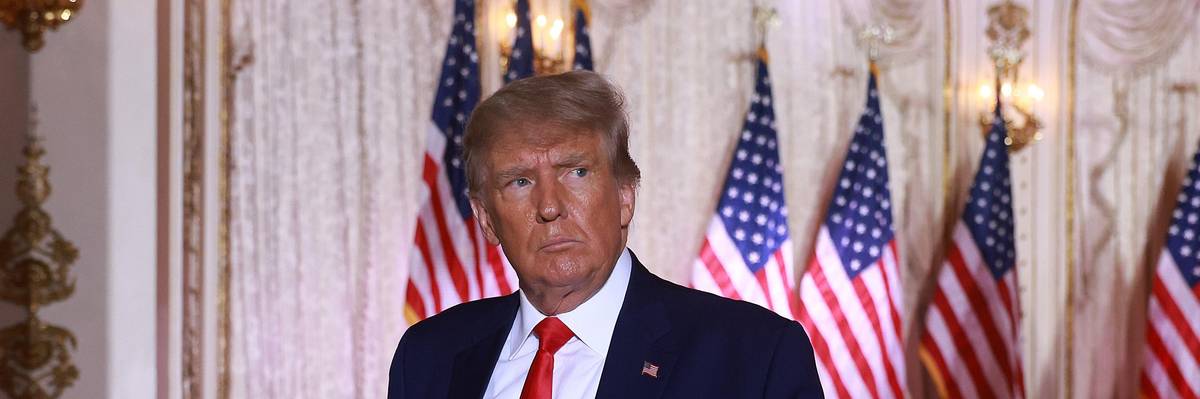
Former President Donald Trump leaves the stage after announcing his 2024 White House bid on November 15, 2022 in Palm Beach, Florida.
Trump did not start the myth of voter fraud—that has been a partisan staple for two decades now.
Congress has approved a budget that includes essential reforms to the Electoral Count Act. The updates, which have broad bipartisan support, eliminate ambiguities in the electoral count process that former President Trump and his allies seized on as they tried to overturn the 2020 election. Anyone looking to undermine future election results will have fewer options, and that is a victory for our democracy.
The passage comes on the heels of the January 6 committee’s release of its full report. The panel made news by making four criminal referrals for the former president. Senate Minority Leader Mitch McConnell, of all people, put it well in response: “The entire nation knows who is responsible for that day.”
In the wake of the committee’s extraordinary work, an important remaining question is not who caused the insurrection but rather what caused the insurrection.
First, let’s take a moment to appreciate the panel’s achievement. It made clear through riveting hearings and careful leaks that this was not just a rally that got out of control but a vigorously pursued plot to overthrow American democracy. The committee documented extraordinary crimes. We thought we knew it all, but it was gripping.
Such congressional investigations once regularly commanded headlines. The most famously effective was the Senate Watergate committee in 1973. That — together with the Church Committee, which exposed wrongdoing by the FBI and CIA — dominated the news but also led to reforms, from the federal campaign finance laws to the establishment of the joint congressional intelligence committee.
Reform sometimes follows scandal. And there has been no greater scandal than Donald Trump’s effort to block the peaceful transfer of power.
But putting the blame squarely and exclusively on Donald Trump is not enough to protect our democracy. Trump did not start the myth of voter fraud — that has been a partisan staple for two decades now. His attempt to subvert the 2020 election exposed vulnerabilities in our legal and electoral systems. Most of them remain, waiting for a second Donald Trump to come along and exploit them again. Those weaknesses are what caused the January 6 insurrection. The committee’s work could have even longer-lasting benefits if its revelations help spur reform.
It starts with fixing the Electoral Count Act. Trump’s loony reading of the creaky and outdated 19th-century law provided the foundation for his pressure campaign against Vice President Mike Pence. The newly passed reform makes clear that vice presidents have a merely ministerial role and makes it harder for members of Congress to object to duly cast electoral votes. These changes cement that the reading of the electoral votes is a ceremony, nothing more. They and other important fixes to the Electoral Count Act are included in the budget bill.
That bill also includes federal funding to upgrade election infrastructure and keep election officials safe, though not nearly enough. We should never forget that Trump’s pressure campaign did not stop with Pence. Trump personally called state election officials, urging them — without any cogent rationale — to overturn his defeat. Trump’s counsel, Rudy Giuliani, falsely accused local election workers of fraud. As a result of Trump’s campaign against these public servants, election workers in several states were harassed, threatened, and chased from their homes. Going forward, Congress must act decisively to protect election officials in their homes and in their offices, providing a reliable source of funding for much-needed security.
Other changes will require sustained pressure from the American people. National baseline standards for federal elections should be high on that list. For example, Trump’s team argued for the invalidation of Pennsylvania’s slate of electors, on the theory that state officials should not have complied with a state supreme court ruling requiring them to count mail votes received several days after the election but postmarked by Election Day. A spurious argument, but the silence of federal law on when and how mail ballots should be counted gave it unnecessary fuel. With 50 states conducting the election with almost 50 different procedures, close elections will lead to similar claims in the future.
The Constitution unquestionably gives Congress the power to fix this problem. With every state playing by the same rules, there would be less room for allegations of impropriety.
These are just the beginning of the necessary reforms. There should be guaranteed funding for states to conduct reliable post-election audits. Congress should fund state efforts to combat election-related disinformation and restore the protections of the Voting Rights Act to prevent racial discrimination in voting — Trump’s attempt to overturn the 2020 election primarily targeted voters of color. The list goes on.
The January 6 committee performed a vital service. It left us with indelible images. But now that its work is over, focusing solely on Trump himself would be a major mistake. Mending weak points in our election system should be a bipartisan priority. It starts with the Electoral Count Act, but I hope it will not end there.
Dear Common Dreams reader, It’s been nearly 30 years since I co-founded Common Dreams with my late wife, Lina Newhouser. We had the radical notion that journalism should serve the public good, not corporate profits. It was clear to us from the outset what it would take to build such a project. No paid advertisements. No corporate sponsors. No millionaire publisher telling us what to think or do. Many people said we wouldn't last a year, but we proved those doubters wrong. Together with a tremendous team of journalists and dedicated staff, we built an independent media outlet free from the constraints of profits and corporate control. Our mission has always been simple: To inform. To inspire. To ignite change for the common good. Building Common Dreams was not easy. Our survival was never guaranteed. When you take on the most powerful forces—Wall Street greed, fossil fuel industry destruction, Big Tech lobbyists, and uber-rich oligarchs who have spent billions upon billions rigging the economy and democracy in their favor—the only bulwark you have is supporters who believe in your work. But here’s the urgent message from me today. It's never been this bad out there. And it's never been this hard to keep us going. At the very moment Common Dreams is most needed, the threats we face are intensifying. We need your support now more than ever. We don't accept corporate advertising and never will. We don't have a paywall because we don't think people should be blocked from critical news based on their ability to pay. Everything we do is funded by the donations of readers like you. When everyone does the little they can afford, we are strong. But if that support retreats or dries up, so do we. Will you donate now to make sure Common Dreams not only survives but thrives? —Craig Brown, Co-founder |
Congress has approved a budget that includes essential reforms to the Electoral Count Act. The updates, which have broad bipartisan support, eliminate ambiguities in the electoral count process that former President Trump and his allies seized on as they tried to overturn the 2020 election. Anyone looking to undermine future election results will have fewer options, and that is a victory for our democracy.
The passage comes on the heels of the January 6 committee’s release of its full report. The panel made news by making four criminal referrals for the former president. Senate Minority Leader Mitch McConnell, of all people, put it well in response: “The entire nation knows who is responsible for that day.”
In the wake of the committee’s extraordinary work, an important remaining question is not who caused the insurrection but rather what caused the insurrection.
First, let’s take a moment to appreciate the panel’s achievement. It made clear through riveting hearings and careful leaks that this was not just a rally that got out of control but a vigorously pursued plot to overthrow American democracy. The committee documented extraordinary crimes. We thought we knew it all, but it was gripping.
Such congressional investigations once regularly commanded headlines. The most famously effective was the Senate Watergate committee in 1973. That — together with the Church Committee, which exposed wrongdoing by the FBI and CIA — dominated the news but also led to reforms, from the federal campaign finance laws to the establishment of the joint congressional intelligence committee.
Reform sometimes follows scandal. And there has been no greater scandal than Donald Trump’s effort to block the peaceful transfer of power.
But putting the blame squarely and exclusively on Donald Trump is not enough to protect our democracy. Trump did not start the myth of voter fraud — that has been a partisan staple for two decades now. His attempt to subvert the 2020 election exposed vulnerabilities in our legal and electoral systems. Most of them remain, waiting for a second Donald Trump to come along and exploit them again. Those weaknesses are what caused the January 6 insurrection. The committee’s work could have even longer-lasting benefits if its revelations help spur reform.
It starts with fixing the Electoral Count Act. Trump’s loony reading of the creaky and outdated 19th-century law provided the foundation for his pressure campaign against Vice President Mike Pence. The newly passed reform makes clear that vice presidents have a merely ministerial role and makes it harder for members of Congress to object to duly cast electoral votes. These changes cement that the reading of the electoral votes is a ceremony, nothing more. They and other important fixes to the Electoral Count Act are included in the budget bill.
That bill also includes federal funding to upgrade election infrastructure and keep election officials safe, though not nearly enough. We should never forget that Trump’s pressure campaign did not stop with Pence. Trump personally called state election officials, urging them — without any cogent rationale — to overturn his defeat. Trump’s counsel, Rudy Giuliani, falsely accused local election workers of fraud. As a result of Trump’s campaign against these public servants, election workers in several states were harassed, threatened, and chased from their homes. Going forward, Congress must act decisively to protect election officials in their homes and in their offices, providing a reliable source of funding for much-needed security.
Other changes will require sustained pressure from the American people. National baseline standards for federal elections should be high on that list. For example, Trump’s team argued for the invalidation of Pennsylvania’s slate of electors, on the theory that state officials should not have complied with a state supreme court ruling requiring them to count mail votes received several days after the election but postmarked by Election Day. A spurious argument, but the silence of federal law on when and how mail ballots should be counted gave it unnecessary fuel. With 50 states conducting the election with almost 50 different procedures, close elections will lead to similar claims in the future.
The Constitution unquestionably gives Congress the power to fix this problem. With every state playing by the same rules, there would be less room for allegations of impropriety.
These are just the beginning of the necessary reforms. There should be guaranteed funding for states to conduct reliable post-election audits. Congress should fund state efforts to combat election-related disinformation and restore the protections of the Voting Rights Act to prevent racial discrimination in voting — Trump’s attempt to overturn the 2020 election primarily targeted voters of color. The list goes on.
The January 6 committee performed a vital service. It left us with indelible images. But now that its work is over, focusing solely on Trump himself would be a major mistake. Mending weak points in our election system should be a bipartisan priority. It starts with the Electoral Count Act, but I hope it will not end there.
Congress has approved a budget that includes essential reforms to the Electoral Count Act. The updates, which have broad bipartisan support, eliminate ambiguities in the electoral count process that former President Trump and his allies seized on as they tried to overturn the 2020 election. Anyone looking to undermine future election results will have fewer options, and that is a victory for our democracy.
The passage comes on the heels of the January 6 committee’s release of its full report. The panel made news by making four criminal referrals for the former president. Senate Minority Leader Mitch McConnell, of all people, put it well in response: “The entire nation knows who is responsible for that day.”
In the wake of the committee’s extraordinary work, an important remaining question is not who caused the insurrection but rather what caused the insurrection.
First, let’s take a moment to appreciate the panel’s achievement. It made clear through riveting hearings and careful leaks that this was not just a rally that got out of control but a vigorously pursued plot to overthrow American democracy. The committee documented extraordinary crimes. We thought we knew it all, but it was gripping.
Such congressional investigations once regularly commanded headlines. The most famously effective was the Senate Watergate committee in 1973. That — together with the Church Committee, which exposed wrongdoing by the FBI and CIA — dominated the news but also led to reforms, from the federal campaign finance laws to the establishment of the joint congressional intelligence committee.
Reform sometimes follows scandal. And there has been no greater scandal than Donald Trump’s effort to block the peaceful transfer of power.
But putting the blame squarely and exclusively on Donald Trump is not enough to protect our democracy. Trump did not start the myth of voter fraud — that has been a partisan staple for two decades now. His attempt to subvert the 2020 election exposed vulnerabilities in our legal and electoral systems. Most of them remain, waiting for a second Donald Trump to come along and exploit them again. Those weaknesses are what caused the January 6 insurrection. The committee’s work could have even longer-lasting benefits if its revelations help spur reform.
It starts with fixing the Electoral Count Act. Trump’s loony reading of the creaky and outdated 19th-century law provided the foundation for his pressure campaign against Vice President Mike Pence. The newly passed reform makes clear that vice presidents have a merely ministerial role and makes it harder for members of Congress to object to duly cast electoral votes. These changes cement that the reading of the electoral votes is a ceremony, nothing more. They and other important fixes to the Electoral Count Act are included in the budget bill.
That bill also includes federal funding to upgrade election infrastructure and keep election officials safe, though not nearly enough. We should never forget that Trump’s pressure campaign did not stop with Pence. Trump personally called state election officials, urging them — without any cogent rationale — to overturn his defeat. Trump’s counsel, Rudy Giuliani, falsely accused local election workers of fraud. As a result of Trump’s campaign against these public servants, election workers in several states were harassed, threatened, and chased from their homes. Going forward, Congress must act decisively to protect election officials in their homes and in their offices, providing a reliable source of funding for much-needed security.
Other changes will require sustained pressure from the American people. National baseline standards for federal elections should be high on that list. For example, Trump’s team argued for the invalidation of Pennsylvania’s slate of electors, on the theory that state officials should not have complied with a state supreme court ruling requiring them to count mail votes received several days after the election but postmarked by Election Day. A spurious argument, but the silence of federal law on when and how mail ballots should be counted gave it unnecessary fuel. With 50 states conducting the election with almost 50 different procedures, close elections will lead to similar claims in the future.
The Constitution unquestionably gives Congress the power to fix this problem. With every state playing by the same rules, there would be less room for allegations of impropriety.
These are just the beginning of the necessary reforms. There should be guaranteed funding for states to conduct reliable post-election audits. Congress should fund state efforts to combat election-related disinformation and restore the protections of the Voting Rights Act to prevent racial discrimination in voting — Trump’s attempt to overturn the 2020 election primarily targeted voters of color. The list goes on.
The January 6 committee performed a vital service. It left us with indelible images. But now that its work is over, focusing solely on Trump himself would be a major mistake. Mending weak points in our election system should be a bipartisan priority. It starts with the Electoral Count Act, but I hope it will not end there.

