

SUBSCRIBE TO OUR FREE NEWSLETTER
Daily news & progressive opinion—funded by the people, not the corporations—delivered straight to your inbox.
5
#000000
#FFFFFF
To donate by check, phone, or other method, see our More Ways to Give page.
Daily news & progressive opinion—funded by the people, not the corporations—delivered straight to your inbox.

Responding to a pledge by the hosts of the COP28 climate meeting to make ‘space available for climate activists to assemble peacefully and make their voices heard’, Heba Morayef, Amnesty International’s Regional Director for the Middle East and North Africa, said:
“The fact that the hosts of this crucial climate meeting felt the need to highlight that some form of free assembly and expression will be allowed during COP28 serves only to highlight the normally restrictive human rights environment in the United Arab Emirates and the severe limits it places on the rights to freedom of expression and peaceful assembly.
“In the UAE, peaceful dissent through expression, association or peaceful assembly is severely restricted or criminalized, public assemblies require government approval, and dozens of critics of the government are in jail. Rather than make an exception related to this two-week meeting, the UAE should permanently do away with these restrictions, as well as the many other curbs it imposes on human rights, and make amends for previous abuses.
“It remains unclear exactly what the UAE authorities will allow, and whether a public demonstration by attendees, as has traditionally occurred in the middle weekend of COP meetings in the host city, can take place.
“At the previous COP meeting in Egypt last year the space given over to protest was wholly inadequate, and the meeting was preceded by a crackdown and arrests by security forces.
“Amnesty International believes the COP28 meeting should be completely inclusive and allow the view of all stakeholders to be freely heard. This must include allowing Emiratis and international participants to protest and criticize corporations and authorities, including the Emirati government. It remains to be seen whether the UAE’s promise is anything other than a hollow commitment.
“The agreement between the UAE and the UN establishing the legal framework for organizing and hosting of COP28 should be made public immediately. Draconian national laws will apply outside the UN venue, heightening concerns for the safety of anyone wishing to express views about climate change, the meeting or the UAE government.”
“COP28 will not bring about the ambitious action required to avert a climate catastrophe if the host state’s laws restrict freedom of expression and peaceful assembly, and throttle civil society.”
Background
COP28 is scheduled to be held in Dubai between 30 November and 12 December. The COP28 Presidency and the UN organizers, the United Nations Framework Convention on Climate Change (UNFCCC), issued a statement about the host agreement on 1 August.
The UAE has a dismal human rights record. It is more than a decade since the United Arab Emirates authorities sentenced 60 members of Emirati civil society to lengthy prison terms in a mass trial. None of the individuals have been released, even though 55 of them have completed their sentence.
Amnesty International is a worldwide movement of people who campaign for internationally recognized human rights for all. Our supporters are outraged by human rights abuses but inspired by hope for a better world - so we work to improve human rights through campaigning and international solidarity. We have more than 2.2 million members and subscribers in more than 150 countries and regions and we coordinate this support to act for justice on a wide range of issues.
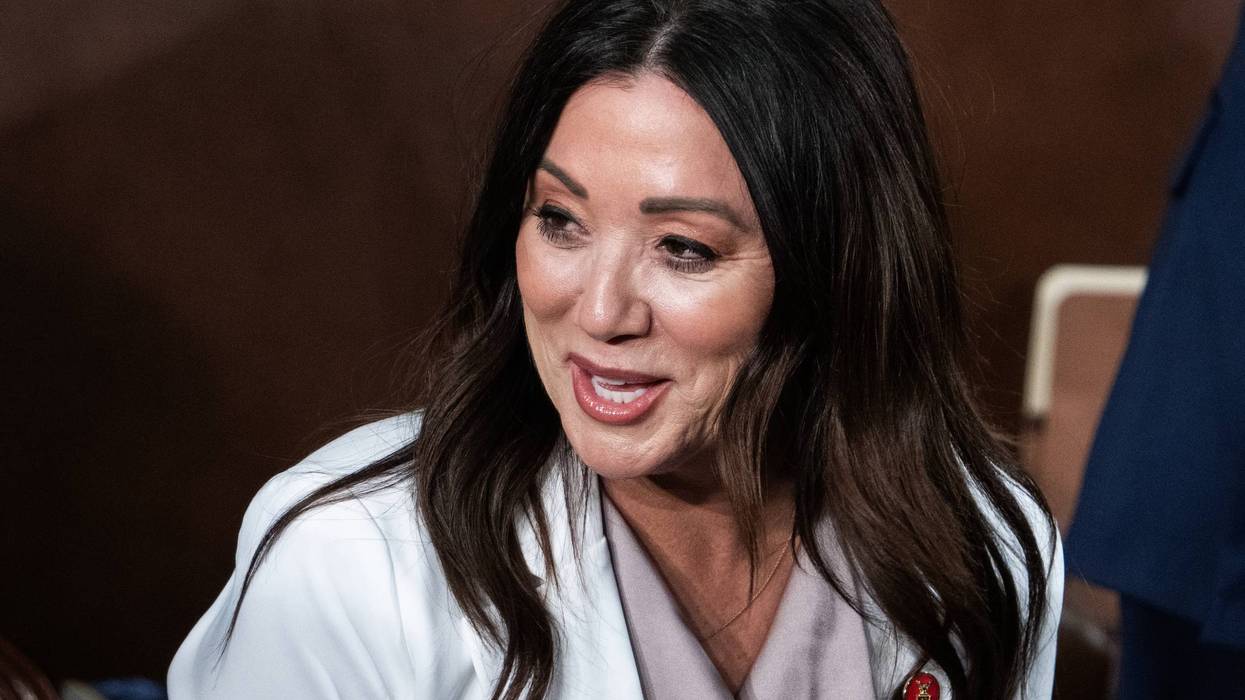
"Chavez-DeRemer failed to protect workers, jeopardized the Department of Labor's work to support the economy, drove down morale among agency staff, and abused federal government resources to serve her own whims."
President Donald Trump's "scandal-ridden" Department of Labor leader, Lori Chavez-DeRemer, resigned from her post on Monday, making her the third member of his Cabinet to leave since the beginning of the year, following the firings of former US Attorney General Pam Bondi and Homeland Security Secretary Kristi Noem.
Confirming reports of the latest departure, White House spokesperson Steven Cheung said that "Chavez-DeRemer will be leaving the administration to take a position in the private sector. She has done a phenomenal job in her role by protecting American workers, enacting fair labor practices, and helping Americans gain additional skills to improve their lives."
Her deputy, Keith Sonderling, "will take on the role of acting secretary of labor," Cheung added.
As Politico noted Monday, "Chavez-DeRemer has been under scrutiny since January, when DOL Inspector General Anthony D'Esposito opened an investigation into allegations that she was involved in an extramarital affair with a member of her security detail, that she drank on the job, and that top aides concocted official events to facilitate her personal travel plans."
That probe led to allegations—initially reported by The New York Times in February—that the secretary's husband, Shawn DeRemer, "has been barred from the department's headquarters after at least two female staff members told officials that he had sexually assaulted them." DeRemer denied the claims, and police have reportedly closed a related investigation.
As NOTUS reported Monday:
A source close to the president told NOTUS last week that the White House viewed Chavez-DeRemer as an effective spokesperson for the president's economic message and implementer of workforce policy. But the tales of the labor secretary's alleged scandals had become palace intrigue among people close to and inside of the White House.
Two Republicans who speak with President Donald Trump told NOTUS they expected him to pull the trigger on removing Chavez-DeRemer on Wednesday, when she was due for what was expected to be a bruising hearing in Congress. Some inside the White House anticipated Democrats at the hearing would focus on Chavez-DeRemer's alleged transgressions.
Responding to the resignation on social media, the Democratic Party highlighted Bondi and Noem's ousters, and declared, "This administration is imploding."
Before joining Trump's Cabinet, the outgoing secretary represented Oregon's 5th Congressional District in the US House of Representatives. Rep. Suzanne Bonamici, a Democrat who serves the state's 1st District, said that "Chavez-DeRemer failed to protect workers, jeopardized the Department of Labor's work to support the economy, drove down morale among agency staff, and abused federal government resources to serve her own whims. She should be held accountable for the damage that occurred on her watch."
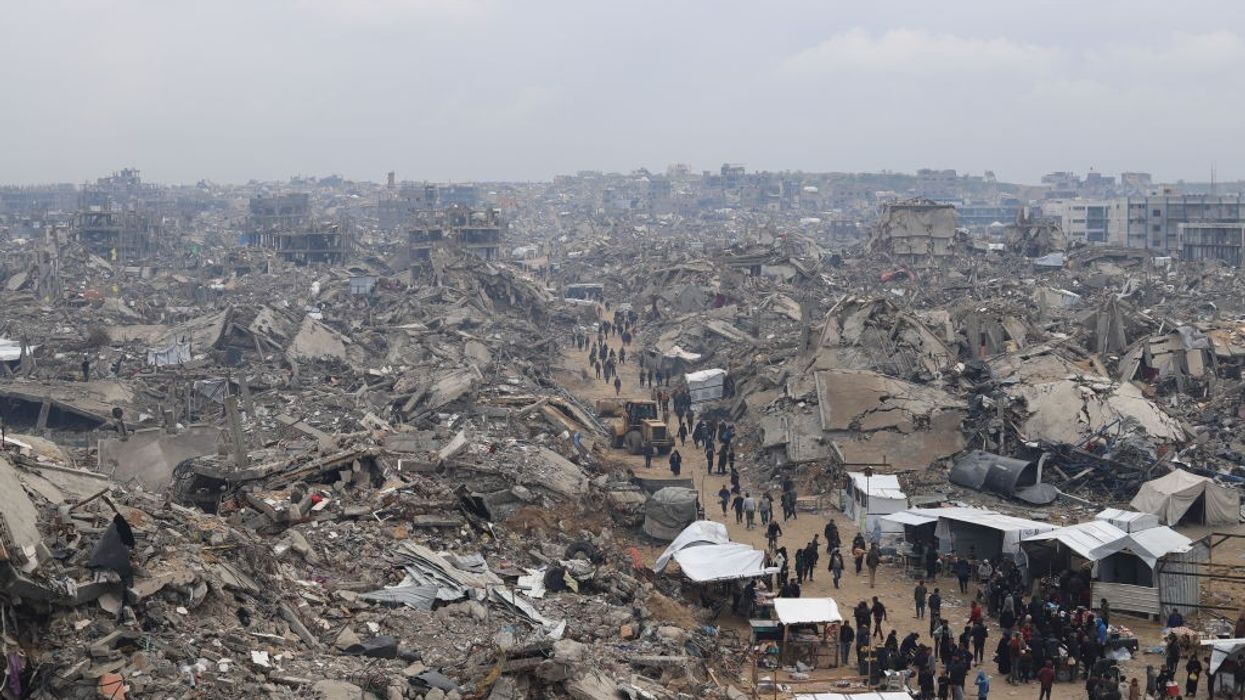
Only a tiny fraction of the already inadequate $17 billion pledged for Gaza reconstruction via US President Donald Trump's so-called "Board of Peace" has reportedly been received.
A joint assessment published Monday by the European Union, United Nations, and World Bank found that an estimated $71.4 billion is needed over the next decade for recovery and reconstruction in the Gaza Strip, where 30 months of Israeli genocide has set human development back by an entire lifetime.
The Gaza Strip Rapid Damage and Needs Assessment (RDNA) states that the $71.4 billion figure includes an estimated $26.3 billion required over the next 18 months "to restore essential service, rebuild critical infrastructure, and support economic recovery."
"Physical infrastructure damages are estimated at $35.2 billion, with economic and social losses amounting to $22.7 billion," the report continues. "The hardest-hit sectors include housing, health, education, commerce, and agriculture. Over 371,888 housing units have been destroyed or damaged, more than 50% of hospitals are nonfunctional, nearly all schools destroyed or damaged, and the economy has contracted by 84% in Gaza."
"Catastrophic impact on human development across Gaza... is estimated to have been set back by 77 years," the RDNA states. "Around 1.9 million people have been displaced, often multiple times, and more than 60% of the population has lost their homes."
"Women, children, persons with disabilities, and those with preexisting vulnerabilities bear the greatest burden," the publication adds.
The new analysis follows a November 2025 UN Conference on Trade and Development report that found Israel's assault on Gaza has caused “the most severe economic crisis ever recorded."
The Israeli war has left more than 250,000 Palestinians dead, maimed, or missing; the strip in ruins; and most of its approximately 2 million people forcibly displaced, starved, or sickened.
“Over two years of conflict has resulted in more than 71,000 Palestinian fatalities and over 171,000 injured, and many are missing under the rubble," the report notes.
With the vast majority of Gaza's buildings damaged or destroyed, separate UN analyses have estimated that it could take as many as 80 years to rebuild the obliterated coastal exclave.
So far, roughly $17 billion in pledged funding has been announced through the so-called "Board of Peace" launched by US President Donald Trump, whose ideas for rebuilding Gaza have included kicking Palestinians out and turning the strip into what he called the "Riviera of the Middle East."
Only a "tiny fraction" of that already inadequate $17 billion has been received, Reuters reported earlier this month.

"When wildlife is already under immense pressure from habitat destruction, climate change, pollution, and industrial development, Congress should be strengthening the Endangered Species Act," said one advocate.
Conservationists warned Monday that "Earth Day could become Extinction Day" if Republican leaders in the US House of Representatives get their way.
Elected Republicans have long set their sights on the historic Endangered Species Act of 1973—and wildfire defenders sounded the alarm in December, when the Republican-led House Natural Resources Committee advanced Chair Bruce Westerman's (R-Ark.) ESA Amendments Act.
"If this bill passes, protections for species like the Florida manatee, monarch butterfly, and California spotted owl would immediately decrease," Earthjustice legislative director for lands, wildlife, and oceans Addie Haughey warned at the time.
Since then, President Donald Trump has continued his war on endangered species with his budget request for the 2027 fiscal year, and his administration's so-called "God Squad" unanimously approved an "unprecedented" exemption allowing fossil fuel operations in the Gulf of Mexico to ignore ESA protections.
Now, House Speaker Mike Johnson (R-La.) plans to take up Westerman's bill this week—potentially on Wednesday, Earth Day.
"At a time when wildlife is already under immense pressure from habitat destruction, climate change, pollution, and industrial development, Congress should be strengthening the Endangered Species Act, not tearing it apart," said Jewel Tomasula, policy director of the Endangered Species Coalition, which has hundreds of member organizations.
"If Rep. Bruce Westerman and Speaker Johnson have their way, Earth Day will become Extinction Day," Tomasula warned. "The urgency is real. This bill is catastrophic for threatened and endangered species."
Susan Holmes, the coalition's executive director, emphasized that "the Endangered Species Act works because it is rooted in science and because it recognizes a simple truth: Once a species is gone, it is gone forever."
"We should not allow politicians to dismantle protections that have saved bald eagles, gray whales, peregrine falcons, and so many other species from disappearing forever," she declared.
Holmes also noted that "the American people overwhelmingly support the Endangered Species Act" and "understand that protecting wildlife is not a partisan issue. It is about responsibility, stewardship, and ensuring that future generations inherit a world still rich with wild species and wild places."
Polling commissioned by IFAW and conducted online last year by Beekeeper Group found that over three-quarters of Americans say they are concerned about the environment, the welfare of animals, and conserving nature, and specifically support the goals of the ESA. That aligns with figures from surveys conducted over the past three decades, according to a 2025 analysis.
The U.S. House is scheduled to vote on the so-called "ESA Amendments Act" (H.R. 1897) on Earth Day, April 22. H.R. 1897 would drastically weaken the Endangered Species Act and decrease protections for threatened and endangered species.TAKE ACTION >>> wildernesswatch.substack.com/p/the-extinc...
[image or embed]
— Wilderness Watch (@wildernesswatch.bsky.social) April 20, 2026 at 3:23 PM
"Protecting the nation's wildlife and habitats has never been an issue of right or left—it is a shared value and a commitment to future generations," said Cassie Ferri, legislative analyst at Defenders of Wildlife, in a Monday statement. "Instead of honoring Earth Day, Congress is turning it into 'Destroy Earth Day' by attempting to dismantle one of our nation's most foundational conservation laws. We all depend on healthy ecosystems to thrive, and the vast majority of Americans want to preserve wildlife through a strong Endangered Species Act—yet time and again Congress blatantly disregards their voices."
The advocacy group director of legislative affairs, Mary Beth Beetham, said that "shameless attempts by some members of Congress to dismantle the Endangered Species Act demonstrate a profound disregard for how valuable this law is to wildlife conservation."
"The Endangered Species Act isn't just rhetoric—it's proven effective and has safeguarded imperiled species for more than 50 years," Beetham stressed. "This bill could be the driving force behind future extinctions and would set a dangerous precedent for wildlife legislation moving forward."
The U.S. House is expected to vote on H.R. 1897 next week—the most dangerous bill facing endangered species right now! It prioritizes profits over science-based safeguards and blocks judicial review. ACT NOW and tell your lawmakers #NOHR1897!ACT NOW at TeamWolf.Org!
[image or embed]
— Team Wolf (@team-wolf.bsky.social) April 17, 2026 at 4:01 PM
Defenders of Wildlife is among nearly 300 groups that have signed on to a Monday letter—shared with Common Dreams by another signatory, Humane World for Animals—urging US House members to "vote NO on HR 1897, which is a damaging bill that would dramatically weaken the ESA and make it harder, if not impossible, to achieve the progress we must make to address the alarming rate of extinction our planet now faces."
Westerman's bill, the letter says, "would significantly rewrite key portions of the ESA to prioritize politics over science and inappropriately shift responsibility for key implementation decisions from the federal government to the states, many of which do not have sufficient resources or legal mechanisms in place to take the lead in conserving listed species."
"It would place significant new administrative burdens on already overburdened agencies," the letter continues. "It would turn the current process for listing and recovering threatened and endangered species into a far lengthier process that precludes judicial review of key decisions."
While Republicans can pass legislation along party lines in the House, they usually need at least some Democratic support in the Senate—due to chamber rules, which can be changed—to send a bill to Trump's desk.