July, 06 2015, 11:30am EDT
For Immediate Release
Contact:
Sam Husseini, (202) 347-0020; or David Zupan, (541) 484-9167
Greek Referendum: Triumph of Democracy over Bankers?
Greeks overwhelmingly rejected conditions for bailout by the European "troika" (European Union, European Central Bank and International Monetary Fund) in a referendum on Sunday. This is widely seen as strengthening the hand of the Greek government in negotiating a more favorable package.
WASHINGTON
Greeks overwhelmingly rejected conditions for bailout by the European "troika" (European Union, European Central Bank and International Monetary Fund) in a referendum on Sunday. This is widely seen as strengthening the hand of the Greek government in negotiating a more favorable package.
In a move that surprised many, Yanis Varoufakis just resigned as Greek finance minister.
COSTAS PANAYOTAKIS, [in NYC] (917) 971-0139, panayotakis@gmail.com
Recently back from Greece, Panayotakis is professor of sociology at the New York City College of Technology of the City University of New York and author of Remaking Scarcity: From Capitalist Inefficiency to Economic Democracy. He has been published in numerous journals including Monthly Review and Capitalism Nature Socialism. He appeared on the program "Democracy Now!" this morning.
Panayotakis said today: "The result of the Greek referendum has been a resounding rejection of the devastating austerity policies that European institutions and the IMF have been imposing on Greek people for the last five years. The fact that more than 60 percent of Greeks voted 'no' to the European proposals for further austerity is a small miracle given the intense psychological pressure that Europe's strangulation of the Greek economy has placed on Greek citizens. This result is also a victory for democracy. The European institutions' choice to take actions that precipitated capital controls and a bank holiday in Greece was an attempt to repeat the scenario of 2011, when aGreek referendum on a previous bailout agreement was aborted as a result of pressure from Chancellor Merkel and then French president Sarkozy. At the time, the democratically elected Prime Minister George Papandreou who called the referendum was toppled and replaced by an unelected banker who enjoyed the trust of European political and business elites.
"This time around not only did Greek citizens get the chance to have a say on their future, but they were also brave enough to resist the campaign of ideological terrorism unleashed on them by the media controlled by Greek oligarchs, as well as by business owners threatening them that they would lose their jobs if 'no' prevailed, and by European officials threatening that Greece would be ejected from the eurozone if 'yes' did not win. The referendum result may not end austerity in Greece, but it does create a better environment for Greek anti-austerity forces to keep fighting. As for European governments and institutions, they are faced with a choice of either reaching a compromise with the Greek government that takes into account the referendum result or continuing strangulating the Greek economy and increasing the risks of a eurozone rupture."
JEAN ROSS, via Charles Idelson, (510) 273-2246, cidelson@calnurses.org
Ross is a registered nurse and co-president of National Nurses United. She said today: "The historic referendum in Greece could be a watershed moment in history -- an entire nation standing up to defy the bankers, the politicians who serve them, and a disastrous demand of more austerity that has already caused so much pain and suffering. Austerity, as nurses see first hand, compromises the health of people who endure loss of income, housing, and nutritional sustenance. The last thing they need is more of the same. Greece, you have inspired us all." Idelson is communications director for the group.
A nationwide consortium, the Institute for Public Accuracy (IPA) represents an unprecedented effort to bring other voices to the mass-media table often dominated by a few major think tanks. IPA works to broaden public discourse in mainstream media, while building communication with alternative media outlets and grassroots activists.
LATEST NEWS
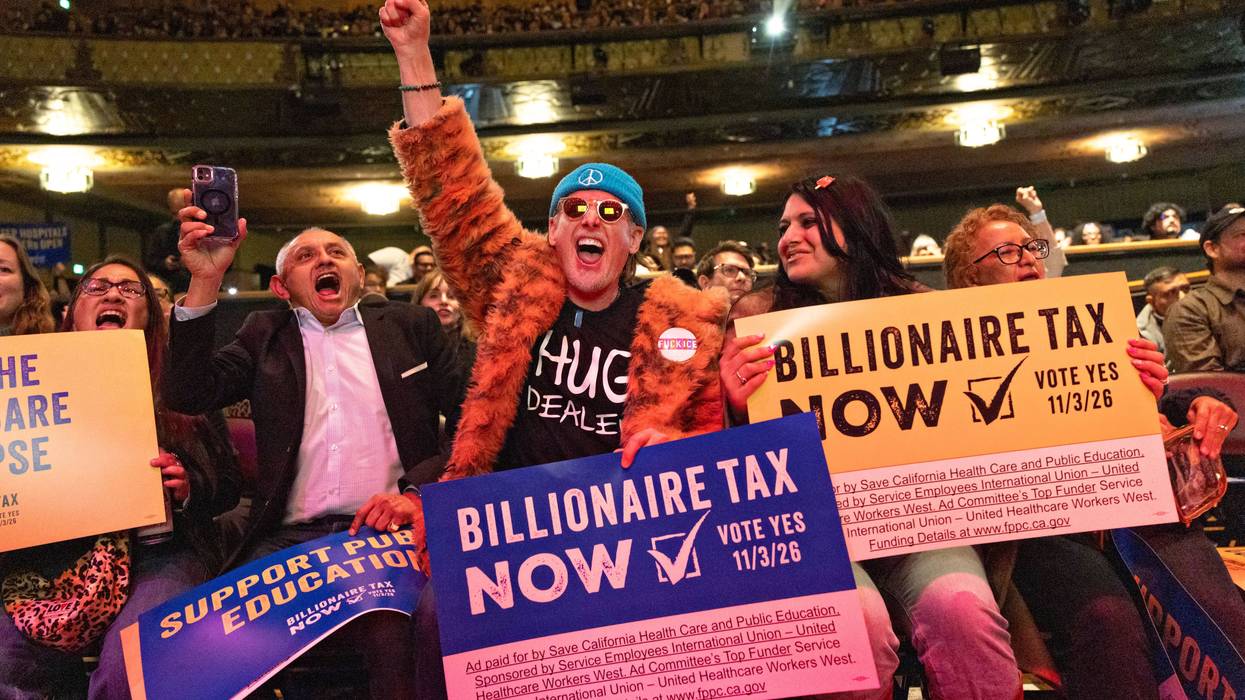
'Unlikely Bedfellows': Left-Leaning Groups Join Newsom-Backed Effort to Sink California Billionaire Tax
“This is not going to be, ‘Billionaires killed this wealth tax’ if it appears on the November ballot,” said Newsom's chief of staff. “It’s going to be Planned Parenthood, doctors, teachers, and labor killed it.”
Jun 17, 2026
It comes as no shock that Silicon Valley oligarchs and other plutocrats are trying to keep a proposed billionaire tax backed by California governor and presumptive Democratic presidential aspirant Gavin Newsom off November's ballot. But the participation of progressive groups as "unlikely bedfellows" in the effort to kill the wealth tax has surprised many observers.
Introduced by the Service Employees International Union-United Healthcare Workers West (SEIU-UHW), the California Billionaire Tax would impose a one-time 5% levy on people worth $1 billion or more, to be paid in annual installments of 1% over five years. Proponents say the tax would raise roughly $100 billion in revenue.
The proposal requires the state to spend 90% of revenue from the tax on healthcare and the rest on food assistance and public education. Opponents counter it could drive wealthy residents and investment from California.
Supporters of the billionaire tax have submitted more than 1.5 million signatures, far more than the roughly 875,000 valid signatures required to qualify for November's ballot. The signatures are still being verified, and the office of California Secretary of State Shirley Weber has until June 25, 2026 to determine whether the initiative qualifies.
The measure is backed by numerous progressive groups including the Teamsters union, California Democratic Socialists of America (DSA), and Our Revolution, as well as individual progressives like Sen. Bernie Sanders (I-Vt.), Rep. Ro Khanna (D-Calif.), and Democratic congressional candidate Connie Chan, who is running to replace retiring longtime San Francisco congresswoman Nancy Pelosi.
However, opponents are trying to stop the proposal from qualifying for the ballot, while preparing for a fight in the likely event that it does.
Newsom, the California Democratic Party, and a growing list of groups—including the California Teachers Association (CTA), Planned Parenthood Affiliates of California (PPAC), and the State Building and Construction Trades Council of California—are publicly opposing the tax and are urging SEIU-UHW to pull the proposal before June 25.
Republicans, the California Chamber of Commerce, and other capitalist interests oppose the billionaire tax, as do both candidates for California governor, Democrat Xavier Becerra and Republican Steve Hilton, and Chan's opponent in the San Francisco congressional race, state Sen. Scott Wiener (D-11).
Newsom said that the proposed tax "makes no sense" and would be "really damaging to the state."
CTA argues that the tax is a one-time revenue source, while California schools and healthcare programs need permanent, recurring funding. To that end, the union is backing a separate ballot measure—the Children's Education and Health Care Protection Act—which would permanently extend Proposition 55, California's existing high-income-earner tax, set to expire in 2030.
Jodi Hicks, PPAC's president, recently said that the California Billionaire Tax's "uncertain impacts on the state budget and lack of specificity on healthcare allocations will do more harm than good in the long term."
PPAC and aligned groups including California Medical Association and California Primary Care Association also support extending Prop 55.
Meanwhile, tech billionaires and Silicon Valley executives—including Google co-founder Sergey Brin, former Google CEO Eric Schmidt, PayPal and Palantir co-founder Peter Thiel, and Ripple co-founder Chris Larsen—have raised tens of millions of dollars for Building a Better California, a political action committee dedicated to defeating the proposed tax at the ballot box.
Building a Better California is also backing separate initiatives designed to weaken or nullify the billionaire tax, including a ban on retroactive wealth taxation, restrictions on how any new tax revenue can be allocated, and the imposition of new auditing requirements.
Newsom and his allies have a useful weapon to deflect claims that he's helping billionaires who are trying to defeat the proposed tax.
“This is not going to be, ‘Billionaires killed this wealth tax’ if it appears on the November ballot,” Nathan Barankin, Newsom’s chief of staff, told The New York Times Wednesday. “It’s going to be Planned Parenthood, doctors, teachers, and labor killed it.”
SEIU-UHW accused opponents of the proposed tax of “carrying water for a few of the world’s most controversial billionaires."
“Their complicity with billionaires at the expense of patient interests is no surprise,” SEIU-UHW chief of staff Suzanne Jimenez told the Times.
Keep ReadingShow Less
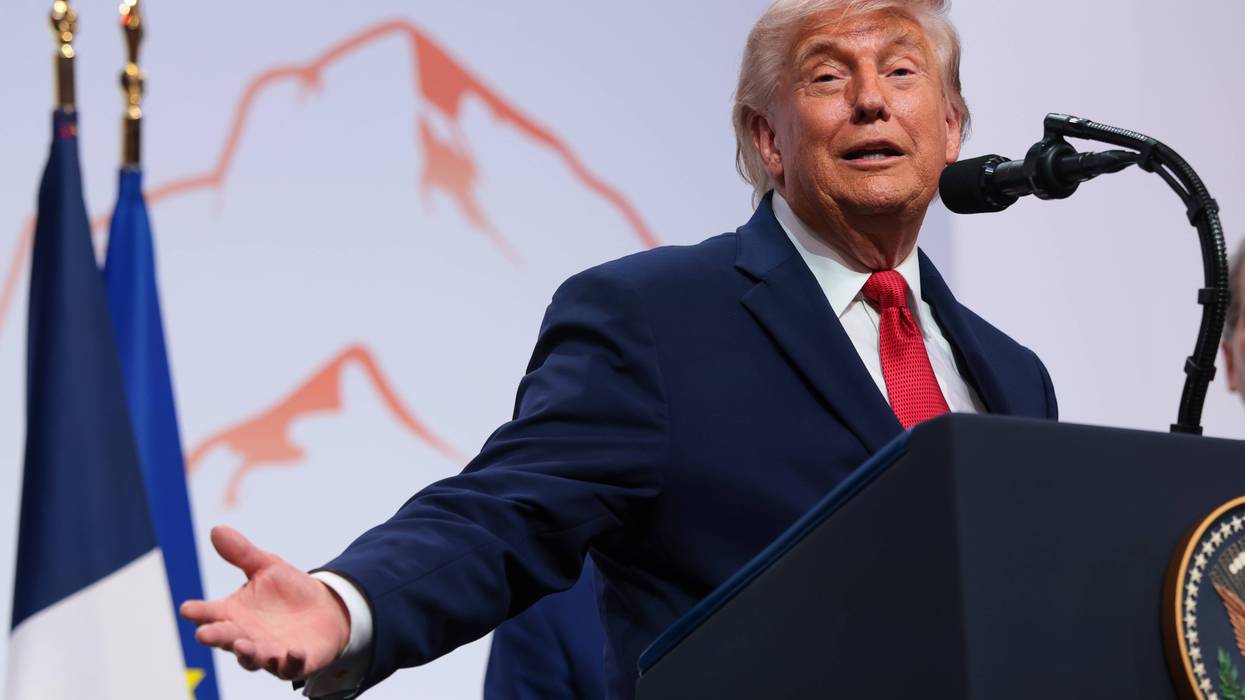
As Full MOU Text Revealed, Trump Justifies Ending War That Critics Said He Never Should Have Started
"Trump appears to return to the non-zero enrichment position," said one foreign policy analyst. "He should never have abandoned it."
Jun 17, 2026
Foreign policy analysts and peace advocates expressed relief Wednesday that the end of the unprovoked US-Israeli war on Iran could be in sight, as the US government released the text of the memorandum of understanding reached this week by the Trump administration and Iranian negotiators.
But observers noted that the text of the agreement and President Donald Trump's remarks at the Group of Seven meeting in France appeared to acknowledge how needless the war was—after 3,400 Iranians and thousands more people across the Middle East were killed by US and Israeli troops.
The memorandum of understanding (MOU) declares the "immediate and permanent termination of military operations on all fronts, including in Lebanon," where Israeli forces have killed more than 3,600 people since early March, allows a 60-day window to negotiate the final terms of the deal, and holds that Iran will "maintain the current status quo of its nuclear program," which Iranian officials have consistently said is not for military purposes.
"The United States of America will not impose any new sanctions and will not deploy additional forces in the region," says the MOU.
At the National Iranian American Council, policy director Ryan Costello rejected the commentary of some Trump opponents in Washington, DC who portrayed the deal as a surrender by the US, with some Democratic lawmakers scoffing at the deal's inclusion of a $300 billion reconstruction fund for Iran—where US and Israeli attacks have destroyed or damaged "100,000 housing units along with schools, hospitals, bridges, and other vital infrastructure."
"The core terms of the agreement are either mutually beneficial or have significant upside, even the ones being decried, denounced, and misportrayed," wrote Costello. "Time will tell if this memorandum can survive the caustic politics in Washington and Tehran that have accompanied any lessening of tensions between the US and Iran, and ultimately deliver relief that is sorely needed... Yet, what has been started is not a threat to American security, it is a threat to the Washington mindset that any US-Iran outcome is ultimately zero-sum and that Iran’s gain is an American loss. The US will benefit if our nation moves off the path of war with Iran. That will be accomplished by the memorandum and the steps that it entails."
In remarks to the press at the G7 summit, Trump addressed questions about how the MOU will stop Iran from developing a nuclear weapon—the key objective of the war, White House officials have repeatedly said. He issued a threat to "bomb them" if Iran does not refrain from developing a nuclear weapon, before indicating he had arrived at a viewpoint long pushed by opponents of the war and foreign policy experts.
"It is a little hard though, when you say that somebody wants it, other people have it, other adjoining states have it, and you're not letting them have it for purposes of electricity and things like that," the president said, referring to Iran's nuclear program.
Trump added that neighboring countries also have ballistic missiles, which Iran has long maintained it should be permitted to have as part of its national security arsenal.
"Today in things it would’ve been great to figure out before you started a war over them," said Matt Duss, executive vice president at the Center for International Policy.
Danny Citrinowicz, a Middle East policy expert, said: "It may have taken a long, costly, and complicated conflict, but the United States appears to have arrived at a conclusion that should have been evident from the start: Iran's missile program is not negotiable because it sits at the very core of the regime's security doctrine."
"Reasonable people can ask whether such a prolonged conflict was necessary to reach this conclusion," he said. "Yet it is better to recognize strategic realities late than never at all. Before events spiraled completely out of control, the US administration stepped back from maximalist objectives and returned to a more measured and realistic approach."
The president suggested that the planned official signing of the deal, scheduled for Friday, could still potentially fall through, and threatened to resume bombing if Iranian officials did not "behave."
He added that he will take credit for the agreement if it holds, and will blame Vice President JD Vance "if it doesn't."
Below is the text of the MOU:
The United States of America and the Islamic Republic of Iran have jointly agreed in good faith on [ __ date] on the following:
1 — The United States of America and the Islamic Republic of Iran and their allies in the current war are signing this MOU to declare the immediate and permanent termination of military operations on all fronts, including in Lebanon, and undertake from now on not to initiate any war or any military operation against each other, and to refrain from the threat or use of force against each other, and ensuring the territorial integrity and sovereignty of Lebanon. The final deal will confirm the permanent termination of the war on all fronts, including in Lebanon and other provisions of this paragraph.
2 — The United States of America and the Islamic Republic of Iran undertake to respect each other’s sovereignty and territorial integrity and to refrain from interfering in each other’s internal affairs.
3 — The United States of America and the Islamic Republic of Iran commit to negotiating and achieving the final deal in maximum 60 days, extendable with mutual consent.
4 — Immediately upon the signing of this MOU, the United States of America will begin the removal of its naval blockade and any disturbances or impediments against the Islamic Republic of Iran, and will fully end the naval blockade within 30 days. During this period, the traffic of vessels will be in proportion to the numbers of pre-war traffic being restored by the Islamic Republic of Iran. The United States of America further undertakes to remove its forces from the proximity of the Islamic Republic of Iran within 30 days after the final deal.
5 — Upon the signing of this MOU, the Islamic Republic of Iran will make arrangements using its best efforts for the safe passage of commercial vessels with no charge, for 60 days only, from the Persian Gulf to the Sea of Oman and vice versa. The traffic of commercial vessels will immediately start, and considering the need for removing the technical and military obstacles, and demining by the Islamic Republic of Iran will be instated within 30 days. The Islamic Republic of Iran will conduct dialog with the Sultanate of Oman to define the future administration and maritime services in the Strait of Hormuz in discussion with other Persian Gulf littoral states in line with the applicable international law and the sovereign rights of coastal states of the Strait of Hormuz.
6 — The United States of America undertakes with regional partners to develop a definitive, mutually agreed plan with at least USD 300 billion for the reconstruction and economic development of the Islamic Republic of Iran. The mechanism for the implementation of this plan will be finalized as part of a final deal within 60 days. All required licenses, waivers and permissions needed for the relevant financial transactions will be granted by the United States of America.
7 — The United States of America undertakes to terminate all types of sanctions against the Islamic Republic of Iran, including the United Nations Security Council resolutions, IAEA Board of Governors resolutions, and all unilateral US sanctions, primary and secondary, in an agreed upon schedule as part of the final deal. The Islamic Republic of Iran and the United States of America acknowledge the critical importance of the sanctions termination issue above mentioned, and expressed their intentions to immediately address these issues in the negotiations in order to achieve mutual agreement on them.
8 — The Islamic Republic of Iran reaffirms that it shall not procure or develop nuclear weapons. The United States of America and the Islamic Republic of Iran have agreed to resolve the disposition of stockpiled enriched material pursuant to a mechanism that will be mutually agreed upon in accordance with the schedule mentioned in paragraph seven, with the minimum methodology to be down blended on site under the supervision of the IAEA. The two parties also agreed to discuss the issue of enrichment and other mutually agreed matters related to the Islamic Republic of Iran’s nuclear needs, based on a satisfactory framework being agreed upon in the final deal. The final deal will confirm the provisions of this paragraph. The United States of America and the Islamic Republic of Iran acknowledge the critical importance of the nuclear issues above mentioned. They express their intention to immediately address these issues in the negotiations in order to achieve mutual agreement on them.
9 — Pending the final deal, the United States of America and the Islamic Republic of Iran agree to maintain the status quo. The Islamic Republic of Iran will maintain the current status quo of its nuclear program, and the United States of America will not impose any new sanctions and will not deploy additional forces in the region.
10 — The United States of America undertakes that immediately upon the signing of this MOU and until the termination of sanctions, US Department of Treasury will issue waivers for the export of Iranian crude oil, petroleum products and derivatives, and all associated services, including banking transactions, insurances, transportation, etc.
11 — The United States of America undertakes to make fully available for use the frozen or restricted funds and assets of the Islamic Republic of Iran upon the implementation of this MOU. The United States of America and the Islamic Republic of Iran will mutually agree on the procedures related to the release of these funds during negotiations. Such funds, whether retained in the original account or transferred, shall be made fully usable for payment to any ultimate beneficiary designated by the Central Bank of the Islamic Republic of Iran. The United States of America undertakes to issue all necessary licenses and authorizations accordingly.
12 — The United States of America and the Islamic Republic of Iran agree that an executive mechanism will be established to monitor the successful implementation of this MOU and the future compliance of the final deal.
13 — After signing this MOU, and subject to the beginning of the implementation of paragraphs 1, 4, 5, 10 and 11 of this MOU, and the continuing implementation of these measures, the United States of America and the Islamic Republic of Iran will start negotiations regarding the final deal exclusively on the other paragraphs.
14 — The final deal will be endorsed by a binding UNSC resolution.
Keep ReadingShow Less
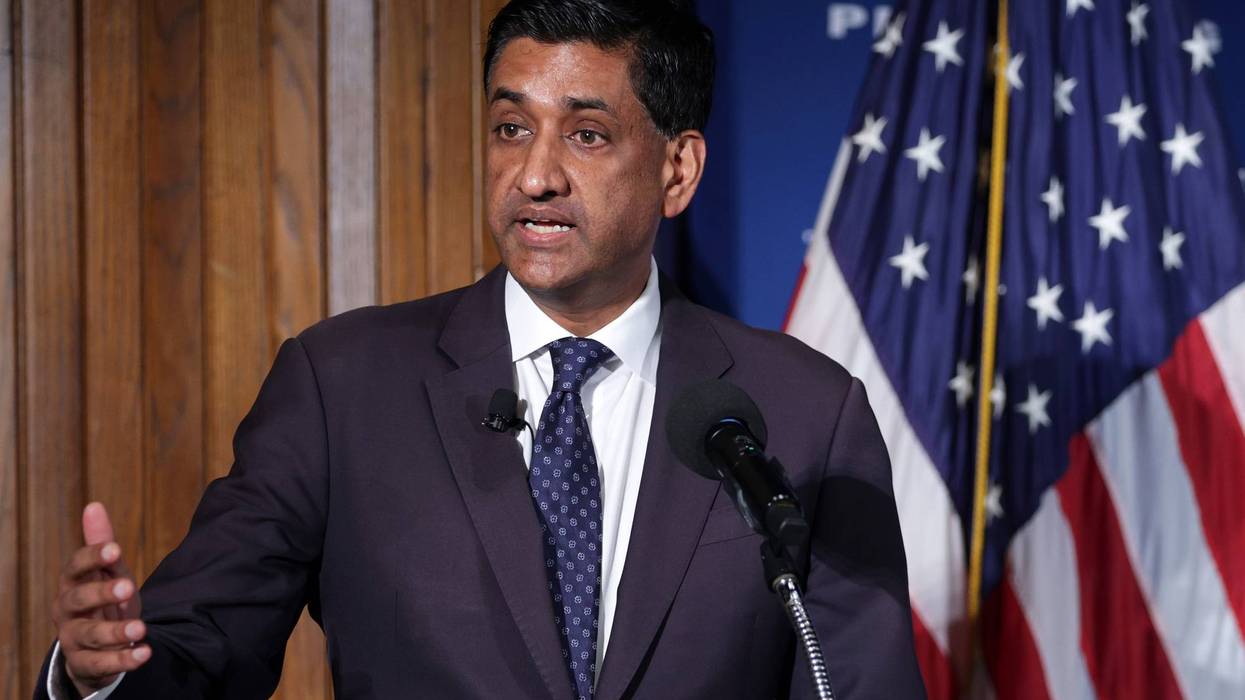
Khanna Becomes First in Congress to Sign 'Peace Pledge' Promising to Reject AIPAC Funds
The co-founder of AIPAC Tracker said the pledge is meant to give lawmakers who once backed Israel "a bridge to get on the right side of history."
Jun 17, 2026
Rep. Ro Khanna has become the first member of the US Congress to sign a "peace pledge" promising to swear off funds from the Israel lobby and block US support for countries that violate human rights.
The pledge was created by the political action committee Citizens Against AIPAC Corruption, which runs the widely shared "AIPAC Tracker" social media campaign that names and shames politicians who receive support from the American Israel Public Affairs Committee and other pro-Israel groups that have spent tens of millions in recent election cycles to influence members of Congress.
Lawmakers who sign the pledge agree not to take money from AIPAC or pro-Israel lobbying groups and promise to make campaign finance reform a key priority.
Acknowledging the consensus among human rights organizations that Israel is committing a genocide in Gaza, signatories also commit to taking actions in Congress to oppose US military and diplomatic support for Israel or any other nation whose military commits gross human rights violations.
They also agree to oppose efforts by the US government to sanction members of the International Criminal Court who seek the arrest of accused war criminals, including Israeli Prime Minister Benjamin Netanyahu.
Signatories also agree to support First Amendment protections for speech critical of Israel as well as efforts to use financial pressure against the country, like the Boycott, Divestment, and Sanctions (BDS) movement, which members of Congress have sought to criminalize.
In a video in which he signed the pledge on Wednesday, Khanna (D-Calif.) described its commitments as "pretty common sense."
"It means that we shouldn't be sending our tax [money] for foreign wars overseas, we should be spending it here at home," he said. "And it says we shouldn't be taking money from AIPAC or all of its affiliate PACs or bundled money from those organizations, and that we have to recognize the genocide that took place in Gaza."
He said, "I'm going to be signing this pledge, and I hope others will follow."
The push for lawmakers to sign the pledge comes as support for Israel has plummeted to historic lows, especially among Democratic voters in the wake of the Gaza genocide, its accelerating ethnic cleansing campaigns in the illegally occupied West Bank and southern Lebanon, and its role in pressuring the Trump administration to launch and continue a devastating war against Iran.
Voters increasingly view AIPAC as having undue influence over American lawmakers, and many Democrats—including longtime supporters of Israel—have seen the writing on the wall and become vocal critics of the lobby.
Khanna is one of them, having previously accepted money from the liberal Zionist group J Street and voted to fund Israel's Iron Dome in 2021 and in favor of a resolution conflating anti-Zionism with antisemitism in the wake of October 7, 2023.
Cory Archibald, the co-founder of Track AIPAC, said the goal of the pledge is to give these politicians an opportunity to transform themselves on the issue while also forcing them to put their votes where their mouths are.
"While we have created a very successful pressure campaign to highlight and expose the extent of the influence of AIPAC and their allies on our lawmakers," she said Wednesday on the Breaking Points podcast, "we also have a responsibility as an organization to give people a bridge to get on the right side of history and to reflect that their policy positions have changed and to chart a new course."
Keep ReadingShow Less
Most Popular