SUBSCRIBE TO OUR FREE NEWSLETTER
Daily news & progressive opinion—funded by the people, not the corporations—delivered straight to your inbox.
5
#000000
#FFFFFF
To donate by check, phone, or other method, see our More Ways to Give page.


Daily news & progressive opinion—funded by the people, not the corporations—delivered straight to your inbox.

The poorest people who need the most help to adapt to a changing
climate are largely being bypassed by the small amount of climate funds
now being disbursed, says a new Oxfam report published today at the UN
climate change talks in Tianjin, China.
The report shows that negotiators must create a Global Climate Fund
that vulnerable populations in poor countries can access so that they
are not left behind in proposed climate solutions.
Oxfam's report, "Righting Two Wrongs: Making a New Global Climate Fund Work for Poor People," brings together evidence, which shows that in recent years:
"Vulnerable populations in poor countries have been completely shut out the process
so it's no surprise that they are being overlooked when the checks are
written," said Kelly Dent, Senior Climate Change Advisor for Oxfam.
"Negotiators need to learn from past mistakes and set up a new Global
Climate Fund that is fairly governed, accountable and accessible to the
groups, including women, who are on the front lines of climate change."
Oxfam is calling for a new Global Climate Fund to be set up at the UN climate summit in Cancun
in December to govern public funds pledged by developed nations under
the Copenhagen Accord. This fund must help address the failure to get
adequate climate investments to poor people who bear the brunt of
climate change's impacts. Progress on this fund is a key item for
discussion in Tianjin and one of the essential ingredients for progress
towards a binding climate deal.
"This is a race against time
but we are running on a treadmill," said Dent. "Setting up a Global
Climate Fund that gives a voice and support to those facing the harshest
climate impacts is one of the things that can get the talks moving this
year."
"For many people around the world, this has been a year
from sheer hell. We've seen floods, droughts, fires, storms and other
extreme weather events that will only get worse as climate change
intensifies. Some of the poorest people in the world have seen their
crops wiped out and livelihoods destroyed - but we still haven't caught
on to their needs," said Dent. "Will we sow the seeds of resilience now
or pay the price of failure later?"
"Righting Two Wrongs" calls
for a new Global Climate Fund and broader finance system that is seen as
legitimate by both developed and developing countries and that is
representative, equitable, accountable, accessible, transparent and
efficient. Poor governments must be able to directly access the fund and
at least half of the money should be spent helping poor and vulnerable
people adapt to a changing climate. In addition, a number of
accountability measures are recommended, including ensuring that poor
countries and women have an equal say in how the fund is managed and
spent and that the fund is transparent as to where the money is going.
"The
devil is in the detail but this is no small decision," said Dent. "We
need to see some clear options on the climate fund coming out of Tianjin
to get to a decision in Cancun. The funds needed are on the same order
of magnitude as current annual aid figures of around $120 billion a
year. Getting it right is literally a question of life and death."
Download the report: Righting two wrongs: Making a new Global Climate Fund work for poor people (pdf, 434kb)
Sow the Seed: how you can make a difference in three simple steps
Oxfam International is a global movement of people who are fighting inequality to end poverty and injustice. We are working across regions in about 70 countries, with thousands of partners, and allies, supporting communities to build better lives for themselves, grow resilience and protect lives and livelihoods also in times of crisis.
One expert called the policy “an open admission of intent to commit ethnic cleansing.”
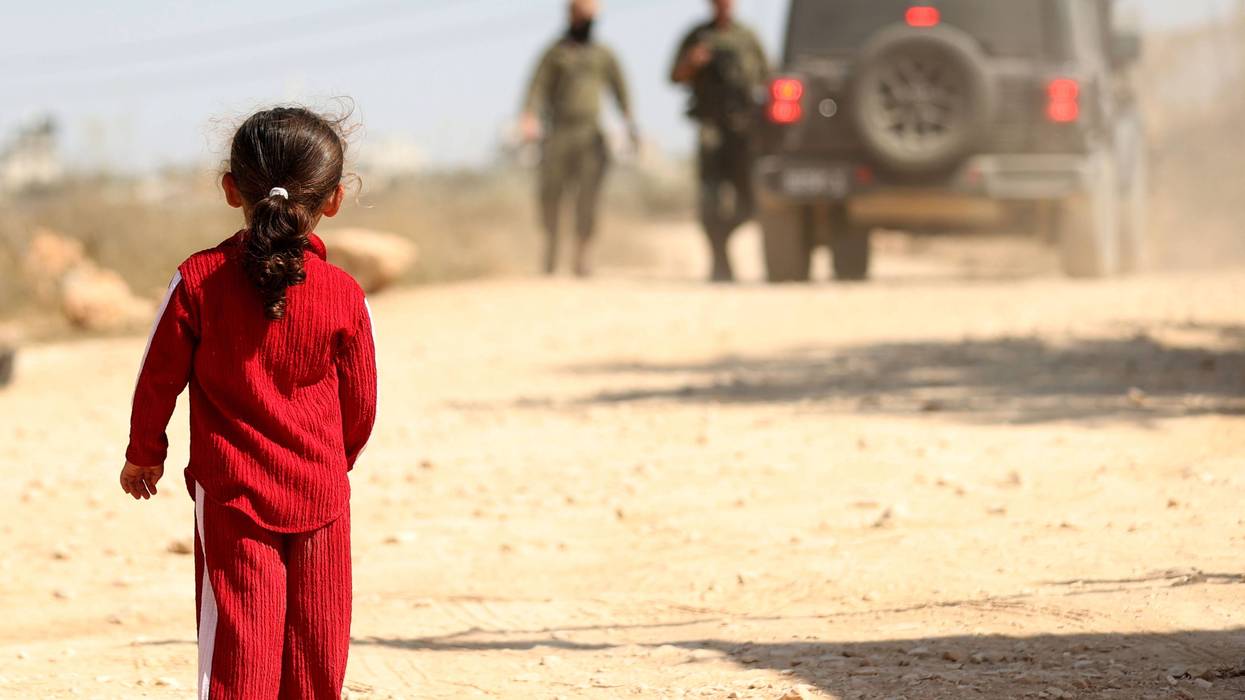
Israel is planning to use Gaza as a "model" for its expanding assault on Lebanon, its defense minister said on Sunday as he pledged to begin the demolition of homes in border villages.
In a statement Sunday, Defense Minister Israel Katz said he and Prime Minister Benjamin Netanyahu had ordered the Israel Defense Forces to "immediately destroy all the bridges over the Litani River that are used for terrorist activity, in order to prevent the passage of Hezbollah terrorists and weapons southward."
He also said he'd ordered the military to "accelerate the destruction of Lebanese homes in the border villages in order to thwart threats to the Israeli settlements—in accordance with the Beit Hanoun and Rafah model in Gaza."
Dylan Williams, the vice president for government affairs at the Center for International Policy, described the invocation of this "Gaza model" as "an open admission of intent to commit ethnic cleansing" in Lebanon.
The two cities Katz referred to were largely wiped off the map during the Gaza genocide.
Beit Hanoun, a city on the northeastern edge of the Gaza Strip, which once had a population of more than 50,000 people, had nearly all of its structures totally "flattened" by Israel's bombing and was totally depopulated, according to the Israeli newspaper Haaretz in mid-2025. The far-right in Israel has pushed for Jewish Israeli settlers to move in and build settlements on the territory.
Rafah has been similarly devastated, with nearly 70% of the structures "wiped out" according to an October 2025 investigation by the Center for Information Resilience.
At the time that Israeli forces moved into Rafah in mid-2024, it was the last refuge for more than 1 million Palestinians who'd been displaced from their homes elsewhere in the strip. UN experts described the attack on Rafah as a culmination of a monthslong campaign to “forcibly transfer and destroy Gaza’s population," with more than 800,000 people being forced to flee.
Human Rights Watch said on Monday that Katz's announcement demonstrated "an intent to forcibly displace residents, destroy civilian homes, and conduct strikes that could target civilians" in Lebanon as well.
Already, more than 1 million civilians in Lebanon, from the area south of the Litani River and in Beirut's southern suburbs, have become displaced following orders from the Israeli military to evacuate their homes.
Katz has said hundreds of thousands of Shiite civilians will be forbidden from returning from their south of the Litani "until the safety of Israel’s northern residents is guaranteed," and he has said Israel “will not hesitate to target anyone who is present near Hezbollah members, facilities, or means of combat.”
Human Rights Watch has said these indefinite displacements raise the concern that Israel is perpetrating the war crime of forced displacement and doing so based on religion.
“The Israeli military does not get to decide when civilians lose protections afforded by international law, nor should it be allowed to prevent displaced residents from returning to their homes based on some undefined ‘safety’ standard,” said Ramzi Kaiss, Lebanon researcher at Human Rights Watch. Deliberately targeting civilians, civilian objects, and others protected under international law would be a war crime, and countries supplying Israel with weapons need to realize they are risking complicity in war crimes too.”
Since the latest outbreak of hostilities at the beginning of March following the launch of the US-Israeli war against Iran, at least 1,024 people in Lebanon have been killed in Israeli attacks, including 79 women and 118 children, according to a report from Lebanese authorities this weekend.
Last week, the United Nations Human Rights Office reported that Israeli airstrikes in Lebanon have "destroyed hundreds of homes and civilian infrastructure, including healthcare facilities."
“For over two years, Israel’s allies and European states that purport to support and uphold human rights have buried their heads in the sand as atrocities continue in Lebanon, as in Gaza,” Kaiss said. “Atrocities flourish when there is impunity, and other countries should no longer stand by as they continue.”
Iran's foreign ministry accused the US president of cynically trying to "reduce energy prices and gain time to implement his military plans."
Iran's foreign ministry on Monday denied US President Donald Trump's claim that the two sides were engaged in "productive" talks over a possible end to the conflict started by the US and Israel late last month.
According to Iranian news agencies, Iran's foreign ministry said Iranian forces' pledge to retaliate in kind against any US strikes on Iran's power plants forced the president to acquiesce. In a Truth Social post early Monday, Trump said he instructed the Pentagon to "postpone any and all military strikes against Iranian power plants and energy infrastructure for a five-day period."
Over the weekend, Trump vowed to "obliterate" Iranian power plants if the Strait of Hormuz was not fully reopened by Monday night. Iran said in response that it would hit power plants serving US military installations in Gulf nations.
"Trump, fearing Iran's response, backed down from his 48-hour ultimatum," Islamic Republic of Iran Broadcasting reported Monday following the US president's Truth Social post.
In a statement reported by Iran's semi-official Mehr news agency, the nation's foreign ministry said that Trump's Monday statement was "within the framework of efforts to reduce energy prices and gain time to implement his military plans."
"There are initiatives by regional countries to deescalate tensions, and our response to all of them is clear: We are not the party that started this war, and all these requests should be referred to Washington," the statement added. Iranian officials maintained that there have been no direct or indirect talks with the Trump administration over an end to the war.
Since the US and Israel started bombing late last month, Tehran has publicly rejected diplomatic talks with the US, saying Trump's decision to wage war on Iran sabotaged previous nuclear negotiations that had been progressing.
"We don't ask for ceasefire, but this war must end, in a way that our enemies never again think about repeating such attacks," Iranian Foreign Minister Abbas Araghchi said last week.
Trump's announcement that he would hold off on striking Iranian power plants for at least five days was seen by some in the US as a cynical attempt to calm shaky global markets, not an indication of movement toward a diplomatic resolution.
"Trump isn't announcing a pause on strikes. He's saying he's postponing a possible war crime—strikes on Iran's civilian energy infrastructure," said US Sen. Chris Murphy (D-Conn.). "Also, this isn't a message to Iran. It's a panicky message to the markets: 'No war escalation until markets close on Friday.'"
“ICE and other federal agents have already shown the cost to us all when the president deploys them on his whim to act as a domestic policing force.”
Democratic lawmakers and civil liberties advocates are warning that President Donald Trump’s decision to send US Immigration and Customs Enforcement officers to airports across the country could have disastrous consequences, particularly given the agency’s deadly conduct on the ground in American cities in recent months.
Trump announced on Sunday that he would be sending ICE agents to airports to assist in security operations, as many Transportation Security Administration (TSA) workers have been either quitting or calling out amid a partial US government shutdown that has left them to work without pay.
Naureen Shah, director of policy and government affairs for immigration at the ACLU, expressed significant concerns about sending ICE to airpots, and she said it could further harm Americans' civil liberties.
"Never in our history has a president deployed armed agents to the airport to inspire fear among families," said Shah. "The American people don’t want to live in White House advisor Stephen Miller’s dystopian police state. ICE and other federal agents have already shown the cost to us all when the president deploys them on his whim to act as a domestic policing force."
Sen. Richard Blumenthal (D-Conn.) also warned of potentially disastrous consequences from having ICE conduct airport security.
"ICE agents at airports will only aggravate delays and lines—disrupting checks, interrogating travelers, dragging parents from children, detaining citizens, brutalizing families, shooting, and even killing," he wrote. "Brutal, lawless tactics common in communities across the country by masked, unidentified agents, violating basic rights—no way to help TSA or travelers."
While Democratic lawmakers publicly condemn the move, journalist Rachel Bade reported on Monday that some Democrats believe that the optics deploying ICE agents at US airports will be terrible for the White House and will simply add to the chaos and turmoil experienced by American fliers.
"Great—do it!” one senior Democratic official told Bade. “Let’s fuck around and find out.”
A second Democratic source predicted to Bade that "armed agents at airports will crush tourism and freak people out," while a third sarcastically requested that the president send fully masked ICE agents to handle airport security.
Bade added that Democrats see the decision to send ICE agents to airports as a panic move by a White House that wants to try anything to get videos of long airport check-in lines out of the news.
Because of this, Bade said, they feel "emboldened" to further squeeze Republicans on making reforms to ICE.
"Democrats say the move shows they’re winning," wrote Bade. "In past shutdowns, presidents have tried to ramp up the pain during closures, thus putting pressure on the opposition party causing the shutdown. Here, Trump has done the exact opposite, seeking a workaround to alleviate concerns."
Democratic lawmakers aren't the only ones predicting Trump's ICE gambit will blow up in his face.
Everett Kelley, president of the American Federation of Government Employees, told NPR on Sunday that it was likely that ICE agents would make the situations at airports even worse.
"ICE agents are not trained or certified in aviation security," said Kelley, who added that TSA workers "deserve to be paid, not replaced by untrained, armed agents who have shown how dangerous they can be."
Aaron Reichlin-Melnick, senior fellow at the American Immigration Council, also welcomed the move to deploy ICE to airports, as he said it would leave fewer masked agents roaming the streets to round up immigrant families.
"To me, this does a lot more to slow down ICE than anything," he wrote in a social media post. "I'll take that deal."
Although Trump has tried to pin blame for chaos at US airports solely on Democrats, Punchbowl News reported that the president on Sunday shot down a proposal from Senate Majority Leader John Thune (R-SD) to fund all of the US Department of Homeland Security (DHS) except for ICE, a move that would at least get TSA agents paid and end chaos at airports.
"Trump said no, according to multiple sources," wrote Punchbowl News. "The president wants Republicans to stay in DC and keep fighting with Democrats over DHS funding and the SAVE America Act, the GOP’s voter ID and proof-of-citizenship bill. Not only that, Trump warned that he’d publicly slam Senate Republicans if they left town for the upcoming recess."