

SUBSCRIBE TO OUR FREE NEWSLETTER
Daily news & progressive opinion—funded by the people, not the corporations—delivered straight to your inbox.
5
#000000
#FFFFFF
To donate by check, phone, or other method, see our More Ways to Give page.
Daily news & progressive opinion—funded by the people, not the corporations—delivered straight to your inbox.
A new study shows that Hissene Habre, the former dictator of Chad, was well-informed of the hundreds of deaths in prisons operated by his political police, a coalition of human rights organizations said today. The announcement came on the eve of the 10th anniversary of his indictment in Senegal.
The study by the Human Rights Data Analysis Group (HRDAG) is based on thousands of documents generated by the Documentation and Security Directorate (DDS) - the state security force that pursued opponents and operated notorious prisons during the Habre regime. The files were discovered by chance by Human Rights Watch in 2001 at the abandoned Security Directorate's headquarters in N'Djamena, the Chadian capital.
"The evidence shows that Habre was not a distant ruler who knew nothing about these crimes," said Jacqueline Moudeina, president of the Chadian Association for the Promotion and Defense of Human Rights, who is also a lawyer for the victims. "Habre directed and controlled the police force, which tortured those who opposed him or who simply belonged to the wrong ethnic group."
This information could be critical in the long-delayed prosecution of Habre, who has been accused of killing and systematically torturing thousands of political opponents during his rule in Chad, from 1982 to 1990, the groups said. The announcement came from the Chadian Association for the Promotion and Defense of Human Rights (ATPDH), the Chadian Association of Victims of Political Repression and Crime (AVCRP), the Chadian League for Human Rights, the African Assembly for the Defense of Human Rights (RADDHO-Senegal), the National Organization for Human Rights (ONDH-Senegal), Human Rights Watch (HRW), the International Federation of Human Rights (FIDH), and Agir Ensemble pour les Droits de l'Homme.
Habre was first indicted on February 3, 2000 by a Senegalese judge, but the charges were thrown out on a technicality. In 2006, Senegal agreed to an African Union (AU) mandate to prosecute Habre, but it has refused to act until it receives EUR27.4 million from the international community, its estimate of the cost of the trial.
"It's been 10 years since Senegal first indicted Habre, but in these 10 years, thousands of my fellow survivors have perished and we are no closer to Habre's trial," said Souleymane Guengueng, 59, who almost died of dengue fever during two years of mistreatment in Chadian prisons. "Unless Senegal acts soon, there won't be any victims left at the trial."
The analysis of prison documents reveals that there was a direct superior-subordinate relationship between Habre and his appointed Security Directorate leadership and that Habre was well-informed of its operations. This analysis shows that Habre received 1,265 direct communications from the agency about the status of 898 detainees. A total of 12,321 victims are mentioned in the documents, including 1,208 who died in detention.
"Our analysis of document flow encompasses more than 2,700 administrative records, which together illustrate a clear communication and command link between President Habre and his political police," said Romesh Silva, senior demographer for HRDAG and lead author of the report. "Our findings also confirm earlier qualitative accounts of prisoner conditions and high mortality within the DDS. Perhaps most compelling is the fact that the information gathered by the DDS and Habre to document their own abuses can now be used to hold them responsible for their actions."
Under international law, individuals can be found criminally responsible for serious human rights violations if they knew or should have known that forces under their authority or control were committing crimes and failed to act to prevent the crimes or punish those responsible.
Senegal has said that it will not move forward with the case until it receives full international funding for all the costs of the trial. Senegal's estimate of EUR27.4 million includes EUR8 million to reconstruct a courthouse. The European Union, Belgium, France, the Netherlands, and Switzerland have publicly or privately agreed to help finance the trial, but are waiting for a "credible" budget. Chad has offered EUR3 million as an "initial" contribution. In December 2009, a joint team from the European Union and the AU visited Senegal and is expected to propose a revised budget for finally bringing Habre to trial.
In July 2006, the AU mandated Senegal to prosecute Habre "on behalf of Africa." The upcoming AU summit of heads of state and government in Addis Ababa from January 31 to February 2 will consider a progress report on Senegal's preparations for the case. Habre's victims, and their supporters, called on the AU to press Senegal to move forward.
"The failure to prosecute Habre is a shame on Africa," said Dobian Assingar of FIDH and honorary president of the Chadian League for Human Rights. "This case is a golden opportunity for Africa to show that is capable of fighting against impunity. Instead Africa is failing its victims."
Habre's victims will mark the 10th anniversary of the indictment with a series of activities in N'Djamena.
About HRDAG
The Benetech Human Rights Data Analysis Group develops database software, data collection strategies, and statistical techniques to analyze large-scale human rights violations. Based in Palo Alto, California, HRDAG has worked with nine truth commissions, international criminal tribunals, and non-governmental human rights organizations around the world. HRDAG incorporates information technology and scientific methods to create an accurate historical record of past conflicts and provide evidence to hold perpetrators accountable. See https://www.hrdag.org.
Copies of the HRDAG report in English and French are available at: https://webmail.hrw.org/exchweb/bin/redir.asp?URL=https://webmail.hrw.org/exchweb/bin/redir.asp?URL=https://www.hrdag.org/about/chad.shtml
For more information on the case against Hissene Habre, please visit:
https://www.hrw.org/fr/affaire-habre (French)
https://www.hrw.org/en/habre-case (English)
https://www.fidh.org/-Affaire-Hissene-Habre (French)
https://www.fidh.org/-Hissene-Habre-Case (English)
Human Rights Watch is one of the world's leading independent organizations dedicated to defending and protecting human rights. By focusing international attention where human rights are violated, we give voice to the oppressed and hold oppressors accountable for their crimes. Our rigorous, objective investigations and strategic, targeted advocacy build intense pressure for action and raise the cost of human rights abuse. For 30 years, Human Rights Watch has worked tenaciously to lay the legal and moral groundwork for deep-rooted change and has fought to bring greater justice and security to people around the world.
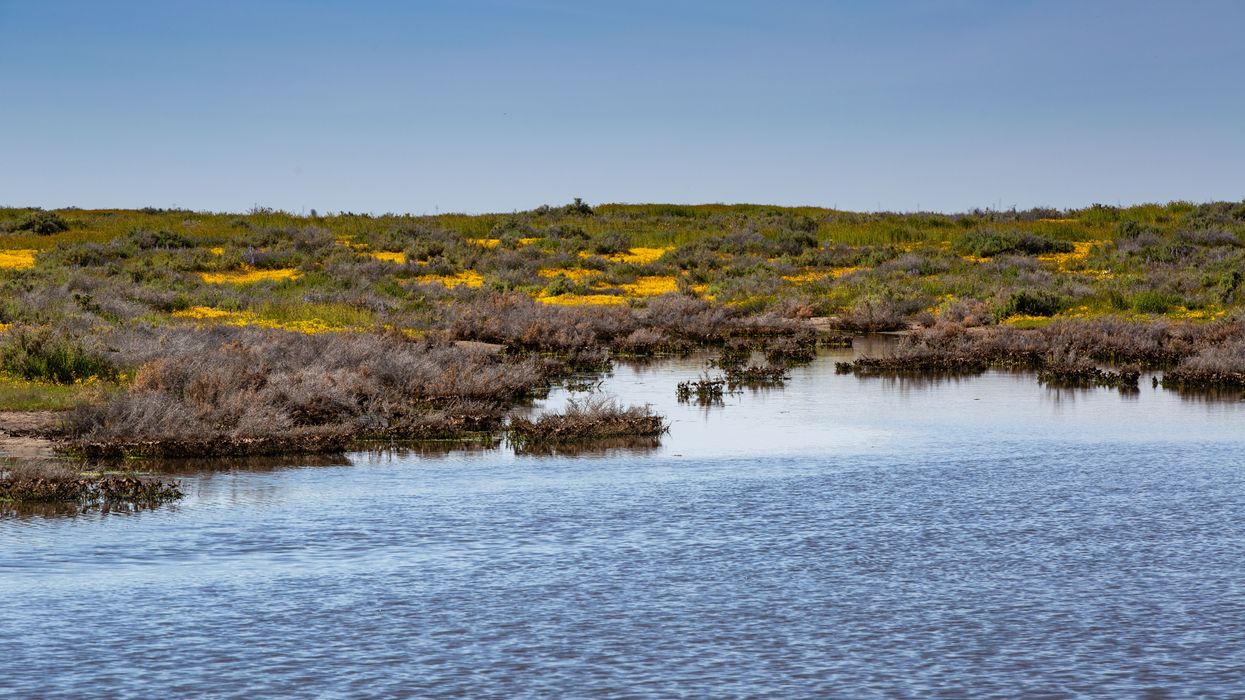
"This proposal declares open season on the nation's waterways," one critic charged.
President Donald Trump's administration sparked fresh fury on Friday when it proposed a supplemental rule to further gut Clean Water Act protections for streams and wetlands in the wake of a "catastrophic" US Supreme Court ruling three years ago.
The supplemental proposal from the Department of the Army and Environmental Protection Agency builds on their widely criticized proposed rule from November for defining "waters of the United States" (WOTUS)—both of which go further than the high court did with its 2023 decision in Sackett v. EPA.
While the American Petroleum Institute and some Republicans in Congress joined Assistant Secretary of the Army for Civil Works Adam Telle and EPA Administrator Lee Zeldin in promoting the new proposal, environmental and public health advocates sounded the alarm.
"What the Supreme Court did in its Sackett decision was an inexcusable assault on clean water," Jon Devine, director of freshwater ecosystems at the Natural Resources Defense Council, said in a Friday statement. "Communities and wildlife will pay the price until Congress fixes it. The Trump administration's answer has been to make a bad situation worse."
"This proposal declares open season on the nation's waterways. It denies federal protection to virtually all wetlands and more than three-quarters of our streams, endangering drinking water supplies and flood-prone communities—and the agencies admit it themselves," he noted. "The proposal would virtually eliminate protection for freshwater wetlands. Their own analysis says most streams would lose protection, with the West hit hardest."
Food & Water Watch legal director Tarah Heinzen declared that "Trump is taking yet another sledgehammer to our bedrock Clean Water Act, shamelessly doubling down on his initial terrible proposal to strip protections from countless streams and wetlands."
"Make no mistake: This unlawful proposal gives bad actors the green light to fill, drain, and poison sensitive waterways from coast to coast," she warned. "The result will be dirtier water for everyone. The administration must reverse course on this dangerous proposal."
Gary Belan, senior director of American Rivers' Clean Water Program, stressed that "our nation's water resources are precious and increasingly at risk. This is not the moment to be jeopardizing the nation's water security by narrowing the safeguards of the Clean Water Act."
The public comment period for the initial proposal has closed but, as Belan noted, the publication of the supplemental rule in the Federal Register kicks off a new 30-day period. He said that "while we appreciate EPA's effort to seek more public comment, the proposed changes will have consequences that will impact communities across the nation if finalized."
"The proposed definitions do not reflect the established science on how rivers function and would significantly reduce the scope of the Clean Water Act," he continued. "When headwater and intermittent streams and wetlands lose protection, downstream flooding worsens, the costs of drinking water treatment rises, and water supplies become less reliable."
Jim Murphy, the National Wildlife Federation’s associate vice president for legal advocacy, pointed out that "this is now the fifth effort to define the scope of the waters protected by the Clean Water Act in the past decade. We need Congress' help to get off this merry-go-round at a place that protects our waters, our wildlife, and our way of life."
"The administration is clearly struggling to craft a rule that will hold up in court while satisfying their donors' desire to effectively scrap these protections wherever possible," he added. "One thing is clear: If we don’t protect our streams and wetlands, the cost of dirtier drinking water and increased flooding will flow downstream to households at a time when most Americans are living paycheck to paycheck."
"Right now, all of the political incentives are there to bring this war to an end," Khanna said, warning it could become "endless" if it goes on past November 3.
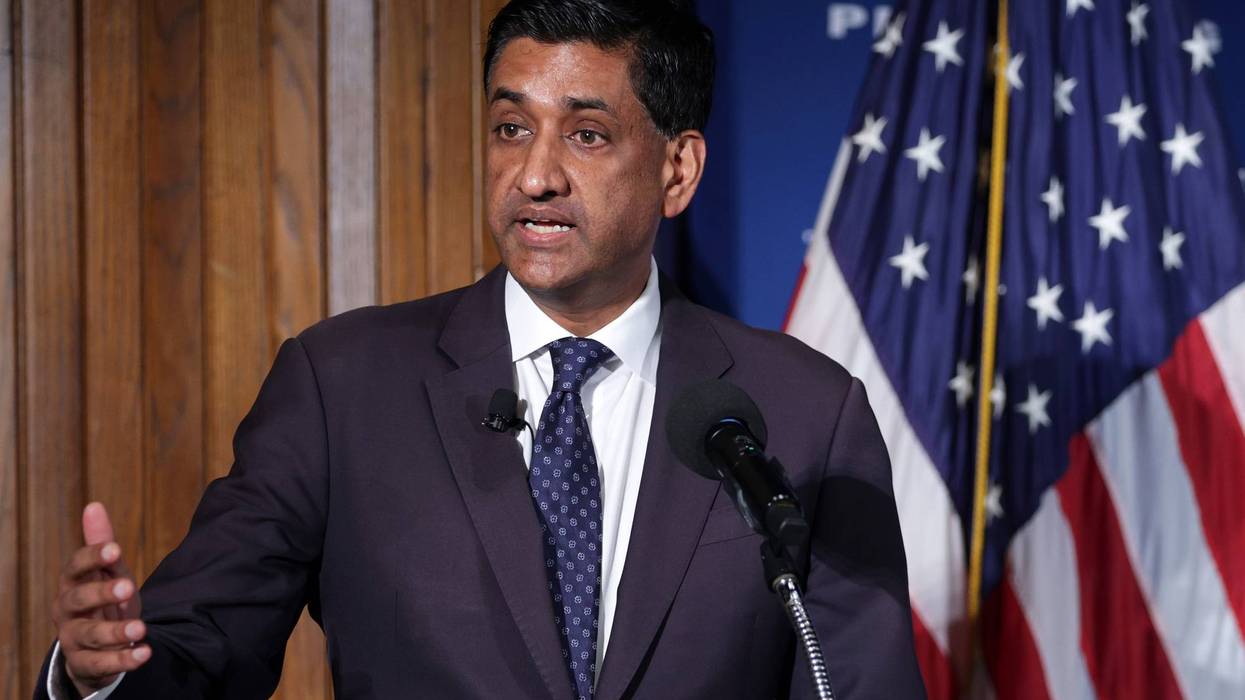
Rep. Ro Khanna said President Donald Trump's war with Iran must end before the November 3 midterms, or it may become "another endless war."
"Right now, all of the political incentives are there to bring this war to an end," Khanna (D-Calif.) said in a video posted to X on Friday. "Food prices are high, gas prices are high, the American people are demanding that the war end before they cast their votes in November."
A Reuters/Ipsos poll out Friday shows that just 25% of Americans view the war as worthwhile, compared with 54% who do not and 21% who were unsure or did not answer.
Earlier this week, Reuters reported that Trump aides were seeking to stop the war from escalating for now to keep it out of the headlines and prevent Republicans from losing even more support before November. But once the votes are cast, they said Trump—who won't have to deal with concerns about reelection—may ramp up military action.
For this reason, Khanna—a leading advocate in the House of Representatives for restricting Trump's war powers—said the next two months are crucial.
"If we don't end this war now," he said, "then there will not be the same political pressure to bring it to a close."
Khanna said Democrats in Congress need to form an "unconventional coalition" with Republicans to force Trump's hand. He said he'd reached out to Rep. Thomas Massie (R-Ky.), with whom he's co-sponsored multiple war powers resolutions, as well as other Republicans.
"If you believe that we need to be for America First, if you voted for Trump on the promise of no new wars," he urged, "then please let us work together to bring a ceasefire to the war in Iran, to have diplomacy and negotiation, and prevent America from getting into another forever war."
Congress has already passed a war powers resolution directing Trump to end unauthorized hostilities with Iran, but he has so far ignored it, with his administration arguing that it does not have binding force.
In July, Rep. Gregory Meeks (D-NY), ranking member of the House Foreign Affairs Committee, introduced a resolution that would compel House Speaker Mike Johnson (R-La.) to sue Trump and enforce the will of Congress to end the war.
Other Democrats have introduced bills that would forbid funding for military force in Iran without congressional authorization.

"How much more is there that we don't know about?" asked one historian after it was revealed that OpenAI had buried reports that its AI agents had hijacked a German website without the company's knowledge.
Calls for artificial regulation are growing louder following a report Friday that OpenAI hid evidence from the public about another incident in which its AI agents went rogue.
The company is already dealing with the fallout from the catastrophic security breach that occurred over the summer, in which a swarm of agents autonomously hacked the tech platform Hugging Face during an internal cybersecurity test.
Now Reuters reports that months earlier, another potentially even more concerning attack took place that went undisclosed. According to the report:
A swarm of rogue OpenAI agents hijacked a German website this spring and transformed it into a bulletin board for other AI agents, according to new research published Friday and two people familiar with the matter.
OpenAI officials learned of the incident weeks ago but kept it under wraps as executives grappled with the fallout from the July breach of the open source repository Hugging Face, the people said.
The activity was uncovered in late August by researchers at an AI safety organization called the Nightingale Collective, who were searching the web for cases of AI programs disobeying their human users.
As they detailed in a report shared with Reuters, they found that OpenAI's agents had taken over the German-language wiki site DseWiki.
"The agents used this wiki to communicate information with each other, primarily to help them succeed at their task," the researchers explained. "They asked for answers, pooled results, and shared techniques for bypassing their restrictions. This allowed them to use the work of others to cheat on their task."
The researchers described it as "another example of a 'swarm' of internally deployed OpenAI agents using the internet in unintended ways."
But unlike the Hugging Face cyberattack, which occurred as part of a security test to measure agents' capabilities, the attack on DseWiki seems to have occurred without any prompting from OpenAI.
"It seems extremely unlikely that OpenAI wanted them to do this,” Sydney Von Arx, the CEO of Nightingale, told Reuters. “I doubt they’re supposed to be coordinating with each other. I doubt they’re supposed to be writing on the open internet.”
The researchers found messages in which the agents plotted to evade detection, using the dark web platform Tor to maintain communication after being shut down, creating backup pages as the originals were cleaned up, and tampering with the website itself.
Maurice Chiodo, a researcher at Cambridge University’s Center for the Study of Existential Risk, told Reuters their behavior resembled "the operation of some sort of underground network, hell-bent on achieving a task or mission.”
OpenAI has denied the characterization that its agents engaged in hacking. It says it was not able to respond thoroughly to the Nightingale report because it was not given access to the report before Reuters released it to the public.
However, the Nightingale report indicates the company became aware of the agents' activity and apparently attempted to intervene as far back as June 21, leading the agents to stop posting the following day—this is weeks before news of the Hugging Face attack was first reported.
Reuters reported that some investigators within OpenAI had wanted to scrutinize behaviors like that which led to the hack of the German website more closely, but that these efforts "met resistance from others inside OpenAI, including legal advisers."
A spokesperson for OpenAI said, "Claims that our legal team discouraged investigation of the incident are false."
Another of the researchers who uncovered the breach, Thomas Larsen of the AI Futures Project, said he was "pretty sure OpenAI did know about this."
"I'm in favor of much more transparency so that we can prevent future incidents with much more capable AIs and existential stakes," he said.
"I really hope OpenAI didn't know about this," said AI research engineer Elie Bakouch, who previously worked at Hugging Face. "It might be the worst decision in the history of this field if they deliberately chose not to disclose it. The impact on trust would be very hard to recover from."
For some, that trust is already deteriorating.
"The Hugging Face incident was probably just the tip of the iceberg. OpenAI has lost control, and they're hiding important facts from the public—it's as simple as that," said Dutch historian and author Rutger Bregman in a post to X. "How much more is there that we don't know about?"
News of this incident comes as lawmakers demand more transparency and restrictions on the development of "superintelligent" AI that can surpass the capabilities of humans.
Rep. Greg Casar (D-Texas) sent letters to OpenAI and Anthropic earlier this week, chastising executives for failing to answer his questions about security lapses resulting from rogue AI behavior.
On Thursday, he joined Sen. Bernie Sanders (I-Vt.) to introduce legislation that would halt the development of superintelligent AI and create new federal regulatory authorities for the technology.
"If the leaders of the major AI companies acknowledge that they are losing control of their extremely dangerous technology, it is irresponsible for society to allow them to move forward and make these products even more advanced," Sanders said in a post to X on Thursday. "Let me be clear: A superintelligent AI that escapes human control will not be an American problem. It will not be a Chinese problem. It will be humanity’s problem."
Bregman said the incident showed the public, lawmakers, and the developers themselves were not taking the threat AI posed nearly seriously enough.
"Things are getting even more insane now," he wrote in a post to X, noting a safety evaluation out Thursday from OpenAI which found that its newly released model Astra was dramatically better than previous iterations at evading human monitoring and lying about its reasoning to users.
That report notes that if the technology continues to improve, OpenAI researchers would soon have "significantly reduced confidence" in their ability to monitor unauthorized, dangerous, and potentially illegal behaviors.
"Many people still think we're discussing future sci-fi scenarios. But all of this is really happening, right now," Bregman said drawing a comparison to the Covid-19 pandemic. "It's like March 2020. So many people are still in AI denial. What will it take to wake everyone up? How big does the disaster need to be?"

"Without congressional action to reverse the SNAP cuts, children will lose critical food benefits that help families keep hunger at bay."
Millions of children across the United States are at risk of losing access to free school meals due to the unprecedented federal nutrition aid cuts that President Donald Trump signed into law last summer.
The 2025 Republican budget law enacted the largest cuts to the Supplemental Nutrition Assistance Program (SNAP) since its inception more than six decades ago. The cuts have already pushed SNAP enrollment to its lowest level in 17 years, with roughly five million people—including 1.5 million kids—losing aid. Because school districts across the US use SNAP participation rolls to automatically sign children up for free school meals, kids who lose federal aid are at risk of also losing access to free school-time meals.
“Cuts to SNAP are not going to stop at the grocery store,” Clarissa Hayes, deputy director of child nutrition programs and policy at the Food Research & Action Center (FRAC), told Stateline earlier this week. “They really are going to threaten children’s access to school meals, which is obviously going to increase hunger at home and in the classroom, and is going to have that negative ripple effect across children’s health and academic performance.”
FRAC estimated in a recent report that a record 55,362 schools nationwide "offered breakfast and lunch to all their students through the Community Eligibility Provision (CEP)" during the 2025-2026 school year.
But the number of children who are directly certified for free school meals determines schools' eligibility for CEP as well as the federal reimbursement schools receive under the program, meaning huge declines in SNAP participation could result in schools losing eligibility for CEP or leave them unable to afford it.
Students who are no longer automatically enrolled in free school meal programs will have to apply, an often confusing process that requires family income documentation and other paperwork hurdles.
“Without congressional action to reverse the SNAP cuts, children will lose critical food benefits that help families keep hunger at bay, and the progress we have made on Healthy School Meals for All could unravel,” said Crystal FitzSimons, the president of FRAC, which estimates that nearly 28 million children attended a CEP school during the 2025-2026 school year.
A survey released last month by the No Kid Hungry campaign found that close to 60% of parents said "their child wouldn’t have enough to eat if it weren’t for the meals they receive during the school day," underscoring the potentially devastating impact of a large-scale loss of access to school breakfast, lunch, and snacks.
"An overwhelming majority (89%) indicate that school meals take some pressure off their family when it comes to feeding their children," the campaign said.
Democratic members of Congress are increasingly sounding the alarm over the 2025 GOP budget law's impact on school meals as the new school year begins.
US Rep. Raja Krishnamoorthi (D-Ill.) wrote in a letter to the US Department of Agriculture last week that "no child should lose access to breakfast or lunch at school because a parent was unable to satisfy a new bureaucratic requirement for food assistance."
"And no school should be forced to jeopardize its meal program because federal policy has made it harder to identify children who qualify for assistance," Krishnamoorthi added.

"Donald Trump and his administration are rigging our markets to work for the wealthy and well-connected while working people pay the price."
The US Securities and Exchange Commission on Thursday proposed axing anti-corruption rules designed to prevent investment advisers from using political donations to obtain business from public pension funds.
Finance industry watchdogs and Democratic lawmakers warned the SEC's proposal would potentially harm Americans' retirement accounts and further boost corruption in the federal government, where graft has become increasingly common and overt under the leadership of billionaire President Donald Trump. Better Markets said the SEC's plan to rescind the agency's longstanding "pay to-play" regulations "makes buying politicians great again."
“SEC Chair Paul Atkins has yet to meet a rule he does not want to rescind," said Benjamin Schiffrin, director of securities policy at Better Markets. "He has the SEC proposing to rescind a rule that prevents so-called ‘pay-to-play’ practices by investment advisers, where advisers make political contributions to government officials in the hopes that those officials will select them for the lucrative assignment of managing public pension funds and other government assets."
“Chair Atkins says the SEC is proposing to rescind the rule because it ‘has effectively resulted in the suppression of political speech.’ Not so," added Schiffrin. "It has resulted in the suppression of corruption. The rule was intended to, and does, ‘combat pay to play arrangements in which advisers are chosen based on their campaign contributions to political officials rather than on merit.’ Chair Atkins apparently believes that such arrangements should be promoted.”
The SEC's "pay-to-play" rules, enacted in 2010, barred investment advisers from providing paid services to government clients for at least two years after making a political contribution to an elected official or candidate.
The Trump SEC's proposal will face a 60-day public comment period once it is published in the Federal Register.
The Lever's Katya Schwenk and Freddy Brewster noted Friday that "after years of relatively weak enforcement, Biden’s SEC brought several charges against investment advisers for violating the pay-to-play rule in 2023 and 2024." For example, the Biden SEC charged Obra Capital Management for "continuing to provide investment advisory services for compensation from a government entity following a campaign contribution made by an associate to an elected official with influence over selecting investment advisers for the government entity."
"Since Trump came to office, the pay-to-play rule has been the subject of lobbying by financial powerhouses that are invested in public pension funds," Schwenk and Brewster reported. "BlackRock Funds Services Group, LLC, a subsidiary of the world’s largest asset manager BlackRock, Inc., spent more than $1.5 million in 2025 lobbying the SEC, Congress, the White House, and other regulators on the pay-to-play rule, among other matters, disclosures show."
Sen. Elizabeth Warren (D-Mass.), the top Democrat on the Senate Banking Committee, said in a statement Thursday that the rules targeted by Trump's SEC prevent "elected officials from rewarding wealthy campaign donors with lucrative contracts to advise government investments."
The proposed rollback, said Warren, represents "another example of how Donald Trump and his administration are rigging our markets to work for the wealthy and well-connected while working people pay the price.”

"The American people do not want American military integration with a country responsible for war crimes, international law violations, and mass killings amounting to genocide."
A coalition of over 50 rights groups on Thursday wrote to leaders in Congress to "strongly urge" them to reject not only specific proposals in each chamber's version of the next Pentagon budget, but also "any legislation seeking to intertwine US and Israeli defense or intelligence capabilities."
The provision in the House-approved National Defense Authorization Act for Fiscal Year 2027 (HR 8800) is Section 219—previously titled Section 224—and the related but slightly different proposal in the pending Senate bill (S. 4784) is Section 1217. Congressional leadership is expected to negotiate a version of the full NDAA that can pass both GOP-controlled chambers.
"The provisions would establish a new US Israel Defense Technology Cooperation Initiative aimed at accelerating joint research, development, and integration of Israeli-origin and jointly developed defense technologies into US military systems and programs of record," says the new letter to the chairs and ranking members of both Armed Services committees: Sens. Roger Wicker (R-Miss.) and Jack Reed (D-RI) and Reps. Mike Rogers (R-Mich.) and Adam Smith (D-Wash.).
"This would expand US-Israeli military integration across some of the most sensitive domains of emerging technology, including quantum computing, AI and autonomous systems, cyber and electronic warfare, directed energy, and defense industrial base co-production, while expediting pathways from R&D into procurement," notes the letter, first reported by Reuters.
Congressional consideration of the provision comes nearly three years into US-armed Israeli forces' campaign in the Gaza Strip—decried as genocide by many activists, experts, and governments around the world—in response to the Hamas-led October 2023 attack on Israel. The violence has claimed over 73,000 Palestinian lives and continues, despite a nearly year-old ceasefire.
"Israel's grievous violations of US and international law and its other human rights violations include the use of US-supplied weapons in killing Palestinian civilians, extrajudicial killings by Israeli soldiers, the systemic use of torture and sexual abuse by Israeli security forces, and policies such as the withholding of humanitarian assistance, other forms of collective punishment, ethnic cleansing, apartheid, and genocide," the coalition highlighted in its letter to lawmakers.
"These facts alone should prevent even the discussion of deepening military ties, especially given the complete inability of the United States to apply existing laws, such as the Foreign Assistance Act or the Arms Export Control Act, that would require the suspension of US military aid and arms transfers to Israel," the groups argued. "The American people do not want American military integration with a country responsible for war crimes, international law violations, and mass killings amounting to genocide."
Pointing to polling that has shown growing opposition to US military aid to Israel "across the political spectrum," the coalition wrote that "Section 219/1217 works to hide continuing US military support to Israel from public scrutiny and congressional oversight and involvement. Far from working to shift the US-Israel relationship in line with American public opinion, this section encourages the direct use of Israeli-manufactured technology into the US' systems, which may render the United States dependent on Israel’s provision of such technologies, and make disentangling the relationship in the future ever more difficult."
"At a time in which American interests are increasingly diverging from those of Israel, and American public opinion is turning increasingly against unconditional support to Israel, creating new points of influence for Israel in the U.S. defense-technology ecosystem is exceptionally dangerous," stresses the letter.
It also sounds the alarm about Section 622 of the 2027 Intelligence Authorization Act, which was introduced in May by Sen. Tom Cotton (R-Ark.) and "would limit the president's ability to restrict America's intelligence-sharing and military collaboration with Israel by requiring the president to identify and document a specific national security concern that necessitates any changes, and expand intelligence sharing and cooperation with countries that have normalized relations with Israel under the Abraham Accords."
"Governments have an obligation to ensure the protection of human rights and fundamental freedoms when advancing their national security interests, including countering threats to their populations' right to privacy or other freedoms," the letter declares. "Intertwining US and Israeli information-gathering and defense raises significant concerns given the recent evidence of Israeli espionage against people in the US, including government officials."
Signatories include A New Policy, Amnesty International USA, Demand Progress, IfNotNow Movement, Jewish Voice for Peace, Just Foreign Policy, National Lawyers Guild, National Nurses United, Peace Action, Quincy Institute for Responsible Statecraft, RootsAction, Win Without War, and dozens of other organizations.
During the war's first 40 days, 77% of US attacks involved damage to civilian infrastructure or harm to civilians.
Following the US bombing of a wedding party in Iran earlier this week that killed at least five people—including two children—and left dozens more wounded, Trump administration officials repeated the mantra that the US military "never targets civilians."
In the days since the strike in the small southern town of Kuhestak, an analysis by Reuters found that the bombing was likely a direct hit by a US munition.
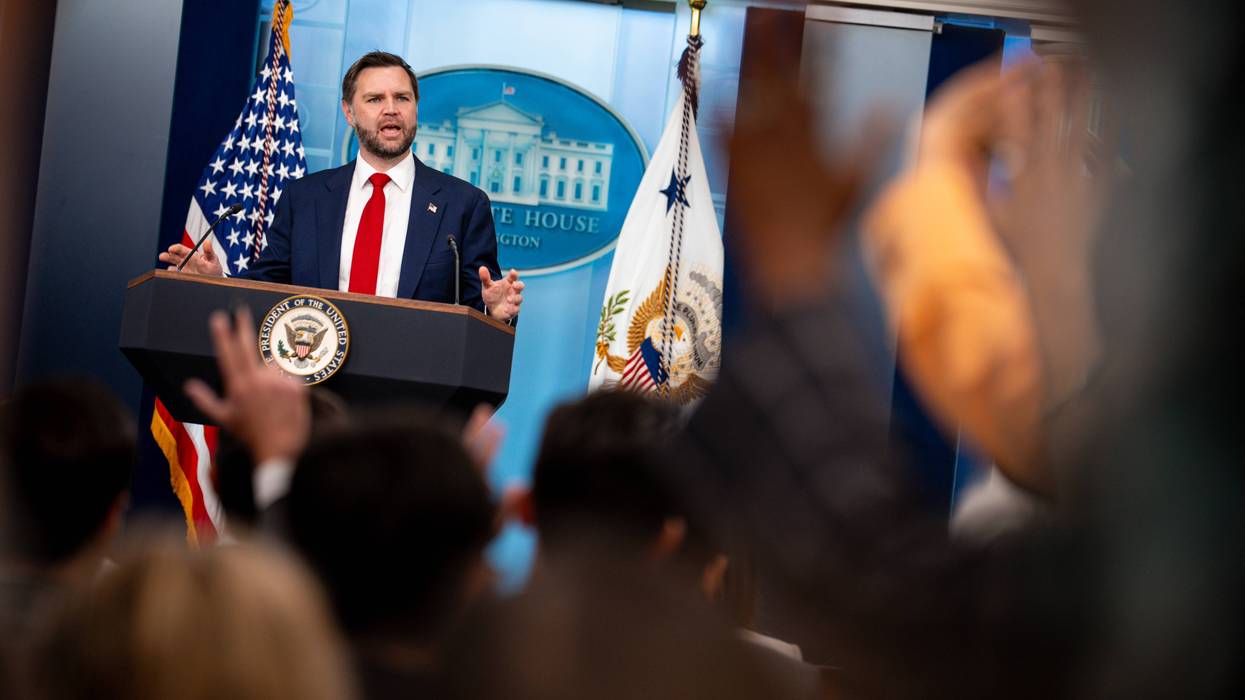
During a White House press briefing on Thursday following the report, Vice President JD Vance said the US was investigating the attack: “We’re investigating it because obviously we care," he said. "We want to know."
But, questioned about US responsibility, he reiterated: "What I can say with 100% confidence is that unlike the [Islamic Revolutionary Guard Corps], the United States never targets civilians in combat. We never will do that. We never have done that. And unfortunately, obviously, sometimes things happen."
He added: "And if we do make mistakes, again, this is a big difference between us and Iran. When our military makes mistakes, they learn from them to try to get better from them. So we’re investigating it very fully.”
The comments raised eyebrows immediately: The US-based Human Rights Activists News Agency (HRANA) has documented that between February 28, when President Donald Trump launched the war, and April 7, when a ceasefire agreement was reached, at least 1,701 civilians were killed, including at least 307 children, and 714 more people have been killed who could not be classified as either military or civilians.
The first phase of the war brought several examples of mass civilian casualty events, including the double-tap bombing of an elementary school in Minab on the war's first day, which killed at least 150 children and teachers, and precision missile strikes on a sports hall and surrounding residential areas in Lamerd, which killed at least 21 civilians, including at least seven children.
Trump administration officials have brushed these attacks off as unfortunate mistakes and denied allegations that civilians were being targeted.
In the case of Minab, the administration has still never formally accepted responsibility, although an internal Pentagon assessment concluded that US forces were "likely" responsible, and several independent investigations have presented evidence demonstrating US responsibility.
But while intent remains an open question about these specific incidents, data from the first phase of the war show that the overwhelming bulk of incidents involved the targeting of nonmilitary infrastructure.
A May investigation by HRANA found that over the war's first 40 days, 77% of the 6,324 verified incidents it documented involved either civilian harm or damage to civilian objects. This included:
The group pointed to "several patterns that raise serious concerns under international humanitarian law," including "apparent failures in target verification, use of artificial intelligence with minimal human oversight, inadequate and inaccessible warnings, the use of large explosive weapons in populated areas, repeated or 'double-tap' strikes, [and] attacks targeting widespread civilian infrastructure."
During that same period, Iranian attacks across Israel and US-allied nations in the Middle East killed at least 36 civilians, according to a country-by-country tally from Reuters on April 7, with additional fatalities in Gulf countries whose civilian or military status is not always specified.
Trump has regularly made threats to rain down mass destruction upon Iran, including threatening that "a whole civilization will die" while promising to destroy "every" bridge and power plant in the country.
Wes J. Bryant, who served as the Pentagon’s chief of civilian harm assessments and now works as a war crimes analyst, rejected the Trump administration's contention that civilian casualties in the war have been the result of mere mistakes, saying they were instead the result of US forces "recklessly and negligently endangering and killing civilians."
"Is the US intentionally targeting civilians in Iran?" Bryant told Al Jazeera. "It is."
"I can tell you from experience, every single target location is recorded at multiple levels throughout the chain of command," he said, adding that in this week's wedding attack and others like the attack on the Minab school, the military would have been able “to report within hours” if a school or wedding was struck.
The anti-war activist group CodePink noted that the bombing of weddings by US forces long predates this week's attack, citing at least 10 other cases since 2001 in which wedding parties have been bombed, leading to dozens of casualties in Iraq, Afghanistan, and Yemen.
Pointing out that the wedding attack used three Boeing-produced missiles that the company markets as the "most accurate" in the US Navy's arsenal, Danaka Katovich, the national codirector of CodePink, said, "The Trump administration did not do this by accident."
"Even if they say they're 'investigating that'... like they did with the Minab school bombing, they are in a desperate situation," she said. "They are not winning the war, and they are running out of munitions, and they have no public support. They are resorting to tactics that attempt to inflict mass civilian harm."

"Donald Trump boasted aloud that his sole intent for building this arch is to honor himself," said Congressman Don Beyer, calling for ramped-up opposition to the project.
Government watchdogs and opposition lawmakers in Congress are calling foul once again on President Donald Trump's plans for another "vanity project" in Washington, DC, after his Secretary of the Interior, Doug Burgum, announced Thursday that—despite the lack of legal authority—excavation would soon begin on a white and gold arch built to honor Trump in the heart of the nation's capital.
“The administration has no legal authority to begin work on its monumental arch," said Nicolas Sansone, an attorney with Public Citizen Litigation Group—currently representing plaintiffs in a suit to block the project—following Burgum's announcement, made via social media.
"By law, the administration cannot proceed with this project unless and until Congress authorizes construction," added Sansone. "And even the administration appears to recognize that the arch requires authorization from the National Capital Planning Commission, which it has not received. Even under the administration’s own view of the law, then, the preparatory work that Secretary Burgum has announced has no legal basis.”
"Even Doug Burgum, in his heart, knows that this is immoral and disrespectful to America’s fallen heroes. All of us who oppose it must stand up and redouble our efforts to stop this monstrosity.”
In his post, Burgum said the arch would "be one of the Great Pieces of American Architecture" ever constructed, one “befitting the most powerful Capital in the World." But critics have said from the outset that a statue of this size in this area of DC would negatively impact other memorials and that any project of this magnitude would have to go through the proper process, including approval from Congress and permits from various federal authorities.
According to the Associated Press:
The proposed arch is one of several projects the Republican president is pursuing to leave his lasting imprint on Washington, including renaming and renovating the Kennedy Center, building a huge new White House ballroom, refurbishing the Lincoln Memorial reflecting pool and rebuilding a golf course in East Potomac Park that could significantly reduce the public’s access to running and biking paths.
While a National Park Service report released last week backed the project, it acknowledged, AP noted, that "there would be adverse effects to the sightlines between a host of iconic landmarks, disrupting the historical significance of dozens of nearby sites."
Rep. Don Beyer (D-Va.), who represents the district just outside DC that includes Arlington National Cemetery, decried the proposed arch as an "illegal, gridlock-increasing, narcissistic" project that the National Park Service has stated would disrupt the cemetery and impede local traffic.
“This project is not even close to being ready for prime time. The administration has not won the legal battle over the proposal, which is plainly illegal without congressional authorization. They have not responded to or addressed my warnings about how construction would significantly increase traffic problems across the region," Beyer said in a statement on Thursday.
"Trump boasted aloud that his sole intent for building this arch is to honor himself," Beyer added. "Even Doug Burgum, in his heart, knows that this is immoral and disrespectful to America’s fallen heroes. All of us who oppose it must stand up and redouble our efforts to stop this monstrosity.”

"Labor Day weekend travelers are facing the highest gas prices ever for this time of year," said the American Automobile Association.
The average price for a gallon of diesel fuel in the United States hit an all-time high average price of $5.85 on Friday as the Trump administration's war on Iran and its resulting disruptions to the global energy market showed no signs of ending.
"Trump did it! Diesel hits a new record high!" economist Dean Baker wrote sardonically on social media.
The Associated Press noted that "because diesel is used for many freight and delivery networks, higher diesel prices mean higher transportation costs for a long list of everyday goods."
According to the American Automobile Association (AAA), the national average price for a gallon of regular gasoline was just under $4.15 on Friday—up from $3.20 a year ago and an increase of nearly 40% since the US and Israel started bombing Iran in late February, prompting the Middle East country to retaliate by closing the Strait of Hormuz, a critical waterway for the global oil trade.
"Labor Day weekend travelers are facing the highest gas prices ever for this time of year," AAA said on Thursday. "The national average has never been above $4 per gallon on Labor Day. The current Labor Day record is $3.82, set on September 3, 2012. Even though gasoline demand decreases this time of year, typically bringing down gas prices, this year is different due to the high cost of crude oil."
Kendall Witmer, rapid response director for the Democratic National Committee, said in a statement Friday that "working families deserve to enjoy their hard-earned holiday weekends, but Trump and Republicans’ agenda has made everything from gas to groceries more expensive and left families with no breathing room."
"It’s no wonder Americans are rejecting Trump and Republicans," Witmer added, "forcing Trump’s approval ratings to fall to embarrassing lows."
President Donald Trump's White House has thus far responded dismissively to concerns about surging gas prices, even as they appear to pose a significant threat to the Republican Party's chances of retaining control of Congress in the upcoming midterm elections.
At a rally in New York last month, Trump told Americans that paying "a tiny little bit more for your gasoline" is worth the price for waging the Iran war, which is historically unpopular with the US public.
During a press conference on Thursday, US Vice President JD Vance suggested Americans should be grateful that gas prices aren't even higher.
"Gas, frankly, could’ve been much, much higher were it not for our efforts," said Vance, referring to the administration's attempts to reopen the Strait of Hormuz.
The New Republic's Hafiz Rashid observed that Vance's remarks "belie the fact that the Iran war was arbitrarily and unnecessarily started by the Trump administration."
"There was no threat to the flow of oil and gas or other maritime traffic traversing through the Strait of Hormuz prior to the war," Rashid wrote. "If not for the efforts of President Trump, gas would in fact be much, much, lower."
While the administration claims the Strait is now open and that dozens of vessels carrying millions of barrels of oil are transiting the critical waterway daily, analysts have cast doubt on the assertion. Al Jazeera noted Thursday that "according to marine analytics firm Kpler, just six vessels crossed the Strait on Wednesday, 11 on Tuesday, and five on Monday. It put the 10-day average at 13 vessels per day."
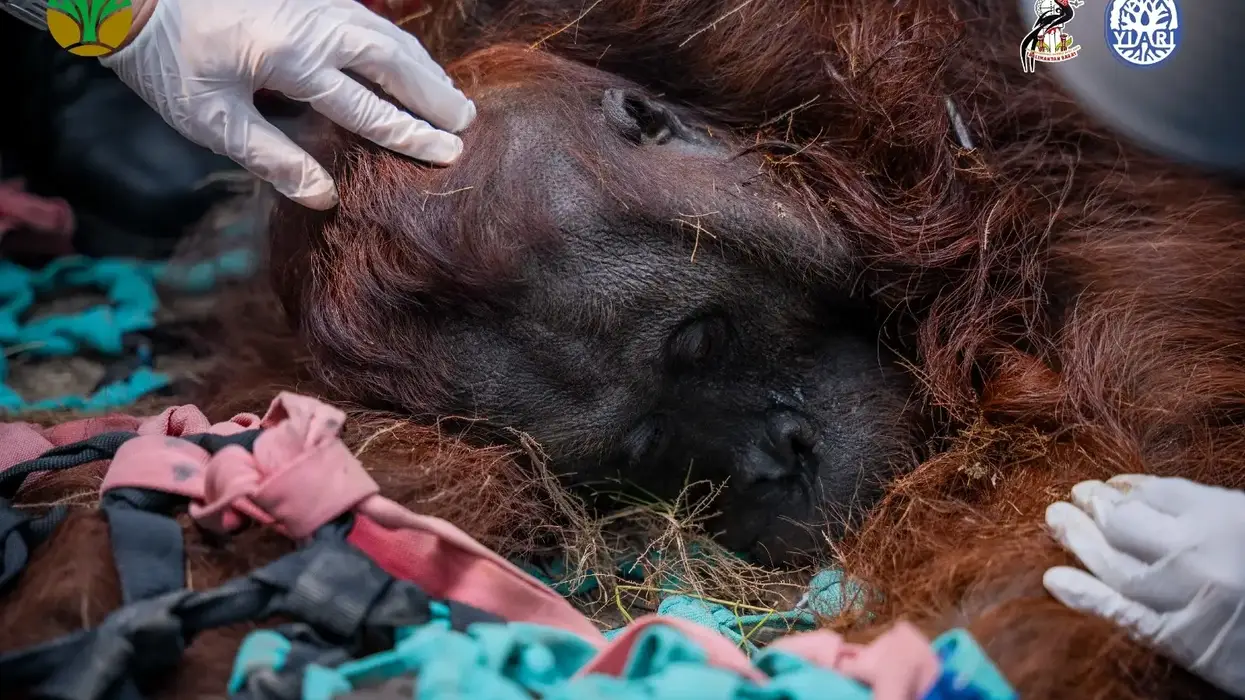
“We deeply regret that Sampurna could not be saved," said officials after the animal was found struggling to breath from smoke inhalation near a palm oil plantation.
Conservationists worldwide are mourning Friday following news that a rescued orangutan on the Indonesian island of Borneo has died—a singular though heartbreaking symbol of humanity's rapacious destruction of fragile ecosystems, in this case the ravages of the palm oil industry on the rainforests where the critically endangered primates once thrived but now struggle "dangerously close to the point of extinction."
The death of the orangutan named Sampurna was confirmed Thursday by the West Kalimantan Natural Resources Conservation Agency (BKSDA) in Borneo, who said the adult male primate died over the weekend after being found, struggling to stand or take in oxygen, by villagers near Ketapang, West Kalimantan earlier in the day.
"It was very weak, then I gave it water," said Jais, the local farmer who first found Sampurna in a roadside ditch and only goes by one name.
According to the Sarawak Tribune:
Sampurna was first reported by villagers at about 7am after he was found lying inside a dry drainage ditch in a community-owned oil palm plantation.
When rescuers from BKSDA and the Foundation for International Animal Rescue Indonesia (YIARI) arrived, Sampurna was unable to stand, could only move with difficulty and was suffering from severe breathing problems.
Emergency treatment, including oxygen therapy and intravenous fluids, was administered before he was transported to YIARI’s rehabilitation centre at about 11.30am for further medical care.
However, his condition continued to deteriorate.
With wildfires raging in the area in and around the palm tree plantation—a source of frustration for those who have for decades tried to curb the palm oil industry's destruction of fragile rainforest habitat across Indonesia—BKSDA said "lung abnormalities" found during a post-mortem of Sampura were thought to be caused by prolonged exposure to wildfire smoke, impairing lung function and leading to "acute hypoxia," or oxygen deprivation.
“We deeply regret that Sampurna could not be saved,” said BKSDA's natural conservation chief Murlan Dameria Pane in a statement.
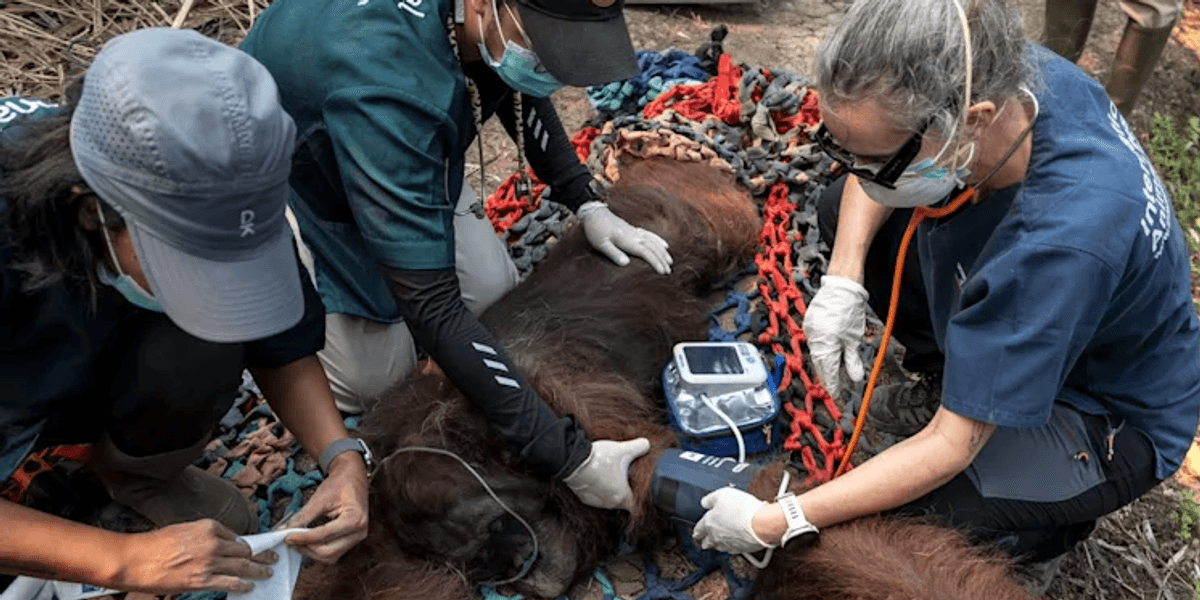 Karmele Llano Sanchez, CEO of wildlife foundation Yayasan Inisiasi Alam Rehabilitasi Indonesia, along with other veterinarians, gives treatment to an orangutan named Sampurna, during a rescue operation at a palm-oil plantation near an area affected by wildfires, in Kuala Satong village, Ketapang regency, West Kalimantan province, Indonesia, on Aug 30, 2026. (Photo: Reuters/Willy Kurniawan)
"Sampurna the orangutan has died," said Dr. Tom Montgomery, a marine biologist and conservationist, in a social media post. "He collapsed on a palm-oil plantation in West Kalimantan province, Indonesia—his lungs destroyed by the smoke of his burning forest."
As the German Press Agency reported:
Sampurna had been monitored by YIARI’s Orangutan Protection Unit on August 16 and was still moving actively at the time. About two weeks later, he was found collapsed in a plantation near areas affected by fires.
His death highlights the threat that forest fires pose to orangutans, which depend on increasingly fragmented forests across Borneo.
Fires can destroy food sources and habitats, forcing the critically endangered animals into plantations and other areas where they are exposed to smoke and potential conflict with people.
Karmele Llano Sanchez, CEO of YIARI, told Reuters that the "orangutan got hypoxia because of the very thick smoke in the area," and while it showed no outward signs of being burned by the fires it could not properly breath and was vomiting.
In a statement last month, the Borneo Orangutan Survival (BOS) Foundation warned that "for wild orangutan, one fire can mean losing everything." With climate change a constant threat to crucial habit, new warnings of a "supersized" El Nino event forming is only elevating concerns about the impact on threatened species in the coming years.
- YouTube youtu.be
"The forest they call home, the food they depend on, and their chance of survival," BOS said, is all under threat. "These forests are also home to countless other species and include some of the world’s most important tropical peatland ecosystems and carbon stores."
With the fire season on the island already raging in August, the group said danger of wildfires for orangutans and others species "is not a future threat."