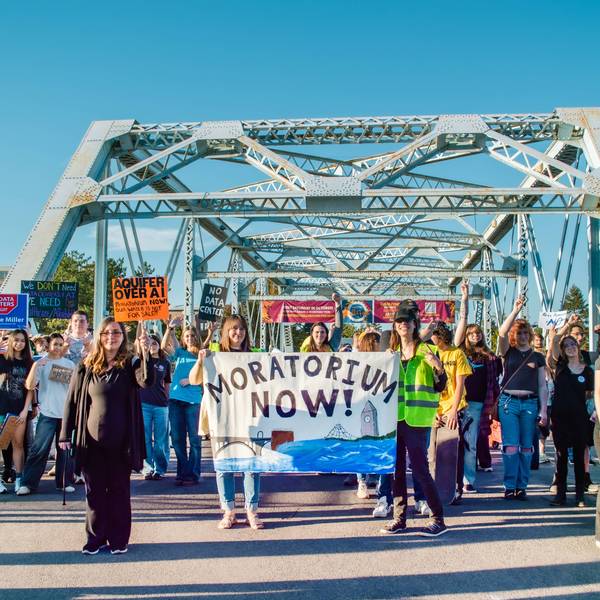

A makeshift memorial for environmental activist Manuel Terán—who was shot dead by law enforcement during a raid to clear the construction site of a police training facility that activists have nicknamed "Cop City" near Atlanta, Georgia—is seen on February 6, 2023.
'Stop Cop City' Referendum Organizers Call Atlanta's Verification Regime 'Voter Suppression'
"It's clear that the city of Atlanta knows that they will lose a vote over Cop City, so now they are trying to prevent it," said one activist.
Organizers of an Atlanta referendum on the proposed Public Safety Training Center—widely known as "Cop City"—said Monday that they've gathered more than twice as many signatures as needed to qualify for November's ballot, while slamming the Georgia city's newly announced verification process as a tried-and-true form of voter suppression.
The Vote to Stop Cop City Coalition said Monday that its hundreds of paid and volunteer canvassers have collected 104,000 signatures for its proposed referendum that would let Atlanta voters decide whether to build the $90 million, 85-acre training facility in the Weelaunee Forest just outside Atlanta city limits in DeKalb County.
The city requires 58,000 valid signatures—15% of registered voters—for a measure to qualify for the ballot. However, organizers typically collect many more signatures than needed, knowing a significant number of them could be disqualified.
The coalition initially planned on submitting the petition on Monday. However, members are sounding the alarm on what they say may be an attempt by city officials to thwart their effort. Organizers say they now plan to continue collecting petition signatures through September 23, a deadline set last month by a federal judge.
"In recent days, the coalition began to hear from reporters and sources inside City Hall that the city of Atlanta is planning to argue for a higher-than-previously-reported legal minimum signature count for ballot access," the coalition said in a statement.
"More concerning were reports that they also plan to utilize 'signature match'—an archaic and widely abandoned tool of voter suppression that has been widely condemned across the political spectrum, including by the Republican-controlled Georgia State Legislature—in their verification process," the coalition added.
The Atlanta City Council on Monday passed a resolution authorizing the hiring of an independent consultant to help verify the petition signatures.
"In an effort to ensure that adequate resources are dedicated to this project, the city of Atlanta—through the adoption of the Atlanta City Council—has developed a step-by-step process to conduct the audit of the documents, of which the signature verification process may be a critical element," Interim Municipal Clerk Vanessa Waldon said in a statement.
"We are committed to a transparent process that meets the requirements of the law and builds public confidence and trust," she added.
The city said that process will include a manual line-by-line review, "which will also include double-checking of each line" on the petition.
Stephanie Jackson Ali, policy director at the voting rights group New Georgia Project Action Fund, told Fox 5 Atlanta that "it's an unscientific process."
"People's signatures from different times are matched from when you first got your driver's license to when you filled out that form," Ali continued. "So you're going [to] find people who mismatch their own signature."
DaMareo Cooper, co-executive director of the Center for Popular Democracy, told The Intercept that "signature matching is a Republican-style voter suppression tactic that will disenfranchise thousands of predominantly Black and working-class voters."
"It's clear that the city of Atlanta knows that they will lose a vote over Cop City, so now they are trying to prevent it," he added. "It's outrageous and shameful."
The ACLU has noted that signature matching results in "the unconstitutional disenfranchisement of eligible voters."
"A voter's signature can change for many reasons," the ACLU explained in a 2018 blog post. "Voters who live with a disability, including many elderly voters, are more likely to vote absentee, due to accessibility issues. It is also more likely that their signature looks different than it did when they first registered to vote."
"Some degenerative diseases or disabilities with periodic symptoms do not affect a voter at the time of registration but may result in tremors or other symptoms that change the way someone signs their name," the group added. "People with eyesight loss often have signatures that change over time."
As Atlanta Community Press Collective noted:
In November 2019, the Democratic Party sued the state of Georgia over its use of signature matching after 3% of the 2018 general election absentee ballots in the state were thrown out due in part to signature matching. The parties settled in March 2020, and the state of Georgia agreed to institute new policies ensuring that a second election worker assesses a signature before it is invalidated and required election officials to notify individuals if their ballots were rejected. It is unclear if city officials plan to follow these state-level policies.
The Vote to Stop Cop City Coalition also pointed to city officials' enmity toward the referendum as a cause for concern about their impartiality. Democratic Atlanta Mayor Andre Dickens has publicly implied the measure can only win through cheating, saying last month that it "is going to be unsuccessful, if it's done honestly."
The debate over Cop City has been raging for more than two years, with opposition to the project intensifying in January after militarized police shot forest defender Manuel Esteban Paez Terán, also known as Tortuguita, at least 57 times during a raid on a protest encampment. While police claimed Terán shot at them first, a DeKalb County autopsy found no gunpowder residue on his hands.
Following nearly 15 hours of public comment—overwhelmingly in opposition to the project—the Atlanta City Council voted in June to fund Cop City.
Earlier this month, U.S. District Court Judge Mark H. Cohen gave the Vote to Stop Cop City Coalition until September 23 to collect signatures for the referendum petition.
"In addition, the coalition will consider upcoming opportunities for nonviolent, direct actions to direct the people's frustration with council's obstruction of the democratic process," the coalition said.
We are at a crossroads
This country and this world are at a monumental crossroads. In a few short weeks, US voters will have an opportunity to beat back the forces of fascism and confront the billionaires who are rigging the economy, our media system, and our democracy, making it increasingly impossible for ordinary people to get by. We’re not just talking about the election. We’re talking about what must be done once these fascist elements are vanquished from power. We need a bolder set of solutions than what either major party has so far been willing to offer and a working-class movement ready to fight like hell for it. Trump didn't emerge from nowhere. The conditions that fueled MAGA authoritarianism were created by decades of radical neoliberal economic policies and a corrupt political system dominated by corporate interests. They slashed taxes on the super-rich, promising that the benefits would trickle down. They said giveaways to the corporate titans would make life more affordable for the rest of us. It was all bullshit. And when a bitter, betrayed populace searches for someone to blame, right-wing demagogues have little trouble finding scapegoats. People know when they're being lied to, but you won't hear any of this from the corporate media. Only independent journalism—powered and funded by people who believe in building a better world—can deliver truly trustworthy daily news. Our Fall Campaign is underway, and we need your help. To power our newsroom through the rest of the year, we need to raise $125,000 by midnight on October 31. So if you share our vision, please contribute whatever you can to sustain our work. |
Organizers of an Atlanta referendum on the proposed Public Safety Training Center—widely known as "Cop City"—said Monday that they've gathered more than twice as many signatures as needed to qualify for November's ballot, while slamming the Georgia city's newly announced verification process as a tried-and-true form of voter suppression.
The Vote to Stop Cop City Coalition said Monday that its hundreds of paid and volunteer canvassers have collected 104,000 signatures for its proposed referendum that would let Atlanta voters decide whether to build the $90 million, 85-acre training facility in the Weelaunee Forest just outside Atlanta city limits in DeKalb County.
The city requires 58,000 valid signatures—15% of registered voters—for a measure to qualify for the ballot. However, organizers typically collect many more signatures than needed, knowing a significant number of them could be disqualified.
The coalition initially planned on submitting the petition on Monday. However, members are sounding the alarm on what they say may be an attempt by city officials to thwart their effort. Organizers say they now plan to continue collecting petition signatures through September 23, a deadline set last month by a federal judge.
"In recent days, the coalition began to hear from reporters and sources inside City Hall that the city of Atlanta is planning to argue for a higher-than-previously-reported legal minimum signature count for ballot access," the coalition said in a statement.
"More concerning were reports that they also plan to utilize 'signature match'—an archaic and widely abandoned tool of voter suppression that has been widely condemned across the political spectrum, including by the Republican-controlled Georgia State Legislature—in their verification process," the coalition added.
The Atlanta City Council on Monday passed a resolution authorizing the hiring of an independent consultant to help verify the petition signatures.
"In an effort to ensure that adequate resources are dedicated to this project, the city of Atlanta—through the adoption of the Atlanta City Council—has developed a step-by-step process to conduct the audit of the documents, of which the signature verification process may be a critical element," Interim Municipal Clerk Vanessa Waldon said in a statement.
"We are committed to a transparent process that meets the requirements of the law and builds public confidence and trust," she added.
The city said that process will include a manual line-by-line review, "which will also include double-checking of each line" on the petition.
Stephanie Jackson Ali, policy director at the voting rights group New Georgia Project Action Fund, told Fox 5 Atlanta that "it's an unscientific process."
"People's signatures from different times are matched from when you first got your driver's license to when you filled out that form," Ali continued. "So you're going [to] find people who mismatch their own signature."
DaMareo Cooper, co-executive director of the Center for Popular Democracy, told The Intercept that "signature matching is a Republican-style voter suppression tactic that will disenfranchise thousands of predominantly Black and working-class voters."
"It's clear that the city of Atlanta knows that they will lose a vote over Cop City, so now they are trying to prevent it," he added. "It's outrageous and shameful."
The ACLU has noted that signature matching results in "the unconstitutional disenfranchisement of eligible voters."
"A voter's signature can change for many reasons," the ACLU explained in a 2018 blog post. "Voters who live with a disability, including many elderly voters, are more likely to vote absentee, due to accessibility issues. It is also more likely that their signature looks different than it did when they first registered to vote."
"Some degenerative diseases or disabilities with periodic symptoms do not affect a voter at the time of registration but may result in tremors or other symptoms that change the way someone signs their name," the group added. "People with eyesight loss often have signatures that change over time."
As Atlanta Community Press Collective noted:
In November 2019, the Democratic Party sued the state of Georgia over its use of signature matching after 3% of the 2018 general election absentee ballots in the state were thrown out due in part to signature matching. The parties settled in March 2020, and the state of Georgia agreed to institute new policies ensuring that a second election worker assesses a signature before it is invalidated and required election officials to notify individuals if their ballots were rejected. It is unclear if city officials plan to follow these state-level policies.
The Vote to Stop Cop City Coalition also pointed to city officials' enmity toward the referendum as a cause for concern about their impartiality. Democratic Atlanta Mayor Andre Dickens has publicly implied the measure can only win through cheating, saying last month that it "is going to be unsuccessful, if it's done honestly."
The debate over Cop City has been raging for more than two years, with opposition to the project intensifying in January after militarized police shot forest defender Manuel Esteban Paez Terán, also known as Tortuguita, at least 57 times during a raid on a protest encampment. While police claimed Terán shot at them first, a DeKalb County autopsy found no gunpowder residue on his hands.
Following nearly 15 hours of public comment—overwhelmingly in opposition to the project—the Atlanta City Council voted in June to fund Cop City.
Earlier this month, U.S. District Court Judge Mark H. Cohen gave the Vote to Stop Cop City Coalition until September 23 to collect signatures for the referendum petition.
"In addition, the coalition will consider upcoming opportunities for nonviolent, direct actions to direct the people's frustration with council's obstruction of the democratic process," the coalition said.
- 'Obliterates the Police Narrative': Autopsy Shows Forest Defender Killed by Cops Never Fired Weapon ›
- 'The Whole World Is Watching': Atlanta City Council Approves Cop City Funding ›
- Independent Probe Demanded After Police Kill Forest Defender "Tortuguita" in Georgia ›
- Atlanta Referendum to Block 'Cop City' Clears Key Bureaucratic Hurdle ›
- Activists Slam 'Compromise' Proposal for Georgia's Cop City ›
- The Movement to 'Stop Cop City' Is a Movement for Climate and Social Justice ›
- Organizers Condemn 'Anti-Democratic' RICO Charges Against Cop City Protesters ›
- Militarized Police 'Indiscriminately' Attack Nonviolent Stop Cop City March With Tear Gas ›
Organizers of an Atlanta referendum on the proposed Public Safety Training Center—widely known as "Cop City"—said Monday that they've gathered more than twice as many signatures as needed to qualify for November's ballot, while slamming the Georgia city's newly announced verification process as a tried-and-true form of voter suppression.
The Vote to Stop Cop City Coalition said Monday that its hundreds of paid and volunteer canvassers have collected 104,000 signatures for its proposed referendum that would let Atlanta voters decide whether to build the $90 million, 85-acre training facility in the Weelaunee Forest just outside Atlanta city limits in DeKalb County.
The city requires 58,000 valid signatures—15% of registered voters—for a measure to qualify for the ballot. However, organizers typically collect many more signatures than needed, knowing a significant number of them could be disqualified.
The coalition initially planned on submitting the petition on Monday. However, members are sounding the alarm on what they say may be an attempt by city officials to thwart their effort. Organizers say they now plan to continue collecting petition signatures through September 23, a deadline set last month by a federal judge.
"In recent days, the coalition began to hear from reporters and sources inside City Hall that the city of Atlanta is planning to argue for a higher-than-previously-reported legal minimum signature count for ballot access," the coalition said in a statement.
"More concerning were reports that they also plan to utilize 'signature match'—an archaic and widely abandoned tool of voter suppression that has been widely condemned across the political spectrum, including by the Republican-controlled Georgia State Legislature—in their verification process," the coalition added.
The Atlanta City Council on Monday passed a resolution authorizing the hiring of an independent consultant to help verify the petition signatures.
"In an effort to ensure that adequate resources are dedicated to this project, the city of Atlanta—through the adoption of the Atlanta City Council—has developed a step-by-step process to conduct the audit of the documents, of which the signature verification process may be a critical element," Interim Municipal Clerk Vanessa Waldon said in a statement.
"We are committed to a transparent process that meets the requirements of the law and builds public confidence and trust," she added.
The city said that process will include a manual line-by-line review, "which will also include double-checking of each line" on the petition.
Stephanie Jackson Ali, policy director at the voting rights group New Georgia Project Action Fund, told Fox 5 Atlanta that "it's an unscientific process."
"People's signatures from different times are matched from when you first got your driver's license to when you filled out that form," Ali continued. "So you're going [to] find people who mismatch their own signature."
DaMareo Cooper, co-executive director of the Center for Popular Democracy, told The Intercept that "signature matching is a Republican-style voter suppression tactic that will disenfranchise thousands of predominantly Black and working-class voters."
"It's clear that the city of Atlanta knows that they will lose a vote over Cop City, so now they are trying to prevent it," he added. "It's outrageous and shameful."
The ACLU has noted that signature matching results in "the unconstitutional disenfranchisement of eligible voters."
"A voter's signature can change for many reasons," the ACLU explained in a 2018 blog post. "Voters who live with a disability, including many elderly voters, are more likely to vote absentee, due to accessibility issues. It is also more likely that their signature looks different than it did when they first registered to vote."
"Some degenerative diseases or disabilities with periodic symptoms do not affect a voter at the time of registration but may result in tremors or other symptoms that change the way someone signs their name," the group added. "People with eyesight loss often have signatures that change over time."
As Atlanta Community Press Collective noted:
In November 2019, the Democratic Party sued the state of Georgia over its use of signature matching after 3% of the 2018 general election absentee ballots in the state were thrown out due in part to signature matching. The parties settled in March 2020, and the state of Georgia agreed to institute new policies ensuring that a second election worker assesses a signature before it is invalidated and required election officials to notify individuals if their ballots were rejected. It is unclear if city officials plan to follow these state-level policies.
The Vote to Stop Cop City Coalition also pointed to city officials' enmity toward the referendum as a cause for concern about their impartiality. Democratic Atlanta Mayor Andre Dickens has publicly implied the measure can only win through cheating, saying last month that it "is going to be unsuccessful, if it's done honestly."
The debate over Cop City has been raging for more than two years, with opposition to the project intensifying in January after militarized police shot forest defender Manuel Esteban Paez Terán, also known as Tortuguita, at least 57 times during a raid on a protest encampment. While police claimed Terán shot at them first, a DeKalb County autopsy found no gunpowder residue on his hands.
Following nearly 15 hours of public comment—overwhelmingly in opposition to the project—the Atlanta City Council voted in June to fund Cop City.
Earlier this month, U.S. District Court Judge Mark H. Cohen gave the Vote to Stop Cop City Coalition until September 23 to collect signatures for the referendum petition.
"In addition, the coalition will consider upcoming opportunities for nonviolent, direct actions to direct the people's frustration with council's obstruction of the democratic process," the coalition said.
- 'Obliterates the Police Narrative': Autopsy Shows Forest Defender Killed by Cops Never Fired Weapon ›
- 'The Whole World Is Watching': Atlanta City Council Approves Cop City Funding ›
- Independent Probe Demanded After Police Kill Forest Defender "Tortuguita" in Georgia ›
- Atlanta Referendum to Block 'Cop City' Clears Key Bureaucratic Hurdle ›
- Activists Slam 'Compromise' Proposal for Georgia's Cop City ›
- The Movement to 'Stop Cop City' Is a Movement for Climate and Social Justice ›
- Organizers Condemn 'Anti-Democratic' RICO Charges Against Cop City Protesters ›
- Militarized Police 'Indiscriminately' Attack Nonviolent Stop Cop City March With Tear Gas ›