

SUBSCRIBE TO OUR FREE NEWSLETTER
Daily news & progressive opinion—funded by the people, not the corporations—delivered straight to your inbox.
5
#000000
#FFFFFF
To donate by check, phone, or other method, see our More Ways to Give page.
Daily news & progressive opinion—funded by the people, not the corporations—delivered straight to your inbox.
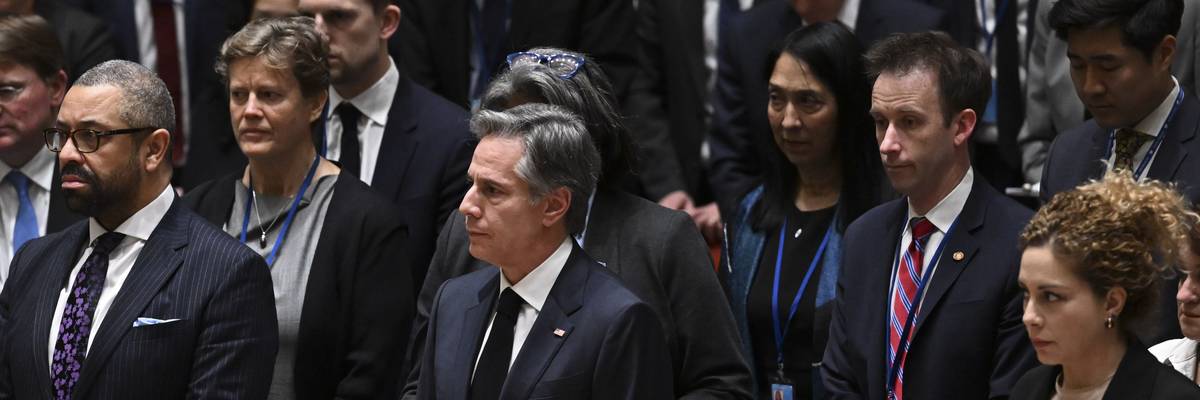
U.S. Secretary of State Antony Blinken attends a U.N. Security Council meeting on February 24, 2023. (Photo by Fatih Aktas/Anadolu Agency via Getty Images)
Brazil and China supported Russia's request while the U.S. and other members of the United Nations Security Council abstained.
The United Nations Security Council on Monday rejected a Russia-led effort to launch a fresh international probe into last year's sabotage of the Nord Stream pipelines in the wake of investigative journalist Seymour Hersh's reports accusing the U.S. of carrying out the attack.
Brazil and China supported Russia's resolution while the U.S., France, the United Kingdom, and other Security Council members abstained, leaving the proposal short of the nine votes needed for passage.
The Security Council said in a press release that, if adopted, the resolution would have requested that the secretary-general establish "an international, independent investigation commission to conduct a comprehensive, transparent, and impartial international investigation of all aspects of the act of sabotage on the Nord Stream 1 and 2 gas pipelines—including identification of its perpetrators, sponsors, organizers, and accomplices."
Ahead of Monday's vote, Russia's U.N. Ambassador Vassily Nebenzia said that "without an objective and transparent international investigation, the truth will not be uncovered as to what happened."
Robert Wood, the deputy U.S. ambassador to the U.N., countered that the Biden administration "was not involved in any way" in the Nord Stream explosions and accused Russia of attempting to "discredit the work of ongoing national investigations and prejudice any conclusions they reach that do not comport to Russia's predetermined and political narrative."
Denmark, Sweden, and Germany told the U.N. Security Council last month that their investigations into the Nord Stream blasts—which nations agree was an act of deliberate sabotage rather than an accident—are still ongoing.
A spokesperson for the U.S. State Department told reporters that the Biden administration is "not a party" to those investigations "because there are countries on whose sovereign territory this attack occurred, and we're deferring it to them."
The Intercept's Jeremy Scahill reported over the weekend that Russian officials have complained in letters to the U.S. and European governments that "they have been barred from examining evidence gathered from the sites where the blasts occurred."
Scahill noted that "despite Russia's majority ownership of the pipelines, Russian officials said, Germany, Denmark, and Sweden have rejected Russia's repeated requests for a joint investigation—confirming their 'suspicions that these countries are trying to conceal evidence, or to cover up the sponsors and perpetrators of these acts of sabotage.'"
"Denmark and Sweden have cited procedural matters and national regulations as to why they aren't collaborating with Russia," Scahill added. "But it's pretty obvious that they have also adopted the position that Russia should be viewed as a suspect in the sabotage and wouldn't want to invite it into the probe, particularly given Russia's invasion of Ukraine."
Citing an anonymous source, Hersh reported last month that U.S. President Joe Biden ordered the sabotage of the Nord Stream pipeline system, believing it posed a threat to "western dominance." According to Hersh, the Biden White House was particularly concerned about Nord Stream 2, which would have carried gas from Russia to Germany.
Germany put the pipeline on hold a day before Russia invaded Ukraine in February 2022.
Weeks after Hersh published his initial report, The New York Times ran a story alleging that "intelligence reviewed by U.S. officials" implicates a shadowy "pro-Ukrainian group" in the Nord Stream attack.
Last week, Hersh alleged that U.S. intelligence agencies have been "feeding" the Times and other outlets false information in an attempt to cover up the Biden administration's involvement in the Nord Stream operation. Hersh also blasted the U.S. press corps for failing to ask why the Biden administration has thus far been unwilling to launch its own investigation.
At a congressional hearing a day after Hersh published his follow-up story, Rep. Brad Sherman (D-Calif.) asked U.S. Secretary of State Antony Blinken whether he can "assure the world that no agency of the U.S. government blew up those pipelines or facilitated that action."
"Yes," Blinken responded, "yes I can."
Scahill noted Saturday that he asked the Biden White House Hersh's question about why American intelligence agencies have not formally announced a probe of the Nord Stream attack.
"In a statement, National Security Council spokesperson Adrienne Watson did not directly address any of my questions," Scahill wrote.
Instead, she repeated the White House's dismissal of Hersh's reporting as "totally false concoctions."
Dear Common Dreams reader, It’s been nearly 30 years since I co-founded Common Dreams with my late wife, Lina Newhouser. We had the radical notion that journalism should serve the public good, not corporate profits. It was clear to us from the outset what it would take to build such a project. No paid advertisements. No corporate sponsors. No millionaire publisher telling us what to think or do. Many people said we wouldn't last a year, but we proved those doubters wrong. Together with a tremendous team of journalists and dedicated staff, we built an independent media outlet free from the constraints of profits and corporate control. Our mission has always been simple: To inform. To inspire. To ignite change for the common good. Building Common Dreams was not easy. Our survival was never guaranteed. When you take on the most powerful forces—Wall Street greed, fossil fuel industry destruction, Big Tech lobbyists, and uber-rich oligarchs who have spent billions upon billions rigging the economy and democracy in their favor—the only bulwark you have is supporters who believe in your work. But here’s the urgent message from me today. It's never been this bad out there. And it's never been this hard to keep us going. At the very moment Common Dreams is most needed, the threats we face are intensifying. We need your support now more than ever. We don't accept corporate advertising and never will. We don't have a paywall because we don't think people should be blocked from critical news based on their ability to pay. Everything we do is funded by the donations of readers like you. When everyone does the little they can afford, we are strong. But if that support retreats or dries up, so do we. Will you donate now to make sure Common Dreams not only survives but thrives? —Craig Brown, Co-founder |
The United Nations Security Council on Monday rejected a Russia-led effort to launch a fresh international probe into last year's sabotage of the Nord Stream pipelines in the wake of investigative journalist Seymour Hersh's reports accusing the U.S. of carrying out the attack.
Brazil and China supported Russia's resolution while the U.S., France, the United Kingdom, and other Security Council members abstained, leaving the proposal short of the nine votes needed for passage.
The Security Council said in a press release that, if adopted, the resolution would have requested that the secretary-general establish "an international, independent investigation commission to conduct a comprehensive, transparent, and impartial international investigation of all aspects of the act of sabotage on the Nord Stream 1 and 2 gas pipelines—including identification of its perpetrators, sponsors, organizers, and accomplices."
Ahead of Monday's vote, Russia's U.N. Ambassador Vassily Nebenzia said that "without an objective and transparent international investigation, the truth will not be uncovered as to what happened."
Robert Wood, the deputy U.S. ambassador to the U.N., countered that the Biden administration "was not involved in any way" in the Nord Stream explosions and accused Russia of attempting to "discredit the work of ongoing national investigations and prejudice any conclusions they reach that do not comport to Russia's predetermined and political narrative."
Denmark, Sweden, and Germany told the U.N. Security Council last month that their investigations into the Nord Stream blasts—which nations agree was an act of deliberate sabotage rather than an accident—are still ongoing.
A spokesperson for the U.S. State Department told reporters that the Biden administration is "not a party" to those investigations "because there are countries on whose sovereign territory this attack occurred, and we're deferring it to them."
The Intercept's Jeremy Scahill reported over the weekend that Russian officials have complained in letters to the U.S. and European governments that "they have been barred from examining evidence gathered from the sites where the blasts occurred."
Scahill noted that "despite Russia's majority ownership of the pipelines, Russian officials said, Germany, Denmark, and Sweden have rejected Russia's repeated requests for a joint investigation—confirming their 'suspicions that these countries are trying to conceal evidence, or to cover up the sponsors and perpetrators of these acts of sabotage.'"
"Denmark and Sweden have cited procedural matters and national regulations as to why they aren't collaborating with Russia," Scahill added. "But it's pretty obvious that they have also adopted the position that Russia should be viewed as a suspect in the sabotage and wouldn't want to invite it into the probe, particularly given Russia's invasion of Ukraine."
Citing an anonymous source, Hersh reported last month that U.S. President Joe Biden ordered the sabotage of the Nord Stream pipeline system, believing it posed a threat to "western dominance." According to Hersh, the Biden White House was particularly concerned about Nord Stream 2, which would have carried gas from Russia to Germany.
Germany put the pipeline on hold a day before Russia invaded Ukraine in February 2022.
Weeks after Hersh published his initial report, The New York Times ran a story alleging that "intelligence reviewed by U.S. officials" implicates a shadowy "pro-Ukrainian group" in the Nord Stream attack.
Last week, Hersh alleged that U.S. intelligence agencies have been "feeding" the Times and other outlets false information in an attempt to cover up the Biden administration's involvement in the Nord Stream operation. Hersh also blasted the U.S. press corps for failing to ask why the Biden administration has thus far been unwilling to launch its own investigation.
At a congressional hearing a day after Hersh published his follow-up story, Rep. Brad Sherman (D-Calif.) asked U.S. Secretary of State Antony Blinken whether he can "assure the world that no agency of the U.S. government blew up those pipelines or facilitated that action."
"Yes," Blinken responded, "yes I can."
Scahill noted Saturday that he asked the Biden White House Hersh's question about why American intelligence agencies have not formally announced a probe of the Nord Stream attack.
"In a statement, National Security Council spokesperson Adrienne Watson did not directly address any of my questions," Scahill wrote.
Instead, she repeated the White House's dismissal of Hersh's reporting as "totally false concoctions."
The United Nations Security Council on Monday rejected a Russia-led effort to launch a fresh international probe into last year's sabotage of the Nord Stream pipelines in the wake of investigative journalist Seymour Hersh's reports accusing the U.S. of carrying out the attack.
Brazil and China supported Russia's resolution while the U.S., France, the United Kingdom, and other Security Council members abstained, leaving the proposal short of the nine votes needed for passage.
The Security Council said in a press release that, if adopted, the resolution would have requested that the secretary-general establish "an international, independent investigation commission to conduct a comprehensive, transparent, and impartial international investigation of all aspects of the act of sabotage on the Nord Stream 1 and 2 gas pipelines—including identification of its perpetrators, sponsors, organizers, and accomplices."
Ahead of Monday's vote, Russia's U.N. Ambassador Vassily Nebenzia said that "without an objective and transparent international investigation, the truth will not be uncovered as to what happened."
Robert Wood, the deputy U.S. ambassador to the U.N., countered that the Biden administration "was not involved in any way" in the Nord Stream explosions and accused Russia of attempting to "discredit the work of ongoing national investigations and prejudice any conclusions they reach that do not comport to Russia's predetermined and political narrative."
Denmark, Sweden, and Germany told the U.N. Security Council last month that their investigations into the Nord Stream blasts—which nations agree was an act of deliberate sabotage rather than an accident—are still ongoing.
A spokesperson for the U.S. State Department told reporters that the Biden administration is "not a party" to those investigations "because there are countries on whose sovereign territory this attack occurred, and we're deferring it to them."
The Intercept's Jeremy Scahill reported over the weekend that Russian officials have complained in letters to the U.S. and European governments that "they have been barred from examining evidence gathered from the sites where the blasts occurred."
Scahill noted that "despite Russia's majority ownership of the pipelines, Russian officials said, Germany, Denmark, and Sweden have rejected Russia's repeated requests for a joint investigation—confirming their 'suspicions that these countries are trying to conceal evidence, or to cover up the sponsors and perpetrators of these acts of sabotage.'"
"Denmark and Sweden have cited procedural matters and national regulations as to why they aren't collaborating with Russia," Scahill added. "But it's pretty obvious that they have also adopted the position that Russia should be viewed as a suspect in the sabotage and wouldn't want to invite it into the probe, particularly given Russia's invasion of Ukraine."
Citing an anonymous source, Hersh reported last month that U.S. President Joe Biden ordered the sabotage of the Nord Stream pipeline system, believing it posed a threat to "western dominance." According to Hersh, the Biden White House was particularly concerned about Nord Stream 2, which would have carried gas from Russia to Germany.
Germany put the pipeline on hold a day before Russia invaded Ukraine in February 2022.
Weeks after Hersh published his initial report, The New York Times ran a story alleging that "intelligence reviewed by U.S. officials" implicates a shadowy "pro-Ukrainian group" in the Nord Stream attack.
Last week, Hersh alleged that U.S. intelligence agencies have been "feeding" the Times and other outlets false information in an attempt to cover up the Biden administration's involvement in the Nord Stream operation. Hersh also blasted the U.S. press corps for failing to ask why the Biden administration has thus far been unwilling to launch its own investigation.
At a congressional hearing a day after Hersh published his follow-up story, Rep. Brad Sherman (D-Calif.) asked U.S. Secretary of State Antony Blinken whether he can "assure the world that no agency of the U.S. government blew up those pipelines or facilitated that action."
"Yes," Blinken responded, "yes I can."
Scahill noted Saturday that he asked the Biden White House Hersh's question about why American intelligence agencies have not formally announced a probe of the Nord Stream attack.
"In a statement, National Security Council spokesperson Adrienne Watson did not directly address any of my questions," Scahill wrote.
Instead, she repeated the White House's dismissal of Hersh's reporting as "totally false concoctions."

