
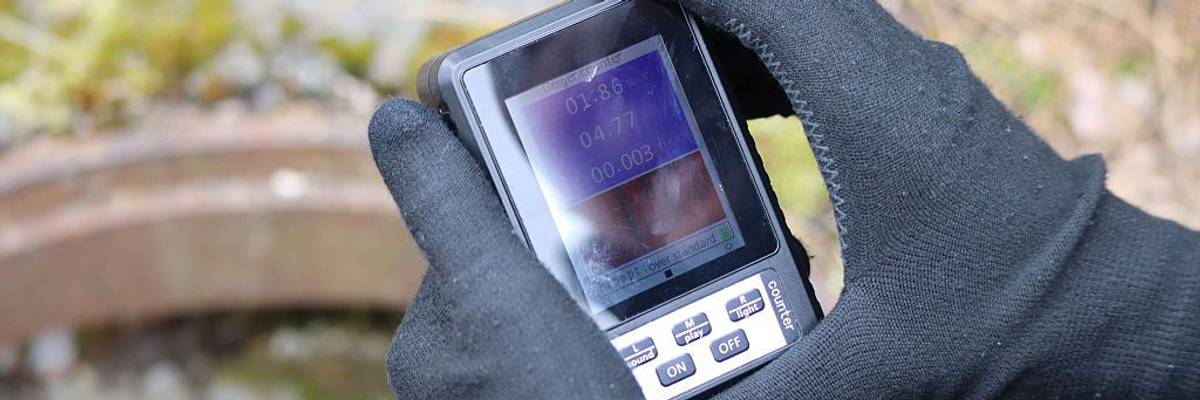
Radiation measurements near the Chоrnobyl Nuclear Power Plant on April 12, 2025 in Chernobyl, Kyiv Oblast, Ukraine.
New Worries at Chernobyl After IAEA Finds Radiation Shield Has 'Lost Primary Safety Functions'
"Timely and comprehensive restoration remains essential to prevent further degradation and ensure long-term nuclear safety," said IAEA director general Rafael Mariano Grossi.
A protective shield built over the remains of the Chernobyl nuclear power plant in Ukraine is no longer capable of blocking radiation, the International Atomic Energy Agency warned late last week.
In a statement published on Friday, the IAEA said that its researchers have confirmed that the New Safe Confinement (NSC) shield has "lost its primary safety functions," including the ability to confine radiation, after it was damaged by a Russian drone strike in February.
On the positive side, the researchers found "no permanent damage" to the system's load-bearing structures and monitoring systems. Nonetheless, IAEA director general Rafael Mariano Grossi said that urgent work needed to be done to rebuild the shield.
"Limited temporary repairs have been carried out on the roof, but timely and comprehensive restoration remains essential to prevent further degradation and ensure long-term nuclear safety," he emphasized.
Grossi noted that IAEA had a permanent team working at the site and vowed that the agency "will continue to do everything it can to support efforts to fully restore nuclear safety and security at the Chernobyl site."
Shaun Burnie, a senior nuclear specialist at Greenpeace, told the New York Times that the damage caused to the NSC isn't cause for immediate concern, although that would change if the damage to the shield went without repairs for a long period of time.
"If there was to be some event inside the shelter that would release radioactive materials into the space inside the New Safe Confinement, because this facility is no longer sealed to the outside environment, there’s the potential for radiation to come out," said Burnie. "I have to say I don’t think that’s a particularly serious issue at the moment, because they’re not actively decommissioning the actual sarcophagus."
The NSC was first put into place in 2016 to enclose the emergency sarcophagus over Chernobyl's number 4 nuclear reactor that was constructed by Soviet officials in the wake of the 1986 disaster at the nuclear plant.
We are at a crossroads
This country and this world are at a monumental crossroads. In a few short weeks, US voters will have an opportunity to beat back the forces of fascism and confront the billionaires who are rigging the economy, our media system, and our democracy, making it increasingly impossible for ordinary people to get by. We’re not just talking about the election. We’re talking about what must be done once these fascist elements are vanquished from power. We need a bolder set of solutions than what either major party has so far been willing to offer and a working-class movement ready to fight like hell for it. Trump didn't emerge from nowhere. The conditions that fueled MAGA authoritarianism were created by decades of radical neoliberal economic policies and a corrupt political system dominated by corporate interests. They slashed taxes on the super-rich, promising that the benefits would trickle down. They said giveaways to the corporate titans would make life more affordable for the rest of us. It was all bullshit. And when a bitter, betrayed populace searches for someone to blame, right-wing demagogues have little trouble finding scapegoats. People know when they're being lied to, but you won't hear any of this from the corporate media. Only independent journalism—powered and funded by people who believe in building a better world—can deliver truly trustworthy daily news. Our Fall Campaign is underway, and we need your help. To power our newsroom through the rest of the year, we need to raise $125,000 by midnight on October 31. So if you share our vision, please contribute whatever you can to sustain our work. |
A protective shield built over the remains of the Chernobyl nuclear power plant in Ukraine is no longer capable of blocking radiation, the International Atomic Energy Agency warned late last week.
In a statement published on Friday, the IAEA said that its researchers have confirmed that the New Safe Confinement (NSC) shield has "lost its primary safety functions," including the ability to confine radiation, after it was damaged by a Russian drone strike in February.
On the positive side, the researchers found "no permanent damage" to the system's load-bearing structures and monitoring systems. Nonetheless, IAEA director general Rafael Mariano Grossi said that urgent work needed to be done to rebuild the shield.
"Limited temporary repairs have been carried out on the roof, but timely and comprehensive restoration remains essential to prevent further degradation and ensure long-term nuclear safety," he emphasized.
Grossi noted that IAEA had a permanent team working at the site and vowed that the agency "will continue to do everything it can to support efforts to fully restore nuclear safety and security at the Chernobyl site."
Shaun Burnie, a senior nuclear specialist at Greenpeace, told the New York Times that the damage caused to the NSC isn't cause for immediate concern, although that would change if the damage to the shield went without repairs for a long period of time.
"If there was to be some event inside the shelter that would release radioactive materials into the space inside the New Safe Confinement, because this facility is no longer sealed to the outside environment, there’s the potential for radiation to come out," said Burnie. "I have to say I don’t think that’s a particularly serious issue at the moment, because they’re not actively decommissioning the actual sarcophagus."
The NSC was first put into place in 2016 to enclose the emergency sarcophagus over Chernobyl's number 4 nuclear reactor that was constructed by Soviet officials in the wake of the 1986 disaster at the nuclear plant.
- In Ukraine, Nuclear Catastrophe Looms ›
- Opinion | The Only True Nuclear Protective Shield Is Global Disarmament | Common Dreams ›
A protective shield built over the remains of the Chernobyl nuclear power plant in Ukraine is no longer capable of blocking radiation, the International Atomic Energy Agency warned late last week.
In a statement published on Friday, the IAEA said that its researchers have confirmed that the New Safe Confinement (NSC) shield has "lost its primary safety functions," including the ability to confine radiation, after it was damaged by a Russian drone strike in February.
On the positive side, the researchers found "no permanent damage" to the system's load-bearing structures and monitoring systems. Nonetheless, IAEA director general Rafael Mariano Grossi said that urgent work needed to be done to rebuild the shield.
"Limited temporary repairs have been carried out on the roof, but timely and comprehensive restoration remains essential to prevent further degradation and ensure long-term nuclear safety," he emphasized.
Grossi noted that IAEA had a permanent team working at the site and vowed that the agency "will continue to do everything it can to support efforts to fully restore nuclear safety and security at the Chernobyl site."
Shaun Burnie, a senior nuclear specialist at Greenpeace, told the New York Times that the damage caused to the NSC isn't cause for immediate concern, although that would change if the damage to the shield went without repairs for a long period of time.
"If there was to be some event inside the shelter that would release radioactive materials into the space inside the New Safe Confinement, because this facility is no longer sealed to the outside environment, there’s the potential for radiation to come out," said Burnie. "I have to say I don’t think that’s a particularly serious issue at the moment, because they’re not actively decommissioning the actual sarcophagus."
The NSC was first put into place in 2016 to enclose the emergency sarcophagus over Chernobyl's number 4 nuclear reactor that was constructed by Soviet officials in the wake of the 1986 disaster at the nuclear plant.
- In Ukraine, Nuclear Catastrophe Looms ›
- Opinion | The Only True Nuclear Protective Shield Is Global Disarmament | Common Dreams ›