SUBSCRIBE TO OUR FREE NEWSLETTER
Daily news & progressive opinion—funded by the people, not the corporations—delivered straight to your inbox.
5
#000000
#FFFFFF
To donate by check, phone, or other method, see our More Ways to Give page.
Daily news & progressive opinion—funded by the people, not the corporations—delivered straight to your inbox.
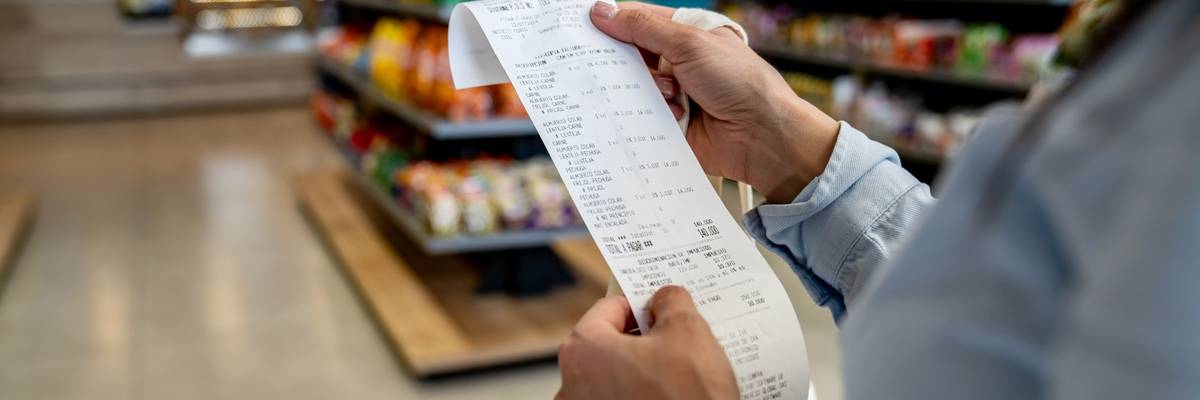
A woman holds a store receipt in this stock photo.
Like the better-known chemical BPA, BPS is an endocrine disruptor linked to breast cancer and reproductive toxicity.
Paper receipts issued by dozens of leading U.S. retailers contain such high levels of bisphenol S that someone who holds one for a surprisingly short period of time is exposed to unsafe levels of the highly toxic chemical, according to a watchdog group.
The Center for Environmental Health (CEH) on Monday announced legal action against 32 major retailers after research by the Oakland, California-based nonprofit found dangerously high levels of BPS—which is chemically similar to the better-known bishpenol A (BPA)—in the nonrecyclable thermal paper used for their receipts. Studies have shown that receipts printed on thermal paper also contain 250-1,000 times the amount of BPA found in a can of food.
"Based on these studies and testing by an independent lab, the concentrations were so high that touching only one receipt with BPS for 10 seconds resulted in exposure above the safe harbor level which requires a clear and reasonable warning to consumers," CEH science lead Mihir Vohra said in a statement.
As CEH explained:
BPS, like BPA, is a hormone-disrupting chemical that mimics estrogen and can disrupt the normal functioning of the body, including metabolism, growth and development, and reproduction. Studies show that BPS can be absorbed through skin when handling receipt paper—even for short periods.
BPS was added to the list of chemicals known to the state of California to cause reproductive issues at the end of 2023, which allowed businesses a one-year grace period to ensure that their products either did not contain this chemical, or included a warning for the presence of BPS.
CEH has notified dozens of retailers that their receipts contain BPS levels that exceed the limit established in California's Proposition 65, giving them 60 days to switch to BPS-free paper or post toxicity warnings near cash registers. CEH can sue companies who don't respond within 60 days.
"For more than two decades, CEH has ensured that companies and manufacturers that remove one toxic chemical from their products do not replace it with another regrettable substitute like a toxic shell game," CEH CEO Kizzy Charles-Guzman said in a statement. "These companies have the opportunity to improve their product specifications so that the receipt paper they purchase is safe for their workers and customers."
CEH recommends that consumers decline paper receipts when possible and workers take measures to protect themselves from BPS exposure.
"Store workers who must handle receipts should wear gloves if possible or avoid using alcohol-based hand cleaners before handling a receipt because it can significantly increase the absorption of BPS," said Shakoora Azimi-Gaylon, senior director of CEH's Toxic Exposures and Pollution Prevention program.
Retailers using BPS-laden receipts include: Burger King, Famous Footwear, Capital One, Claire's, Converse, Crumbl, Daiso, Forever 21, Subway, Foot Locker, Champs, Lids, Jack in the Box, Nordstrom Rack, Peet's Coffee & Tea, JCPenney, Pressed, Spencer's, The Cheesecake Factory, Gap Outlet, Victoria's Secret, Wetzel's Pretzels, Yard House, Smart & Final, Office Depot, Staples, Alliance Thermal Paper, Chanel, Dollar General, AMC, GameStop, and Cinnabon.
Dear Common Dreams reader, It’s been nearly 30 years since I co-founded Common Dreams with my late wife, Lina Newhouser. We had the radical notion that journalism should serve the public good, not corporate profits. It was clear to us from the outset what it would take to build such a project. No paid advertisements. No corporate sponsors. No millionaire publisher telling us what to think or do. Many people said we wouldn't last a year, but we proved those doubters wrong. Together with a tremendous team of journalists and dedicated staff, we built an independent media outlet free from the constraints of profits and corporate control. Our mission has always been simple: To inform. To inspire. To ignite change for the common good. Building Common Dreams was not easy. Our survival was never guaranteed. When you take on the most powerful forces—Wall Street greed, fossil fuel industry destruction, Big Tech lobbyists, and uber-rich oligarchs who have spent billions upon billions rigging the economy and democracy in their favor—the only bulwark you have is supporters who believe in your work. But here’s the urgent message from me today. It's never been this bad out there. And it's never been this hard to keep us going. At the very moment Common Dreams is most needed, the threats we face are intensifying. We need your support now more than ever. We don't accept corporate advertising and never will. We don't have a paywall because we don't think people should be blocked from critical news based on their ability to pay. Everything we do is funded by the donations of readers like you. When everyone does the little they can afford, we are strong. But if that support retreats or dries up, so do we. Will you donate now to make sure Common Dreams not only survives but thrives? —Craig Brown, Co-founder |
Paper receipts issued by dozens of leading U.S. retailers contain such high levels of bisphenol S that someone who holds one for a surprisingly short period of time is exposed to unsafe levels of the highly toxic chemical, according to a watchdog group.
The Center for Environmental Health (CEH) on Monday announced legal action against 32 major retailers after research by the Oakland, California-based nonprofit found dangerously high levels of BPS—which is chemically similar to the better-known bishpenol A (BPA)—in the nonrecyclable thermal paper used for their receipts. Studies have shown that receipts printed on thermal paper also contain 250-1,000 times the amount of BPA found in a can of food.
"Based on these studies and testing by an independent lab, the concentrations were so high that touching only one receipt with BPS for 10 seconds resulted in exposure above the safe harbor level which requires a clear and reasonable warning to consumers," CEH science lead Mihir Vohra said in a statement.
As CEH explained:
BPS, like BPA, is a hormone-disrupting chemical that mimics estrogen and can disrupt the normal functioning of the body, including metabolism, growth and development, and reproduction. Studies show that BPS can be absorbed through skin when handling receipt paper—even for short periods.
BPS was added to the list of chemicals known to the state of California to cause reproductive issues at the end of 2023, which allowed businesses a one-year grace period to ensure that their products either did not contain this chemical, or included a warning for the presence of BPS.
CEH has notified dozens of retailers that their receipts contain BPS levels that exceed the limit established in California's Proposition 65, giving them 60 days to switch to BPS-free paper or post toxicity warnings near cash registers. CEH can sue companies who don't respond within 60 days.
"For more than two decades, CEH has ensured that companies and manufacturers that remove one toxic chemical from their products do not replace it with another regrettable substitute like a toxic shell game," CEH CEO Kizzy Charles-Guzman said in a statement. "These companies have the opportunity to improve their product specifications so that the receipt paper they purchase is safe for their workers and customers."
CEH recommends that consumers decline paper receipts when possible and workers take measures to protect themselves from BPS exposure.
"Store workers who must handle receipts should wear gloves if possible or avoid using alcohol-based hand cleaners before handling a receipt because it can significantly increase the absorption of BPS," said Shakoora Azimi-Gaylon, senior director of CEH's Toxic Exposures and Pollution Prevention program.
Retailers using BPS-laden receipts include: Burger King, Famous Footwear, Capital One, Claire's, Converse, Crumbl, Daiso, Forever 21, Subway, Foot Locker, Champs, Lids, Jack in the Box, Nordstrom Rack, Peet's Coffee & Tea, JCPenney, Pressed, Spencer's, The Cheesecake Factory, Gap Outlet, Victoria's Secret, Wetzel's Pretzels, Yard House, Smart & Final, Office Depot, Staples, Alliance Thermal Paper, Chanel, Dollar General, AMC, GameStop, and Cinnabon.
Paper receipts issued by dozens of leading U.S. retailers contain such high levels of bisphenol S that someone who holds one for a surprisingly short period of time is exposed to unsafe levels of the highly toxic chemical, according to a watchdog group.
The Center for Environmental Health (CEH) on Monday announced legal action against 32 major retailers after research by the Oakland, California-based nonprofit found dangerously high levels of BPS—which is chemically similar to the better-known bishpenol A (BPA)—in the nonrecyclable thermal paper used for their receipts. Studies have shown that receipts printed on thermal paper also contain 250-1,000 times the amount of BPA found in a can of food.
"Based on these studies and testing by an independent lab, the concentrations were so high that touching only one receipt with BPS for 10 seconds resulted in exposure above the safe harbor level which requires a clear and reasonable warning to consumers," CEH science lead Mihir Vohra said in a statement.
As CEH explained:
BPS, like BPA, is a hormone-disrupting chemical that mimics estrogen and can disrupt the normal functioning of the body, including metabolism, growth and development, and reproduction. Studies show that BPS can be absorbed through skin when handling receipt paper—even for short periods.
BPS was added to the list of chemicals known to the state of California to cause reproductive issues at the end of 2023, which allowed businesses a one-year grace period to ensure that their products either did not contain this chemical, or included a warning for the presence of BPS.
CEH has notified dozens of retailers that their receipts contain BPS levels that exceed the limit established in California's Proposition 65, giving them 60 days to switch to BPS-free paper or post toxicity warnings near cash registers. CEH can sue companies who don't respond within 60 days.
"For more than two decades, CEH has ensured that companies and manufacturers that remove one toxic chemical from their products do not replace it with another regrettable substitute like a toxic shell game," CEH CEO Kizzy Charles-Guzman said in a statement. "These companies have the opportunity to improve their product specifications so that the receipt paper they purchase is safe for their workers and customers."
CEH recommends that consumers decline paper receipts when possible and workers take measures to protect themselves from BPS exposure.
"Store workers who must handle receipts should wear gloves if possible or avoid using alcohol-based hand cleaners before handling a receipt because it can significantly increase the absorption of BPS," said Shakoora Azimi-Gaylon, senior director of CEH's Toxic Exposures and Pollution Prevention program.
Retailers using BPS-laden receipts include: Burger King, Famous Footwear, Capital One, Claire's, Converse, Crumbl, Daiso, Forever 21, Subway, Foot Locker, Champs, Lids, Jack in the Box, Nordstrom Rack, Peet's Coffee & Tea, JCPenney, Pressed, Spencer's, The Cheesecake Factory, Gap Outlet, Victoria's Secret, Wetzel's Pretzels, Yard House, Smart & Final, Office Depot, Staples, Alliance Thermal Paper, Chanel, Dollar General, AMC, GameStop, and Cinnabon.