SUBSCRIBE TO OUR FREE NEWSLETTER
Daily news & progressive opinion—funded by the people, not the corporations—delivered straight to your inbox.
5
#000000
#FFFFFF
To donate by check, phone, or other method, see our More Ways to Give page.
Daily news & progressive opinion—funded by the people, not the corporations—delivered straight to your inbox.
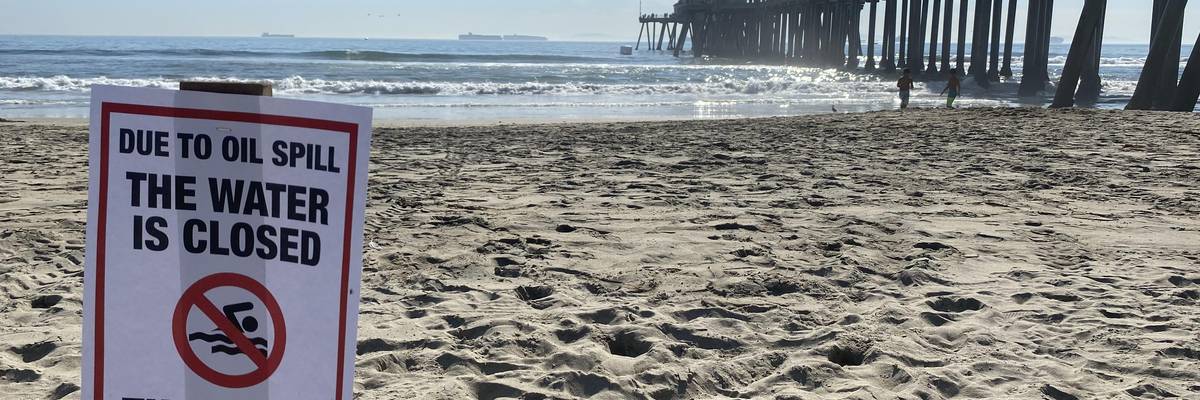
A sign on a beach in Huntington Beach, California warns that the water is closed due to an oil spill in October 2021. (Photo: Wendy Leung/Center for Biological Diversity)
A year after a rupture in a 42-year-old pipeline off the coast of Southern California sent about 25,000 gallons of oil into the Pacific Ocean, conservation and climate groups are speaking out against the federal government's decision to allow the company behind the disaster to repair the pipeline instead of shutting it down for good.
The U.S. Army Corps of Engineers on Friday gave approval to Amplify Energy Corp. to repair the damaged infrastructure, a month after the company pleaded no contest to charges that its negligence caused the leak.
"We must oppose the restart of this pipeline that is over four decades old and instead invest in the development of a clean energy future."
The Houston-based company's pipeline burst on October 1, 2021 off the coast of Huntington Beach, California and continued spewing crude oil for 13 hours before the pipeline was finally shut down. Workers reportedly believed the alert system that was going off after the spill was a false alarm.
The federal government's decision to allow Amplify to continue servicing drilling platforms in the Pacific will increase "the risk of yet another ugly oil spill on California's beautiful coast," said Brady Bradshaw, a senior campaigner at the Center for Biological Diversity's (CBD) oceans program, in a Saturday statement.
"Unfortunately, people living near offshore drilling infrastructure are all too familiar with this abusive cycle of drill, spill, repeat," said Bradshaw. "We need to quickly phase out all dangerous, failing offshore oil infrastructure, not issue more permits that invite the next disaster."
The spill last year forced officials to close beaches in the area for a week and shut down fisheries for a month. While at least 45 birds died from exposure to the spill, dozens more had to be rescued after being coated in oil and injured.
The pipeline burst after the anchors of ships hit the infrastructure during a storm, and Amplify blamed the ships for the spill when federal prosecutors accused the company of negligence, but agreed to pay a $7 million fine and nearly $6 million to pay back the expenses incurred by the government. The company also agreed to install a new leak-detection system and train employees on how to respond to possible leaks.
Having secured the approval of the U.S. Army Corps of Engineers, the company expects to be operating the repaired pipeline in the first quarter of 2023.
That plan flies in the face of repeated warnings from climate scientists and energy experts who say the continued extraction of fossil fuel--and the building of new infrastructure to do so--will make it impossible to keep the planet from heating less than 1.5deg Celsius above pre-industrial temperatures and will ensure that sea levels continue to rise and extreme weather events continue to inflict damage on frontline communities around the world.
"The Amplify oil spill was a stark reminder of the damaging impacts of offshore oil drilling to our coastal environment, communities and the planet. Instead of elongating the life of aging infrastructure, we need to start the transition to clean energy and away from fossil fuels," said Angela Howe, senior legal director of the Surfrider Foundation. "We must oppose the restart of this pipeline that is over four decades old and instead invest in the development of a clean energy future."
The Surfrider Foundation last week posted a video of last year's oil spill on social media and said that "existing offshore drilling off California and beyond must be terminated through the timely decommissioning of oil and gas infrastructure in accordance with federal, state, and local laws."
CBD noted that in giving approval for the repair of the pipeline, the Biden administration disregarded demands made by eight members of Congress in June, including Democratic Reps. Katie Porter, Jared Huffman, and Sara Jacobs, all of California.
The lawmakers called for "adequate environmental review and opportunity for public input" before any approval by the Army Corps.
Last week, CBD sued the federal government for allowing oil companies to operate off the coast of Southern California under "outdated drilling plans written in the 1970s and 80s."
"The Bureau of Ocean Energy Management has failed to review and require revision of the plans, despite last year's oil spill," said CBD. "The outdated plans indicated that the offshore platforms should have been fully decommissioned more than a decade ago."
Dear Common Dreams reader, It’s been nearly 30 years since I co-founded Common Dreams with my late wife, Lina Newhouser. We had the radical notion that journalism should serve the public good, not corporate profits. It was clear to us from the outset what it would take to build such a project. No paid advertisements. No corporate sponsors. No millionaire publisher telling us what to think or do. Many people said we wouldn't last a year, but we proved those doubters wrong. Together with a tremendous team of journalists and dedicated staff, we built an independent media outlet free from the constraints of profits and corporate control. Our mission has always been simple: To inform. To inspire. To ignite change for the common good. Building Common Dreams was not easy. Our survival was never guaranteed. When you take on the most powerful forces—Wall Street greed, fossil fuel industry destruction, Big Tech lobbyists, and uber-rich oligarchs who have spent billions upon billions rigging the economy and democracy in their favor—the only bulwark you have is supporters who believe in your work. But here’s the urgent message from me today. It's never been this bad out there. And it's never been this hard to keep us going. At the very moment Common Dreams is most needed, the threats we face are intensifying. We need your support now more than ever. We don't accept corporate advertising and never will. We don't have a paywall because we don't think people should be blocked from critical news based on their ability to pay. Everything we do is funded by the donations of readers like you. When everyone does the little they can afford, we are strong. But if that support retreats or dries up, so do we. Will you donate now to make sure Common Dreams not only survives but thrives? —Craig Brown, Co-founder |
A year after a rupture in a 42-year-old pipeline off the coast of Southern California sent about 25,000 gallons of oil into the Pacific Ocean, conservation and climate groups are speaking out against the federal government's decision to allow the company behind the disaster to repair the pipeline instead of shutting it down for good.
The U.S. Army Corps of Engineers on Friday gave approval to Amplify Energy Corp. to repair the damaged infrastructure, a month after the company pleaded no contest to charges that its negligence caused the leak.
"We must oppose the restart of this pipeline that is over four decades old and instead invest in the development of a clean energy future."
The Houston-based company's pipeline burst on October 1, 2021 off the coast of Huntington Beach, California and continued spewing crude oil for 13 hours before the pipeline was finally shut down. Workers reportedly believed the alert system that was going off after the spill was a false alarm.
The federal government's decision to allow Amplify to continue servicing drilling platforms in the Pacific will increase "the risk of yet another ugly oil spill on California's beautiful coast," said Brady Bradshaw, a senior campaigner at the Center for Biological Diversity's (CBD) oceans program, in a Saturday statement.
"Unfortunately, people living near offshore drilling infrastructure are all too familiar with this abusive cycle of drill, spill, repeat," said Bradshaw. "We need to quickly phase out all dangerous, failing offshore oil infrastructure, not issue more permits that invite the next disaster."
The spill last year forced officials to close beaches in the area for a week and shut down fisheries for a month. While at least 45 birds died from exposure to the spill, dozens more had to be rescued after being coated in oil and injured.
The pipeline burst after the anchors of ships hit the infrastructure during a storm, and Amplify blamed the ships for the spill when federal prosecutors accused the company of negligence, but agreed to pay a $7 million fine and nearly $6 million to pay back the expenses incurred by the government. The company also agreed to install a new leak-detection system and train employees on how to respond to possible leaks.
Having secured the approval of the U.S. Army Corps of Engineers, the company expects to be operating the repaired pipeline in the first quarter of 2023.
That plan flies in the face of repeated warnings from climate scientists and energy experts who say the continued extraction of fossil fuel--and the building of new infrastructure to do so--will make it impossible to keep the planet from heating less than 1.5deg Celsius above pre-industrial temperatures and will ensure that sea levels continue to rise and extreme weather events continue to inflict damage on frontline communities around the world.
"The Amplify oil spill was a stark reminder of the damaging impacts of offshore oil drilling to our coastal environment, communities and the planet. Instead of elongating the life of aging infrastructure, we need to start the transition to clean energy and away from fossil fuels," said Angela Howe, senior legal director of the Surfrider Foundation. "We must oppose the restart of this pipeline that is over four decades old and instead invest in the development of a clean energy future."
The Surfrider Foundation last week posted a video of last year's oil spill on social media and said that "existing offshore drilling off California and beyond must be terminated through the timely decommissioning of oil and gas infrastructure in accordance with federal, state, and local laws."
CBD noted that in giving approval for the repair of the pipeline, the Biden administration disregarded demands made by eight members of Congress in June, including Democratic Reps. Katie Porter, Jared Huffman, and Sara Jacobs, all of California.
The lawmakers called for "adequate environmental review and opportunity for public input" before any approval by the Army Corps.
Last week, CBD sued the federal government for allowing oil companies to operate off the coast of Southern California under "outdated drilling plans written in the 1970s and 80s."
"The Bureau of Ocean Energy Management has failed to review and require revision of the plans, despite last year's oil spill," said CBD. "The outdated plans indicated that the offshore platforms should have been fully decommissioned more than a decade ago."
A year after a rupture in a 42-year-old pipeline off the coast of Southern California sent about 25,000 gallons of oil into the Pacific Ocean, conservation and climate groups are speaking out against the federal government's decision to allow the company behind the disaster to repair the pipeline instead of shutting it down for good.
The U.S. Army Corps of Engineers on Friday gave approval to Amplify Energy Corp. to repair the damaged infrastructure, a month after the company pleaded no contest to charges that its negligence caused the leak.
"We must oppose the restart of this pipeline that is over four decades old and instead invest in the development of a clean energy future."
The Houston-based company's pipeline burst on October 1, 2021 off the coast of Huntington Beach, California and continued spewing crude oil for 13 hours before the pipeline was finally shut down. Workers reportedly believed the alert system that was going off after the spill was a false alarm.
The federal government's decision to allow Amplify to continue servicing drilling platforms in the Pacific will increase "the risk of yet another ugly oil spill on California's beautiful coast," said Brady Bradshaw, a senior campaigner at the Center for Biological Diversity's (CBD) oceans program, in a Saturday statement.
"Unfortunately, people living near offshore drilling infrastructure are all too familiar with this abusive cycle of drill, spill, repeat," said Bradshaw. "We need to quickly phase out all dangerous, failing offshore oil infrastructure, not issue more permits that invite the next disaster."
The spill last year forced officials to close beaches in the area for a week and shut down fisheries for a month. While at least 45 birds died from exposure to the spill, dozens more had to be rescued after being coated in oil and injured.
The pipeline burst after the anchors of ships hit the infrastructure during a storm, and Amplify blamed the ships for the spill when federal prosecutors accused the company of negligence, but agreed to pay a $7 million fine and nearly $6 million to pay back the expenses incurred by the government. The company also agreed to install a new leak-detection system and train employees on how to respond to possible leaks.
Having secured the approval of the U.S. Army Corps of Engineers, the company expects to be operating the repaired pipeline in the first quarter of 2023.
That plan flies in the face of repeated warnings from climate scientists and energy experts who say the continued extraction of fossil fuel--and the building of new infrastructure to do so--will make it impossible to keep the planet from heating less than 1.5deg Celsius above pre-industrial temperatures and will ensure that sea levels continue to rise and extreme weather events continue to inflict damage on frontline communities around the world.
"The Amplify oil spill was a stark reminder of the damaging impacts of offshore oil drilling to our coastal environment, communities and the planet. Instead of elongating the life of aging infrastructure, we need to start the transition to clean energy and away from fossil fuels," said Angela Howe, senior legal director of the Surfrider Foundation. "We must oppose the restart of this pipeline that is over four decades old and instead invest in the development of a clean energy future."
The Surfrider Foundation last week posted a video of last year's oil spill on social media and said that "existing offshore drilling off California and beyond must be terminated through the timely decommissioning of oil and gas infrastructure in accordance with federal, state, and local laws."
CBD noted that in giving approval for the repair of the pipeline, the Biden administration disregarded demands made by eight members of Congress in June, including Democratic Reps. Katie Porter, Jared Huffman, and Sara Jacobs, all of California.
The lawmakers called for "adequate environmental review and opportunity for public input" before any approval by the Army Corps.
Last week, CBD sued the federal government for allowing oil companies to operate off the coast of Southern California under "outdated drilling plans written in the 1970s and 80s."
"The Bureau of Ocean Energy Management has failed to review and require revision of the plans, despite last year's oil spill," said CBD. "The outdated plans indicated that the offshore platforms should have been fully decommissioned more than a decade ago."