SUBSCRIBE TO OUR FREE NEWSLETTER
Daily news & progressive opinion—funded by the people, not the corporations—delivered straight to your inbox.
5
#000000
#FFFFFF
To donate by check, phone, or other method, see our More Ways to Give page.
Daily news & progressive opinion—funded by the people, not the corporations—delivered straight to your inbox.
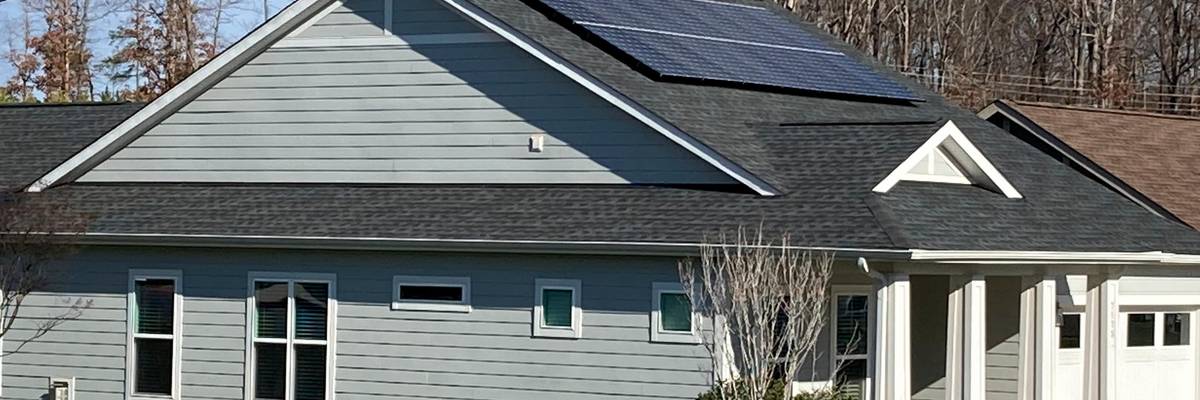
SunPro Solar Energy specialists install solar panels on roof of house in North Carolina. (Photo: Lindsey Nicholson/UCG/Universal Images Group via Getty Images)
The Biden administration on Wednesday announced a new initiative to bring solar power to low-income families across the U.S.
"Deploying community solar is a vital move to protect both our climate and the millions of households most vulnerable to utility shutoffs and dirty energy price spikes."
The new measures will be available to the over 4.5 million families that are served by U.S. Department of Housing and Urban Development (HUD) programs, helping them transition their homes to community solar power--which would reduce prices of monthly power bills by 10% to 50%.
"The combination of extreme heat and rising utility prices creates a perfect storm, and HUD-assisted families and communities are some of the most vulnerable," said HUD Secretary Marcia Fudge. "The steps announced today by the Biden administration will not only help families reduce utility costs, but also provide an opportunity for HUD-assisted residents to participate in the clean energy economy through local community solar programs."
As reported by Politico, "The initiative would connect participants in a federal program that subsidizes energy costs for low-income residents with developers of community solar projects, which sell subscriptions to households for renewable power with the promise of lowering their monthly electricity bills."
In order to reduce consumer risk, Low Income Home Energy Assistance Program recipients will be able to log in to an online platform and shop for the project of their choice--selected from a pool of vetted and approved developers by the Biden administration.
This is the latest proposal by President Joe Biden to accomplish his climate goals through executive actions, after hundreds of billions of dollars worth of climate and clean energy spending failed to pass in the Senate.
Environmental organizations and Democratic lawmakers have called on Biden to declare a climate emergency, which would allow him to unlock the broad powers of the National Emergency Act (NEA) and pursue a wide range of climate regulatory and administrative actions--but the president has yet to do so.
"Good to see Biden rolling out the type of programs he should have been doing since Day One!" said Jamie Henn, director of Fossil Free Media on Twitter. "Let's keep those executive actions coming--and use them not only to build renewables, but also to shut down fossil fuels."
Henn also called for a Big Oil windfall profits tax to expand revenue for the program:
The initiative comes as consumers across the U.S. are contending with skyrocketing energy costs and record-shattering heatwaves.
The Biden administration projects the new HUD initiative could stimulate 134 gigawatts of new solar power capacity nationwide. The current U.S. solar capacity today sits at 97.2 gigawatts, according to the Energy Department.
Community solar advocates see the program--part of Biden's wider climate goal to achieve a net-zero electric grid by 2035--as a way to democratize renewable power, as it will enable people who would otherwise not have access or the means to finance solar investments.
"Deploying community solar is a vital move to protect both our climate and the millions of households most vulnerable to utility shutoffs and dirty energy price spikes," said Jean Su, Energy Justice program director at the Center for Biological Diversity in a statement. "As deadly heatwaves shatter records, this move signals that Biden is taking the climate emergency seriously, but he must go further, and fast. By declaring a climate emergency, Biden can unleash his full suite of executive powers, draw down deadly fossil fuels, and show the world he's ready to fight the climate catastrophe head-on."
Dear Common Dreams reader, It’s been nearly 30 years since I co-founded Common Dreams with my late wife, Lina Newhouser. We had the radical notion that journalism should serve the public good, not corporate profits. It was clear to us from the outset what it would take to build such a project. No paid advertisements. No corporate sponsors. No millionaire publisher telling us what to think or do. Many people said we wouldn't last a year, but we proved those doubters wrong. Together with a tremendous team of journalists and dedicated staff, we built an independent media outlet free from the constraints of profits and corporate control. Our mission has always been simple: To inform. To inspire. To ignite change for the common good. Building Common Dreams was not easy. Our survival was never guaranteed. When you take on the most powerful forces—Wall Street greed, fossil fuel industry destruction, Big Tech lobbyists, and uber-rich oligarchs who have spent billions upon billions rigging the economy and democracy in their favor—the only bulwark you have is supporters who believe in your work. But here’s the urgent message from me today. It's never been this bad out there. And it's never been this hard to keep us going. At the very moment Common Dreams is most needed, the threats we face are intensifying. We need your support now more than ever. We don't accept corporate advertising and never will. We don't have a paywall because we don't think people should be blocked from critical news based on their ability to pay. Everything we do is funded by the donations of readers like you. When everyone does the little they can afford, we are strong. But if that support retreats or dries up, so do we. Will you donate now to make sure Common Dreams not only survives but thrives? —Craig Brown, Co-founder |
The Biden administration on Wednesday announced a new initiative to bring solar power to low-income families across the U.S.
"Deploying community solar is a vital move to protect both our climate and the millions of households most vulnerable to utility shutoffs and dirty energy price spikes."
The new measures will be available to the over 4.5 million families that are served by U.S. Department of Housing and Urban Development (HUD) programs, helping them transition their homes to community solar power--which would reduce prices of monthly power bills by 10% to 50%.
"The combination of extreme heat and rising utility prices creates a perfect storm, and HUD-assisted families and communities are some of the most vulnerable," said HUD Secretary Marcia Fudge. "The steps announced today by the Biden administration will not only help families reduce utility costs, but also provide an opportunity for HUD-assisted residents to participate in the clean energy economy through local community solar programs."
As reported by Politico, "The initiative would connect participants in a federal program that subsidizes energy costs for low-income residents with developers of community solar projects, which sell subscriptions to households for renewable power with the promise of lowering their monthly electricity bills."
In order to reduce consumer risk, Low Income Home Energy Assistance Program recipients will be able to log in to an online platform and shop for the project of their choice--selected from a pool of vetted and approved developers by the Biden administration.
This is the latest proposal by President Joe Biden to accomplish his climate goals through executive actions, after hundreds of billions of dollars worth of climate and clean energy spending failed to pass in the Senate.
Environmental organizations and Democratic lawmakers have called on Biden to declare a climate emergency, which would allow him to unlock the broad powers of the National Emergency Act (NEA) and pursue a wide range of climate regulatory and administrative actions--but the president has yet to do so.
"Good to see Biden rolling out the type of programs he should have been doing since Day One!" said Jamie Henn, director of Fossil Free Media on Twitter. "Let's keep those executive actions coming--and use them not only to build renewables, but also to shut down fossil fuels."
Henn also called for a Big Oil windfall profits tax to expand revenue for the program:
The initiative comes as consumers across the U.S. are contending with skyrocketing energy costs and record-shattering heatwaves.
The Biden administration projects the new HUD initiative could stimulate 134 gigawatts of new solar power capacity nationwide. The current U.S. solar capacity today sits at 97.2 gigawatts, according to the Energy Department.
Community solar advocates see the program--part of Biden's wider climate goal to achieve a net-zero electric grid by 2035--as a way to democratize renewable power, as it will enable people who would otherwise not have access or the means to finance solar investments.
"Deploying community solar is a vital move to protect both our climate and the millions of households most vulnerable to utility shutoffs and dirty energy price spikes," said Jean Su, Energy Justice program director at the Center for Biological Diversity in a statement. "As deadly heatwaves shatter records, this move signals that Biden is taking the climate emergency seriously, but he must go further, and fast. By declaring a climate emergency, Biden can unleash his full suite of executive powers, draw down deadly fossil fuels, and show the world he's ready to fight the climate catastrophe head-on."
The Biden administration on Wednesday announced a new initiative to bring solar power to low-income families across the U.S.
"Deploying community solar is a vital move to protect both our climate and the millions of households most vulnerable to utility shutoffs and dirty energy price spikes."
The new measures will be available to the over 4.5 million families that are served by U.S. Department of Housing and Urban Development (HUD) programs, helping them transition their homes to community solar power--which would reduce prices of monthly power bills by 10% to 50%.
"The combination of extreme heat and rising utility prices creates a perfect storm, and HUD-assisted families and communities are some of the most vulnerable," said HUD Secretary Marcia Fudge. "The steps announced today by the Biden administration will not only help families reduce utility costs, but also provide an opportunity for HUD-assisted residents to participate in the clean energy economy through local community solar programs."
As reported by Politico, "The initiative would connect participants in a federal program that subsidizes energy costs for low-income residents with developers of community solar projects, which sell subscriptions to households for renewable power with the promise of lowering their monthly electricity bills."
In order to reduce consumer risk, Low Income Home Energy Assistance Program recipients will be able to log in to an online platform and shop for the project of their choice--selected from a pool of vetted and approved developers by the Biden administration.
This is the latest proposal by President Joe Biden to accomplish his climate goals through executive actions, after hundreds of billions of dollars worth of climate and clean energy spending failed to pass in the Senate.
Environmental organizations and Democratic lawmakers have called on Biden to declare a climate emergency, which would allow him to unlock the broad powers of the National Emergency Act (NEA) and pursue a wide range of climate regulatory and administrative actions--but the president has yet to do so.
"Good to see Biden rolling out the type of programs he should have been doing since Day One!" said Jamie Henn, director of Fossil Free Media on Twitter. "Let's keep those executive actions coming--and use them not only to build renewables, but also to shut down fossil fuels."
Henn also called for a Big Oil windfall profits tax to expand revenue for the program:
The initiative comes as consumers across the U.S. are contending with skyrocketing energy costs and record-shattering heatwaves.
The Biden administration projects the new HUD initiative could stimulate 134 gigawatts of new solar power capacity nationwide. The current U.S. solar capacity today sits at 97.2 gigawatts, according to the Energy Department.
Community solar advocates see the program--part of Biden's wider climate goal to achieve a net-zero electric grid by 2035--as a way to democratize renewable power, as it will enable people who would otherwise not have access or the means to finance solar investments.
"Deploying community solar is a vital move to protect both our climate and the millions of households most vulnerable to utility shutoffs and dirty energy price spikes," said Jean Su, Energy Justice program director at the Center for Biological Diversity in a statement. "As deadly heatwaves shatter records, this move signals that Biden is taking the climate emergency seriously, but he must go further, and fast. By declaring a climate emergency, Biden can unleash his full suite of executive powers, draw down deadly fossil fuels, and show the world he's ready to fight the climate catastrophe head-on."