

SUBSCRIBE TO OUR FREE NEWSLETTER
Daily news & progressive opinion—funded by the people, not the corporations—delivered straight to your inbox.
5
#000000
#FFFFFF
To donate by check, phone, or other method, see our More Ways to Give page.
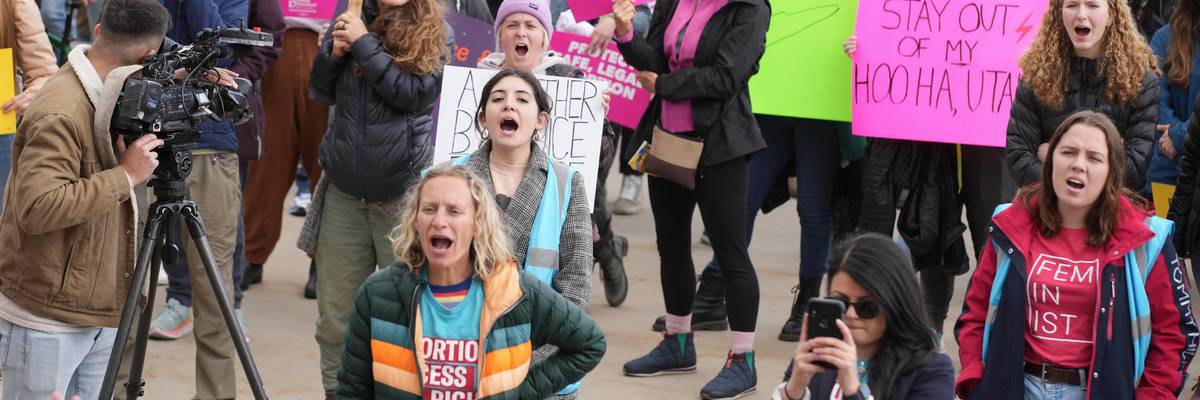
Reproductive rights defenders on Monday welcomed a Utah judge's 14-day injunction against the state's so-called "trigger law" banning abortions in the wake of the U.S. Supreme Court's reversal of Roe v. Wade last week.
"Without a temporary restraining order, the act will cause irreparable harm to PPAU, its patients, and its staff."
KSTU reports abortions were allowed to resume immediately after 3rd District Court Judge Andrew Stone approved a request from Planned Parenthood of Utah (PPAU) and the ACLU of Utah for an emergency injunction to block enforcement of the newly enacted law.
"The Supreme Court ruling was devastating and terrifying for our patients and providers, but at least for now, Utahns will be able to get the care they need," PPAU president and chief executive Karrie Galloway said in a statement. "Today is a win, but it is only the first step in what will undoubtedly be a long and difficult fight."
Passed in 2020, Utah's trigger law outlaws abortions with limited exceptions, such as rape or incest or to save a pregnant person's life. PPAU argued the legislation is "flagrantly unconstitutional."
Thirteen states have passed trigger bans. A person convicted of violating Utah's trigger law could face as many as 15 years in prison, a fine of up to $10,000, or both.
Stone wrote in his ruling that the injunction served the public interest, and that the trigger law "upsets the long-standing status quo on which Utah women and their families have relied for at least five decades."
"Without a temporary restraining order, the act will cause irreparable harm to PPAU, its patients, and its staff," Stone wrote. "If left in place, the act will force many Utahns to continue carrying a pregnancy that they have decided to end, with all of the physical, emotional, and financial costs that entails."
Related Content

The Utah ruling came on the same day that a Louisiana judge temporarily blocked that state's trigger ban, which she called "unconstitutionally vague."
Reproductive rights defenders on Monday welcomed a Utah judge's 14-day injunction against the state's so-called "trigger law" banning abortions in the wake of the U.S. Supreme Court's reversal of Roe v. Wade last week.
"Without a temporary restraining order, the act will cause irreparable harm to PPAU, its patients, and its staff."
KSTU reports abortions were allowed to resume immediately after 3rd District Court Judge Andrew Stone approved a request from Planned Parenthood of Utah (PPAU) and the ACLU of Utah for an emergency injunction to block enforcement of the newly enacted law.
"The Supreme Court ruling was devastating and terrifying for our patients and providers, but at least for now, Utahns will be able to get the care they need," PPAU president and chief executive Karrie Galloway said in a statement. "Today is a win, but it is only the first step in what will undoubtedly be a long and difficult fight."
Passed in 2020, Utah's trigger law outlaws abortions with limited exceptions, such as rape or incest or to save a pregnant person's life. PPAU argued the legislation is "flagrantly unconstitutional."
Thirteen states have passed trigger bans. A person convicted of violating Utah's trigger law could face as many as 15 years in prison, a fine of up to $10,000, or both.
Stone wrote in his ruling that the injunction served the public interest, and that the trigger law "upsets the long-standing status quo on which Utah women and their families have relied for at least five decades."
"Without a temporary restraining order, the act will cause irreparable harm to PPAU, its patients, and its staff," Stone wrote. "If left in place, the act will force many Utahns to continue carrying a pregnancy that they have decided to end, with all of the physical, emotional, and financial costs that entails."
Related Content
The Utah ruling came on the same day that a Louisiana judge temporarily blocked that state's trigger ban, which she called "unconstitutionally vague."
Reproductive rights defenders on Monday welcomed a Utah judge's 14-day injunction against the state's so-called "trigger law" banning abortions in the wake of the U.S. Supreme Court's reversal of Roe v. Wade last week.
"Without a temporary restraining order, the act will cause irreparable harm to PPAU, its patients, and its staff."
KSTU reports abortions were allowed to resume immediately after 3rd District Court Judge Andrew Stone approved a request from Planned Parenthood of Utah (PPAU) and the ACLU of Utah for an emergency injunction to block enforcement of the newly enacted law.
"The Supreme Court ruling was devastating and terrifying for our patients and providers, but at least for now, Utahns will be able to get the care they need," PPAU president and chief executive Karrie Galloway said in a statement. "Today is a win, but it is only the first step in what will undoubtedly be a long and difficult fight."
Passed in 2020, Utah's trigger law outlaws abortions with limited exceptions, such as rape or incest or to save a pregnant person's life. PPAU argued the legislation is "flagrantly unconstitutional."
Thirteen states have passed trigger bans. A person convicted of violating Utah's trigger law could face as many as 15 years in prison, a fine of up to $10,000, or both.
Stone wrote in his ruling that the injunction served the public interest, and that the trigger law "upsets the long-standing status quo on which Utah women and their families have relied for at least five decades."
"Without a temporary restraining order, the act will cause irreparable harm to PPAU, its patients, and its staff," Stone wrote. "If left in place, the act will force many Utahns to continue carrying a pregnancy that they have decided to end, with all of the physical, emotional, and financial costs that entails."
Related Content
The Utah ruling came on the same day that a Louisiana judge temporarily blocked that state's trigger ban, which she called "unconstitutionally vague."

