Human rights advocates and attorneys representing Guantanamo Bay detainees on Thursday decried a secret new courtroom reportedly being built by the Pentagon at the notorious offshore U.S. prison.
"I've observed trials in Mongolia that were more transparent than this."
The New York Times reports Gitmo's new second courtroom--which will cost $4 million--will not allow members of the public to witness proceedings against detainees to be tried for alleged terrorism-related offenses. People wishing to view those trials will have the option of watching delayed video footage in a separate building.
"I've observed trial proceedings in person at Guantanamo. The chipper 'secrecy' imposed by the military is insulting, anti-democratic, and cowardly," said Michael Bronner, producer of the 2021 film The Mauritanian, which portrays Gitmo detainee Mohamedou Ould Slahi's 14-year fight for freedom. "The entire enterprise makes a mockery out of what the U.S. pretends to stand for."
The Times calls the second court "the latest retreat from transparency in the already secretive national security cases at the base, where the military and intelligence agencies have been restricting what the public can see."
The paper says that the new court "appears to be tailor-made for the conspiracy murder trial of three men who were recently charged in two terrorist bombings in Indonesia in 2002 and 2003 that killed more than 200 people."
Pentagon officials said the new courtroom--which is being built in the United States for assembly at Gitmo by 2023--will enable prosecutors to hold two simultaneous trials. Camp Justice, Guantanamo's court compound, consists of prefabricated structures and tents in order to circumvent the congressional approval needed for permanent buildings. The current main courtroom permits observers to watch live proceedings with a 40-second audio delay that allows judges or security officers to censor information they believe is classified.
"I've observed trials in Mongolia that were more transparent than this," James R. Hodes, an attorney representing detainee Encep Nurjaman--also known as Hambali--in the Indonesian bombing case, told the Times.
James P. Anderson, the security specialist assigned to the defense team of detainee Abd al-Hadi al-Iraqi, lamented that "things that used to be unclassified become classified just because the person reviewing it is uncomfortable with its use."
"It defies all reasonable logic," he told the Times.
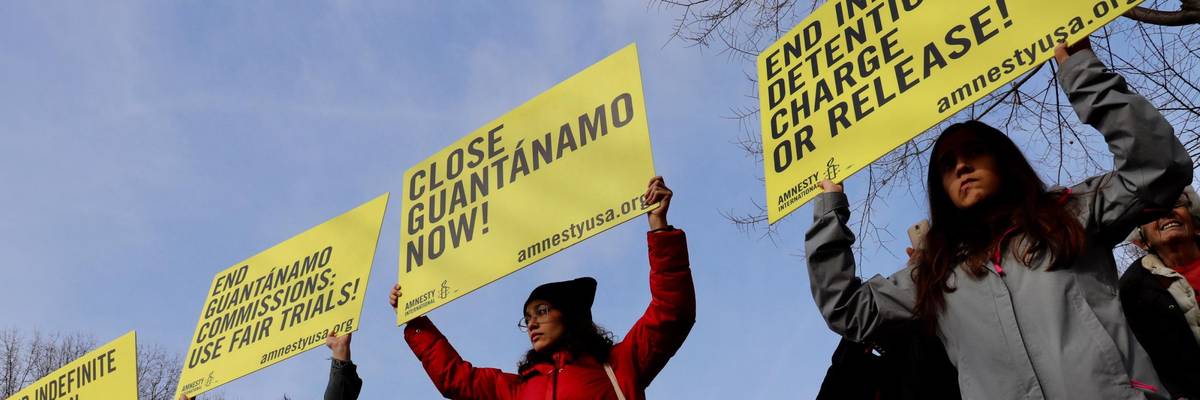
News of the new Gitmo courtroom comes amid an ongoing push by human rights advocates to hold President Joe Biden accountable to his stated intention to close the military prison, which was opened by the George W. Bush administration in January 2002 and is viewed globally as a symbol of the indefinite detention and torture that have characterized the U.S.-led War on Terror.
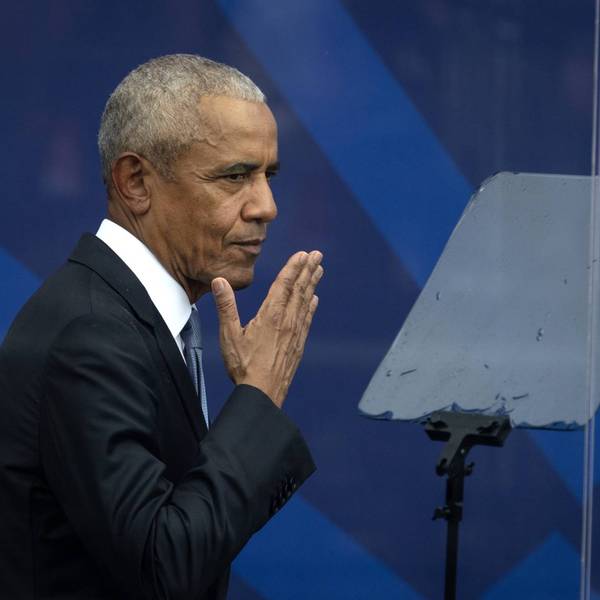
Once Biden's boss, former President Barack Obama ordered the Guantanamo prison closed in January 2009 but was blocked by Congress and later abandoned the effort. Today, 39 men remain imprisoned there. Of these, 28 have never been charged, and 10 have been cleared for release. Earlier this year, 56-year-old Moroccan detainee Abdul Latif Nasser was repatriated after 19 years in detention.
Related Content

CIA Torture Cover-Up Still Looms Over 9/11 Trials at Guantanamo
Last month, U.S. Sen. Dick Durbin (D-Ill.) introduced an amendment to the National Defense Authorization Act (NDAA) that would have closed the prison at Gitmo. However, the NDAA signed by Biden earlier this week bars him from transferring detainees to third countries or the U.S. for trial.
Biden said the prohibition "unduly impair[s] the ability of the executive branch to determine when and where to prosecute Guantanamo Bay detainees and where to send them upon release," and "could make it difficult to comply with the final judgment of a court that has directed the release of a detainee on a writ of habeas corpus."
Additionally, the president said the proscription could "constrain the flexibility of the executive branch with respect to its engagement in delicate negotiations with foreign countries over the potential transfer of detainees and thus may in some cases make it difficult to effectuate the transfer of detainees in a manner that does not threaten national security."
"I urge the Congress to eliminate these restrictions as soon as possible," Biden said.
Human rights advocates and attorneys representing Guantanamo Bay detainees on Thursday decried a secret new courtroom reportedly being built by the Pentagon at the notorious offshore U.S. prison.
"I've observed trials in Mongolia that were more transparent than this."
The New York Times reports Gitmo's new second courtroom--which will cost $4 million--will not allow members of the public to witness proceedings against detainees to be tried for alleged terrorism-related offenses. People wishing to view those trials will have the option of watching delayed video footage in a separate building.
"I've observed trial proceedings in person at Guantanamo. The chipper 'secrecy' imposed by the military is insulting, anti-democratic, and cowardly," said Michael Bronner, producer of the 2021 film The Mauritanian, which portrays Gitmo detainee Mohamedou Ould Slahi's 14-year fight for freedom. "The entire enterprise makes a mockery out of what the U.S. pretends to stand for."
The Times calls the second court "the latest retreat from transparency in the already secretive national security cases at the base, where the military and intelligence agencies have been restricting what the public can see."
The paper says that the new court "appears to be tailor-made for the conspiracy murder trial of three men who were recently charged in two terrorist bombings in Indonesia in 2002 and 2003 that killed more than 200 people."
Pentagon officials said the new courtroom--which is being built in the United States for assembly at Gitmo by 2023--will enable prosecutors to hold two simultaneous trials. Camp Justice, Guantanamo's court compound, consists of prefabricated structures and tents in order to circumvent the congressional approval needed for permanent buildings. The current main courtroom permits observers to watch live proceedings with a 40-second audio delay that allows judges or security officers to censor information they believe is classified.
"I've observed trials in Mongolia that were more transparent than this," James R. Hodes, an attorney representing detainee Encep Nurjaman--also known as Hambali--in the Indonesian bombing case, told the Times.
James P. Anderson, the security specialist assigned to the defense team of detainee Abd al-Hadi al-Iraqi, lamented that "things that used to be unclassified become classified just because the person reviewing it is uncomfortable with its use."
"It defies all reasonable logic," he told the Times.
News of the new Gitmo courtroom comes amid an ongoing push by human rights advocates to hold President Joe Biden accountable to his stated intention to close the military prison, which was opened by the George W. Bush administration in January 2002 and is viewed globally as a symbol of the indefinite detention and torture that have characterized the U.S.-led War on Terror.
Once Biden's boss, former President Barack Obama ordered the Guantanamo prison closed in January 2009 but was blocked by Congress and later abandoned the effort. Today, 39 men remain imprisoned there. Of these, 28 have never been charged, and 10 have been cleared for release. Earlier this year, 56-year-old Moroccan detainee Abdul Latif Nasser was repatriated after 19 years in detention.
Related Content
CIA Torture Cover-Up Still Looms Over 9/11 Trials at Guantanamo
Last month, U.S. Sen. Dick Durbin (D-Ill.) introduced an amendment to the National Defense Authorization Act (NDAA) that would have closed the prison at Gitmo. However, the NDAA signed by Biden earlier this week bars him from transferring detainees to third countries or the U.S. for trial.
Biden said the prohibition "unduly impair[s] the ability of the executive branch to determine when and where to prosecute Guantanamo Bay detainees and where to send them upon release," and "could make it difficult to comply with the final judgment of a court that has directed the release of a detainee on a writ of habeas corpus."
Additionally, the president said the proscription could "constrain the flexibility of the executive branch with respect to its engagement in delicate negotiations with foreign countries over the potential transfer of detainees and thus may in some cases make it difficult to effectuate the transfer of detainees in a manner that does not threaten national security."
"I urge the Congress to eliminate these restrictions as soon as possible," Biden said.
- CIA Torture Cover-Up Still Looms Over 9/11 Trials at Guantanamo ›
- Opinion | Unveiling Shadows: Guantánamo Prisoners and the International Day of the Victims of Enforced Disappearances | Common Dreams ›
- 22 Years, 4 Presidents, and Just 1 Conviction Later, Dozens Still Jailed at Guantánamo ›
- Opinion | It’s Time to Finally Close the Shameful Prison at Guantánamo | Common Dreams ›
Human rights advocates and attorneys representing Guantanamo Bay detainees on Thursday decried a secret new courtroom reportedly being built by the Pentagon at the notorious offshore U.S. prison.
"I've observed trials in Mongolia that were more transparent than this."
The New York Times reports Gitmo's new second courtroom--which will cost $4 million--will not allow members of the public to witness proceedings against detainees to be tried for alleged terrorism-related offenses. People wishing to view those trials will have the option of watching delayed video footage in a separate building.
"I've observed trial proceedings in person at Guantanamo. The chipper 'secrecy' imposed by the military is insulting, anti-democratic, and cowardly," said Michael Bronner, producer of the 2021 film The Mauritanian, which portrays Gitmo detainee Mohamedou Ould Slahi's 14-year fight for freedom. "The entire enterprise makes a mockery out of what the U.S. pretends to stand for."
The Times calls the second court "the latest retreat from transparency in the already secretive national security cases at the base, where the military and intelligence agencies have been restricting what the public can see."
The paper says that the new court "appears to be tailor-made for the conspiracy murder trial of three men who were recently charged in two terrorist bombings in Indonesia in 2002 and 2003 that killed more than 200 people."
Pentagon officials said the new courtroom--which is being built in the United States for assembly at Gitmo by 2023--will enable prosecutors to hold two simultaneous trials. Camp Justice, Guantanamo's court compound, consists of prefabricated structures and tents in order to circumvent the congressional approval needed for permanent buildings. The current main courtroom permits observers to watch live proceedings with a 40-second audio delay that allows judges or security officers to censor information they believe is classified.
"I've observed trials in Mongolia that were more transparent than this," James R. Hodes, an attorney representing detainee Encep Nurjaman--also known as Hambali--in the Indonesian bombing case, told the Times.
James P. Anderson, the security specialist assigned to the defense team of detainee Abd al-Hadi al-Iraqi, lamented that "things that used to be unclassified become classified just because the person reviewing it is uncomfortable with its use."
"It defies all reasonable logic," he told the Times.
News of the new Gitmo courtroom comes amid an ongoing push by human rights advocates to hold President Joe Biden accountable to his stated intention to close the military prison, which was opened by the George W. Bush administration in January 2002 and is viewed globally as a symbol of the indefinite detention and torture that have characterized the U.S.-led War on Terror.
Once Biden's boss, former President Barack Obama ordered the Guantanamo prison closed in January 2009 but was blocked by Congress and later abandoned the effort. Today, 39 men remain imprisoned there. Of these, 28 have never been charged, and 10 have been cleared for release. Earlier this year, 56-year-old Moroccan detainee Abdul Latif Nasser was repatriated after 19 years in detention.
Related Content
CIA Torture Cover-Up Still Looms Over 9/11 Trials at Guantanamo
Last month, U.S. Sen. Dick Durbin (D-Ill.) introduced an amendment to the National Defense Authorization Act (NDAA) that would have closed the prison at Gitmo. However, the NDAA signed by Biden earlier this week bars him from transferring detainees to third countries or the U.S. for trial.
Biden said the prohibition "unduly impair[s] the ability of the executive branch to determine when and where to prosecute Guantanamo Bay detainees and where to send them upon release," and "could make it difficult to comply with the final judgment of a court that has directed the release of a detainee on a writ of habeas corpus."
Additionally, the president said the proscription could "constrain the flexibility of the executive branch with respect to its engagement in delicate negotiations with foreign countries over the potential transfer of detainees and thus may in some cases make it difficult to effectuate the transfer of detainees in a manner that does not threaten national security."
"I urge the Congress to eliminate these restrictions as soon as possible," Biden said.
- CIA Torture Cover-Up Still Looms Over 9/11 Trials at Guantanamo ›
- Opinion | Unveiling Shadows: Guantánamo Prisoners and the International Day of the Victims of Enforced Disappearances | Common Dreams ›
- 22 Years, 4 Presidents, and Just 1 Conviction Later, Dozens Still Jailed at Guantánamo ›
- Opinion | It’s Time to Finally Close the Shameful Prison at Guantánamo | Common Dreams ›