

SUBSCRIBE TO OUR FREE NEWSLETTER
Daily news & progressive opinion—funded by the people, not the corporations—delivered straight to your inbox.
5
#000000
#FFFFFF
To donate by check, phone, or other method, see our More Ways to Give page.
Daily news & progressive opinion—funded by the people, not the corporations—delivered straight to your inbox.
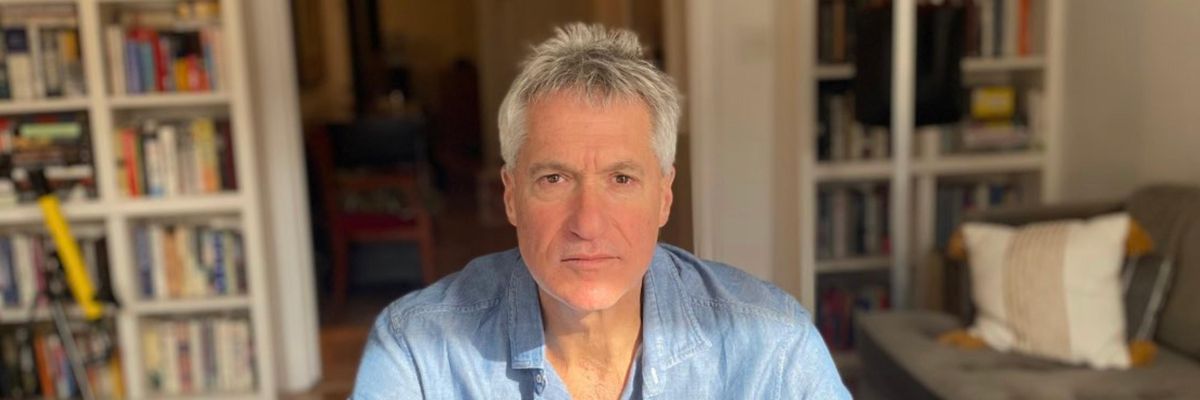
Imprisoned human rights lawyer Steven Donziger said he was transferred from a federal penitentiary in Connecticut back to house arrest on December 9, 2021. (Photo: Steven Donziger/Twitter)
Steven Donziger, the U.S. human rights attorney sentenced in October to six months' incarceration for refusing to hand over privileged client information to fossil fuel giant Chevron, said Thursday that he was released from a federal prison in Connecticut to complete his sentence under house arrest.
"Prison officials released me this morning to serve the rest of my sentence (136 days) at home," Donziger tweeted following his release from the Danbury Federal Correctional Institution. Prior to his incarceration, he had spent over 800 days under house arrest.
Donziger said he is "so grateful" for the development, but that "the battle for my freedom and to hold Chevron accountable continues."
Donziger represented a group of Ecuadorean farmers and Indigenous people in a 1990s lawsuit against Texaco, which was later acquired by Chevron, over the company's intentional dumping of billions of gallons of carcinogenic waste into the Amazon. The U.S. attorney won a multibillion-dollar judgment against Chevron in Ecuadorian courts.
However, Chevron went after Donziger in the American court system, and when the attorney refused to disclose privileged client information to the company, U.S. District Judge Lewis Kaplan--who was invested in Chevron--held him in contempt of court. Kaplan's handpicked judge to preside over Donziger's contempt trial, Loretta Preska, is affiliated with the Chevron-funded Federalist Society.
Donziger's case drew worldwide attention and solidarity, with human rights experts and free speech groups joining progressive U.S. lawmakers in demanding his release.
Dear Common Dreams reader, It’s been nearly 30 years since I co-founded Common Dreams with my late wife, Lina Newhouser. We had the radical notion that journalism should serve the public good, not corporate profits. It was clear to us from the outset what it would take to build such a project. No paid advertisements. No corporate sponsors. No millionaire publisher telling us what to think or do. Many people said we wouldn't last a year, but we proved those doubters wrong. Together with a tremendous team of journalists and dedicated staff, we built an independent media outlet free from the constraints of profits and corporate control. Our mission has always been simple: To inform. To inspire. To ignite change for the common good. Building Common Dreams was not easy. Our survival was never guaranteed. When you take on the most powerful forces—Wall Street greed, fossil fuel industry destruction, Big Tech lobbyists, and uber-rich oligarchs who have spent billions upon billions rigging the economy and democracy in their favor—the only bulwark you have is supporters who believe in your work. But here’s the urgent message from me today. It's never been this bad out there. And it's never been this hard to keep us going. At the very moment Common Dreams is most needed, the threats we face are intensifying. We need your support now more than ever. We don't accept corporate advertising and never will. We don't have a paywall because we don't think people should be blocked from critical news based on their ability to pay. Everything we do is funded by the donations of readers like you. When everyone does the little they can afford, we are strong. But if that support retreats or dries up, so do we. Will you donate now to make sure Common Dreams not only survives but thrives? —Craig Brown, Co-founder |
Steven Donziger, the U.S. human rights attorney sentenced in October to six months' incarceration for refusing to hand over privileged client information to fossil fuel giant Chevron, said Thursday that he was released from a federal prison in Connecticut to complete his sentence under house arrest.
"Prison officials released me this morning to serve the rest of my sentence (136 days) at home," Donziger tweeted following his release from the Danbury Federal Correctional Institution. Prior to his incarceration, he had spent over 800 days under house arrest.
Donziger said he is "so grateful" for the development, but that "the battle for my freedom and to hold Chevron accountable continues."
Donziger represented a group of Ecuadorean farmers and Indigenous people in a 1990s lawsuit against Texaco, which was later acquired by Chevron, over the company's intentional dumping of billions of gallons of carcinogenic waste into the Amazon. The U.S. attorney won a multibillion-dollar judgment against Chevron in Ecuadorian courts.
However, Chevron went after Donziger in the American court system, and when the attorney refused to disclose privileged client information to the company, U.S. District Judge Lewis Kaplan--who was invested in Chevron--held him in contempt of court. Kaplan's handpicked judge to preside over Donziger's contempt trial, Loretta Preska, is affiliated with the Chevron-funded Federalist Society.
Donziger's case drew worldwide attention and solidarity, with human rights experts and free speech groups joining progressive U.S. lawmakers in demanding his release.
Steven Donziger, the U.S. human rights attorney sentenced in October to six months' incarceration for refusing to hand over privileged client information to fossil fuel giant Chevron, said Thursday that he was released from a federal prison in Connecticut to complete his sentence under house arrest.
"Prison officials released me this morning to serve the rest of my sentence (136 days) at home," Donziger tweeted following his release from the Danbury Federal Correctional Institution. Prior to his incarceration, he had spent over 800 days under house arrest.
Donziger said he is "so grateful" for the development, but that "the battle for my freedom and to hold Chevron accountable continues."
Donziger represented a group of Ecuadorean farmers and Indigenous people in a 1990s lawsuit against Texaco, which was later acquired by Chevron, over the company's intentional dumping of billions of gallons of carcinogenic waste into the Amazon. The U.S. attorney won a multibillion-dollar judgment against Chevron in Ecuadorian courts.
However, Chevron went after Donziger in the American court system, and when the attorney refused to disclose privileged client information to the company, U.S. District Judge Lewis Kaplan--who was invested in Chevron--held him in contempt of court. Kaplan's handpicked judge to preside over Donziger's contempt trial, Loretta Preska, is affiliated with the Chevron-funded Federalist Society.
Donziger's case drew worldwide attention and solidarity, with human rights experts and free speech groups joining progressive U.S. lawmakers in demanding his release.

