SUBSCRIBE TO OUR FREE NEWSLETTER
Daily news & progressive opinion—funded by the people, not the corporations—delivered straight to your inbox.
5
#000000
#FFFFFF
To donate by check, phone, or other method, see our More Ways to Give page.
Daily news & progressive opinion—funded by the people, not the corporations—delivered straight to your inbox.

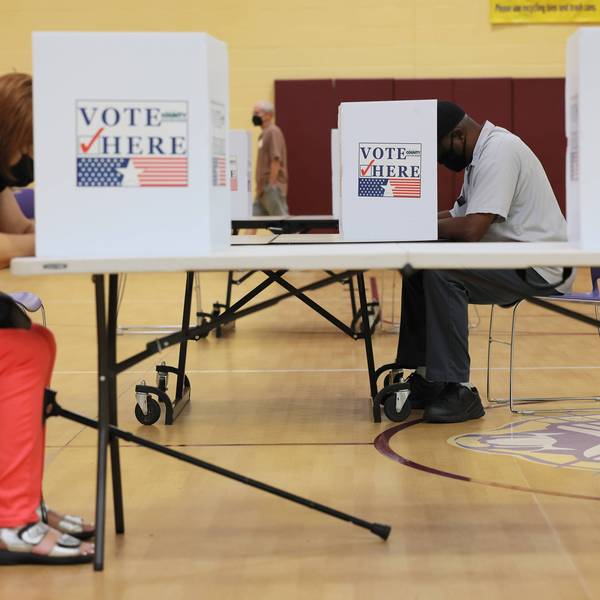
An election worker gives a ballot to a voter on November 3, 2020 in Lumberton, North Carolina. (Photo: Melissa Sue Gerrits/Getty Images)
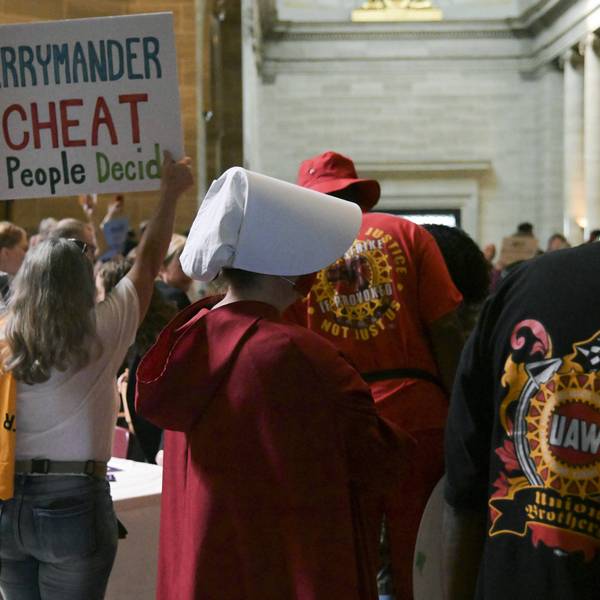
Voting rights advocates on Wednesday hailed a state Supreme Court order in North Carolina as a victory for democracy as the court cited the state's gerrymandered district map as its reason for delaying the 2022 primaries by two months--but noted that the fight for a fair map is not over yet.
Following the court's preliminary injunction, voters in North Carolina will go to the polls on May 17 instead of March 8 due to ongoing litigation over the new district map, which was drawn by Republican state lawmakers and was expected to give the GOP at least 10 safe seats in the U.S. House out of the state's 14 seats.
"The fight continues but this is a very, very BIG step for democracy and fair maps in North Carolina," tweeted Marc Elias, founder of Democracy Docket, which filed a lawsuit regarding the map.
In a state that's fairly evenly split between Republican and Democratic voters and which former President Donald Trump won by just over one percentage point in 2020, critics say the district map should give Democrats the opportunity to win six or seven seats.
The North Carolina League of Conservation Voters, which brought one of the cases that resulted in Wednesday's ruling, welcomed the decision.
"If the North Carolina GOP takes over the state Supreme Court, fair elections in North Carolina are over until someone dies or retires."
"We will continue going to bat for voters so they will vote under fair maps for elections next year and beyond," Carrie Clark, the group's executive director, told the News & Observer. "This is the only way our people will get a General Assembly and congressional delegation that protect every North Carolinian's right to clean air, clean water, and clean energy."
Following a 2019 ruling by the U.S. Supreme Court which said political gerrymandering is not unconstitutional, a North Carolina court overturned the state's district map and ordered GOP legislators to draw a new one, resulting in the party's current advantage.
The party divided up the state's largest counties to dilute the voting power of Democrats--doing away with the seat held by Democratic Rep. Kathy Manning and leading another Democrat, Rep. G.K. Butterfield, to announce he would not seek reelection with the new districts in place.
The nonpartisan Princeton Gerrymandering Project gave the state's map an "F" grade, saying it gave Republicans a significant unfair advantage.
The state Supreme Court's ruling "sends a clear message that North Carolinians deserve to cast their ballots in elections held in fair, constitutional voting districts," Hilary Harris Klein of the Southern Coalition for Social Justice, which also filed a lawsuit over the map, told the New York Times.
The high court said it would hand down a final ruling regarding whether the maps have to be redrawn by January 11.
The justices said in their order that they saw a "need for urgency in reaching a final resolution" and mandated that any appeals that are filed after their final ruling should be heard on an accelerated timeline, signaling that the boundaries should be redrawn well before May if they are ruled unconstitutional.
Progressive advocacy group Carolina Forward said the ruling should serve as a reminder to voters to "not sleep on judicial races."
"If the North Carolina GOP takes over the state Supreme Court, fair elections in North Carolina are over until someone dies or retires," tweeted the group.
Dear Common Dreams reader, It’s been nearly 30 years since I co-founded Common Dreams with my late wife, Lina Newhouser. We had the radical notion that journalism should serve the public good, not corporate profits. It was clear to us from the outset what it would take to build such a project. No paid advertisements. No corporate sponsors. No millionaire publisher telling us what to think or do. Many people said we wouldn't last a year, but we proved those doubters wrong. Together with a tremendous team of journalists and dedicated staff, we built an independent media outlet free from the constraints of profits and corporate control. Our mission has always been simple: To inform. To inspire. To ignite change for the common good. Building Common Dreams was not easy. Our survival was never guaranteed. When you take on the most powerful forces—Wall Street greed, fossil fuel industry destruction, Big Tech lobbyists, and uber-rich oligarchs who have spent billions upon billions rigging the economy and democracy in their favor—the only bulwark you have is supporters who believe in your work. But here’s the urgent message from me today. It's never been this bad out there. And it's never been this hard to keep us going. At the very moment Common Dreams is most needed, the threats we face are intensifying. We need your support now more than ever. We don't accept corporate advertising and never will. We don't have a paywall because we don't think people should be blocked from critical news based on their ability to pay. Everything we do is funded by the donations of readers like you. When everyone does the little they can afford, we are strong. But if that support retreats or dries up, so do we. Will you donate now to make sure Common Dreams not only survives but thrives? —Craig Brown, Co-founder |
Voting rights advocates on Wednesday hailed a state Supreme Court order in North Carolina as a victory for democracy as the court cited the state's gerrymandered district map as its reason for delaying the 2022 primaries by two months--but noted that the fight for a fair map is not over yet.
Following the court's preliminary injunction, voters in North Carolina will go to the polls on May 17 instead of March 8 due to ongoing litigation over the new district map, which was drawn by Republican state lawmakers and was expected to give the GOP at least 10 safe seats in the U.S. House out of the state's 14 seats.
"The fight continues but this is a very, very BIG step for democracy and fair maps in North Carolina," tweeted Marc Elias, founder of Democracy Docket, which filed a lawsuit regarding the map.
In a state that's fairly evenly split between Republican and Democratic voters and which former President Donald Trump won by just over one percentage point in 2020, critics say the district map should give Democrats the opportunity to win six or seven seats.
The North Carolina League of Conservation Voters, which brought one of the cases that resulted in Wednesday's ruling, welcomed the decision.
"If the North Carolina GOP takes over the state Supreme Court, fair elections in North Carolina are over until someone dies or retires."
"We will continue going to bat for voters so they will vote under fair maps for elections next year and beyond," Carrie Clark, the group's executive director, told the News & Observer. "This is the only way our people will get a General Assembly and congressional delegation that protect every North Carolinian's right to clean air, clean water, and clean energy."
Following a 2019 ruling by the U.S. Supreme Court which said political gerrymandering is not unconstitutional, a North Carolina court overturned the state's district map and ordered GOP legislators to draw a new one, resulting in the party's current advantage.
The party divided up the state's largest counties to dilute the voting power of Democrats--doing away with the seat held by Democratic Rep. Kathy Manning and leading another Democrat, Rep. G.K. Butterfield, to announce he would not seek reelection with the new districts in place.
The nonpartisan Princeton Gerrymandering Project gave the state's map an "F" grade, saying it gave Republicans a significant unfair advantage.
The state Supreme Court's ruling "sends a clear message that North Carolinians deserve to cast their ballots in elections held in fair, constitutional voting districts," Hilary Harris Klein of the Southern Coalition for Social Justice, which also filed a lawsuit over the map, told the New York Times.
The high court said it would hand down a final ruling regarding whether the maps have to be redrawn by January 11.
The justices said in their order that they saw a "need for urgency in reaching a final resolution" and mandated that any appeals that are filed after their final ruling should be heard on an accelerated timeline, signaling that the boundaries should be redrawn well before May if they are ruled unconstitutional.
Progressive advocacy group Carolina Forward said the ruling should serve as a reminder to voters to "not sleep on judicial races."
"If the North Carolina GOP takes over the state Supreme Court, fair elections in North Carolina are over until someone dies or retires," tweeted the group.
Voting rights advocates on Wednesday hailed a state Supreme Court order in North Carolina as a victory for democracy as the court cited the state's gerrymandered district map as its reason for delaying the 2022 primaries by two months--but noted that the fight for a fair map is not over yet.
Following the court's preliminary injunction, voters in North Carolina will go to the polls on May 17 instead of March 8 due to ongoing litigation over the new district map, which was drawn by Republican state lawmakers and was expected to give the GOP at least 10 safe seats in the U.S. House out of the state's 14 seats.
"The fight continues but this is a very, very BIG step for democracy and fair maps in North Carolina," tweeted Marc Elias, founder of Democracy Docket, which filed a lawsuit regarding the map.
In a state that's fairly evenly split between Republican and Democratic voters and which former President Donald Trump won by just over one percentage point in 2020, critics say the district map should give Democrats the opportunity to win six or seven seats.
The North Carolina League of Conservation Voters, which brought one of the cases that resulted in Wednesday's ruling, welcomed the decision.
"If the North Carolina GOP takes over the state Supreme Court, fair elections in North Carolina are over until someone dies or retires."
"We will continue going to bat for voters so they will vote under fair maps for elections next year and beyond," Carrie Clark, the group's executive director, told the News & Observer. "This is the only way our people will get a General Assembly and congressional delegation that protect every North Carolinian's right to clean air, clean water, and clean energy."
Following a 2019 ruling by the U.S. Supreme Court which said political gerrymandering is not unconstitutional, a North Carolina court overturned the state's district map and ordered GOP legislators to draw a new one, resulting in the party's current advantage.
The party divided up the state's largest counties to dilute the voting power of Democrats--doing away with the seat held by Democratic Rep. Kathy Manning and leading another Democrat, Rep. G.K. Butterfield, to announce he would not seek reelection with the new districts in place.
The nonpartisan Princeton Gerrymandering Project gave the state's map an "F" grade, saying it gave Republicans a significant unfair advantage.
The state Supreme Court's ruling "sends a clear message that North Carolinians deserve to cast their ballots in elections held in fair, constitutional voting districts," Hilary Harris Klein of the Southern Coalition for Social Justice, which also filed a lawsuit over the map, told the New York Times.
The high court said it would hand down a final ruling regarding whether the maps have to be redrawn by January 11.
The justices said in their order that they saw a "need for urgency in reaching a final resolution" and mandated that any appeals that are filed after their final ruling should be heard on an accelerated timeline, signaling that the boundaries should be redrawn well before May if they are ruled unconstitutional.
Progressive advocacy group Carolina Forward said the ruling should serve as a reminder to voters to "not sleep on judicial races."
"If the North Carolina GOP takes over the state Supreme Court, fair elections in North Carolina are over until someone dies or retires," tweeted the group.