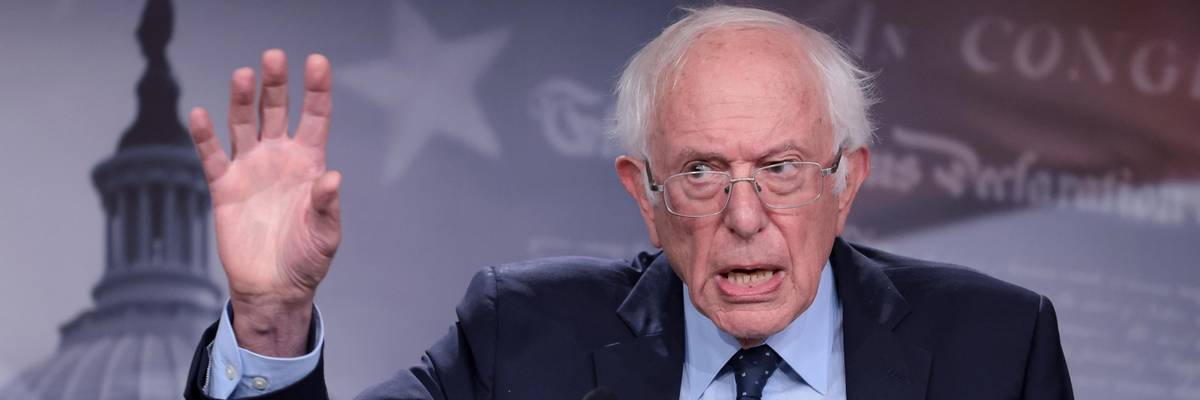
U.S. Sen. Bernie Sanders of Vermont said Tuesday that the World Trade Organization's decision to postpone its biannual Ministerial Conference due to the Omicron variant is no excuse to further delay approval of a temporary waiver for coronavirus vaccine patents, which are constraining the global supply of lifesaving shots.
"Our vaccination efforts will only be successful if vaccination efforts in the developing world happen simultaneously."
Sanders noted that it's been nearly a year since the U.S. kicked off its vaccination campaign, which has gotten shots into the arms of 70% of the country's population. But the Vermont senator noted that as many wealthy nations have achieved widespread inoculation, "too many of our neighbors around the world still are blocked" from vaccine access.
"The time for debate by the members of the World Trade Organization is over," Sanders said in a statement. "As we face the potential threat of a new coronavirus variant, we must move even more urgently to dismantle the vaccine inequality that undermines our ability to confront this crisis. We cannot postpone or delay. It's time for the WTO and our world leaders to step up, to finally put people over profits and make the vaccine technologies available to all, regardless of wealth."
More than a year has passed--and millions of people have died of Covid-19--since India and South Africa first proposed a temporary suspension of coronavirus vaccine-related intellectual property (IP) protections, which are preventing manufacturers around the world from producing generic versions of existing vaccines.
One South African company is currently attempting to replicate Moderna's mRNA shot, but the U.S.-based pharmaceutical giant's refusal to share its formula--developed with the help of U.S. government scientists and public funding--is hindering the process.
"Let us be clear: to deny lifesaving healthcare anytime, but particularly during a global health crisis, is unacceptable," said Sanders, who first voiced support for the IP waiver in April. "Our vaccination efforts will only be successful if vaccination efforts in the developing world happen simultaneously. This waiver would not only save lives, but protect against new variants that threaten the progress we have made. This is exactly the kind of leadership the world needs right now. We must work together to get this done."
Related Content

Bernie Sanders Says Backing Waiver for Covid Vaccine Patents Is 'Common Human Morality'
A majority of WTO member nations support the proposed patent waiver, but a small number of rich countries--including the European Union, the United Kingdom, Switzerland, Norway, and Singapore--continue to object, leaving the negotiations at a standstill even amid the emergence and spread of a high-risk coronavirus variant.
Advocates viewed the WTO's Ministerial Conference, which was originally slated to begin Tuesday, as a key opportunity to win passage of the waiver. The body has proposed pushing the conference back until March of 2022 "if conditions allow."
As Bloomberg Law reported Tuesday, WTO Director-General Ngozi Okonjo-Iweala promised that "work on an intellectual-property waiver aimed at widening vaccine access in poor countries will continue despite the sudden postponement of a meeting of key stakeholders this week."
"The new variant should be a clarion call to all of us," Okonjo-Iweala declared during a virtual meeting Tuesday. "We need to use all the tools at our disposal to make sure we solve this problem of access to vaccines."
U.S. President Joe Biden endorsed a temporary patent waiver in May after months of persistent grassroots pressure, but critics have accused his administration of failing to fight for the proposal during private WTO talks.
Last week, as South African scientists alerted the world to the detection of Omicron, Biden issued a statement reiterating his support for a waiver, which he said would help ensure that "vaccines can be manufactured globally." But as Sarah Lazare of In These Times reported Monday, "this public statement, which garnered numerous headlines, stands in stark contrast with what the Biden administration did--or did not do--behind closed doors at the WTO on November 29."
"While the Biden administration has publicly declared support for an intellectual property waiver of some kind, it has not specified whether it supports the specific proposal put forward by South Africa and India in October 2020, nor clarified what changes it would like to see," Lazare noted. "The effect, global health activists charge, has been a slowing down of negotiations, in a context where any delay means more lives lost."
Burcu Kilic, the research director of Public Citizen's Global Access to Medicines program, told In These Times that the Biden administration should immediately "call for a [WTO] General Council meeting" to secure a patent waiver, which advocates say is a crucial first step toward boosting global vaccine production and equalizing distribution.
"The decisions will be made by the General Council," said Kilic, "so the ideal would be for Biden to call for the GC to get the waiver passed--the proposal as it is."
U.S. Sen. Bernie Sanders of Vermont said Tuesday that the World Trade Organization's decision to postpone its biannual Ministerial Conference due to the Omicron variant is no excuse to further delay approval of a temporary waiver for coronavirus vaccine patents, which are constraining the global supply of lifesaving shots.
"Our vaccination efforts will only be successful if vaccination efforts in the developing world happen simultaneously."
Sanders noted that it's been nearly a year since the U.S. kicked off its vaccination campaign, which has gotten shots into the arms of 70% of the country's population. But the Vermont senator noted that as many wealthy nations have achieved widespread inoculation, "too many of our neighbors around the world still are blocked" from vaccine access.
"The time for debate by the members of the World Trade Organization is over," Sanders said in a statement. "As we face the potential threat of a new coronavirus variant, we must move even more urgently to dismantle the vaccine inequality that undermines our ability to confront this crisis. We cannot postpone or delay. It's time for the WTO and our world leaders to step up, to finally put people over profits and make the vaccine technologies available to all, regardless of wealth."
More than a year has passed--and millions of people have died of Covid-19--since India and South Africa first proposed a temporary suspension of coronavirus vaccine-related intellectual property (IP) protections, which are preventing manufacturers around the world from producing generic versions of existing vaccines.
One South African company is currently attempting to replicate Moderna's mRNA shot, but the U.S.-based pharmaceutical giant's refusal to share its formula--developed with the help of U.S. government scientists and public funding--is hindering the process.
"Let us be clear: to deny lifesaving healthcare anytime, but particularly during a global health crisis, is unacceptable," said Sanders, who first voiced support for the IP waiver in April. "Our vaccination efforts will only be successful if vaccination efforts in the developing world happen simultaneously. This waiver would not only save lives, but protect against new variants that threaten the progress we have made. This is exactly the kind of leadership the world needs right now. We must work together to get this done."
Related Content
Bernie Sanders Says Backing Waiver for Covid Vaccine Patents Is 'Common Human Morality'
A majority of WTO member nations support the proposed patent waiver, but a small number of rich countries--including the European Union, the United Kingdom, Switzerland, Norway, and Singapore--continue to object, leaving the negotiations at a standstill even amid the emergence and spread of a high-risk coronavirus variant.
Advocates viewed the WTO's Ministerial Conference, which was originally slated to begin Tuesday, as a key opportunity to win passage of the waiver. The body has proposed pushing the conference back until March of 2022 "if conditions allow."
As Bloomberg Law reported Tuesday, WTO Director-General Ngozi Okonjo-Iweala promised that "work on an intellectual-property waiver aimed at widening vaccine access in poor countries will continue despite the sudden postponement of a meeting of key stakeholders this week."
"The new variant should be a clarion call to all of us," Okonjo-Iweala declared during a virtual meeting Tuesday. "We need to use all the tools at our disposal to make sure we solve this problem of access to vaccines."
U.S. President Joe Biden endorsed a temporary patent waiver in May after months of persistent grassroots pressure, but critics have accused his administration of failing to fight for the proposal during private WTO talks.
Last week, as South African scientists alerted the world to the detection of Omicron, Biden issued a statement reiterating his support for a waiver, which he said would help ensure that "vaccines can be manufactured globally." But as Sarah Lazare of In These Times reported Monday, "this public statement, which garnered numerous headlines, stands in stark contrast with what the Biden administration did--or did not do--behind closed doors at the WTO on November 29."
"While the Biden administration has publicly declared support for an intellectual property waiver of some kind, it has not specified whether it supports the specific proposal put forward by South Africa and India in October 2020, nor clarified what changes it would like to see," Lazare noted. "The effect, global health activists charge, has been a slowing down of negotiations, in a context where any delay means more lives lost."
Burcu Kilic, the research director of Public Citizen's Global Access to Medicines program, told In These Times that the Biden administration should immediately "call for a [WTO] General Council meeting" to secure a patent waiver, which advocates say is a crucial first step toward boosting global vaccine production and equalizing distribution.
"The decisions will be made by the General Council," said Kilic, "so the ideal would be for Biden to call for the GC to get the waiver passed--the proposal as it is."
U.S. Sen. Bernie Sanders of Vermont said Tuesday that the World Trade Organization's decision to postpone its biannual Ministerial Conference due to the Omicron variant is no excuse to further delay approval of a temporary waiver for coronavirus vaccine patents, which are constraining the global supply of lifesaving shots.
"Our vaccination efforts will only be successful if vaccination efforts in the developing world happen simultaneously."
Sanders noted that it's been nearly a year since the U.S. kicked off its vaccination campaign, which has gotten shots into the arms of 70% of the country's population. But the Vermont senator noted that as many wealthy nations have achieved widespread inoculation, "too many of our neighbors around the world still are blocked" from vaccine access.
"The time for debate by the members of the World Trade Organization is over," Sanders said in a statement. "As we face the potential threat of a new coronavirus variant, we must move even more urgently to dismantle the vaccine inequality that undermines our ability to confront this crisis. We cannot postpone or delay. It's time for the WTO and our world leaders to step up, to finally put people over profits and make the vaccine technologies available to all, regardless of wealth."
More than a year has passed--and millions of people have died of Covid-19--since India and South Africa first proposed a temporary suspension of coronavirus vaccine-related intellectual property (IP) protections, which are preventing manufacturers around the world from producing generic versions of existing vaccines.
One South African company is currently attempting to replicate Moderna's mRNA shot, but the U.S.-based pharmaceutical giant's refusal to share its formula--developed with the help of U.S. government scientists and public funding--is hindering the process.
"Let us be clear: to deny lifesaving healthcare anytime, but particularly during a global health crisis, is unacceptable," said Sanders, who first voiced support for the IP waiver in April. "Our vaccination efforts will only be successful if vaccination efforts in the developing world happen simultaneously. This waiver would not only save lives, but protect against new variants that threaten the progress we have made. This is exactly the kind of leadership the world needs right now. We must work together to get this done."
Related Content
Bernie Sanders Says Backing Waiver for Covid Vaccine Patents Is 'Common Human Morality'
A majority of WTO member nations support the proposed patent waiver, but a small number of rich countries--including the European Union, the United Kingdom, Switzerland, Norway, and Singapore--continue to object, leaving the negotiations at a standstill even amid the emergence and spread of a high-risk coronavirus variant.
Advocates viewed the WTO's Ministerial Conference, which was originally slated to begin Tuesday, as a key opportunity to win passage of the waiver. The body has proposed pushing the conference back until March of 2022 "if conditions allow."
As Bloomberg Law reported Tuesday, WTO Director-General Ngozi Okonjo-Iweala promised that "work on an intellectual-property waiver aimed at widening vaccine access in poor countries will continue despite the sudden postponement of a meeting of key stakeholders this week."
"The new variant should be a clarion call to all of us," Okonjo-Iweala declared during a virtual meeting Tuesday. "We need to use all the tools at our disposal to make sure we solve this problem of access to vaccines."
U.S. President Joe Biden endorsed a temporary patent waiver in May after months of persistent grassroots pressure, but critics have accused his administration of failing to fight for the proposal during private WTO talks.
Last week, as South African scientists alerted the world to the detection of Omicron, Biden issued a statement reiterating his support for a waiver, which he said would help ensure that "vaccines can be manufactured globally." But as Sarah Lazare of In These Times reported Monday, "this public statement, which garnered numerous headlines, stands in stark contrast with what the Biden administration did--or did not do--behind closed doors at the WTO on November 29."
"While the Biden administration has publicly declared support for an intellectual property waiver of some kind, it has not specified whether it supports the specific proposal put forward by South Africa and India in October 2020, nor clarified what changes it would like to see," Lazare noted. "The effect, global health activists charge, has been a slowing down of negotiations, in a context where any delay means more lives lost."
Burcu Kilic, the research director of Public Citizen's Global Access to Medicines program, told In These Times that the Biden administration should immediately "call for a [WTO] General Council meeting" to secure a patent waiver, which advocates say is a crucial first step toward boosting global vaccine production and equalizing distribution.
"The decisions will be made by the General Council," said Kilic, "so the ideal would be for Biden to call for the GC to get the waiver passed--the proposal as it is."