

SUBSCRIBE TO OUR FREE NEWSLETTER
Daily news & progressive opinion—funded by the people, not the corporations—delivered straight to your inbox.
5
#000000
#FFFFFF
To donate by check, phone, or other method, see our More Ways to Give page.
Major businesses and the fossil fuel industry are engaging in "a dangerous distraction" by utilizing a scheme known as carbon offsetting while continuing activities that are worsening the climate emergency, according to a report released Friday.
"The real and credible solutions to the environmental emergencies we face are clear."
The findings from Friends of the Earth U.K. come just ahead of the United Nations climate summit COP 26, a venue the report says must not be a platform for false solutions to the crisis.
"The real and credible solutions to the environmental emergencies we face are clear," the report states. "We must rapidly stop using fossil fuels. And we must fund the proper protection, conservation, and restoration of nature."
The new publication--entitled A dangerous distraction--the offsetting con--takes issue with both the more commonly known practice of carbon offsetting as well as biodiversity offsetting. FOE explains:
Carbon offsetting is touted as a way to compensate for continuing fossil fuel emissions by reducing emissions elsewhere or drawing them down using trees, etc. As well as carbon offsetting, businesses and governments are also promoting biodiversity offsetting. This is where harming nature in one place is in theory compensated by restoring nature elsewhere.
"The best way to prevent the heating of our planet is to end the use of fossil fuels for good," the report says. "Yet offsetting is being used as an excuse to continue using these climate-wrecking fuels."
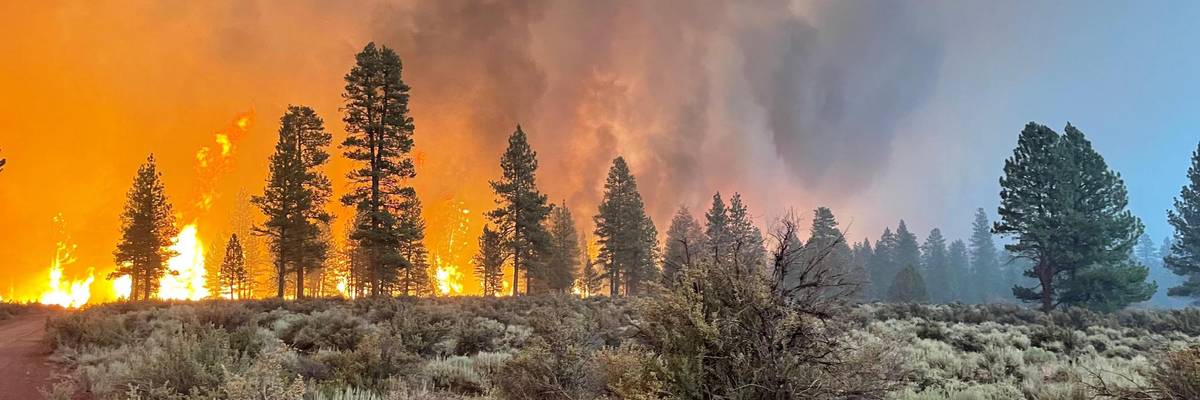
There's a wave of such efforts underway, with some so-called nature-based solutions like tree planting and mangrove restoration put forth as sufficient to justify further fossil fuel consumption elsewhere. Yet these schemes can be highly problematic, the report says, noting as an example that "forest fires in North America are already releasing the carbon that offsetting companies promised to lock up for companies that include Microsoft and BP."
In addition, "while investing in genuine action for nature is important, the carbon that is drawn down by these nature-based solutions could easily be released within decades, because of climate breakdown and its effects on nature," the report adds. "Yet the carbon emissions these projects are meant to offset will remain in the atmosphere for many centuries."
Part of the problem is that carbon offsets are relatively cheap, the report says, and "will remain cheaper than cutting carbon emissions in the decade the world needs to reduce emissions to stay within safe limits," even if projects' ability to lock up carbon over the long term is not guaranteed.
The overall offsetting scheme also creates a sort of "mitigation deterrence," meaning that corporations can delay real action to change their planet-heating practices.
The report also warns that offsetting projects can be harmful in and of themselves.
It's not good, says FOE, when trees are planted without meaningful consideration of the ecosystem they're going into or when they're put in without seeking approval from a community's Indigenous residents. Nature offsetting schemes can be detrimental as well, the report notes, because destroying one tract of nature cannot simply be remedied be restoring or creating another. "Habitats," the group states, "are as unique and irreplaceable as a Leonardo da Vinci masterpiece."
The report offers a handful of case studies to illustrate the dangers posed by offsetting, including one in which oil giant BP is pushing protections of U.S. forests with one hand while lobbying to have fracked gas counted as a "sustainable" energy source with the other. From the report:
Fossil fuel giant BP has also promised to become carbon neutral by 2050. Putting to one side that it is action in the decade to 2030 that matters, BP is not planning to do this by ceasing to extract and sell fossil fuels. Far from it--BP wants to sell oil and gas for decades to come. Remarkably, BP has been busy lobbying the European Commission to label natural gas as a sustainable energy source.
To try and square the circle of selling fossil fuels and being carbon neutral, BP has bought a major carbon offset company, Finite Carbon, which it claims "has the potential to build a global platform for managing and financing natural climate solutions." Finite Carbon already specializes in forest carbon offsets in the USA, where forests are now increasingly ravaged by wildfires and pests, in a real-life demonstration of how temporarily carbon may be locked up in trees.
An additional example cited is mining giant Rio Tinto's activities in Madagascar, a biodiversity hotspot.
Rio Tinto's QMM ilmenite mine is destroying 6,000 hectares of littoral forest along the southeast coastline, while claiming it will leave a net-positive impact on biodiversity. To do this, its offsetting programme has acquired three forest areas in what has been considered a double land grab. Some of the area is already protected under a national conservation program, and in Antsotso the offset has resulted in loss of forest access, traditional livelihoods, and food security. Villagers living on less than a dollar a day are criminalized if they cut a tree to replace a dug-out canoe for fishing. Mineral extraction accounts for most of the forest loss in the region, and some of the poorest people on the planet are carrying the cost of greening Rio Tinto' mine.
Simply put, offsetting lets "politicians and business leaders avoid confronting the reality of climate breakdown and nature decline, and continue with business as usual and the latest kind of greenwashing instead," the report states.
Related Content

The report calls for a number of tactics to truly address the biodiversity and climate crises, including ending support for and stopping using fossil fuels; investing in public transport and walking and biking infrastructure; retrofitting buildings; ramping up the growth of renewable energy; and safeguarding existing nature as well as protecting at least 30% of land and seas.
"We have to face the fundamental fact that we need to reduce emissions," tweeted FOE, "not compensate for emissions."
Major businesses and the fossil fuel industry are engaging in "a dangerous distraction" by utilizing a scheme known as carbon offsetting while continuing activities that are worsening the climate emergency, according to a report released Friday.
"The real and credible solutions to the environmental emergencies we face are clear."
The findings from Friends of the Earth U.K. come just ahead of the United Nations climate summit COP 26, a venue the report says must not be a platform for false solutions to the crisis.
"The real and credible solutions to the environmental emergencies we face are clear," the report states. "We must rapidly stop using fossil fuels. And we must fund the proper protection, conservation, and restoration of nature."
The new publication--entitled A dangerous distraction--the offsetting con--takes issue with both the more commonly known practice of carbon offsetting as well as biodiversity offsetting. FOE explains:
Carbon offsetting is touted as a way to compensate for continuing fossil fuel emissions by reducing emissions elsewhere or drawing them down using trees, etc. As well as carbon offsetting, businesses and governments are also promoting biodiversity offsetting. This is where harming nature in one place is in theory compensated by restoring nature elsewhere.
"The best way to prevent the heating of our planet is to end the use of fossil fuels for good," the report says. "Yet offsetting is being used as an excuse to continue using these climate-wrecking fuels."
There's a wave of such efforts underway, with some so-called nature-based solutions like tree planting and mangrove restoration put forth as sufficient to justify further fossil fuel consumption elsewhere. Yet these schemes can be highly problematic, the report says, noting as an example that "forest fires in North America are already releasing the carbon that offsetting companies promised to lock up for companies that include Microsoft and BP."
In addition, "while investing in genuine action for nature is important, the carbon that is drawn down by these nature-based solutions could easily be released within decades, because of climate breakdown and its effects on nature," the report adds. "Yet the carbon emissions these projects are meant to offset will remain in the atmosphere for many centuries."
Part of the problem is that carbon offsets are relatively cheap, the report says, and "will remain cheaper than cutting carbon emissions in the decade the world needs to reduce emissions to stay within safe limits," even if projects' ability to lock up carbon over the long term is not guaranteed.
The overall offsetting scheme also creates a sort of "mitigation deterrence," meaning that corporations can delay real action to change their planet-heating practices.
The report also warns that offsetting projects can be harmful in and of themselves.
It's not good, says FOE, when trees are planted without meaningful consideration of the ecosystem they're going into or when they're put in without seeking approval from a community's Indigenous residents. Nature offsetting schemes can be detrimental as well, the report notes, because destroying one tract of nature cannot simply be remedied be restoring or creating another. "Habitats," the group states, "are as unique and irreplaceable as a Leonardo da Vinci masterpiece."
The report offers a handful of case studies to illustrate the dangers posed by offsetting, including one in which oil giant BP is pushing protections of U.S. forests with one hand while lobbying to have fracked gas counted as a "sustainable" energy source with the other. From the report:
Fossil fuel giant BP has also promised to become carbon neutral by 2050. Putting to one side that it is action in the decade to 2030 that matters, BP is not planning to do this by ceasing to extract and sell fossil fuels. Far from it--BP wants to sell oil and gas for decades to come. Remarkably, BP has been busy lobbying the European Commission to label natural gas as a sustainable energy source.
To try and square the circle of selling fossil fuels and being carbon neutral, BP has bought a major carbon offset company, Finite Carbon, which it claims "has the potential to build a global platform for managing and financing natural climate solutions." Finite Carbon already specializes in forest carbon offsets in the USA, where forests are now increasingly ravaged by wildfires and pests, in a real-life demonstration of how temporarily carbon may be locked up in trees.
An additional example cited is mining giant Rio Tinto's activities in Madagascar, a biodiversity hotspot.
Rio Tinto's QMM ilmenite mine is destroying 6,000 hectares of littoral forest along the southeast coastline, while claiming it will leave a net-positive impact on biodiversity. To do this, its offsetting programme has acquired three forest areas in what has been considered a double land grab. Some of the area is already protected under a national conservation program, and in Antsotso the offset has resulted in loss of forest access, traditional livelihoods, and food security. Villagers living on less than a dollar a day are criminalized if they cut a tree to replace a dug-out canoe for fishing. Mineral extraction accounts for most of the forest loss in the region, and some of the poorest people on the planet are carrying the cost of greening Rio Tinto' mine.
Simply put, offsetting lets "politicians and business leaders avoid confronting the reality of climate breakdown and nature decline, and continue with business as usual and the latest kind of greenwashing instead," the report states.
Related Content
The report calls for a number of tactics to truly address the biodiversity and climate crises, including ending support for and stopping using fossil fuels; investing in public transport and walking and biking infrastructure; retrofitting buildings; ramping up the growth of renewable energy; and safeguarding existing nature as well as protecting at least 30% of land and seas.
"We have to face the fundamental fact that we need to reduce emissions," tweeted FOE, "not compensate for emissions."
Major businesses and the fossil fuel industry are engaging in "a dangerous distraction" by utilizing a scheme known as carbon offsetting while continuing activities that are worsening the climate emergency, according to a report released Friday.
"The real and credible solutions to the environmental emergencies we face are clear."
The findings from Friends of the Earth U.K. come just ahead of the United Nations climate summit COP 26, a venue the report says must not be a platform for false solutions to the crisis.
"The real and credible solutions to the environmental emergencies we face are clear," the report states. "We must rapidly stop using fossil fuels. And we must fund the proper protection, conservation, and restoration of nature."
The new publication--entitled A dangerous distraction--the offsetting con--takes issue with both the more commonly known practice of carbon offsetting as well as biodiversity offsetting. FOE explains:
Carbon offsetting is touted as a way to compensate for continuing fossil fuel emissions by reducing emissions elsewhere or drawing them down using trees, etc. As well as carbon offsetting, businesses and governments are also promoting biodiversity offsetting. This is where harming nature in one place is in theory compensated by restoring nature elsewhere.
"The best way to prevent the heating of our planet is to end the use of fossil fuels for good," the report says. "Yet offsetting is being used as an excuse to continue using these climate-wrecking fuels."
There's a wave of such efforts underway, with some so-called nature-based solutions like tree planting and mangrove restoration put forth as sufficient to justify further fossil fuel consumption elsewhere. Yet these schemes can be highly problematic, the report says, noting as an example that "forest fires in North America are already releasing the carbon that offsetting companies promised to lock up for companies that include Microsoft and BP."
In addition, "while investing in genuine action for nature is important, the carbon that is drawn down by these nature-based solutions could easily be released within decades, because of climate breakdown and its effects on nature," the report adds. "Yet the carbon emissions these projects are meant to offset will remain in the atmosphere for many centuries."
Part of the problem is that carbon offsets are relatively cheap, the report says, and "will remain cheaper than cutting carbon emissions in the decade the world needs to reduce emissions to stay within safe limits," even if projects' ability to lock up carbon over the long term is not guaranteed.
The overall offsetting scheme also creates a sort of "mitigation deterrence," meaning that corporations can delay real action to change their planet-heating practices.
The report also warns that offsetting projects can be harmful in and of themselves.
It's not good, says FOE, when trees are planted without meaningful consideration of the ecosystem they're going into or when they're put in without seeking approval from a community's Indigenous residents. Nature offsetting schemes can be detrimental as well, the report notes, because destroying one tract of nature cannot simply be remedied be restoring or creating another. "Habitats," the group states, "are as unique and irreplaceable as a Leonardo da Vinci masterpiece."
The report offers a handful of case studies to illustrate the dangers posed by offsetting, including one in which oil giant BP is pushing protections of U.S. forests with one hand while lobbying to have fracked gas counted as a "sustainable" energy source with the other. From the report:
Fossil fuel giant BP has also promised to become carbon neutral by 2050. Putting to one side that it is action in the decade to 2030 that matters, BP is not planning to do this by ceasing to extract and sell fossil fuels. Far from it--BP wants to sell oil and gas for decades to come. Remarkably, BP has been busy lobbying the European Commission to label natural gas as a sustainable energy source.
To try and square the circle of selling fossil fuels and being carbon neutral, BP has bought a major carbon offset company, Finite Carbon, which it claims "has the potential to build a global platform for managing and financing natural climate solutions." Finite Carbon already specializes in forest carbon offsets in the USA, where forests are now increasingly ravaged by wildfires and pests, in a real-life demonstration of how temporarily carbon may be locked up in trees.
An additional example cited is mining giant Rio Tinto's activities in Madagascar, a biodiversity hotspot.
Rio Tinto's QMM ilmenite mine is destroying 6,000 hectares of littoral forest along the southeast coastline, while claiming it will leave a net-positive impact on biodiversity. To do this, its offsetting programme has acquired three forest areas in what has been considered a double land grab. Some of the area is already protected under a national conservation program, and in Antsotso the offset has resulted in loss of forest access, traditional livelihoods, and food security. Villagers living on less than a dollar a day are criminalized if they cut a tree to replace a dug-out canoe for fishing. Mineral extraction accounts for most of the forest loss in the region, and some of the poorest people on the planet are carrying the cost of greening Rio Tinto' mine.
Simply put, offsetting lets "politicians and business leaders avoid confronting the reality of climate breakdown and nature decline, and continue with business as usual and the latest kind of greenwashing instead," the report states.
Related Content
The report calls for a number of tactics to truly address the biodiversity and climate crises, including ending support for and stopping using fossil fuels; investing in public transport and walking and biking infrastructure; retrofitting buildings; ramping up the growth of renewable energy; and safeguarding existing nature as well as protecting at least 30% of land and seas.
"We have to face the fundamental fact that we need to reduce emissions," tweeted FOE, "not compensate for emissions."

