SUBSCRIBE TO OUR FREE NEWSLETTER
Daily news & progressive opinion—funded by the people, not the corporations—delivered straight to your inbox.
5
#000000
#FFFFFF
To donate by check, phone, or other method, see our More Ways to Give page.
Daily news & progressive opinion—funded by the people, not the corporations—delivered straight to your inbox.
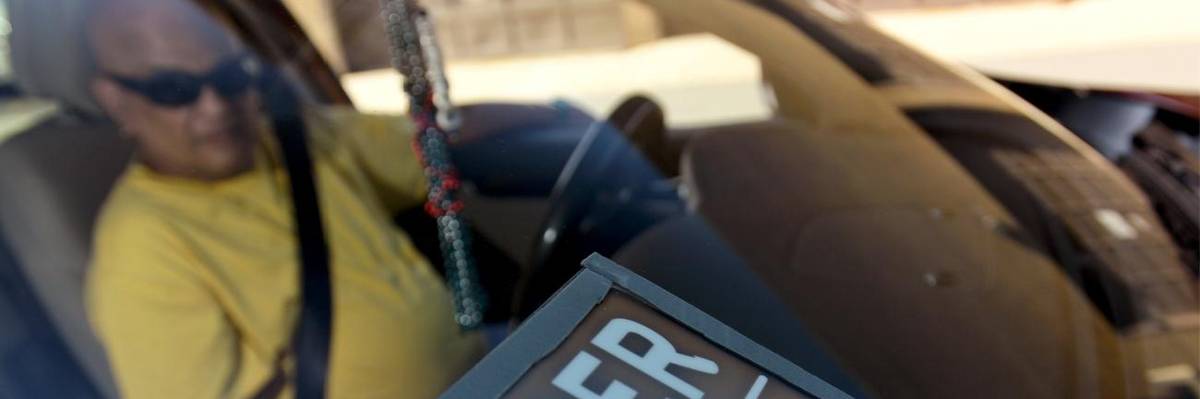
Alex Castillo, a driver for Lyft and Uber, with his car in Reading, Pennsylvania. (Photo: Jeremy Drey/MediaNews Group/Reading Eagle via Getty Images)
Progressives and labor leaders on Wednesday welcomed news that the U.S. Department of Labor is rescinding a rule proposed by the Trump administration which aimed to make it harder for gig workers to sue companies like Uber, Lyft, and DoorDash.
Announcing that the independent contractor rule is being withdrawn, Labor Secretary Marty Walsh said the Biden administration is committed to preserving "essential working rights" and stopping "the erosion of worker protections that would have occurred had the rule gone into effect."
"Legitimate business owners play an important role in our economy but, too often, workers lose important wage and related protections when employers misclassify them as independent contractors," said Walsh. "We remain committed to ensuring that employees are recognized clearly and correctly when they are, in fact, employees so that they receive the protections the Fair Labor Standards Act provides."
The rule would have limited workers' ability to argue that they were misclassified as independent contractors rather than employees, and potentially put a minimum wage and overtime pay out of reach for millions of Americans who work in the gig economy.
Sen. Elizabeth Warren (D-Mass.) called the proposed measure an "awful rule" and applauded Walsh for rescinding it.
Companies like Uber and Lyft have aggressively lobbied in recent years for the right to classify the workers who keep their app-based businesses running as independent contractors, claiming the classification is beneficial for their workers because it allows for flexibility.
The two rideshare companies supported Proposition 22 in California last year and spent millions of dollars helping the measure to pass, guaranteeing the companies savings on payroll taxes, unemployment insurance, workers' compensation, and other costs associated with granting employees basic protections.
Thanks to worker misclassification and the efforts of companies like Uber and Lyft, said the Economic Policy Institute in a 2015 report, "there are millions of Americans wrongly left uninsured, without benefits, and without job security." Workers are also left paying for gas, car repairs, and other costs associated with working in the gig economy.
"All workers deserve basic rights like minimum wage and overtime pay," Mary Kay Henry, international president of the SEIU, said Wednesday after Walsh announced the withdrawal of the rule.
Walsh won praise from workers' rights advocates last week after he told Reuters, "In a lot of cases gig workers should be classified as employees."
The labor secretary added that he wants to ensure the success of companies like Uber and DoorDash "trickles down to the worker."
A coalition of companies including Uber and Postmates sued the Biden administration in March, after officials said they intended to block the independent contractor rule.
"When it comes to digital workers and app-based workers--they're workers," Jessica Looman of the Labor Department's Wage and Hour Division, told reporters on Wednesday. "And so we want to make sure we continue to look at their needs, and how they are interacting with their individual employer and whether they have protection."
Dear Common Dreams reader, It’s been nearly 30 years since I co-founded Common Dreams with my late wife, Lina Newhouser. We had the radical notion that journalism should serve the public good, not corporate profits. It was clear to us from the outset what it would take to build such a project. No paid advertisements. No corporate sponsors. No millionaire publisher telling us what to think or do. Many people said we wouldn't last a year, but we proved those doubters wrong. Together with a tremendous team of journalists and dedicated staff, we built an independent media outlet free from the constraints of profits and corporate control. Our mission has always been simple: To inform. To inspire. To ignite change for the common good. Building Common Dreams was not easy. Our survival was never guaranteed. When you take on the most powerful forces—Wall Street greed, fossil fuel industry destruction, Big Tech lobbyists, and uber-rich oligarchs who have spent billions upon billions rigging the economy and democracy in their favor—the only bulwark you have is supporters who believe in your work. But here’s the urgent message from me today. It's never been this bad out there. And it's never been this hard to keep us going. At the very moment Common Dreams is most needed, the threats we face are intensifying. We need your support now more than ever. We don't accept corporate advertising and never will. We don't have a paywall because we don't think people should be blocked from critical news based on their ability to pay. Everything we do is funded by the donations of readers like you. When everyone does the little they can afford, we are strong. But if that support retreats or dries up, so do we. Will you donate now to make sure Common Dreams not only survives but thrives? —Craig Brown, Co-founder |
Progressives and labor leaders on Wednesday welcomed news that the U.S. Department of Labor is rescinding a rule proposed by the Trump administration which aimed to make it harder for gig workers to sue companies like Uber, Lyft, and DoorDash.
Announcing that the independent contractor rule is being withdrawn, Labor Secretary Marty Walsh said the Biden administration is committed to preserving "essential working rights" and stopping "the erosion of worker protections that would have occurred had the rule gone into effect."
"Legitimate business owners play an important role in our economy but, too often, workers lose important wage and related protections when employers misclassify them as independent contractors," said Walsh. "We remain committed to ensuring that employees are recognized clearly and correctly when they are, in fact, employees so that they receive the protections the Fair Labor Standards Act provides."
The rule would have limited workers' ability to argue that they were misclassified as independent contractors rather than employees, and potentially put a minimum wage and overtime pay out of reach for millions of Americans who work in the gig economy.
Sen. Elizabeth Warren (D-Mass.) called the proposed measure an "awful rule" and applauded Walsh for rescinding it.
Companies like Uber and Lyft have aggressively lobbied in recent years for the right to classify the workers who keep their app-based businesses running as independent contractors, claiming the classification is beneficial for their workers because it allows for flexibility.
The two rideshare companies supported Proposition 22 in California last year and spent millions of dollars helping the measure to pass, guaranteeing the companies savings on payroll taxes, unemployment insurance, workers' compensation, and other costs associated with granting employees basic protections.
Thanks to worker misclassification and the efforts of companies like Uber and Lyft, said the Economic Policy Institute in a 2015 report, "there are millions of Americans wrongly left uninsured, without benefits, and without job security." Workers are also left paying for gas, car repairs, and other costs associated with working in the gig economy.
"All workers deserve basic rights like minimum wage and overtime pay," Mary Kay Henry, international president of the SEIU, said Wednesday after Walsh announced the withdrawal of the rule.
Walsh won praise from workers' rights advocates last week after he told Reuters, "In a lot of cases gig workers should be classified as employees."
The labor secretary added that he wants to ensure the success of companies like Uber and DoorDash "trickles down to the worker."
A coalition of companies including Uber and Postmates sued the Biden administration in March, after officials said they intended to block the independent contractor rule.
"When it comes to digital workers and app-based workers--they're workers," Jessica Looman of the Labor Department's Wage and Hour Division, told reporters on Wednesday. "And so we want to make sure we continue to look at their needs, and how they are interacting with their individual employer and whether they have protection."
Progressives and labor leaders on Wednesday welcomed news that the U.S. Department of Labor is rescinding a rule proposed by the Trump administration which aimed to make it harder for gig workers to sue companies like Uber, Lyft, and DoorDash.
Announcing that the independent contractor rule is being withdrawn, Labor Secretary Marty Walsh said the Biden administration is committed to preserving "essential working rights" and stopping "the erosion of worker protections that would have occurred had the rule gone into effect."
"Legitimate business owners play an important role in our economy but, too often, workers lose important wage and related protections when employers misclassify them as independent contractors," said Walsh. "We remain committed to ensuring that employees are recognized clearly and correctly when they are, in fact, employees so that they receive the protections the Fair Labor Standards Act provides."
The rule would have limited workers' ability to argue that they were misclassified as independent contractors rather than employees, and potentially put a minimum wage and overtime pay out of reach for millions of Americans who work in the gig economy.
Sen. Elizabeth Warren (D-Mass.) called the proposed measure an "awful rule" and applauded Walsh for rescinding it.
Companies like Uber and Lyft have aggressively lobbied in recent years for the right to classify the workers who keep their app-based businesses running as independent contractors, claiming the classification is beneficial for their workers because it allows for flexibility.
The two rideshare companies supported Proposition 22 in California last year and spent millions of dollars helping the measure to pass, guaranteeing the companies savings on payroll taxes, unemployment insurance, workers' compensation, and other costs associated with granting employees basic protections.
Thanks to worker misclassification and the efforts of companies like Uber and Lyft, said the Economic Policy Institute in a 2015 report, "there are millions of Americans wrongly left uninsured, without benefits, and without job security." Workers are also left paying for gas, car repairs, and other costs associated with working in the gig economy.
"All workers deserve basic rights like minimum wage and overtime pay," Mary Kay Henry, international president of the SEIU, said Wednesday after Walsh announced the withdrawal of the rule.
Walsh won praise from workers' rights advocates last week after he told Reuters, "In a lot of cases gig workers should be classified as employees."
The labor secretary added that he wants to ensure the success of companies like Uber and DoorDash "trickles down to the worker."
A coalition of companies including Uber and Postmates sued the Biden administration in March, after officials said they intended to block the independent contractor rule.
"When it comes to digital workers and app-based workers--they're workers," Jessica Looman of the Labor Department's Wage and Hour Division, told reporters on Wednesday. "And so we want to make sure we continue to look at their needs, and how they are interacting with their individual employer and whether they have protection."