SUBSCRIBE TO OUR FREE NEWSLETTER
Daily news & progressive opinion—funded by the people, not the corporations—delivered straight to your inbox.
5
#000000
#FFFFFF
To donate by check, phone, or other method, see our More Ways to Give page.
Daily news & progressive opinion—funded by the people, not the corporations—delivered straight to your inbox.
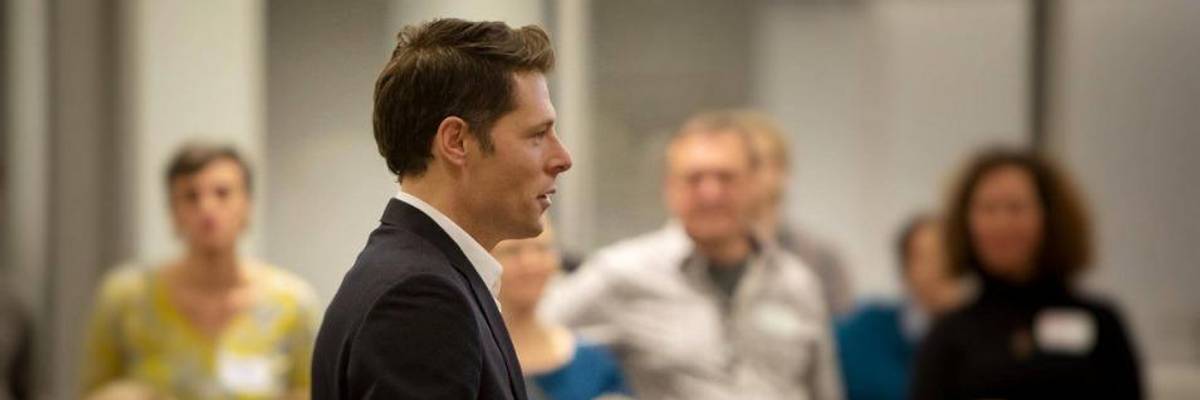
Community organizer Stephen Smith is running for governor of West Virginia as part of the West Virginia Can't Wait movement. (Photo: @WVCantWait/Twitter)
Community organizer and Democratic gubernatorial candidate Stephen Smith on Sunday released his proposal for the first state-level wealth tax in the nation, which his campaign said was based on thousands of conversations with West Virginians from all walks of life about their top concerns.
The proposed Half-Penny Wealth Tax, a 0.5% tax on West Virginians with more than $2 million in non-residential property assets, would generate $835 million for the state per year--enough to give teachers in the state raises, pay for infrastructure improvements, and guarantee broadband access across the state.
The campaign wrote on its website:
West Virginia should be the first state in the country to institute a wealth tax in modern times. The Good Old Boys Club will tell us that they are being treated unfairly, that they are being "double-taxed" on this wealth. That is a lie. For generations, they've exploited tax havens and loopholes and political connections at our expense and their gain. It is time for them to finally pay their fair share.
The wealth tax is just one of 32 proposals Smith's campaign is planning to unveil in the coming weeks.
"If this can work, it opens up an entirely new style of politics, one rooted in something so simple it's absurd that it seems so novel: respecting the wishes and needs of the electorate."
--David Dayen, The American ProspectThe proposals, which also so far include a Workers' Bill of Rights and a plan for disability rights, are part of the West Virginia Can't Wait movement, a political campaign the American Prospect called "one of the most unusual and thrilling in recent memory."
Since announcing his candidacy for governor last January, Smith--the former head of the West Virginia Healthy Kids and Families Coalition, which helped win dozens of policy victories for working people during his tenure--has held more than 150 town halls across the state.
Dozens of volunteer groups have plugged in to the top concerns of West Virginians from all walks of life--creating "constituency teams" including Coal Miners Can't Wait and Students Can't Wait and asking people across the state about their priorities in the 2020 election.
"A civil rights movement cannot win without the leadership of black folks," reads the West Virginia Can't Wait website. "A labor movement cannot succeed without the leadership of workers. And we will never solve our drug crisis without the leadership of people in recovery. That's the guiding principle of our constituency teams."
Smith's platform proposals are the result of a convention attended by representatives of the constituency teams, where the volunteers voted on the changes Smith should fight for during his gubernatorial campaign. The candidate himself did not have final say in the vote.
Other proposals so far include a guaranteed $15 minimum wage; guaranteed sick days and paid family leave; a plan to "root out racism and discrimination in the criminal justice system, school system and workplace;" and plans to guarantee equality in employment, housing, and quality of life for people with disabilities.
The campaign will be releasing other plans on a weekly basis; Smith "unapologetically supports a single-payer health care system, and is in favor of free college" according to The Intercept's report on him last May.
More than 60 other pro-labor state, local, and federal candidates have signed the West Virginia Can't Wait pledge, promising to run without accepting corporate cash and "to stay grounded in the day-to-day struggles and desires of the people who are working the hardest and hurting the most."
At the American Prospect on Monday, David Dayen wrote that Smith's campaign could be "transformational" for politics in West Virginia and across the country.
"It would deliver a roadmap for how to organize in rural towns thought to be lost to the right wing forever," wrote Dayen. "It would identify how to bring in infrequent voters who have given up on politics. It would lay out how to break a corrupt establishment and return government to its people, on principles that bring people together rather than driving them apart."
"If this can work," he added, "it opens up an entirely new style of politics, one rooted in something so simple it's absurd that it seems so novel: respecting the wishes and needs of the electorate."
Dear Common Dreams reader, It’s been nearly 30 years since I co-founded Common Dreams with my late wife, Lina Newhouser. We had the radical notion that journalism should serve the public good, not corporate profits. It was clear to us from the outset what it would take to build such a project. No paid advertisements. No corporate sponsors. No millionaire publisher telling us what to think or do. Many people said we wouldn't last a year, but we proved those doubters wrong. Together with a tremendous team of journalists and dedicated staff, we built an independent media outlet free from the constraints of profits and corporate control. Our mission has always been simple: To inform. To inspire. To ignite change for the common good. Building Common Dreams was not easy. Our survival was never guaranteed. When you take on the most powerful forces—Wall Street greed, fossil fuel industry destruction, Big Tech lobbyists, and uber-rich oligarchs who have spent billions upon billions rigging the economy and democracy in their favor—the only bulwark you have is supporters who believe in your work. But here’s the urgent message from me today. It's never been this bad out there. And it's never been this hard to keep us going. At the very moment Common Dreams is most needed, the threats we face are intensifying. We need your support now more than ever. We don't accept corporate advertising and never will. We don't have a paywall because we don't think people should be blocked from critical news based on their ability to pay. Everything we do is funded by the donations of readers like you. When everyone does the little they can afford, we are strong. But if that support retreats or dries up, so do we. Will you donate now to make sure Common Dreams not only survives but thrives? —Craig Brown, Co-founder |
Community organizer and Democratic gubernatorial candidate Stephen Smith on Sunday released his proposal for the first state-level wealth tax in the nation, which his campaign said was based on thousands of conversations with West Virginians from all walks of life about their top concerns.
The proposed Half-Penny Wealth Tax, a 0.5% tax on West Virginians with more than $2 million in non-residential property assets, would generate $835 million for the state per year--enough to give teachers in the state raises, pay for infrastructure improvements, and guarantee broadband access across the state.
The campaign wrote on its website:
West Virginia should be the first state in the country to institute a wealth tax in modern times. The Good Old Boys Club will tell us that they are being treated unfairly, that they are being "double-taxed" on this wealth. That is a lie. For generations, they've exploited tax havens and loopholes and political connections at our expense and their gain. It is time for them to finally pay their fair share.
The wealth tax is just one of 32 proposals Smith's campaign is planning to unveil in the coming weeks.
"If this can work, it opens up an entirely new style of politics, one rooted in something so simple it's absurd that it seems so novel: respecting the wishes and needs of the electorate."
--David Dayen, The American ProspectThe proposals, which also so far include a Workers' Bill of Rights and a plan for disability rights, are part of the West Virginia Can't Wait movement, a political campaign the American Prospect called "one of the most unusual and thrilling in recent memory."
Since announcing his candidacy for governor last January, Smith--the former head of the West Virginia Healthy Kids and Families Coalition, which helped win dozens of policy victories for working people during his tenure--has held more than 150 town halls across the state.
Dozens of volunteer groups have plugged in to the top concerns of West Virginians from all walks of life--creating "constituency teams" including Coal Miners Can't Wait and Students Can't Wait and asking people across the state about their priorities in the 2020 election.
"A civil rights movement cannot win without the leadership of black folks," reads the West Virginia Can't Wait website. "A labor movement cannot succeed without the leadership of workers. And we will never solve our drug crisis without the leadership of people in recovery. That's the guiding principle of our constituency teams."
Smith's platform proposals are the result of a convention attended by representatives of the constituency teams, where the volunteers voted on the changes Smith should fight for during his gubernatorial campaign. The candidate himself did not have final say in the vote.
Other proposals so far include a guaranteed $15 minimum wage; guaranteed sick days and paid family leave; a plan to "root out racism and discrimination in the criminal justice system, school system and workplace;" and plans to guarantee equality in employment, housing, and quality of life for people with disabilities.
The campaign will be releasing other plans on a weekly basis; Smith "unapologetically supports a single-payer health care system, and is in favor of free college" according to The Intercept's report on him last May.
More than 60 other pro-labor state, local, and federal candidates have signed the West Virginia Can't Wait pledge, promising to run without accepting corporate cash and "to stay grounded in the day-to-day struggles and desires of the people who are working the hardest and hurting the most."
At the American Prospect on Monday, David Dayen wrote that Smith's campaign could be "transformational" for politics in West Virginia and across the country.
"It would deliver a roadmap for how to organize in rural towns thought to be lost to the right wing forever," wrote Dayen. "It would identify how to bring in infrequent voters who have given up on politics. It would lay out how to break a corrupt establishment and return government to its people, on principles that bring people together rather than driving them apart."
"If this can work," he added, "it opens up an entirely new style of politics, one rooted in something so simple it's absurd that it seems so novel: respecting the wishes and needs of the electorate."
Community organizer and Democratic gubernatorial candidate Stephen Smith on Sunday released his proposal for the first state-level wealth tax in the nation, which his campaign said was based on thousands of conversations with West Virginians from all walks of life about their top concerns.
The proposed Half-Penny Wealth Tax, a 0.5% tax on West Virginians with more than $2 million in non-residential property assets, would generate $835 million for the state per year--enough to give teachers in the state raises, pay for infrastructure improvements, and guarantee broadband access across the state.
The campaign wrote on its website:
West Virginia should be the first state in the country to institute a wealth tax in modern times. The Good Old Boys Club will tell us that they are being treated unfairly, that they are being "double-taxed" on this wealth. That is a lie. For generations, they've exploited tax havens and loopholes and political connections at our expense and their gain. It is time for them to finally pay their fair share.
The wealth tax is just one of 32 proposals Smith's campaign is planning to unveil in the coming weeks.
"If this can work, it opens up an entirely new style of politics, one rooted in something so simple it's absurd that it seems so novel: respecting the wishes and needs of the electorate."
--David Dayen, The American ProspectThe proposals, which also so far include a Workers' Bill of Rights and a plan for disability rights, are part of the West Virginia Can't Wait movement, a political campaign the American Prospect called "one of the most unusual and thrilling in recent memory."
Since announcing his candidacy for governor last January, Smith--the former head of the West Virginia Healthy Kids and Families Coalition, which helped win dozens of policy victories for working people during his tenure--has held more than 150 town halls across the state.
Dozens of volunteer groups have plugged in to the top concerns of West Virginians from all walks of life--creating "constituency teams" including Coal Miners Can't Wait and Students Can't Wait and asking people across the state about their priorities in the 2020 election.
"A civil rights movement cannot win without the leadership of black folks," reads the West Virginia Can't Wait website. "A labor movement cannot succeed without the leadership of workers. And we will never solve our drug crisis without the leadership of people in recovery. That's the guiding principle of our constituency teams."
Smith's platform proposals are the result of a convention attended by representatives of the constituency teams, where the volunteers voted on the changes Smith should fight for during his gubernatorial campaign. The candidate himself did not have final say in the vote.
Other proposals so far include a guaranteed $15 minimum wage; guaranteed sick days and paid family leave; a plan to "root out racism and discrimination in the criminal justice system, school system and workplace;" and plans to guarantee equality in employment, housing, and quality of life for people with disabilities.
The campaign will be releasing other plans on a weekly basis; Smith "unapologetically supports a single-payer health care system, and is in favor of free college" according to The Intercept's report on him last May.
More than 60 other pro-labor state, local, and federal candidates have signed the West Virginia Can't Wait pledge, promising to run without accepting corporate cash and "to stay grounded in the day-to-day struggles and desires of the people who are working the hardest and hurting the most."
At the American Prospect on Monday, David Dayen wrote that Smith's campaign could be "transformational" for politics in West Virginia and across the country.
"It would deliver a roadmap for how to organize in rural towns thought to be lost to the right wing forever," wrote Dayen. "It would identify how to bring in infrequent voters who have given up on politics. It would lay out how to break a corrupt establishment and return government to its people, on principles that bring people together rather than driving them apart."
"If this can work," he added, "it opens up an entirely new style of politics, one rooted in something so simple it's absurd that it seems so novel: respecting the wishes and needs of the electorate."