

SUBSCRIBE TO OUR FREE NEWSLETTER
Daily news & progressive opinion—funded by the people, not the corporations—delivered straight to your inbox.
5
#000000
#FFFFFF
To donate by check, phone, or other method, see our More Ways to Give page.
Daily news & progressive opinion—funded by the people, not the corporations—delivered straight to your inbox.
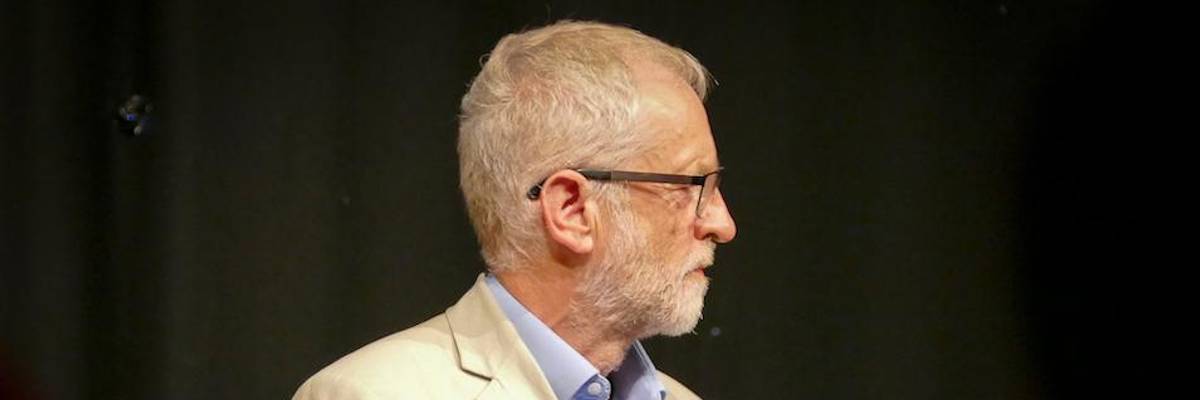
Jeremy Corbyn Leader of the Labour Party after speaking at a "Labour Roots" event, Bolton, August 17, 2019. (Photo: Sophie Brown/cc)
News on Thursday that U.K. Prime Minister Boris Johnson reached a deal with the European Union to allow Britain to leave the coalition under the Brexit referendum of 2016 was met with criticism and derision by progressives, including Labour leader Jeremy Corbyn.
"It won't bring the country together and should be rejected," Corbyn said of the deal on Twitter Thursday.
Johnson made the deal with European Commission President Jean-Claude Juncker Thursday. The agreement will go up for a vote in fron of the U.K. Parliament on a special Saturday session.
But opponents of Johnson's approach are prepared to make it an uphill fight.
Labour's shadow Brexit secretary Keir Starmer expanded on Corbyn's criticism of the deal.
"It is clear that the Johnson deal is a far worse deal than Theresa May's deal," said Starmer. "It paves the way for a decade of deregulation. It gives Johnson licence to slash workers' rights, environmental standards and consumer protections."
According to journalist Paul Mason, a supporter of Corbyn, Labour intends to enter Parliament on Saturday united behind demanding a second referndum on either the Johnson deal or pulling out of Brexit completely.
"That's our strategy, let the people decide," said Mason. "Having achieved that--which I think we can on Saturday--that's the platform for going into an election and ridding this country of this right wing, authoritarian, white nationalist, and English chauvinist government once and for all."
Scottish Nationalist Party leader Nicola Sturgeon also rejected the deal's premise.
"It's hard to imagine a deal that would be worse for Scotland," said Sturgeon.
The deal, which would go into effect for the current Brexit deadline of October 31, reportedly undoes the hardest sticking point of negotiations, what to do with the border between Northern Ireland and Ireland, by allowing goods to flow through the border after crossing through customs over the Irish Sea.
Johnson's counterpart in Ireland, Taisoeach Leo Varadkar, called the deal a "good agreement" in comments to reporters.
"The people of the north did not consent to Brexit. They rejected it."
--Michelle O'Neill, Sinn Fein
"It allows the United Kingdom to leave the European Union in an orderly fashion," said Varadkar.
That sentiment was not, however, shared by others in Ireland and Northern Ireland.
Northern Ireland's hard-right Democratic Unionist Party (DUP), who are relied on by Johnson and the Conservatives to maintain their majority in Parliament, flatly rejected the proposal. Without the DUP's support, passing Brexit becomes even more difficult.
"We have been consistent that we will only ever consider supporting arrangements that are in Northern Ireland's long-term economic and constitutional interests and protect the integrity of the Union," the party said in a statement. "These proposals are not, in our view, beneficial to the economic well-being of Northern Ireland and they undermine the integrity of the Union."
Irish nationalist party Sinn Fein, in a tweet, said that there was "no good Brexit."
"The people of the north did not consent to Brexit," Sinn Fein leader Michelle O'Neill said, referring to Northern Irelands vote against the proposal in 2016. "They rejected it."
Dear Common Dreams reader, It’s been nearly 30 years since I co-founded Common Dreams with my late wife, Lina Newhouser. We had the radical notion that journalism should serve the public good, not corporate profits. It was clear to us from the outset what it would take to build such a project. No paid advertisements. No corporate sponsors. No millionaire publisher telling us what to think or do. Many people said we wouldn't last a year, but we proved those doubters wrong. Together with a tremendous team of journalists and dedicated staff, we built an independent media outlet free from the constraints of profits and corporate control. Our mission has always been simple: To inform. To inspire. To ignite change for the common good. Building Common Dreams was not easy. Our survival was never guaranteed. When you take on the most powerful forces—Wall Street greed, fossil fuel industry destruction, Big Tech lobbyists, and uber-rich oligarchs who have spent billions upon billions rigging the economy and democracy in their favor—the only bulwark you have is supporters who believe in your work. But here’s the urgent message from me today. It's never been this bad out there. And it's never been this hard to keep us going. At the very moment Common Dreams is most needed, the threats we face are intensifying. We need your support now more than ever. We don't accept corporate advertising and never will. We don't have a paywall because we don't think people should be blocked from critical news based on their ability to pay. Everything we do is funded by the donations of readers like you. When everyone does the little they can afford, we are strong. But if that support retreats or dries up, so do we. Will you donate now to make sure Common Dreams not only survives but thrives? —Craig Brown, Co-founder |
News on Thursday that U.K. Prime Minister Boris Johnson reached a deal with the European Union to allow Britain to leave the coalition under the Brexit referendum of 2016 was met with criticism and derision by progressives, including Labour leader Jeremy Corbyn.
"It won't bring the country together and should be rejected," Corbyn said of the deal on Twitter Thursday.
Johnson made the deal with European Commission President Jean-Claude Juncker Thursday. The agreement will go up for a vote in fron of the U.K. Parliament on a special Saturday session.
But opponents of Johnson's approach are prepared to make it an uphill fight.
Labour's shadow Brexit secretary Keir Starmer expanded on Corbyn's criticism of the deal.
"It is clear that the Johnson deal is a far worse deal than Theresa May's deal," said Starmer. "It paves the way for a decade of deregulation. It gives Johnson licence to slash workers' rights, environmental standards and consumer protections."
According to journalist Paul Mason, a supporter of Corbyn, Labour intends to enter Parliament on Saturday united behind demanding a second referndum on either the Johnson deal or pulling out of Brexit completely.
"That's our strategy, let the people decide," said Mason. "Having achieved that--which I think we can on Saturday--that's the platform for going into an election and ridding this country of this right wing, authoritarian, white nationalist, and English chauvinist government once and for all."
Scottish Nationalist Party leader Nicola Sturgeon also rejected the deal's premise.
"It's hard to imagine a deal that would be worse for Scotland," said Sturgeon.
The deal, which would go into effect for the current Brexit deadline of October 31, reportedly undoes the hardest sticking point of negotiations, what to do with the border between Northern Ireland and Ireland, by allowing goods to flow through the border after crossing through customs over the Irish Sea.
Johnson's counterpart in Ireland, Taisoeach Leo Varadkar, called the deal a "good agreement" in comments to reporters.
"The people of the north did not consent to Brexit. They rejected it."
--Michelle O'Neill, Sinn Fein
"It allows the United Kingdom to leave the European Union in an orderly fashion," said Varadkar.
That sentiment was not, however, shared by others in Ireland and Northern Ireland.
Northern Ireland's hard-right Democratic Unionist Party (DUP), who are relied on by Johnson and the Conservatives to maintain their majority in Parliament, flatly rejected the proposal. Without the DUP's support, passing Brexit becomes even more difficult.
"We have been consistent that we will only ever consider supporting arrangements that are in Northern Ireland's long-term economic and constitutional interests and protect the integrity of the Union," the party said in a statement. "These proposals are not, in our view, beneficial to the economic well-being of Northern Ireland and they undermine the integrity of the Union."
Irish nationalist party Sinn Fein, in a tweet, said that there was "no good Brexit."
"The people of the north did not consent to Brexit," Sinn Fein leader Michelle O'Neill said, referring to Northern Irelands vote against the proposal in 2016. "They rejected it."
News on Thursday that U.K. Prime Minister Boris Johnson reached a deal with the European Union to allow Britain to leave the coalition under the Brexit referendum of 2016 was met with criticism and derision by progressives, including Labour leader Jeremy Corbyn.
"It won't bring the country together and should be rejected," Corbyn said of the deal on Twitter Thursday.
Johnson made the deal with European Commission President Jean-Claude Juncker Thursday. The agreement will go up for a vote in fron of the U.K. Parliament on a special Saturday session.
But opponents of Johnson's approach are prepared to make it an uphill fight.
Labour's shadow Brexit secretary Keir Starmer expanded on Corbyn's criticism of the deal.
"It is clear that the Johnson deal is a far worse deal than Theresa May's deal," said Starmer. "It paves the way for a decade of deregulation. It gives Johnson licence to slash workers' rights, environmental standards and consumer protections."
According to journalist Paul Mason, a supporter of Corbyn, Labour intends to enter Parliament on Saturday united behind demanding a second referndum on either the Johnson deal or pulling out of Brexit completely.
"That's our strategy, let the people decide," said Mason. "Having achieved that--which I think we can on Saturday--that's the platform for going into an election and ridding this country of this right wing, authoritarian, white nationalist, and English chauvinist government once and for all."
Scottish Nationalist Party leader Nicola Sturgeon also rejected the deal's premise.
"It's hard to imagine a deal that would be worse for Scotland," said Sturgeon.
The deal, which would go into effect for the current Brexit deadline of October 31, reportedly undoes the hardest sticking point of negotiations, what to do with the border between Northern Ireland and Ireland, by allowing goods to flow through the border after crossing through customs over the Irish Sea.
Johnson's counterpart in Ireland, Taisoeach Leo Varadkar, called the deal a "good agreement" in comments to reporters.
"The people of the north did not consent to Brexit. They rejected it."
--Michelle O'Neill, Sinn Fein
"It allows the United Kingdom to leave the European Union in an orderly fashion," said Varadkar.
That sentiment was not, however, shared by others in Ireland and Northern Ireland.
Northern Ireland's hard-right Democratic Unionist Party (DUP), who are relied on by Johnson and the Conservatives to maintain their majority in Parliament, flatly rejected the proposal. Without the DUP's support, passing Brexit becomes even more difficult.
"We have been consistent that we will only ever consider supporting arrangements that are in Northern Ireland's long-term economic and constitutional interests and protect the integrity of the Union," the party said in a statement. "These proposals are not, in our view, beneficial to the economic well-being of Northern Ireland and they undermine the integrity of the Union."
Irish nationalist party Sinn Fein, in a tweet, said that there was "no good Brexit."
"The people of the north did not consent to Brexit," Sinn Fein leader Michelle O'Neill said, referring to Northern Irelands vote against the proposal in 2016. "They rejected it."

,_Labour_Roots_event.jpg)