SUBSCRIBE TO OUR FREE NEWSLETTER
Daily news & progressive opinion—funded by the people, not the corporations—delivered straight to your inbox.
5
#000000
#FFFFFF
To donate by check, phone, or other method, see our More Ways to Give page.
Daily news & progressive opinion—funded by the people, not the corporations—delivered straight to your inbox.

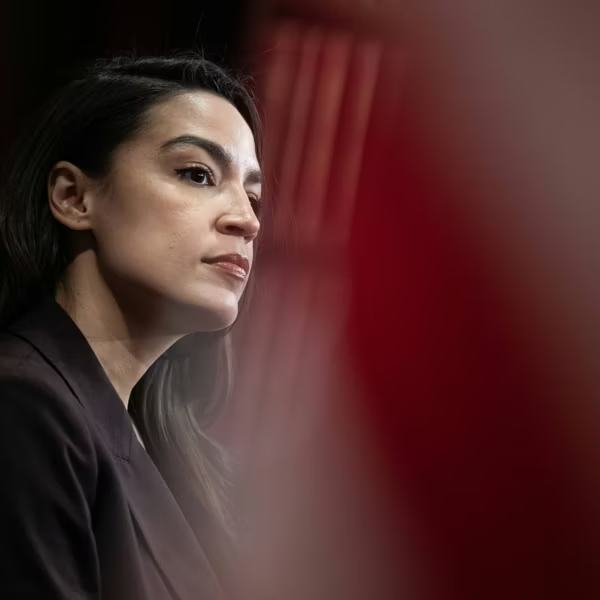
Rep. Alexandria Ocasio-Cortez (D-N.Y.) spoke out on Tuesday about her support for pay raises for members of Congress. (Photo: Getty Images)
Calling for cost-of-living increases for all workers including those who serve in Congress, Rep. Alexandria Ocasio-Cortez on Tuesday decried House Democratic leaders' decision to table a spending bill that would include a small pay raise for senators and representatives.
Keeping elected officials' pay stagnant year after year is an invitation for representatives to enrich themselves through "loopholes and other forms of self-dealing," the progressive New York Democrat tweeted.
After several Democratic members from swing districts expressed concern that they'd face backlash from voters if the party approved a bill with a cost-of-living increase, amounting to an addition $4,500 per year for members of Congress, leaders postponed consideration of the proposal.
"Nobody wants to vote to give themselves a raise," freshman Rep. Katie Hill (D-Calif.) told Politico. "There's nothing good about that."
Ocasio-Cortez vehemently disagreed, explaining on Twitter that one benefit of extending cost-of-living adjustments to members of Congress is avoiding incentives for representatives and senators to accept cash from lobbyists and approve tax cuts for their wealthy donors like those included in the $1.5 trillion Republican tax law of 2017.
Members have made $174,000 per year since 2009, when Congress froze pay increases in light of the financial meltdown and recession. The average cost of living in the U.S. has risen by 14 percent in just the past three years, and Washington, D.C. is frequently ranked as one of the most expensive cities in the United States.
Fighting for a cost-of-living increase is not a popular position, Ocasio-Cortez said, but she argued it is consistent with her goal of reforming campaign finance, ending corruption in Washington, and fighting for fair wages for all workers.
Open Markets Institute fellow Matt Stoller agreed, writing, "You get what you pay for and if you cut the pay of public servants for a decade you get bribery and corruption."
Ocasio-Cortez and her supporters also argued that keeping public servants' compensation at the same level indefinitely keeps jobs on Capitol Hill out of reach for many Americans.
"If you don't want only millionaires to be in Congress, you have to treat it like a real job--and you have to treat members like professionals," wrote Benjamin Wittes, editor in chief of Lawfare.
Stagnant salaries for representatives have trickled down to staffers, Ocasio-Cortez added, making internships and positions in congressional offices feasible only for a richest young workers.
Dear Common Dreams reader, It’s been nearly 30 years since I co-founded Common Dreams with my late wife, Lina Newhouser. We had the radical notion that journalism should serve the public good, not corporate profits. It was clear to us from the outset what it would take to build such a project. No paid advertisements. No corporate sponsors. No millionaire publisher telling us what to think or do. Many people said we wouldn't last a year, but we proved those doubters wrong. Together with a tremendous team of journalists and dedicated staff, we built an independent media outlet free from the constraints of profits and corporate control. Our mission has always been simple: To inform. To inspire. To ignite change for the common good. Building Common Dreams was not easy. Our survival was never guaranteed. When you take on the most powerful forces—Wall Street greed, fossil fuel industry destruction, Big Tech lobbyists, and uber-rich oligarchs who have spent billions upon billions rigging the economy and democracy in their favor—the only bulwark you have is supporters who believe in your work. But here’s the urgent message from me today. It's never been this bad out there. And it's never been this hard to keep us going. At the very moment Common Dreams is most needed, the threats we face are intensifying. We need your support now more than ever. We don't accept corporate advertising and never will. We don't have a paywall because we don't think people should be blocked from critical news based on their ability to pay. Everything we do is funded by the donations of readers like you. When everyone does the little they can afford, we are strong. But if that support retreats or dries up, so do we. Will you donate now to make sure Common Dreams not only survives but thrives? —Craig Brown, Co-founder |
Calling for cost-of-living increases for all workers including those who serve in Congress, Rep. Alexandria Ocasio-Cortez on Tuesday decried House Democratic leaders' decision to table a spending bill that would include a small pay raise for senators and representatives.
Keeping elected officials' pay stagnant year after year is an invitation for representatives to enrich themselves through "loopholes and other forms of self-dealing," the progressive New York Democrat tweeted.
After several Democratic members from swing districts expressed concern that they'd face backlash from voters if the party approved a bill with a cost-of-living increase, amounting to an addition $4,500 per year for members of Congress, leaders postponed consideration of the proposal.
"Nobody wants to vote to give themselves a raise," freshman Rep. Katie Hill (D-Calif.) told Politico. "There's nothing good about that."
Ocasio-Cortez vehemently disagreed, explaining on Twitter that one benefit of extending cost-of-living adjustments to members of Congress is avoiding incentives for representatives and senators to accept cash from lobbyists and approve tax cuts for their wealthy donors like those included in the $1.5 trillion Republican tax law of 2017.
Members have made $174,000 per year since 2009, when Congress froze pay increases in light of the financial meltdown and recession. The average cost of living in the U.S. has risen by 14 percent in just the past three years, and Washington, D.C. is frequently ranked as one of the most expensive cities in the United States.
Fighting for a cost-of-living increase is not a popular position, Ocasio-Cortez said, but she argued it is consistent with her goal of reforming campaign finance, ending corruption in Washington, and fighting for fair wages for all workers.
Open Markets Institute fellow Matt Stoller agreed, writing, "You get what you pay for and if you cut the pay of public servants for a decade you get bribery and corruption."
Ocasio-Cortez and her supporters also argued that keeping public servants' compensation at the same level indefinitely keeps jobs on Capitol Hill out of reach for many Americans.
"If you don't want only millionaires to be in Congress, you have to treat it like a real job--and you have to treat members like professionals," wrote Benjamin Wittes, editor in chief of Lawfare.
Stagnant salaries for representatives have trickled down to staffers, Ocasio-Cortez added, making internships and positions in congressional offices feasible only for a richest young workers.
Calling for cost-of-living increases for all workers including those who serve in Congress, Rep. Alexandria Ocasio-Cortez on Tuesday decried House Democratic leaders' decision to table a spending bill that would include a small pay raise for senators and representatives.
Keeping elected officials' pay stagnant year after year is an invitation for representatives to enrich themselves through "loopholes and other forms of self-dealing," the progressive New York Democrat tweeted.
After several Democratic members from swing districts expressed concern that they'd face backlash from voters if the party approved a bill with a cost-of-living increase, amounting to an addition $4,500 per year for members of Congress, leaders postponed consideration of the proposal.
"Nobody wants to vote to give themselves a raise," freshman Rep. Katie Hill (D-Calif.) told Politico. "There's nothing good about that."
Ocasio-Cortez vehemently disagreed, explaining on Twitter that one benefit of extending cost-of-living adjustments to members of Congress is avoiding incentives for representatives and senators to accept cash from lobbyists and approve tax cuts for their wealthy donors like those included in the $1.5 trillion Republican tax law of 2017.
Members have made $174,000 per year since 2009, when Congress froze pay increases in light of the financial meltdown and recession. The average cost of living in the U.S. has risen by 14 percent in just the past three years, and Washington, D.C. is frequently ranked as one of the most expensive cities in the United States.
Fighting for a cost-of-living increase is not a popular position, Ocasio-Cortez said, but she argued it is consistent with her goal of reforming campaign finance, ending corruption in Washington, and fighting for fair wages for all workers.
Open Markets Institute fellow Matt Stoller agreed, writing, "You get what you pay for and if you cut the pay of public servants for a decade you get bribery and corruption."
Ocasio-Cortez and her supporters also argued that keeping public servants' compensation at the same level indefinitely keeps jobs on Capitol Hill out of reach for many Americans.
"If you don't want only millionaires to be in Congress, you have to treat it like a real job--and you have to treat members like professionals," wrote Benjamin Wittes, editor in chief of Lawfare.
Stagnant salaries for representatives have trickled down to staffers, Ocasio-Cortez added, making internships and positions in congressional offices feasible only for a richest young workers.