SUBSCRIBE TO OUR FREE NEWSLETTER
Daily news & progressive opinion—funded by the people, not the corporations—delivered straight to your inbox.
5
#000000
#FFFFFF
To donate by check, phone, or other method, see our More Ways to Give page.
Daily news & progressive opinion—funded by the people, not the corporations—delivered straight to your inbox.
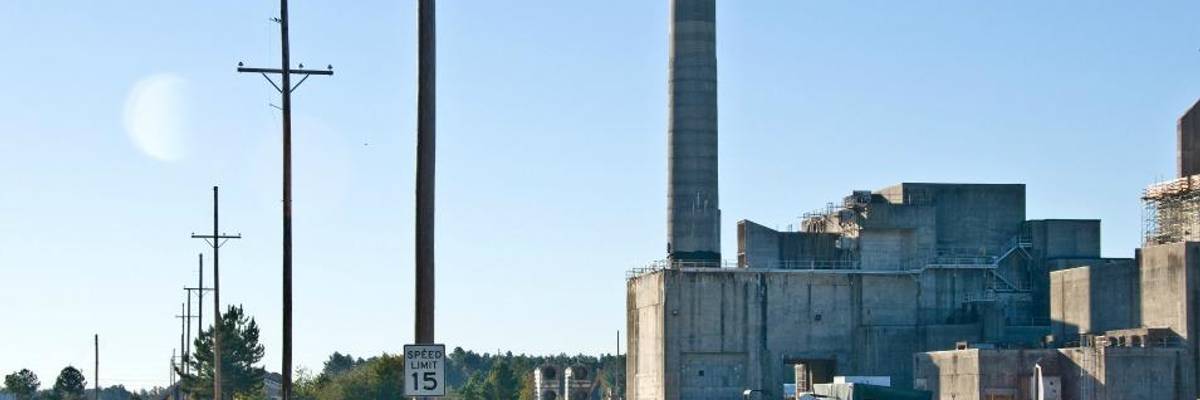
The Savannah River Site in South Carolina is one of three Defense Reprocessing Waste Inventories where the Department of Energy will be reclassifying nuclear waste as safer than it has for decades, allowing the government to dispose of the waste more easily and potentially posing a risk for the surrounding environment. (Photo: Savannah River Site/Flickr/cc)
In a move that will roll back safety standards that have been observed for decades, the Trump administration reportedly has plans to reclassify nuclear waste previously listed as "high-level" radioactive to a lower level, in the interest of saving money and time when disposing of the material.
The Department of Energy (DOE) plans to observe a new interpretation of which nuclear waste qualifies as "high-level waste," which must be disposed of deep underground to avoid contaminating the surrounding environment. Under the new standards, radioactive materials at three nuclear sites will be classified as low-risk, enabling officials to dispose of the waste in shallow pits.
"The Trump administration is moving to fundamentally alter more than 50 years of national consensus on how the most toxic and radioactive waste in the world is managed and ultimately disposed of."
--Geoff Fettus, NRDCThe Hanford Site in Washington state, the Savannah River Site in South Carolina, and the Idaho National Laboratory all contain millions of gallons of sludge and other waste following decades of use by the DOE, which reprocessed nuclear rods at the sites when the department was extracting plutonium for hydrogen bombs.
The DOE for decades classified any material that was created during reprocessing as high-level waste, but it will now label the sludge at the three sites as safe due to its level of radioactivity.
Under the new rules, the waste--which includes toxic and radioactive elements such as unaranium and plutonium--can now be stored in shallow pits that may leak into the surrounding soil.
Washington Gov. Jay Inslee, who is running for the Democratic nomination in the 2020 presidential race, slammed the Trump administration for "unilaterally" deciding to potentially put Washington residents and their environment at risk, without consulting with the states in question--going against previous agreements between the states and the federal government.
"By taking this action, the administration seeks to cut out state input and move towards disposal options of their choosing, including those already deemed to be unsafe by their own assessments and in violation of the existing legally binding agreement," Inslee said in a statement. "We will consider all options to stop this reckless and dangerous action."
The Energy Department claims that downgrading the risk level of the sludge is necessary to allow for faster clean-up of the sites and to save money for the federal government--a claim which "flies in the face of sound science and judgment," according to Columbia Riverkeeper, a non-profit group which aims to protect Washington state's Columbia River.
"The Trump administration's attempt to cut corners with nuclear waste undermines effective, long-term cleanup at the Hanford Nuclear Site," said Lauren Goldberg, legal and program director at the organization. "People in the Pacific Northwest value clean water and strong salmon runs."
The Natural Resources Defense Council (NRDC) called the DOE's move "irresponsible and outrageous."
"The Trump administration is moving to fundamentally alter more than 50 years of national consensus on how the most toxic and radioactive waste in the world is managed and ultimately disposed of," said Geoff Fettus, senior attorney at NRDC. "No matter what they call it, this waste needs a permanent, well-protected disposal option to guard it for generations to come."
At the Seattle-based newspaper The Stranger, Katie Herzog wrote that the DOE's action is the latest attempt by the Trump administration to "change the definition" of a problem to avoid addressing it effectively.
Recently, the Trump administration has also sought to change the official government definition of the poverty line to avoid paying for government benefits for struggling families, and the definition of domestic violence to limit the funds that go to agencies serving survivors.
Reclassifying dangerous elements, one critic wrote on social media, "doesn't mean its going to make it any less harmful to the public."
Dear Common Dreams reader, It’s been nearly 30 years since I co-founded Common Dreams with my late wife, Lina Newhouser. We had the radical notion that journalism should serve the public good, not corporate profits. It was clear to us from the outset what it would take to build such a project. No paid advertisements. No corporate sponsors. No millionaire publisher telling us what to think or do. Many people said we wouldn't last a year, but we proved those doubters wrong. Together with a tremendous team of journalists and dedicated staff, we built an independent media outlet free from the constraints of profits and corporate control. Our mission has always been simple: To inform. To inspire. To ignite change for the common good. Building Common Dreams was not easy. Our survival was never guaranteed. When you take on the most powerful forces—Wall Street greed, fossil fuel industry destruction, Big Tech lobbyists, and uber-rich oligarchs who have spent billions upon billions rigging the economy and democracy in their favor—the only bulwark you have is supporters who believe in your work. But here’s the urgent message from me today. It's never been this bad out there. And it's never been this hard to keep us going. At the very moment Common Dreams is most needed, the threats we face are intensifying. We need your support now more than ever. We don't accept corporate advertising and never will. We don't have a paywall because we don't think people should be blocked from critical news based on their ability to pay. Everything we do is funded by the donations of readers like you. When everyone does the little they can afford, we are strong. But if that support retreats or dries up, so do we. Will you donate now to make sure Common Dreams not only survives but thrives? —Craig Brown, Co-founder |
In a move that will roll back safety standards that have been observed for decades, the Trump administration reportedly has plans to reclassify nuclear waste previously listed as "high-level" radioactive to a lower level, in the interest of saving money and time when disposing of the material.
The Department of Energy (DOE) plans to observe a new interpretation of which nuclear waste qualifies as "high-level waste," which must be disposed of deep underground to avoid contaminating the surrounding environment. Under the new standards, radioactive materials at three nuclear sites will be classified as low-risk, enabling officials to dispose of the waste in shallow pits.
"The Trump administration is moving to fundamentally alter more than 50 years of national consensus on how the most toxic and radioactive waste in the world is managed and ultimately disposed of."
--Geoff Fettus, NRDCThe Hanford Site in Washington state, the Savannah River Site in South Carolina, and the Idaho National Laboratory all contain millions of gallons of sludge and other waste following decades of use by the DOE, which reprocessed nuclear rods at the sites when the department was extracting plutonium for hydrogen bombs.
The DOE for decades classified any material that was created during reprocessing as high-level waste, but it will now label the sludge at the three sites as safe due to its level of radioactivity.
Under the new rules, the waste--which includes toxic and radioactive elements such as unaranium and plutonium--can now be stored in shallow pits that may leak into the surrounding soil.
Washington Gov. Jay Inslee, who is running for the Democratic nomination in the 2020 presidential race, slammed the Trump administration for "unilaterally" deciding to potentially put Washington residents and their environment at risk, without consulting with the states in question--going against previous agreements between the states and the federal government.
"By taking this action, the administration seeks to cut out state input and move towards disposal options of their choosing, including those already deemed to be unsafe by their own assessments and in violation of the existing legally binding agreement," Inslee said in a statement. "We will consider all options to stop this reckless and dangerous action."
The Energy Department claims that downgrading the risk level of the sludge is necessary to allow for faster clean-up of the sites and to save money for the federal government--a claim which "flies in the face of sound science and judgment," according to Columbia Riverkeeper, a non-profit group which aims to protect Washington state's Columbia River.
"The Trump administration's attempt to cut corners with nuclear waste undermines effective, long-term cleanup at the Hanford Nuclear Site," said Lauren Goldberg, legal and program director at the organization. "People in the Pacific Northwest value clean water and strong salmon runs."
The Natural Resources Defense Council (NRDC) called the DOE's move "irresponsible and outrageous."
"The Trump administration is moving to fundamentally alter more than 50 years of national consensus on how the most toxic and radioactive waste in the world is managed and ultimately disposed of," said Geoff Fettus, senior attorney at NRDC. "No matter what they call it, this waste needs a permanent, well-protected disposal option to guard it for generations to come."
At the Seattle-based newspaper The Stranger, Katie Herzog wrote that the DOE's action is the latest attempt by the Trump administration to "change the definition" of a problem to avoid addressing it effectively.
Recently, the Trump administration has also sought to change the official government definition of the poverty line to avoid paying for government benefits for struggling families, and the definition of domestic violence to limit the funds that go to agencies serving survivors.
Reclassifying dangerous elements, one critic wrote on social media, "doesn't mean its going to make it any less harmful to the public."
In a move that will roll back safety standards that have been observed for decades, the Trump administration reportedly has plans to reclassify nuclear waste previously listed as "high-level" radioactive to a lower level, in the interest of saving money and time when disposing of the material.
The Department of Energy (DOE) plans to observe a new interpretation of which nuclear waste qualifies as "high-level waste," which must be disposed of deep underground to avoid contaminating the surrounding environment. Under the new standards, radioactive materials at three nuclear sites will be classified as low-risk, enabling officials to dispose of the waste in shallow pits.
"The Trump administration is moving to fundamentally alter more than 50 years of national consensus on how the most toxic and radioactive waste in the world is managed and ultimately disposed of."
--Geoff Fettus, NRDCThe Hanford Site in Washington state, the Savannah River Site in South Carolina, and the Idaho National Laboratory all contain millions of gallons of sludge and other waste following decades of use by the DOE, which reprocessed nuclear rods at the sites when the department was extracting plutonium for hydrogen bombs.
The DOE for decades classified any material that was created during reprocessing as high-level waste, but it will now label the sludge at the three sites as safe due to its level of radioactivity.
Under the new rules, the waste--which includes toxic and radioactive elements such as unaranium and plutonium--can now be stored in shallow pits that may leak into the surrounding soil.
Washington Gov. Jay Inslee, who is running for the Democratic nomination in the 2020 presidential race, slammed the Trump administration for "unilaterally" deciding to potentially put Washington residents and their environment at risk, without consulting with the states in question--going against previous agreements between the states and the federal government.
"By taking this action, the administration seeks to cut out state input and move towards disposal options of their choosing, including those already deemed to be unsafe by their own assessments and in violation of the existing legally binding agreement," Inslee said in a statement. "We will consider all options to stop this reckless and dangerous action."
The Energy Department claims that downgrading the risk level of the sludge is necessary to allow for faster clean-up of the sites and to save money for the federal government--a claim which "flies in the face of sound science and judgment," according to Columbia Riverkeeper, a non-profit group which aims to protect Washington state's Columbia River.
"The Trump administration's attempt to cut corners with nuclear waste undermines effective, long-term cleanup at the Hanford Nuclear Site," said Lauren Goldberg, legal and program director at the organization. "People in the Pacific Northwest value clean water and strong salmon runs."
The Natural Resources Defense Council (NRDC) called the DOE's move "irresponsible and outrageous."
"The Trump administration is moving to fundamentally alter more than 50 years of national consensus on how the most toxic and radioactive waste in the world is managed and ultimately disposed of," said Geoff Fettus, senior attorney at NRDC. "No matter what they call it, this waste needs a permanent, well-protected disposal option to guard it for generations to come."
At the Seattle-based newspaper The Stranger, Katie Herzog wrote that the DOE's action is the latest attempt by the Trump administration to "change the definition" of a problem to avoid addressing it effectively.
Recently, the Trump administration has also sought to change the official government definition of the poverty line to avoid paying for government benefits for struggling families, and the definition of domestic violence to limit the funds that go to agencies serving survivors.
Reclassifying dangerous elements, one critic wrote on social media, "doesn't mean its going to make it any less harmful to the public."